








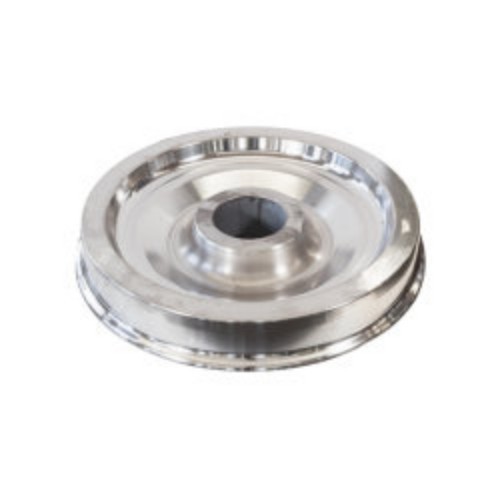


Steel Rail Wheels
1) Steel rail wheels are essential components in the railway industry. These wheels are designed to carry heavy loads and provide stability, traction and maneuverability to trains. They are typically made of high-quality cast steel, which provides excellent durability and resistance to wear and tear.
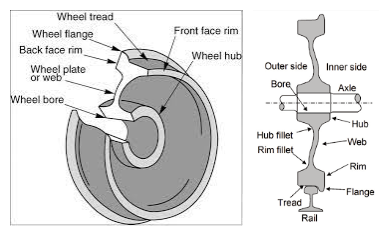
2) The main components of a steel rail wheel are the wheel disc, the flange, and the rim. The wheel disc is the central part of the wheel that comes in contact with the rail. The flange is the raised portion of the wheel that helps keep the train on track by guiding it through turns. The rim is the outermost part of the wheel that provides additional strength and support.
3) Steel rail wheels are typically designed to meet specific requirements based on the type of train and application. For example, wheels used on freight trains require more durability and strength than those used on passenger trains. Additionally, the size of the wheel and the distance between the rail tracks must also be considered to ensure proper performance and stability.
4) Overall, steel rail wheels are an essential part of the railway industry and are crucial to the safe and efficient transport of goods and people. They are subject to strict quality control standards to ensure they meet the highest standards of performance and durability.
5) The high quality wheel set is made of 45# steel die forging, roughing, conditioning and finishing. The hardness of heat treatment is HB305 ~ 385, and the hardness of hardening layer at 18mm depth is not less than HB250. The wheel shaft is made of 45# steel, which is roughed, tempered and finished. The hardness of heat treatment is 250 ~ 280HB.

Material:
A) Carbon steel: A350LF2, A105, Q235, Q355D, A694F52, A516-GR65, EN10222, P280GH, P245GH, P250GH, JIS S25C, SS400, S20C, 16Mn, C22.8, Q345B/C/D, 1055, 1045, C50, C45, 10#, 20#, 35#, 45#, 40#, 50#, 55#, 60# and other carbon steel forgings.
B) Stainless steel: ASTM, A182, F304/304L, F316/316L, F316H, F310, F321, JB4728-2000, OCR18Ni10Ti, JB4728-2000, OCR17NI12Mo2, 2205, 2507, 2103, 904L, 254SMD, 304LN , 316LN, 1CR13, 2cr13, 3cr13, 4cr13, 321, 302, W1813N, W2014N, W2018N, W2020N, P550, Cr18Mn18N, 06Cr19Ni10(S30408), 022Cr19Ni10(S30403), 06Cr17Ni12Mo2(S31608), 022Cr17Ni 12Mo2(S31603), 06Cr25Ni20(S31008), 06Cr18Ni11Ti(S32168), 022Cr19Ni13Mo (S31703), 0Cr17Ni4Cu4Nb, 06Cr19Ni10N, 14Cr17Ni2, 13Cr13Mo, 06Cr13 and other stainless steel forgings.
C) Alloy steel: 40Cr, 15CrMo, 20CrMo, 25CrMo, 30CrMo, 35CrMo, 35CrMoV, 42CrMo, 20Cr2Ni4, 20CrNiMo, 40CrNiMo, 30Cr2Ni2Mo, 35CrMoV, 12Cr1MoV, 38CrMoAl, 18Cr2Nio4W, 40CrNi2Mo, 30CrMnSi, 25Cr2MoV, 17 Cr2Ni2Mo, 20MnMo, 20MnMoNb, 34CrNi3Mo, 20CrMnTi , 40CrMnMo, 30Cr2Ni2Mo, 34CrMo1, 20CrMnMo, 24CrMoV, 30Cr2MoV, 34CrNi1Mo, 17Cr2Ni2Mo, 34CrNi3MoV, 20CrMnTi, A182F1, F5, F9, F11, F22, 12Cr2Mo1, 10Cr9Mo1VNbN (F91), 10Cr9Mo W2VNbBN (F92), 12CrMoV, 4140, 4340, 4330 , 4130, 4150, 9CR2MO, 17NiCrMo6-4, 18CrNiMo7-6, 30CrNiMo8, 34CRNIMO, 34CrNiMo6, 36CrNiMo4, 34CrNi3Mo, 40CRNIMO, 40CrNiMoA, 50CrMo4, Q345D, 300M, 17-4PH, PH13-8Mo, 15-5PH, AerMet 100 and other alloys steel forgings.
- Diameter: Φ250, Φ350, Φ400, Φ500, Φ600, Φ700, Φ800, Φ 1000, Φ 1200 or as your requirement
- Technique: Casting or forging
- Quenching Depth: more than 25mm
- Heat Treatment: Quenching and tempering
- Work environment temperature: -25℃~+40℃, relative humidity ≤85%
- Reference Price Range: $80-1000/piece
- Rated Loading Capacity: 1~1200 ton
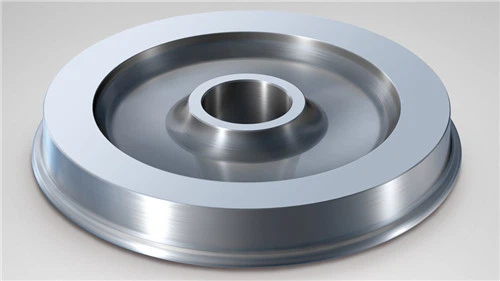
Sketch
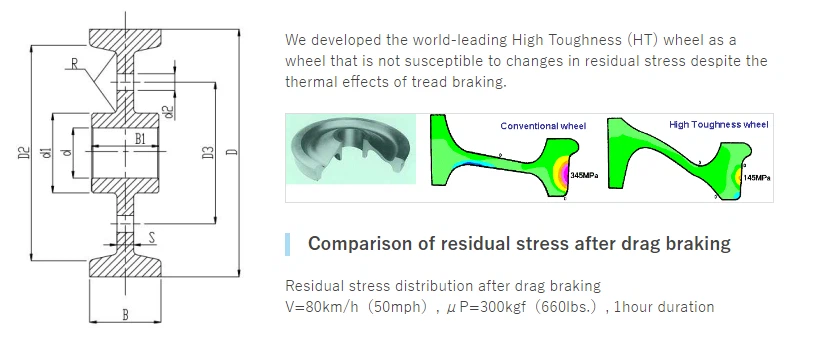
Advantages
1. Durability: Steel rail wheels are highly durable and can withstand heavy loads and rough usage. They have a longer lifespan than other materials used for rail wheels, making them more cost-effective in the long run.
2. Strength: Steel has a high tensile strength, which means that it can handle heavy loads without deforming or breaking. This makes steel rail wheels ideal for use in heavy-duty applications like mining, transportation of heavy machinery, and industrial equipment.
3. Weather resistance: Steel rail wheels are highly resistant to weathering and can withstand exposure to harsh weather conditions like extreme temperatures, moisture, and corrosive substances like saltwater.
4. Easy maintenance: Steel rail wheels do not require frequent maintenance or replacement, which makes them highly cost-effective in the long run. They can be easily repaired if damaged or worn out, reducing downtime and maintenance costs.
5. High load capacity: Steel rail wheels can handle heavy loads and are designed to distribute the weight of the load evenly over the length of the rail, minimizing the risk of damage to the rail or wheel.
6. High-speed capability: Steel rail wheels are capable of traveling at high speeds with minimal resistance, making them ideal for use in high-speed rail applications.
7. Reduced noise: Steel rail wheels produce less noise than wheels made of other materials, which makes them ideal for use in urban areas and other noise-sensitive environments.
Application
Steel rail wheels are used in the railway industry for the wheels of locomotives, passenger cars, and freight cars. These wheels must be able to withstand the heavy loads and stresses encountered during railway operations. Some of the applications of steel rail wheels include:
1. Locomotives: Steel rail wheels are used in the wheels of locomotives to provide traction and stability on the railway tracks. They are the main driving force for the locomotive, allowing it to move both forwards and backwards.
2. Passenger Cars: Steel rail wheels are also used in the wheels of passenger cars to provide a smooth and comfortable ride for passengers. They are designed to absorb the shocks and vibrations generated by the train, reducing the impact on the passengers.
3. Freight Cars: Steel rail wheels are used in the wheels of freight cars to transport a wide range of cargo. These wheels must be able to support heavy loads and withstand the stresses generated by the movement of the cargo.
In addition to their use in the railway industry, steel rail wheels are also used in other industries such as mining, agriculture, and construction. They are used in heavy-duty machinery such as tractors, excavators, and bulldozers to provide traction and stability on rough terrain.


Production Procedure
The production procedure of steel rail wheels involves several steps:
1. Melting: The raw materials, mainly iron and steel scrap, are melted in a furnace to create molten metal.
2. Casting: The liquid metal is poured into a mold to create the basic shape of the wheel. The mold is designed to match the specifications of the wheel.
3. Forging: The cast wheel is then transferred to a forge where it is heated and hammered into its final shape. This process strengthens the metal and helps to align the grain structure of the wheel.

4. Machining: The finished wheel is then machined to achieve the desired finish and dimensions. This includes grinding the edges, boring the center hole, and drilling the bolt holes.

5. Heat treatment: The forged wheel is then subjected to various heating and cooling processes to refine its chemical and physical properties. This helps to ensure that the wheel is strong, durable, and resistant to wear.

6. Finishing: The finished wheels are cleaned, inspected for defects and polished to a smooth finish.

7. Inspection: Finally, the finished steel rail wheel is rigorously inspected to ensure that it meets the required standards for strength, dimensions, and surface finish. Any defects are identified and addressed before the wheel is approved for use.

8. Delivery: The completed train wheels are loaded onto trucks, trains or ships and delivered to train manufacturers where they are installed on new trains or used to replace worn-out wheels on existing trains.


Workshop View
The company has installed an intelligent equipment management platform, and has installed 310 sets (sets) of handling and welding robots. After the completion of the plan, there will be more than 500 sets (sets), and the equipment networking rate will reach 95%. 32 welding lines have been put into use, 50 are planned to be installed, and the automation rate of the entire product line has reached.


Hot Tags: steel rail wheels, China steel rail wheels manufacturers, suppliers, factory, Forged Train Wheels, Wheels, Forged Crane Wheels, Train Wheels, Crane Parts, Steel Rail Wheels
Previous
Forged Crane WheelsNext
No InformationYou Might Also Like


Send Inquiry