










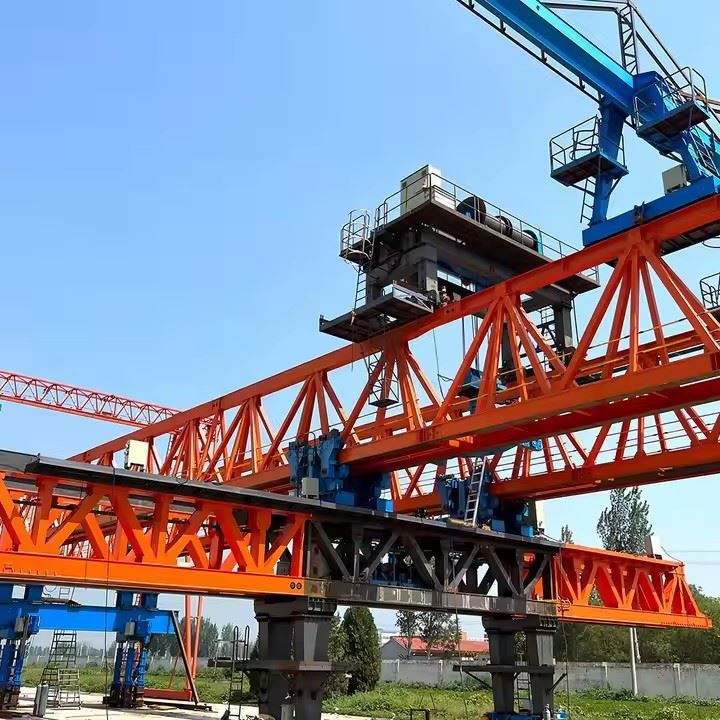
110 Ton Bridge Launcher Equipment
The 110-ton bridge launcher equipment is a specialized military or engineering vehicle designed to deploy portable bridges, allowing troops, vehicles, and supplies to cross obstacles such as rivers, trenches, or gaps in the battlefield. Here's an overview of its key aspects:

Key Features
Key Features:
Capacity:
Can launch bridges with a load capacity of up to 110 tons, supporting heavy military vehicles like tanks, armored personnel carriers (APCs), and logistics trucks.
Bridge Types:
Typically deploys modular or scissors-type bridges (e.g., Bailey bridge variants, Medium Girder Bridges, or custom military designs).
May support single-span or multi-span configurations depending on the mission.
Mobility & Deployment:
Mounted on a heavy-duty wheeled or tracked chassis (e.g., modified tank hulls or multi-axle trucks).
Hydraulic or mechanical systems for rapid deployment (often in under 10–30 minutes).
Some models feature automated launch/recovery systems for minimal crew exposure.
Operational Use:
Used by military engineering corps (e.g., U.S. Army's ABV, China's Type 84, or Russian TMM-6 systems).
Critical for combat engineering, disaster relief, and rapid infrastructure repair.
Specification
General Specifications
Bridge Capacity: 110 metric tons (Class 110 load rating)
Bridge Span: Typically 20–40 meters (adjustable based on configuration)
Deployment Time: 30–90 minutes (depending on bridge length and crew experience)
Mobility: Mounted on a heavy transport vehicle (8x8 or 10x10 all-terrain chassis)
Operating Crew: 3–6 personnel
Technical Specifications
Vehicle Platform
Chassis: High-mobility military or commercial heavy-duty truck
Engine: 400–600 HP diesel engine
Transmission: Automatic or manual with off-road capabilities
Suspension: Hydraulic or pneumatic for rough terrain
Max Speed (Loaded): 60–80 km/h (on-road), 20–40 km/h (off-road)
Bridge System
Bridge Type: Modular steel/aluminum assault bridge (e.g., Bailey-type, scissors bridge, or modular panel design)
Bridge Width: 3.5–4.5 meters (allowing for vehicle passage)
Deployment Mechanism: Hydraulic or mechanical launching system
Load Class: MLC 110 (Military Load Classification) or equivalent for civilian use
Deployment Features
Launching Method: Telescopic, scissors, or sliding mechanism
Stabilization: Outriggers or hydraulic jacks for stability during deployment
Remote Control Option: Some models allow partial remote operation
Environmental & Operational Limits
Operating Temperature: -30°C to +50°C
Slope Capability: Can deploy on gradients up to 10%
Water Crossing: Can launch bridges over rivers or gaps with proper setup

Pictures & Components
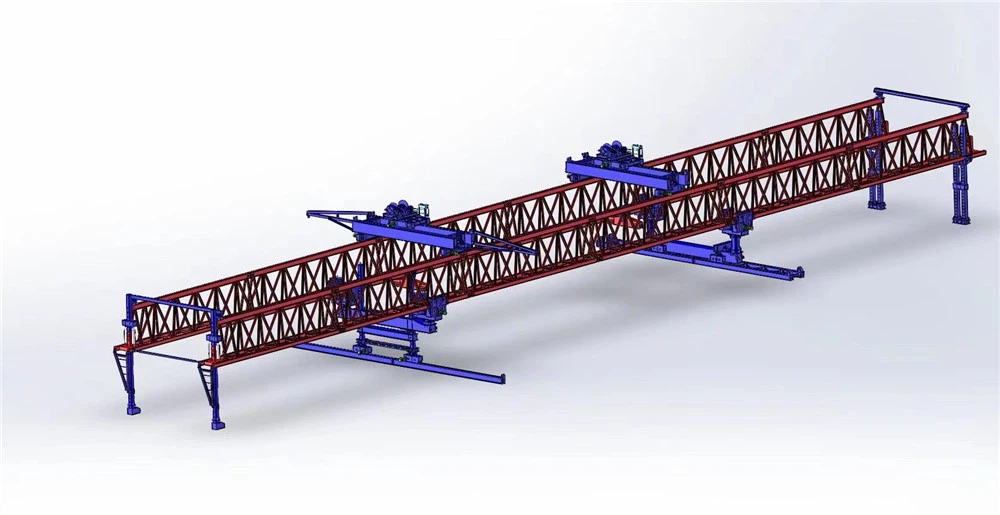
The 110-ton Bridge Launcher Equipment is typically used by military engineering units to deploy mobile bridges quickly, enabling troops and vehicles to cross obstacles like rivers, trenches, or gaps. Below are the key components of such a system:
1. Bridge Structure
Launching Mechanism: Hydraulic or mechanical system to extend/retract the bridge.
Bridge Deck: Modular or continuous panels that form the roadway.
Support Beams: Load-bearing elements that distribute weight.
2. Vehicle/Chassis
Carrier Vehicle: Often a heavy-duty military truck or tracked vehicle (e.g., MAN, Oshkosh, or similar).
Stabilizers/Outriggers: Hydraulic legs to stabilize during bridge deployment.
3. Hydraulic System
Pumps & Actuators: Power the extension/retraction of the bridge.
Control Valves: Regulate hydraulic pressure and flow.
4. Control System
Operator Console: Controls for launching, retrieving, and adjusting the bridge.
Sensors & Feedback Systems: Monitor alignment, stability, and deployment status.
5. Safety & Support Components
Locking Pins/Clamps: Secure the bridge in place.
Winch/Cable System: Assists in positioning and recovery.
Emergency Release: Allows quick detachment if needed.
6. Ancillary Equipment
Tool Kits: For maintenance and adjustments.
Spare Parts: Replacement hydraulic hoses, pins, etc.

Sketch

Advantages
The 110-ton bridge launcher equipment is a specialized engineering system designed for rapid deployment of military or emergency bridges, enabling troops, vehicles, and supplies to cross obstacles like rivers, gorges, or damaged infrastructure. Here are its key advantages:
1. High Load Capacity (110 Tons)
Supports heavy military vehicles (e.g., tanks, armored personnel carriers, and logistics trucks).
Ensures safe passage for convoys in combat or disaster relief scenarios.
2. Rapid Deployment
Can be assembled and launched quickly (often within minutes to hours), reducing downtime in critical operations.
Enhances mobility for advancing forces or humanitarian missions.
3. Modular & Adaptable Design
Adjustable span length to fit different gap widths.
Can be configured for various terrains (wet gaps, dry gaps, or uneven ground).
4. Mobility & Transport Efficiency
Mounted on heavy-duty vehicles (e.g., tank chassis or trucks) for easy relocation.
Some systems are amphibious or air-transportable (via helicopters or cargo planes).
5. Minimal Crew Requirement
Automated or semi-automated launching mechanisms reduce manpower needs.
Operable by a small team of engineers.
6. Military & Disaster Relief Applications
Combat Use: Facilitates rapid troop and equipment movement in offensive/defensive operations.
Humanitarian Aid: Enables access to disaster zones where bridges are destroyed.
7. Durability & Reliability
Built to withstand harsh environments (extreme weather, rough terrain).
Corrosion-resistant materials for long-term use.
8. Interoperability
Compatible with NATO or other military standards for joint operations.
Can integrate with existing bridging systems.
9. Reduced Logistics Burden
Eliminates the need for complex bridge-building materials on-site.
Faster than traditional pontoon or Bailey bridge methods.
10. Tactical Advantage
Enables surprise maneuvers by quickly overcoming obstacles.
Reduces vulnerability to enemy attacks during crossing operations.

Application
The 110-ton bridge launcher equipment is a specialized engineering system designed for rapid deployment of military or emergency bridges, enabling the crossing of obstacles such as rivers, ravines, or damaged infrastructure. Below are its key applications:
1. Military Operations
Rapid Troop & Vehicle Movement: Allows armored vehicles, tanks, and troops to cross gaps during combat or strategic maneuvers.
Logistics Support: Ensures uninterrupted supply chain movement in contested or rugged terrain.
Bypassing Destroyed Bridges: Quickly replaces bridges damaged by enemy action or natural disasters.
2. Disaster Relief & Emergency Response
Post-Disaster Recovery: Restores connectivity after earthquakes, floods, or hurricanes.
Humanitarian Aid Access: Facilitates the delivery of supplies to isolated areas.
3. Civil Engineering & Infrastructure
Temporary Bridges for Construction: Supports heavy machinery and material transport in large-scale projects.
Bridge Maintenance: Provides alternative crossings during repair work.
4. Tactical Advantages
High Mobility: Mounted on heavy-duty vehicles (e.g., trucks or tracked carriers) for quick relocation.
Heavy Load Capacity: Supports weights up to 110 tons, accommodating main battle tanks (e.g., M1 Abrams, Leopard 2).
Modular Design: Adaptable to varying gap lengths (typically 20–30 meters).

Production Procedure
The production procedure for a 110-ton bridge launcher involves several critical stages, from design and material procurement to assembly, testing, and commissioning. Below is a structured outline of the typical production process:
1. Design & Engineering
Conceptual Design: Define the bridge launcher's specifications (span capacity, mobility, hydraulic/pneumatic systems, etc.).
Detailed Engineering:
Structural analysis (finite element analysis for load distribution).
Mechanical design (launching mechanism, bogies, lifting systems).
Hydraulic/pneumatic system design.
Electrical and control systems (automation, sensors, safety interlocks).
Regulatory Compliance: Ensure adherence to international standards (ISO, EN, AASHTO, etc.).
2. Material Procurement
Structural Steel: High-grade steel (e.g., S355, ASTM A572) for beams, trusses, and supports.
Hydraulic Components: Pumps, cylinders, valves, and hoses.
Mechanical Parts: Gears, winches, bearings, and bogies.
Electrical Systems: Motors, PLCs, sensors, and wiring.
3. Fabrication & Machining
Cutting & Shaping: CNC plasma/laser cutting for precision parts.
Welding:
Submerged arc welding (SAW) for heavy sections.
Shielded metal arc welding (SMAW) for joints.
Non-destructive testing (NDT) like ultrasonic/X-ray inspection.
Machining: Drilling, milling, and turning for critical components.
4. Sub-Assembly
Bogie Assembly: Wheel sets, suspension, and braking systems.
Hydraulic Power Unit (HPU): Pump, reservoir, and valve integration.
Beam Sections: Pre-assembly of bridge segments with connection plates.
5. Main Assembly
Frame Integration: Mounting of longitudinal/transverse beams.
Mechanical Systems: Installing winches, gears, and launch mechanisms.
Hydraulic Systems: Connecting cylinders for lifting/launching.
Electrical Wiring: Control panels, sensors, and automation systems.
6. Testing & Quality Control
Load Testing:
Static load test (110-ton + safety factor).
Dynamic load test (simulated launching).
Hydraulic Tests: Pressure checks and leak tests.
Functional Tests:
Launching sequence (forward/backward movement).
Emergency stop and safety interlocks.
Final Inspection: Dimensional checks, paint quality, and documentation.
7. Painting & Corrosion Protection
Surface Preparation: Sandblasting (SA 2.5 standard).
Priming: Epoxy-based primer for corrosion resistance.
Top Coating: Polyurethane paint (weather-resistant).
8. Packaging & Shipping
Disassembly (if required): Modular breakdown for transport.
Packaging: Weatherproof wrapping for sensitive components.
Logistics: Heavy-duty transport (flatbed trucks/specialized trailers).
9. On-Site Commissioning
Reassembly: Guided by technical teams.
Calibration: Aligning sensors and control systems.
Operator Training: Hands-on instruction for deployment and maintenance.
10. Documentation & Handover
Manuals: Operation, maintenance, and safety guidelines.
Certificates: Material test reports (MTRs), weld logs, and compliance certificates.
As-built Drawings: Updated design documents reflecting final modifications.


Workshop View
The company has installed an intelligent equipment management platform, and has installed 310 sets (sets) of handling and welding robots. After the completion of the plan, there will be more than 500 sets (sets), and the equipment networking rate will reach 95%. 32 welding lines have been put into use, 50 are planned to be installed, and the automation rate of the entire product line has reached 85%.


Hot Tags: 110 ton bridge launcher equipment, China 110 ton bridge launcher equipment manufacturers, suppliers, factory
You Might Also Like


Send Inquiry