










15T Diesel Winches
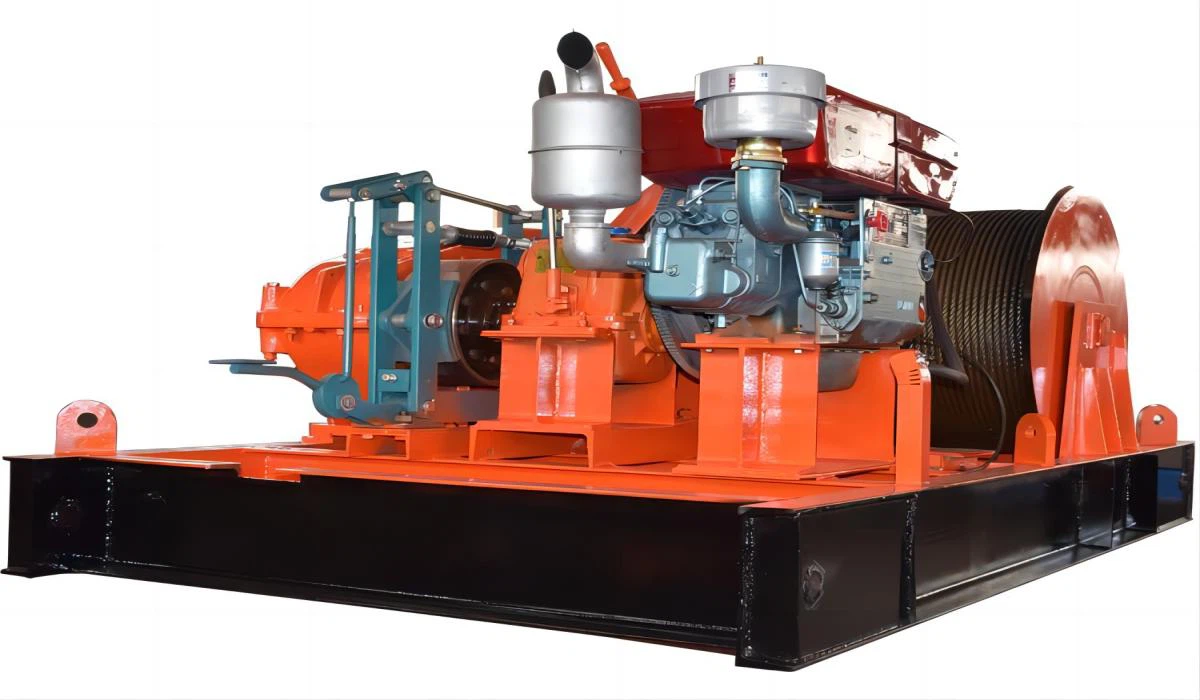
A 15-ton diesel winch is a heavy-duty piece of equipment typically used in industrial, construction, and maritime settings where high load lifting and pulling capacity is needed. These winches are powered by diesel engines and are known for their robustness, reliability, and ability to operate in challenging environments.
Key Features
1. Load Capacity
As the name suggests, the winch is rated to handle loads of up to 15 tons (30,000 lbs). This makes them suitable for lifting heavy equipment, pulling large vehicles, or performing other demanding tasks.
2. Diesel Engine Power
Diesel engines provide more power and efficiency compared to electric or hydraulic motors, especially for long-duration use. Diesel engines are commonly chosen for their ability to operate in remote or rugged environments where electricity might not be available.
3. Heavy-Duty Construction
These winches are built to last with durable materials, such as high-strength steel for the drum, gears, and other components. They are designed to endure harsh outdoor environments, including extreme temperatures, moisture, and dust.
4. Cable and Drum
The winch typically uses a thick steel cable (or synthetic rope) wound around a drum. The drum diameter and line speed are key considerations for efficiency and safety when pulling or lifting.
5. Brake System
These winches often come with an automatic brake system that helps prevent the load from free-falling when the winch is not operating. This is crucial for safety when handling heavy loads.
6. Control Options
Winches are often equipped with remote control systems (wired or wireless) to operate from a safe distance. Some models may even feature automatic systems to monitor load weight and prevent overload.

Pictures & Components
A diesel engine winch is a complex piece of machinery, consisting of several essential components that work together to perform lifting, pulling, or towing tasks efficiently. Here are the key components typically found in a diesel engine winch:
- Diesel Engine: The heart of the winch is the diesel engine, which provides the power necessary to drive the winch's operations. These engines are designed for durability and high torque output, making them suitable for heavy-duty applications.
- Winch Drum: The winch drum is a cylindrical spool onto which the cable or wire rope is wound. When the winch is engaged, the drum rotates, winding or unwinding the cable to move the load. The size of the drum determines the winch's capacity and the length of cable it can hold.
- Wire Rope or Cable: The wire rope or cable is wound around the winch drum and is attached to the load. It provides the strength and durability required to handle heavy loads and is available in various materials and thicknesses, depending on the application.
- Gearbox or Transmission: A gearbox or transmission is used to control the speed and torque of the winch. It allows the winch to operate at different speeds to suit the specific task at hand.
-
Portable Diesel Winches: Compact, mobile units for fieldwork like logging or emergency recovery.
Marine Winches: Corrosion-resistant designs for anchoring, mooring, or towing vessels.
Industrial Winches: Heavy-duty models for mining, oil rigs, or construction (e.g., dragging pipelines).
Off-Road Winches: Mounted on vehicles for recovery in challenging terrains.
- Braking System: Winches typically have a braking system to hold the load securely when not in operation and to control the descent of the load when lowering it. There are various types of braking systems, including mechanical and hydraulic.
- Control System: The control system includes the controls and mechanisms that allow operators to operate the winch safely and efficiently. This can include levers, buttons, joysticks, or remote control systems for remote operation.
- Safety Features: Many diesel engine winches are equipped with safety features such as load limiters, emergency stop buttons, and overload protection to prevent accidents and equipment damage.
- Frame or Mounting Structure: The winch is typically mounted on a sturdy frame or structure that can be attached to various types of equipment or vehicles, such as trucks, boats, or cranes.

Sketch

Main Technical Parameter

Advantages
Diesel engine winches offer several advantages that make them a popular choice in various industrial and commercial applications. Here are some of the key advantages of diesel engine winches:
-
High Torque Output: Excels in heavy-load scenarios where electric winches may falter.
Fuel Autonomy: Operates without external power, ideal for remote locations.
Durability: Built to withstand harsh conditions (dust, moisture, extreme temperatures).
Versatility: Compatible with steel cables, synthetic ropes, or chains.
Long Runtime: Large fuel tanks enable extended operation without refueling.
- Longevity: Diesel engines typically have a longer lifespan compared to some other power sources. With proper maintenance, a diesel engine winch can provide years of dependable service, reducing the need for frequent replacements.
- Excellent Load Control: Diesel winches offer precise load control, making them suitable for delicate lifting tasks where precision is crucial.
- No Need for External Power: Unlike electric winches that rely on external power sources, diesel engine winches are self-contained, making them ideal for remote locations or areas with limited access to electricity.
- Heavy-Duty Applications: Diesel engine winches are well-suited for heavy-duty applications, such as lifting construction materials, towing boats, dragging logs, and hoisting mining equipment.
- Emergency Use: Diesel winches can be used in emergency situations, such as vehicle recovery, where a powerful winch is required to pull a stuck vehicle out of challenging terrain.
- Fuel Efficiency: Diesel engines are known for their fuel efficiency and can operate for extended periods without frequent refueling, reducing downtime.
- Low RPM Operation: Diesel engines generate torque at low RPM (revolutions per minute), which is advantageous for winches as it allows for precise control and gradual acceleration and deceleration.

Application
Diesel engine winches find a wide range of applications across various industries due to their power, versatility, and reliability. Here are some common applications of diesel engine winches:
● Construction Industry:
■ Lifting and positioning heavy construction materials, such as steel beams and concrete blocks.
■ Assisting with the assembly and disassembly of scaffolding and formwork.
■ Tensioning and securing cables for cable-stayed bridges and suspension bridges.
■ Pulling equipment and machinery into position at construction sites.
● Marine and Offshore Industry:
■ Anchoring and mooring vessels, including large ships and offshore platforms.
■ Towing boats, barges, and floating structures.
■ Deploying and retrieving fishing nets and trawl gear.
■ Handling heavy cargo and containers on and off ships.
● Forestry and Logging:
■ Skidding logs from forests to logging yards.
■ Loading logs onto trucks for transport.
■ Operating log winches on forestry equipment like skidders and forwarders.
● Mining Industry:
■ Hoisting and lowering mining equipment and materials into mineshafts.
■ Assisting with excavation and material handling in open-pit mining.
■ Dragging heavy loads over rough terrain in mining operations.
● Utilities and Power Distribution:
■ Installing and maintaining power transmission and distribution lines.
■ Stringing electrical cables and conductors on overhead lines.
■ Erecting and positioning utility poles and towers.
● Oil and Gas Industry:
■ Handling drilling equipment and casing during offshore drilling operations.
■ Lifting and positioning pipeline components.
■ Assisting with the installation and maintenance of oil and gas infrastructure.
● Transport and Logistics:
■ Loading and unloading cargo on and off trucks and transport vehicles.
■ Securing and tensioning cargo for transportation.
■ Providing support in ports and logistics hubs.
Construction: Hauling materials, positioning heavy equipment, or trenching.
Marine Industry: Anchor handling, ship docking, and offshore platform operations.
Mining: Dragging ore, machinery, or debris in underground or open-pit sites.
Forestry: Logging, skidding, and transporting timber.
Disaster Response: Clearing wreckage or rescuing vehicles in floods or landslides.
● Construction and Maintenance of Infrastructure:
■ Erecting and positioning bridges, towers, and communication structures.
■ Installing and maintaining overhead signs and traffic signals.
■ Assisting with the construction and maintenance of railways and railways.
Production Procedure
The production procedure for a diesel engine winch involves several stages, from design and engineering to manufacturing, assembly, and quality control. Here is a general outline of the production procedure for a diesel engine winch:
● Design and Engineering:
■ Conceptualize and design the diesel engine winch based on the intended application and customer requirements.
■ Develop detailed engineering drawings and specifications, including calculations for load capacity, torque, and safety factors.
■ Select suitable materials and components for construction.
● Material Procurement:
■ Procure the necessary materials, including steel for the frame and components, diesel engines, hydraulic systems (if applicable), wire ropes or cables, and other required parts.
● Fabrication and Machining:
■ Fabricate the winch frame and other structural components using welding, cutting, and machining processes.
■ Ensure that the components meet the specified tolerances and quality standards.
● Assembly of Key Components:
■ Assemble the diesel engine onto the winch frame, ensuring proper alignment and secure mounting.
■ Install the winch drum, gearbox or transmission, braking system, and other critical components.
■ Connect the hydraulic system (if applicable) to the diesel engine.
● Electrical and Control System Integration:
■ If the winch includes electrical components or a control system, integrate these components into the design.
■ Connect wiring and sensors for remote control, load monitoring, and safety features.
● Quality Control and Testing:
■ Conduct thorough quality control inspections to ensure that all components meet specifications and industry standards.
■ Perform functional tests to check the winch's lifting and pulling capabilities, safety features, and control systems.
■ Address any issues or defects identified during testing and inspections.
● Painting and Finish:
■ Apply protective coatings, such as paint or corrosion-resistant finishes, to the winch frame and components to extend their lifespan and protect them from environmental factors.
● Final Assembly:
■ Assemble all remaining components, including fairleads, rollers, cable guides, and any accessories.
■ Ensure that all connections are secure and functional.
● Documentation and Manuals:
■ Create user manuals and documentation that provide instructions for installation, operation, and maintenance of the diesel engine winch.
● Installation and commissioning (Optional)
■ Provide on-site installation and commissioning services if required, ensuring that the winch is correctly integrated into the customer's equipment or application.
● Customer Training (Optional):
■ Offer training to customers and operators on the proper use, maintenance, and safety precautions associated with the diesel engine winch.
● After-Sales Support:
■ Establish a system for after-sales support, including warranty services

Workshop View
The company has installed an intelligent equipment management platform, and has installed 310 sets (sets) of handling and welding robots. After the completion of the plan, there will be more than 500 sets (sets), and the equipment networking rate will reach 95%. 32 welding lines have been put into use, 50 are planned to be installed, and the automation rate of the entire product line has reached.


Hot Tags: 15t diesel winches, China 15t diesel winches manufacturers, suppliers, factory, Wheels, Electromagnetic Overhead Crane, Double Girder Overhead Cranes, Double Girder Overhead Crane, Ladle Foundry and Casting Steel Mill Overhead Crane, Casting Overhead Ladle Crane
Previous
10T Diesel WinchesNext
20T Desiel WinchYou Might Also Like


Send Inquiry