







Winch Diesel
A Diesel Winch is a heavy-duty, high-performance mechanical device designed to meet the most demanding lifting, pulling, and towing requirements across various industries. Powered by a reliable diesel engine, this winch is built for operations where electric or hydraulic power sources are unavailable or impractical.
Key Features
- Diesel Engine Powered: Equipped with a robust and fuel-efficient diesel engine, ensuring continuous operation even in remote or off-grid locations.
- Heavy Load Capacity: Engineered to handle substantial loads, with models available for capacities ranging from 3 tons up to 30 tons or more.
- Durable Construction: Made from high-strength steel and corrosion-resistant components to withstand harsh working environments such as mining, construction, marine, and oilfield applications.
- Easy Operation & Maintenance: Designed with user-friendly controls and accessible components for simplified operation and maintenance.
- Customizable Options: Available with various drum sizes, rope lengths, braking systems, and speed controls to suit specific operational requirements.

Pictures & Components
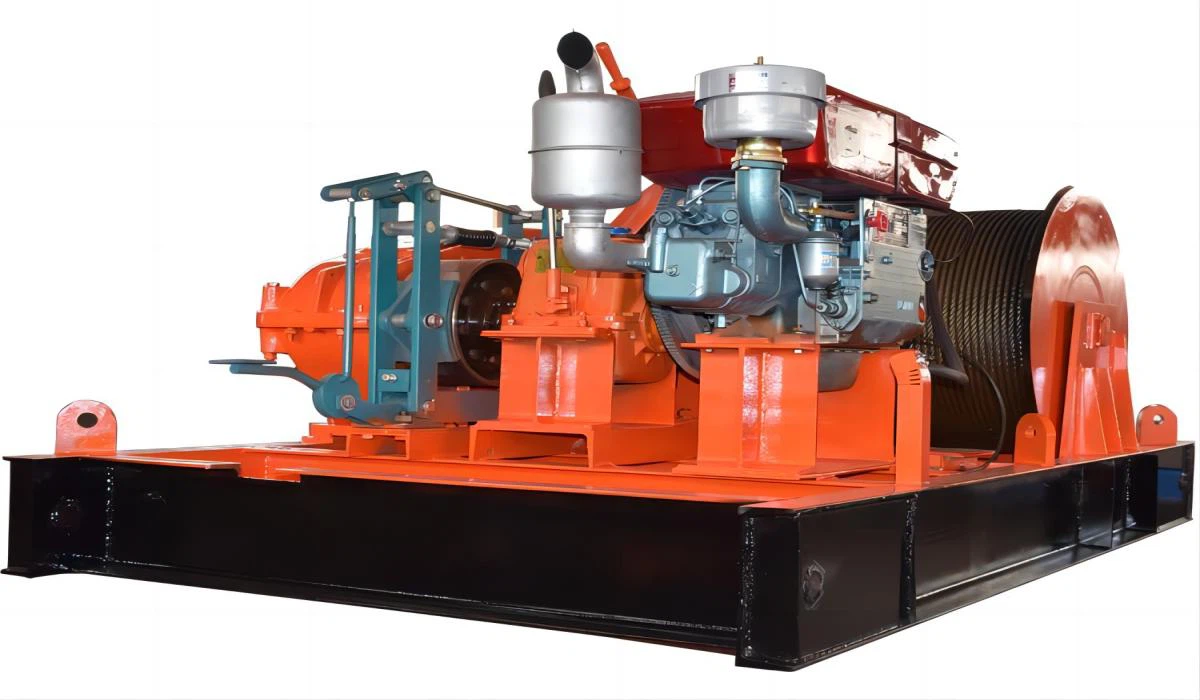
A Diesel Winch typically has several key components that work together to provide pulling or lifting power using a diesel engine. Here's a breakdown of the common components:
- Diesel Engine:The power source for the winch, usually an internal combustion engine running on diesel fuel. It provides mechanical power to drive the winch drum.
- Winch Drum:A cylindrical spool where the cable or rope is wound. It rotates to pull in or let out the cable.
- Gearbox / Transmission:Converts the high-speed, low-torque power from the diesel engine into low-speed, high-torque power needed for the winching operation.
- Clutch:Allows the operator to engage or disengage the drum from the drive system. It helps control when the winch is pulling and when it is idle.
- Brake System:Essential for holding the load in place when the winch is stopped. This could be a mechanical, hydraulic, or automatic brake system.
- Hydraulic Pump (if applicable):In some diesel winches, the engine drives a hydraulic pump, which then powers a hydraulic motor connected to the winch drum.
- Control System / Lever:Manual levers, electric controls, or hydraulic controls are used to operate the clutch, brakes, and throttle.
- Frame / Base:A solid, heavy-duty frame that holds all the components together and provides mounting points.
- Cable or Wire Rope:Heavy-duty steel cable or synthetic rope wound onto the drum, used for pulling or lifting.
- Fairlead / Cable Guide:Guides the cable onto the drum evenly and prevents it from tangling or damaging.
- Fuel System:Includes the fuel tank, fuel pump, fuel filter, and injectors that supply diesel to the engine.
- Cooling System:A radiator and fan (or air-cooled system) to prevent the engine from overheating.
- Exhaust System:Muffler and piping to direct exhaust gases away from the equipment and reduce noise.
- Air Intake & Filter:Ensures the engine receives clean air, free of dust and debris.

Sketch

Main Technical Parameter

Advantages
Diesel Winch comes with several key advantages, especially in industrial, off-road, and remote applications. Here are some of the main benefits:
1. High Power Output
Diesel engines typically provide more torque compared to gasoline engines, making diesel winches capable of handling heavier loads and tougher jobs.
2. Fuel Efficiency
Diesel engines are more fuel-efficient than gasoline engines. This allows the winch to operate for longer periods on the same amount of fuel, which is crucial for remote locations.
3. Durability & Longevity
Diesel engines are built to withstand harsh environments and heavy-duty use, so a diesel winch tends to have a longer lifespan and requires less frequent maintenance.
4. Independence from Electricity
Unlike electric winches, diesel winches don't rely on an external power source, making them ideal for remote areas where there is no access to electricity.
5. Superior Performance in Harsh Conditions
Diesel winches tend to perform better in extreme weather conditions (cold, heat, dust, etc.), which makes them a popular choice in industries like forestry, mining, and oil & gas.
6. Safety in Hazardous Environments
Diesel engines are less prone to sparking compared to gasoline engines, reducing the risk of fire in flammable or explosive environments.
7. Portability
Since they are self-contained units, diesel winches can be moved and deployed easily to various job sites.

Application
Diesel Winch is a mechanical device powered by a diesel engine and used to pull, lift, or move heavy loads. Here are some common applications of a diesel winch across different industries:
1. Marine Industry
Anchoring and mooring: Used for pulling heavy anchors and securing ships at docks.
Towing operations: Assist in towing other vessels or equipment at sea.
Salvage operations: Help recover sunken or stranded vessels.
2. Construction
Lifting and pulling materials: Move heavy construction materials like steel beams, pipes, and machinery.
Foundation work: Pull piles or heavy foundation elements into place.
Bridge building: Assist in the positioning and tensioning of cables or girders.
3. Oil & Gas Industry
Rigging and hoisting: Lift and position drilling equipment, pipes, and other heavy components on offshore or onshore rigs.
Pipeline installation: Pull heavy pipeline sections into trenches or elevated structures.
4. Mining
Ore hauling: Pull carts or loads of mined materials.
Equipment retrieval: Recover broken-down machinery from difficult or remote mining locations.
5. Forestry
Log skidding: Drag large felled trees from forests to processing areas.
Tree removal: Assist in uprooting and relocating large trees.
6. Transportation & Recovery
Vehicle recovery: Used on tow trucks to recover or reposition vehicles.
Heavy load transport: Pull large cargo or trailers onto transport platforms or barges.
7. Agriculture
Farm machinery positioning: Pull plows, harvesters, or other equipment when stuck.
Fence and irrigation installation: Tension wires or move irrigation pipes.
Production Procedure
The production procedure of a diesel winch typically involves several stages, from design and material sourcing to assembly and quality control. Here's an outline of a standard production process:
1. Design and Engineering
Requirement analysis: Based on customer requirements or industry standards (e.g., capacity, speed, application).
CAD design: Detailed drawings of the winch components (drum, frame, diesel engine integration, gearbox, clutch, etc.).
Stress analysis: Ensure the design can handle the load and meet safety standards.
2. Material Procurement
Steel: For frame, drum, gears, and structural components.
Diesel engine: Procured based on power requirements (from reputable manufacturers like Yanmar, Cummins, etc.).
Gearbox and mechanical components: Custom-made or sourced based on the design.
Cables, bearings, and fasteners: Industrial-grade to ensure durability.
3. Fabrication Process
Cutting and machining:
CNC machining for gears, shafts, and precision parts.
Laser/plasma cutting for plates and frame components.
Welding and assembly of frame and drum:
Structural welding of base, frame, and drum.
Ensure alignment and dimensional accuracy.
4. Assembly
Mounting the diesel engine onto the frame.
Gearbox installation and alignment with engine output shaft.
Clutch system installation (if applicable) to control drum engagement.
Drum and cable guide assembly.
Installation of control levers, hydraulic or mechanical brakes, and safety guards.
5. Surface Treatment
Sandblasting to remove impurities from metal surfaces.
Painting or powder coating for corrosion resistance.
Anti-rust treatment on internal components if needed.
6. Testing & Quality Control
Load testing to ensure winch can handle rated capacity.
Engine and transmission testing to verify smooth power delivery.
Brake system and emergency stop testing.
Noise, vibration, and temperature checks during operation.
Compliance inspection to meet local or international standards (e.g., ISO, CE, etc.).
7. Final Assembly and Packaging
Final tightening and inspection of all components.
Lubrication of all moving parts.
Documentation: User manual, maintenance instructions, and certification.
Packaging: Wooden crates or steel-framed pallets for shipment.
8. Delivery
Shipping the winch to the customer or job site, ensuring all transportation safety guidelines are followed.

Workshop View
The company has installed an intelligent equipment management platform, and has installed 310 sets (sets) of handling and welding robots. After the completion of the plan, there will be more than 500 sets (sets), and the equipment networking rate will reach 95%. 32 welding lines have been put into use, 50 are planned to be installed, and the automation rate of the entire product line has reached.


Hot Tags: winch diesel, China winch diesel manufacturers, suppliers, factory
Previous
Diesel Powered WinchNext
Diesel WinchesYou Might Also Like



Send Inquiry