










Hook Overhead Travelling Crane
1.Hook overhead travelling crane is a kind of lifting equipment widely used in industrial production. It is mainly composed of bridge, trolley running mechanism, trolley, electrical equipment and hook, etc., and is usually used for handling, loading and unloading and transporting various heavy objects in workshops, warehouses or docks.
2.The Hook overhead travelling crane adopts a steel bridge, which has good strength and rigidity and can withstand large loads and frequent operations. Through the cooperation of the electric trolley and the trolley running mechanism, the crane can move freely in the horizontal and vertical directions, and the operation is convenient and precise. Equipped with various safety devices, such as overload protection, limit switch, emergency stop, etc., to ensure safety during operation.
3.The Hook overhead travelling crane is used to carry large workpieces, assembly parts, etc., for stacking and transportation of materials, for loading and unloading of goods, and for carrying heavy objects such as steel and castings.
4.The Hook overhead travelling crane has become an indispensable lifting equipment in many industries with its high efficiency and reliability, which can greatly improve production efficiency and safety.
Max. Lifting Height:30m
Weight (KG):4500 kg
Max. Lifting Load:3 ton
Span:7.5-22.5
Work Duty:A4
Capacity:3t 5t 10t 15t 20t

Pictures & Components
1.Main beam
1.The main beam of a The Hook overhead travelling crane is one of the key structural components of the crane. It supports the weight and load of the entire crane and provides a running track for the trolley and hook. The main beam is usually made of high-strength steel to ensure the stability and safety of the crane when carrying heavy objects.
2.The structural characteristics of the main beam of a The Hook overhead travelling crane are box-type structure or I-shaped structure. Box-type structure: The main beam usually adopts a box-type structure design, which consists of upper and lower cover plates, side plates and partitions. This design provides high strength and rigidity and can withstand large bending and torsional moments. I-shaped structure: The I-shaped main beam consists of upper and lower flange plates and web plates, has good bending resistance, relatively simple structure and light weight.
The main beam is the core load-bearing structure of the The Hook overhead travelling crane . Its design and manufacturing directly affect the load-bearing capacity, running stability and service life of the crane. High-quality main beam design can ensure that the crane can still operate safely and smoothly under heavy load conditions, while extending the service life of the equipment.
Lifting System
The lifting system of The Hook overhead travelling crane is the core functional part of the entire crane equipment, responsible for lifting, lowering, and moving heavy objects to the designated position. The design and performance of this system directly affect the efficiency and safety of the crane.
2.The lifting system is mainly composed of the following components: hoist (crane), wire rope or chain, motor, brake system, control system, pulley and guide device.
3.Functions and advantages of the lifting system of The Hook overhead travelling crane Precise control of the lifting system can achieve accurate lifting and positioning of heavy objects by adjusting the speed and direction of the motor. The combination of wire rope and pulley block makes the lifting system more labor-saving when lifting heavy objects, and is equipped with multiple safety protection measures to ensure the safety of personnel and equipment during operation. Since the lifting system often handles heavy loads, all components are strictly selected and manufactured with processes to ensure their stability and reliability under long-term high loads.
4.The lifting system of The Hook overhead travelling crane has a rigorous design and superior performance. It can meet the needs of heavy object handling in various industrial scenarios and is the core guarantee for the crane to achieve efficient operation.


End Beam
The end beam of a The Hook overhead travelling crane is one of the key structural components connecting the main beam and the track, and plays the role of supporting and moving the bridge. The end beam is usually located at both ends of the crane, and together with the main beam, it constitutes the entire bridge structure, and contacts the track through wheels, so that the crane can move laterally along the track.
The main function of the end beam of a The Hook overhead travelling crane is to support the main beam of the crane, and evenly distribute the weight and load of the bridge to the track through wheels to ensure that the crane can move smoothly. The end beam generally adopts a box structure or an I-shaped structure, and the material is usually high-strength steel to ensure sufficient strength and rigidity when bearing loads.The design of the end beam takes into account the balanced distribution of weight to reduce the bending and deformation of the entire bridge. Usually, a reinforcing rib plate is also provided in the end beam to further improve the rigidity of the structure.
3.The end beam of a The Hook overhead travelling crane is an indispensable part of a hook bridge crane, and its design and quality directly affect the operating stability and safety of the crane. High-quality end beam design can not only improve the operating efficiency of the crane, but also extend the service life of the equipment and reduce maintenance costs. During use, the maintenance and care of the end beam is equally important. Regular inspection and lubrication of the wheels and traveling mechanisms can effectively prevent wear and failure and ensure the normal operation of the crane.


Crane travelling mechanism
1.The Crane travelling mechanism of a The Hook overhead travelling crane refers to a system in which the crane bridge (including the main beam and end beam) moves along the track installed in the factory or workshop. This system enables the crane to move laterally flexibly in a wide working area, thereby lifting and transporting heavy objects to a designated location.
2.The Crane travelling mechanism is usually driven by an electric motor. The motor transmits power to the wheels through a transmission device (such as a reducer) to move the bridge along the track. The power of the motor determines the running speed and load capacity of the crane.
3.The control system of the Crane travelling mechanism is usually integrated with the electrical control system of the entire crane. Through the controller, the operator can accurately control the running speed, direction and stop position of the trolley. Modern trolley operation systems are usually equipped with frequency converters, which can achieve smoother starting and braking, and better energy saving.
4.The Crane travelling mechanism enables the crane to move laterally in a wide working area, thereby covering a larger working range, increasing the flexibility and operating efficiency of the crane. Through reasonable transmission design and precise track laying, the trolley operation system can achieve smooth and impact-free operation, reduce equipment wear and vibration, and improve the comfort and safety of operation. In conjunction with the crane's control system, the trolley operation system can achieve precise positioning, ensuring that heavy objects can accurately reach the designated location, especially in situations requiring high-precision operations, such as assembly lines or warehouse management.
5.The Crane travelling mechanism plays a vital role in The Hook overhead travelling crane , ensuring that the crane can efficiently and safely complete the handling tasks of various heavy objects. High-quality trolley operation system design and maintenance can significantly extend the service life of the crane and reduce operating costs.
Trolley travelling mechanism
1.Trolley travelling mechanism of The Hook overhead travelling crane is one of the key parts of the crane. It enables the hook to move along the main beam to achieve accurate positioning and handling of heavy objects. The design of the trolley operation system directly affects the operating flexibility, precision and safety of the crane.
2.Trolley travelling mechanism enables the hook to move freely along the main beam, increasing the working coverage and operating flexibility of the crane. Through a sophisticated control system, Trolley travelling mechanism can achieve precise control of the position of heavy objects, ensuring high-precision operations in assembly, handling and stacking operations. Trolley travelling mechanism is equipped with multiple safety devices such as brakes, limit switches and anti-derailment devices to ensure safety during operation and reduce the occurrence of accidents. The design of modern trolley operation systems focuses on high efficiency and energy saving. The application of variable frequency drive technology makes the start and stop of the trolley smoother, effectively prolongs the service life of the equipment, and reduces energy consumption.
3.Trolley travelling mechanism plays a vital role in The Hook overhead travelling crane , ensuring that heavy objects can be moved and positioned safely, smoothly and accurately within the specified range, and is an important guarantee for the efficient operation of the crane.
Crane wheel
1.The wheels of a The Hook overhead travelling crane are key components in the crane's operating system, mainly used to support the weight of the entire crane and enable it to move along the track. The design and quality of the wheels directly affect the crane's operating smoothness, durability and safety.
2.The wheels of a The Hook overhead travelling crane are usually made of high-strength steel, and the surface is quenched and tempered to improve its hardness and wear resistance. For cranes that carry larger loads, the wheels may also use alloy steel or other special materials to enhance their performance. The rim part of the wheel is designed to be thicker to withstand high pressure and wear during long-term use. Structural design: The design of the wheel is usually a single-wheel structure, and there is also a double-wheel structure to increase the contact area and disperse the pressure. The rim usually has a certain thickness to avoid wheel derailment. In order to reduce friction and improve operating efficiency, the wheels are usually equipped with rolling bearings to make it run more smoothly and labor-saving on the track.
3.The importance of the wheels of The Hook overhead travelling crane:
Carrying capacity: The wheel must bear the weight of the crane itself and the load of the hoisted object, so the selection of materials and structural design must ensure that it has sufficient strength and durability.
Running smoothness: The running smoothness of the wheel directly affects the overall operation effect of the crane. High-quality wheel design and precise installation can reduce vibration and noise, and extend the service life of the crane and track.
Safety: The design of the wheel must take into account the anti-derailment function, especially when running under load and turning. Preventing accidental derailment is a key factor in ensuring the safety of crane operation.
4.In summary, the wheel of The Hook overhead travelling crane is an indispensable component of the entire crane operation system, and its design and maintenance directly affect the operating efficiency and safety of the crane. In daily use, regular inspection and maintenance of the wheel can effectively extend the service life of the crane and ensure its safe and reliable operation.
 |
 |
 |
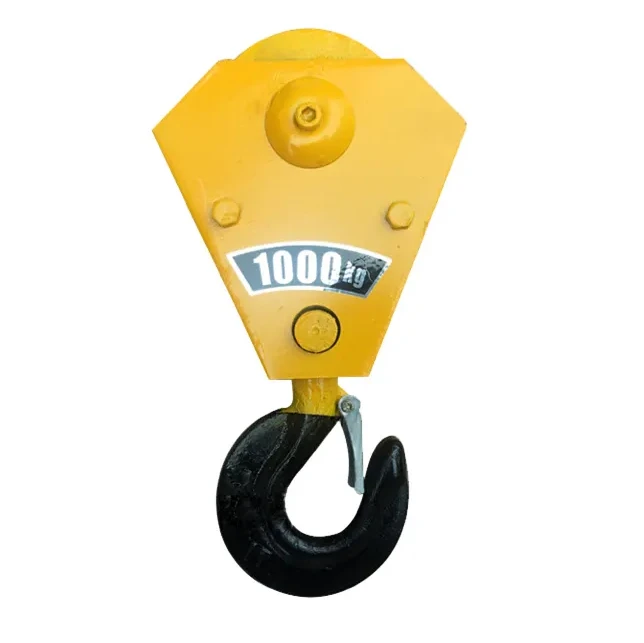
Crane hook
1.The hook of The Hook overhead travelling crane is the direct tool for the crane to lift and carry heavy objects, and is a vital end component of the entire lifting system. The design and quality of the hook have a direct impact on the operational safety and efficiency of the crane.
2.Main types of hooks for The Hook overhead travelling crane :
Single hook: Single hook is the most common type of hook and is usually used for ordinary lifting operations. The single hook has a simple structure and is easy to use, suitable for most lifting operations, especially when the lifting weight is relatively light or does not require special balance.
Double hook: Double hook is usually used for lifting heavy objects or heavy load operations that require balance. The structure of the double hook can better disperse the load, reduce the swing during lifting, and improve safety. The double hook can be fixed or adjustable to meet different lifting needs.
3.The hook will be subjected to tensile and bending stresses during repeated use, so the fatigue strength of the material is a key consideration. High-quality hooks undergo strict material selection and heat treatment to ensure that they will not fail due to fatigue in long-term use. Regular inspection and maintenance of the hook is essential to ensure its safety and reliability in long-term use, especially in the case of high frequency or heavy load use.
4.In summary, the hook of The Hook overhead travelling crane is a key component that comes into direct contact with heavy objects, and its design, manufacture and maintenance are essential for the safe operation of the crane. Correct use and regular maintenance of the hook can effectively prevent accidents and ensure the safety and efficiency of lifting operations.
 |
 |
 |
Motor
1.The motor of a Hook overhead travelling crane is the core power device that drives all operating systems of the crane, including trolley operation, trolley operation, and hook lifting and lowering functions. The performance of the motor directly affects the operating efficiency, stability, and safety of the crane.
2.The motor of a Hook overhead travelling crane drives the wire rope winding through the hoist system to realize the lifting and lowering operation of the hook. The output power of the motor determines the maximum load weight and lifting speed that the crane can lift.
3.Types of motors for Hook overhead travelling crane :
AC motor: AC motors are the most common type and are widely used in various types of bridge cranes. They are characterized by simple structure, easy maintenance, and low cost. AC motors usually use squirrel cage asynchronous motors, which are widely used because of their high reliability and long life.
In modern cranes, frequency converters are often used in conjunction with AC motors to achieve more precise speed control and energy saving effects.
DC motors: DC motors are usually used in situations where precise control is required, especially when speed and position control requirements are high. DC motors have excellent speed regulation performance, but their structure is relatively complex and maintenance requirements are high.
With the development of inverter technology, the application of DC motors in cranes has gradually decreased, but they still have advantages in some specific applications.
4.Importance of motors: As the core drive device of Hook overhead travelling crane , motors directly determine the performance and safety of cranes. By selecting the appropriate motor type and control method, and strengthening maintenance, the working efficiency of the crane can be significantly improved, the service life can be extended, and the safety in various operating environments can be ensured.

. 

Sound and light alarm system & limit switch
1.The sound and light alarm system and limit switch of the Hook overhead travelling crane are important devices to ensure safe operation, which can effectively prevent accidents and ensure the safety of equipment and personnel. These systems play the role of early warning and protection during the operation of the crane.
2.Sound and light alarm system of the Hook overhead travelling crane
The sound and light alarm system warns the operator or surrounding personnel through a combination of sound and light to remind the operator or surrounding personnel of potential dangers or abnormal status of the equipment. It is usually used to issue warnings such as equipment start-up, stop, overload, failure, etc. to ensure that the operator can take timely measures. The sound and light alarm system is usually installed in a conspicuous position on the crane to ensure that the operator and surrounding personnel can clearly hear and see the alarm signal. Adjust the intensity of sound and light according to the working environment and needs to ensure that the alarm system can effectively transmit warnings.
Limit switch of the Hook overhead travelling crane
The limit switch is used to monitor the position of each moving part of the crane to prevent it from exceeding the predetermined working range. This helps to protect the equipment from damage and ensure safe operation. When a part of the crane approaches or reaches the position set by the limit switch, the limit switch will automatically trigger to stop further movement of the equipment. Limit switches are usually installed at key positions of the main beam, trolley, carriage and other moving parts. The installation position needs to be determined according to specific design and work requirements.
Debugging: After installation, the limit switch needs to be debugged to ensure that it can accurately detect the predetermined position and trigger the corresponding protection measures when necessary. Limit switches are usually installed at key positions of the main beam, trolley, carriage and other moving parts. The installation position needs to be determined according to the specific design and work requirements. After installation, the limit switch needs to be debugged to ensure that it can accurately detect the predetermined position and trigger the corresponding protection measures when necessary.
In summary, the sound and light alarm system and limit switch of Hook overhead travelling crane are important components to ensure the safe operation of the equipment. Through timely early warning and automatic protection functions, the safety of operators and the normal operation of equipment are guaranteed.

Safety Devices
1. The safety equipment of the Hook overhead travelling crane is a key component to ensure the safety of equipment and personnel. These devices can prevent accidents, reduce risks, and ensure the safe and reliable operation of the crane in various working environments.
2. The following are common safety equipment and functions of the Hook overhead travelling crane
Electrical control system
Function: Manage the motor and other electrical equipment of the crane, provide precise control and protection functions.
Composition: electrical control panel, inverter, relay.
Function: Ensure the normal operation of the motor and prevent electrical failure.
Emergency stop device
Function: Quickly stop all movements of the crane in an emergency.
Composition: emergency stop button, emergency stop system.
Function: In the event of an accident or emergency, quickly cut off the power supply to ensure safety.
Braking system
Function: Control the movement of the crane to stop and hold.
Composition: electromagnetic brake, hydraulic brake, brake disc.
Function: Ensure the smooth shutdown of the crane to prevent heavy objects from sliding down or unstable movement of the crane.
Anti-collision system
Function: Avoid collision between the crane and other equipment or buildings.
Composition: radar detector, laser sensor, alarm device.
Function: monitor the surrounding environment, automatically alarm or stop the crane movement.
Safety shield
Function: protect the operator from direct contact with the operating parts of the crane.
Composition: metal shield, mesh protection screen.
Function: prevent personnel from contact with high temperature, rotating parts or hanging heavy objects to avoid accidents.
3. Summary
The safety equipment of the Hook overhead travelling crane covers all aspects from operation monitoring to emergency protection. These devices work together to ensure the safety and reliability of the crane under various operating conditions. By regularly checking and maintaining these safety devices, accidents can be effectively prevented and the safety of operators and equipment can be guaranteed.
Control Mode
1. The control mode of the Hook overhead travelling crane determines how to operate and control the various systems of the crane to achieve efficient and safe lifting operations. Different control modes are suitable for different application scenarios and operating requirements.
2. The following are the main control modes of the Hook overhead travelling crane and their characteristics:
Automation control mode
Features:
Operation mode: Fully automated control through a computer control system or PLC (programmable logic controller).
High precision: Able to achieve precise motion control, load monitoring, programmed operation, etc.
Data integration: Usually integrated with sensors, monitoring systems, and data acquisition systems to provide real-time monitoring and data analysis functions.
Applicable scenarios:
Highly automated production lines or large-scale operating environments that require precise control and monitoring.
Occasions with high requirements for automation and the need to reduce manual operations.
Mixed control mode
Features:
Operation mode: Combining the advantages of manual, remote control and automation control modes, a variety of control modes are provided.
Flexibility: The operator can switch between different control modes as needed to adapt to different operating requirements.
Adaptability: Able to handle complex operating tasks while ensuring operational flexibility and safety.
Applicable scenarios:
Occasions where multiple control methods need to be integrated to adapt to different operating requirements, such as complex industrial environments or changing construction sites.
Computer monitoring and control system
Features:
Operation method: Monitor and control through a computer system, including a graphical user interface (GUI) and advanced control software.
Real-time data: Provides real-time equipment status, load data, operation history and other information, and supports remote monitoring and control.
Intelligent: Intelligent functions such as predictive maintenance, automatic diagnosis and fault warning can be realized.
Applicable scenarios:
Large factories or high-tech applications that require advanced data analysis and intelligent control.
Environments with high demand for real-time monitoring and remote operation.
Safety protection control system
Features:
Operation method: Integrate various safety control functions, such as overload protection, limit control, emergency shutdown, etc.
Protection function: Automatically enable protection measures when the crane is abnormal or overloaded to prevent equipment damage and safety accidents.
Automatic alarm: The system can automatically sound an alarm and take measures to prevent further danger.
Applicable scenarios:
All crane operating environments, especially high-risk areas and occasions that require strict safety control.
Operation scenarios with high safety requirements to ensure the safety of equipment and personnel.
3.Summary
The Hook overhead travelling crane have a variety of control modes, from manual control to highly automated computer control systems, each with its own applicable scenarios and advantages and disadvantages. Choosing the appropriate control mode according to specific operating requirements and environmental conditions can improve operating efficiency and ensure safe operation. Combined with appropriate safety equipment and regular maintenance, the performance and safety of the crane can be maximized.

Sketch

Main technical data

Advantages
1. Efficient lifting capacity
Powerful load capacity: Hook bridge cranes are capable of lifting and moving heavier objects, and are suitable for large-tonnage lifting operations.
Large span coverage: Due to its bridge structure, it can provide lifting services within a large span range, and is suitable for large-area factories or warehouses.
2. Flexible operations
Multi-function operation: It can perform a variety of operations such as hook lifting, trolley operation, and trolley movement to meet different operation needs.
Precise control: Equipped with a modern control system, it can achieve precise load control and position positioning, and improve the accuracy of operation.
3. Space saving
Compact structure: Hook bridge cranes are usually installed above the factory building, saving ground space and keeping the working area unobstructed.
Suitable for high-altitude operations: It can be hoisted in the high-altitude working area, avoiding the occupation of the ground working space.
4. Operational safety
Safety protection system: Equipped with safety equipment such as sound and light alarms, limit switches, and overload protection, it can monitor and protect the equipment in real time to ensure safe operation.
High stability: The bridge structure provides good stability and earthquake resistance, reduces the shaking and tilting of the equipment, and ensures the stability of the lifting process.
5. Strong durability
Sturdy structure: The bridge-type structural design gives it strong load-bearing capacity and durability, and can withstand long-term high-intensity operations.
High-quality materials: The use of high-strength steel and advanced manufacturing technology improves the durability and service life of the crane.
6. Wide range of applications
Multiple application scenarios: Suitable for industrial production lines, warehousing and logistics, construction and other scenarios, and can meet the needs of different types of lifting operations.
Adapt to different environments: It can work in high temperature, low temperature, humid or dusty environments, and adapt to various working conditions.
Application:
1. Industrial production line
Manufacturing: used to assemble, move, lift and distribute heavy components and finished products. For example, in automobile manufacturing plants, hook bridge cranes are used to move and install automobile parts.
Heavy machinery: In heavy machinery manufacturing plants, cranes can be used to move large machine tools, molds and mechanical parts.
2. Warehousing and logistics
Cargo handling: In warehouses and logistics centers, it is used to move, stack and load and unload large quantities of goods or heavy objects. It can improve the space utilization and operation efficiency of warehouses.
Container handling: In container terminals and freight stations, hook bridge cranes are used to load and unload containers, improving loading and unloading efficiency and accuracy.
3. Construction
Building material lifting: At construction sites, it is used to lift and move building materials such as steel bars, prefabricated concrete parts, construction equipment, etc., to facilitate construction operations.
Structural component installation: used to install and adjust large building structural components such as beams, columns, ceilings, etc. to ensure construction quality and progress.
4. Metallurgical industry
Steel production: In steel smelters, it is used to move molten iron, steel billets and other heavy materials in the furnace. The high load-bearing capacity of the crane can meet the needs of the metallurgical industry.
Metal processing: used for handling and processing metal plates, bars, coils, etc., and for movement and loading and unloading during processing.
5. Power industry
Power generation equipment installation: In power plants, it is used to install and maintain large generators, transformers and other power equipment.
Maintenance and overhaul: used for regular maintenance and overhaul of power facilities, facilitating the up and down movement and adjustment of equipment.
6. Ports and docks
Cargo loading and unloading: In ports and docks, it is used for loading and unloading cargo on ships, especially on large cargo ships. Hook bridge cranes can improve operating efficiency and safety.
Container handling: used to handle large containers, improving loading and unloading speed and accuracy.
Crane production procedure
1. Demand Analysis and Design
Demand Analysis: Determine the parameters such as the use environment, load requirements, span, lifting height, etc. of the crane to meet the specific needs of customers.
Design Phase:
Preliminary Design: Carry out preliminary design according to the needs, including structural drawings, functional modules, operating systems, etc.
Detailed Design: Including structural analysis, material selection, load calculation, strength design, etc., to ensure the safety and stability of the crane at work.
3D Modeling: Use computer-aided design (CAD) software to create detailed three-dimensional models for virtual simulation and optimization.
2. Material Procurement
Material Selection: Select suitable materials, such as high-strength steel, alloy materials, etc., to ensure the strength and durability of the crane.
Supplier Management: Work with material suppliers to ensure the quality and delivery time of materials.
Quality Inspection: Carry out quality inspection on purchased materials to ensure that they meet the design requirements and standards.
3. Manufacturing and Processing
Main Beam and End Beam Manufacturing:
Cutting and Welding: Cut and weld steel to manufacture the main beam and end beam.
Surface treatment: Grinding, spraying, rust removal and other treatments are performed on welded parts to improve corrosion resistance and aesthetics.
Trolley and Cart Manufacturing:
Machining: Manufacturing various components of trolleys and carts, such as wheels, bearings, drive devices, etc.
Assembly: Assembling various components of trolleys and carts to ensure smooth operation.
Motor and Control System Installation:
Motor Manufacturing: Producing motors required for cranes, assembling and debugging.
Control System: Installing electrical control systems, including electrical panels, control cabinets, relays, etc.
Hook and Hoisting System Manufacturing:
Hook Processing: Manufacturing hooks, including forging, heat treatment and surface treatment.
Hoisting System Assembly: Assembling hoisting systems, including winches, wire ropes, limit switches, etc.
4. Assembly and Debugging
Component Assembly:
Main Structure Assembly: Assembling main beams, end beams, trolleys, carts and other components to form a complete crane structure.
System Integration: Installing motors, control systems, hoisting systems, etc., and performing system integration.
Debugging and testing:
No-load test: Perform no-load test on the assembled crane to check whether all functions are normal.
Load test: Perform load test under conditions that meet safety standards to verify the lifting capacity and stability of the crane.
System debugging: Adjust the electrical control system, limit switches, etc. to ensure that the system operates normally.
5. Quality inspection
Internal inspection: Perform internal quality inspection during the production and assembly process, including material quality, processing accuracy, assembly quality, etc.
Third-party inspection: A third-party testing agency may be invited to conduct quality inspection to ensure compliance with industry standards and safety regulations.
6. Packaging and transportation
Packaging: Pack the completed crane to prevent damage during transportation.
Transportation: Arrange transportation according to customer requirements, including domestic and international transportation, to ensure that the equipment is safely delivered to the destination.
7. On-site installation and commissioning
On-site installation: Perform final assembly and installation of the crane at the customer's site to ensure that it meets the use requirements.
On-site commissioning: Perform on-site commissioning and testing to ensure the normal operation of the crane in the actual operating environment.
Training: Train customer operators on crane operation methods, maintenance knowledge and safety precautions.
8. After-sales service
Maintenance: Provide regular maintenance and upkeep services to ensure long-term stable operation of the equipment.
Fault handling: Handle possible faults and problems during the use of the equipment, and provide technical support and solutions.
Customer feedback: Collect customer feedback and make product improvements and optimizations.

Workshop view
The company has installed an intelligent equipment management platform, and has installed 310 sets (sets) of handling and welding robots. After the completion of the plan, there will be more than 500 sets (sets), and the equipment networking rate will reach 95%. 32 welding lines have been put into use, 50 are planned to be installed, and the automation rate of the entire product line has reached.


Hot Tags: hook overhead travelling crane, China hook overhead travelling crane manufacturers, suppliers, factory
Previous
Industrial Overhead CraneYou Might Also Like


Send Inquiry