










Forged Wheel
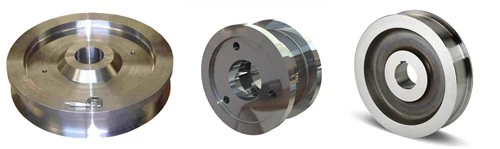
1) A forged crane wheel is a key component of a crane and is responsible for carrying the load. It is used as an important structural component in the crane's running mechanism by rotating on the end of the axle while carrying the weight of the load. Forged crane wheels are made of high-quality steel, and are produced using a forging process that involves the application of huge compressive force to a heated metal billet until it conforms to a die's precise contours. This process gives the wheel its superior mechanical properties, which are important for durability, strength, and resistance to wear and tear.
2) The main advantages of a forged crane wheel are its superior strength and durability, which are critical for safe and efficient crane operation. Additionally, forged crane wheels are known for their low maintenance requirements due to their robustness and ability to withstand heavy loads. When compared to cast crane wheels, forged crane wheels provide a higher level of quality, with better wear resistance and longer service life. Finally, forged crane wheels offer a cost-effective solution for heavy-duty applications, as they require less frequent maintenance and replacement.

3) Overall, forged crane wheels are a critical component in crane construction and are designed to provide a safe and efficient means of transporting heavy loads. Due to their strength, durability, and low maintenance requirements, forged crane wheels remain a popular choice for crane manufacturers around the world.
4) Flanged crane wheels are industrial wheels specifically designed for use in overhead cranes and other mobile machinery that moves along a fixed track. The wheels are usually made of high-strength steel or cast iron and have a flange on the outer edge to prevent them from slipping off the track. Flanged crane wheels are typically mounted on a shaft or axle and are supported by bearings or bushings to reduce friction during movement. They are commonly used in heavy-duty applications such as steel mills, shipyards, and construction sites. Proper maintenance and regular inspection are important to ensure the safety and longevity of flanged crane wheels.

5) Forged wheels are the products crafted from a single piece of aluminum, precisely carved out by a forging machine to create continuous grain structure, resisting the impact of workloads over a longer duration. They are stronger and lighter, weighing up to 25% to 30% lesser than cast wheels. Forged wheels come in various designs, finishes, and sizes, catering to the needs of luxury car enthusiasts or race car drivers.
6) We are committed to producing high-quality forged wheels that meet our customers' expectations, and that is why we employ the latest technology to deliver finished products of outstanding quality. Our range of forged wheels includes custom designs that allow car enthusiasts to match their vehicle with their personal style. We have a team of experienced craftsmen who hand finishes all forged wheels to excellent standards, ensuring that each product is unique and eye-catching.
7) In conclusion, our forged wheels are the perfect addition to your luxury car or race car. They are engineered to offer more speed, better handling, and overall improvement in the performance of your vehicle. Browse our collection today and find the perfect set that works for you.
8) The high quality wheel set is made of 45# steel die forging, roughing, conditioning and finishing. The hardness of heat treatment is HB305 ~ 385, and the hardness of hardening layer at 18mm depth is not less than HB250. The wheel shaft is made of 45# steel, which is roughed, tempered and finished. The hardness of heat treatment is 250 ~ 280HB.

Material:
A) Carbon steel: A350LF2, A105, Q235, Q355D, A694F52, A516-GR65, EN10222, P280GH, P245GH, P250GH, JIS S25C, SS400, S20C, 16Mn, C22.8, Q345B/C/D, 1055, 1045, C50, C45, 10#, 20#, 35#, 45#, 40#, 50#, 55#, 60# and other carbon steel forgings.
B) Stainless steel: ASTM, A182, F304/304L, F316/316L, F316H, F310, F321, JB4728-2000, OCR18Ni10Ti, JB4728-2000, OCR17NI12Mo2, 2205, 2507, 2103, 904L, 254SMD, 304LN , 316LN, 1CR13, 2cr13, 3cr13, 4cr13, 321, 302, W1813N, W2014N, W2018N, W2020N, P550, Cr18Mn18N, 06Cr19Ni10(S30408), 022Cr19Ni10(S30403), 06Cr17Ni12Mo2(S31608), 022Cr17Ni 12Mo2(S31603), 06Cr25Ni20(S31008), 06Cr18Ni11Ti(S32168), 022Cr19Ni13Mo (S31703), 0Cr17Ni4Cu4Nb, 06Cr19Ni10N, 14Cr17Ni2, 13Cr13Mo, 06Cr13 and other stainless steel forgings.
C) Alloy steel: 40Cr, 15CrMo, 20CrMo, 25CrMo, 30CrMo, 35CrMo, 35CrMoV, 42CrMo, 20Cr2Ni4, 20CrNiMo, 40CrNiMo, 30Cr2Ni2Mo, 35CrMoV, 12Cr1MoV, 38CrMoAl, 18Cr2Nio4W, 40CrNi2Mo, 30CrMnSi, 25Cr2MoV, 17 Cr2Ni2Mo, 20MnMo, 20MnMoNb, 34CrNi3Mo, 20CrMnTi , 40CrMnMo, 30Cr2Ni2Mo, 34CrMo1, 20CrMnMo, 24CrMoV, 30Cr2MoV, 34CrNi1Mo, 17Cr2Ni2Mo, 34CrNi3MoV, 20CrMnTi, A182F1, F5, F9, F11, F22, 12Cr2Mo1, 10Cr9Mo1VNbN (F91), 10Cr9Mo W2VNbBN (F92), 12CrMoV, 4140, 4340, 4330 , 4130, 4150, 9CR2MO, 17NiCrMo6-4, 18CrNiMo7-6, 30CrNiMo8, 34CRNIMO, 34CrNiMo6, 36CrNiMo4, 34CrNi3Mo, 40CRNIMO, 40CrNiMoA, 50CrMo4, Q345D, 300M, 17-4PH, PH13-8Mo, 15-5PH, AerMet 100 and other alloys steel forgings.
- Diameter: Φ250, Φ350, Φ400, Φ500, Φ600, Φ700, Φ800, Φ 1000, Φ 1200 or as your requirement
- Technique: Casting or forging
- Quenching Depth: more than 25mm
- Heat Treatment: Quenching and tempering
- Work environment temperature: -25℃~+40℃, relative humidity ≤85%
- Reference Price Range: $80-1000/piece
- Rated Loading Capacity: 1~1200 ton
Sketch

Advantages
Some advantages of forged wheels:
1. Durable and Strong: Forged wheels are stronger and more durable than cast wheels, which means they can withstand more weight and are less likely to crack or bend.
2. Lightweight: Because of their stronger build, forged wheels can be made with less material, making them lighter than cast wheels. This can improve the performance and handling of a vehicle, as well as increase fuel efficiency.
3. Better Heat Dissipation: Forged wheels have a higher thermal conductivity than cast wheels. This means that they can dissipate heat more quickly, which can help prevent brake fade and prolong the life of the wheels and tires.
4. Improved Aesthetics: Forged wheels are often more visually appealing than cast wheels because they can be designed with intricate details and shapes. They are also available in a wider variety of finishes, including polished, painted, and anodized.
5. Customized: Because of the manufacturing process involved, forged wheels can be easily customized in terms of dimension, width, offset, lug pattern, and overall look. This allows vehicle owners to create a unique and personalized look for their vehicle.
Application
Forged wheels are used in a variety of applications, including:
1. High-performance cars: Forged wheels are commonly used in high-performance cars because they are lighter and stronger, which improves performance and handling.
2. Racing cars: Racing cars use forged wheels because they withstand stress and high speeds better than cast wheels.
3. Sports cars: Sports cars benefit from the improved performance and appearance that forged wheels provide.
4. Luxury cars: Luxury car owners prefer forged wheels because they are durable and enhance the overall look of the vehicle.
5. Off-road vehicles: Forged wheels are commonly used in off-road vehicles because they are more resistant to damage caused by rocks, mud, and other obstacles.
6. Military vehicles: Military vehicles use forged wheels because they are built to withstand rough terrain and extreme conditions.
7. Aerospace industry: Forged wheel technology is also used in the aerospace industry for aircraft landing gear due to their high strength and durability.
In addition to these applications, forged wheels are also used in industrial equipment, heavy trucks, and agricultural machinery.
Production Procedure
The forged wheel production procedure typically involves the following steps:
1. Design: The wheel design is determined based on customer requirements, vehicle specifications, and engineering considerations.
2. Material selection: The wheel is usually made of high-quality aluminum alloy, which is chosen for its strength and durability.
3. Forging: The forging process involves heating the aluminum alloy to a precise temperature and then using a high-pressure press to shape the material into the desired wheel form. This process creates a dense grain structure that enhances the wheel's strength and reliability.

4. Machining: The forged wheel is then machined on a CNC lathe or milling machine to create the final shape and dimensions. This step ensures that the wheel is precise and free of imperfections.

5. Heat treatment: The wheel is then heat-treated to further enhance its mechanical properties and durability.

6. Surface finishing: The wheel is typically polished, painted, or powder-coated to enhance its appearance and protect it from corrosion or wear.

7. Quality control: The wheel is thoroughly inspected for any defects or irregularities, and rigorous testing is conducted to ensure that it meets all necessary quality standards and specifications.

8. Packaging and shipment: Once the wheel has been fully inspected, it is carefully packaged and shipped to the customer or distributor.


Workshop View
The company has installed an intelligent equipment management platform, and has installed 310 sets (sets) of handling and welding robots. After the completion of the plan, there will be more than 500 sets (sets), and the equipment networking rate will reach 95%. 32 welding lines have been put into use, 50 are planned to be installed, and the automation rate of the entire product line has reached.


Hot Tags: forged wheel, China forged wheel manufacturers, suppliers, factory, Forged Crane Wheels, Crane Parts, Steel Rail Wheels, Wheels, Train Wheels, Forged Wheel
Previous
Crane WheelsYou Might Also Like


Send Inquiry