







European Type Double Girder Bridge Crane

European Type Double Girder Bridge Crane suppliers

European Type Double Girder Bridge Crane factory

European Type Double Girder Bridge Crane best

European Type Double Girder Bridge Crane high quality

European Type Double Girder Bridge Crane price

European Type Double Girder Bridge Crane manufacturers

European Type Double Girder Bridge Crane factory
European Type Double Girder Bridge Crane
Products Description
What is a European Type Double Girder Bridge Crane?
A European Type Double Girder Bridge Crane refers to an overhead traveling crane that adheres to European design standards (primarily the FEM - Fédération Européenne de la Manutention and ISO standards). It is characterized by its optimized design, high-quality components, advanced safety features, and a focus on energy efficiency and ergonomics.
Think of it as the premium, high-performance option in the crane world-engineered for reliability, precision, and operator safety in demanding industrial environments.
Advantages of European Type Double Girder Cranes
Superior Reliability and Uptime: The use of premium components and robust design leads to exceptional reliability and reduced downtime.
Precision Handling: Frequency-controlled drives allow for extremely accurate and smooth load placement, protecting both the load and the crane structure.
Enhanced Safety: Designed and certified to the world's most stringent safety standards, protecting personnel and assets.
Low Total Cost of Ownership: While the initial investment may be higher, their durability, energy efficiency, and ease of maintenance result in a lower cost over the crane's lifespan.
Lightweight and Efficient Structure: The optimized design puts less stress on the building structure, potentially reducing construction costs for a new facility.
Comparison: European vs. Conventional Double Girder Cranes
| Feature | European Type | Conventional Type |
|---|---|---|
| Design Standard | FEM / ISO | Other national standards (e.g., JB/T, CMAA) |
| Control | VFDs Standard on all motions | VFDs often an option |
| Safety | CE Certified, SIL-rated systems | Basic safety systems |
| Components | Premium European brands | Standard or local brands |
| Weight | Lighter, optimized structure | Heavier for same capacity |
| Focus | Precision, Safety, Efficiency | Capacity, Cost |
Conclusion: The European Type Double Girder Bridge Crane represents the pinnacle of overhead lifting technology. Its emphasis on optimized design, premium quality, and integrated safety makes it the preferred choice for modern, high-performance industries where operational efficiency, precision, and worker safety are critical. It is an investment in productivity and risk mitigation.
Core Components:Bearing, Gearbox, Motor, Pump
Place of Origin:Henan, China
Warranty:1 Year
Weight (KG):2000 kg
Video outgoing-inspection:Provided
Machinery Test Report:Provided
Design:Double beam
Effectiveness:high efficiency
Operating speed:High speed operation
Stability:Anti-swing function
Color:Optional
Power Source:110V/220V/230V/380V/440V,customized
Span:7.5-31.5m

Pictures & Components
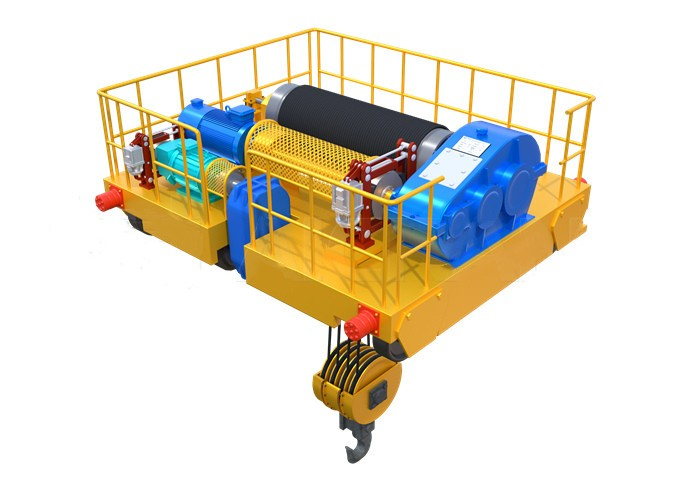
Here is a detailed breakdown of the components of a European Type Double Girder Bridge Crane, highlighting the design features that set it apart.
1. Optimized Structural System (The Framework)
Welded Box Girders:
FEM-Optimized Design: Fabricated from high-strength steel plate and optimized using Finite Element Analysis (FEA) for maximum strength-to-weight ratio.
Corrosion Protection: Feature high-quality surface preparation (shot blasting) and multiple coating layers for superior corrosion resistance.

Modular End Trucks:
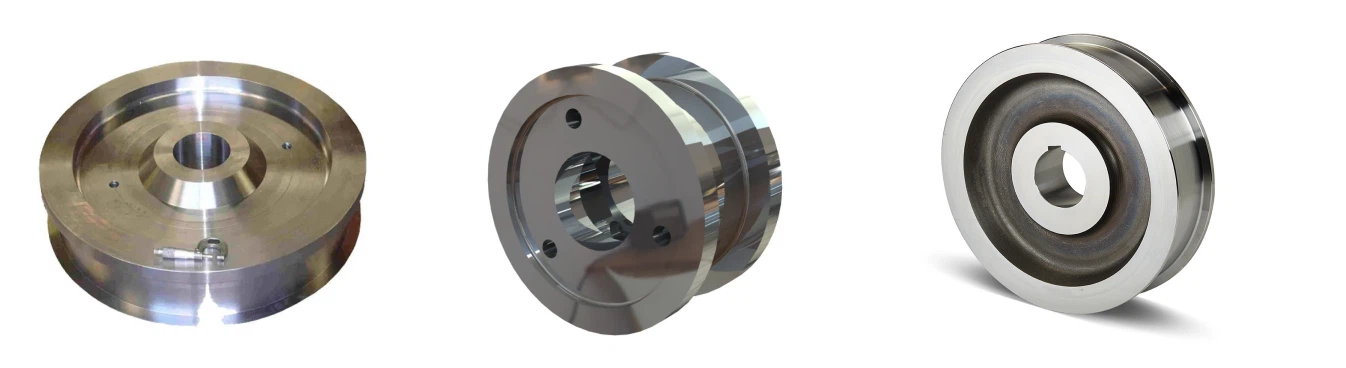
Sealed Bearing Units: Pre-lubricated, lifetime-sealed bearing cartridges for minimal maintenance.
Precision Machining: All mounting surfaces are machined for perfect alignment, ensuring smooth travel and reduced wheel wear.
Anti-Derailment Devices: Standard features to prevent wheels from leaving the rails.
Runway System:
Precision Rails: High-quality steel rails with precise alignment tolerances.
Crane Buffers: Energy-absorbing buffers with shock-absorbing properties.
 |
 |
2. High-Performance Lifting & Drive System
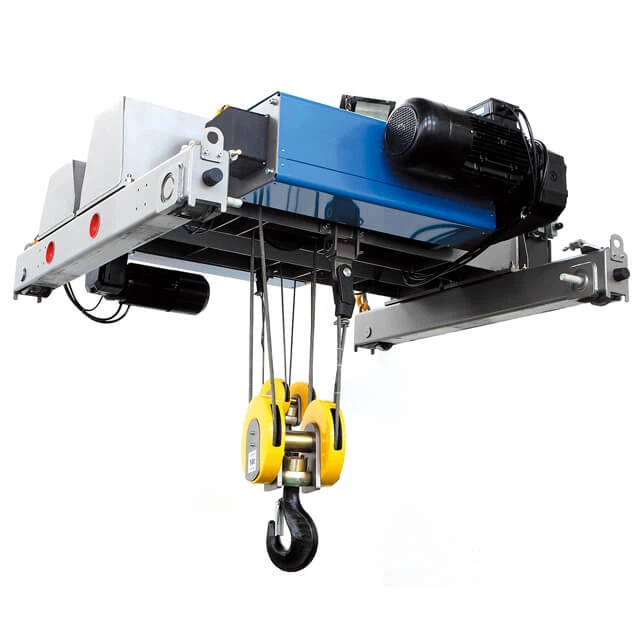
Integrated Hoist and Trolley:
Low Headroom Design: Compact integration of hoist and trolley mechanisms to maximize hook travel.
Modular Construction: Allows for easy maintenance and component replacement.
Premium Hoist Unit:
Branded Components: Typically features hoists from manufacturers like Demag, Street Crane, or ABB.
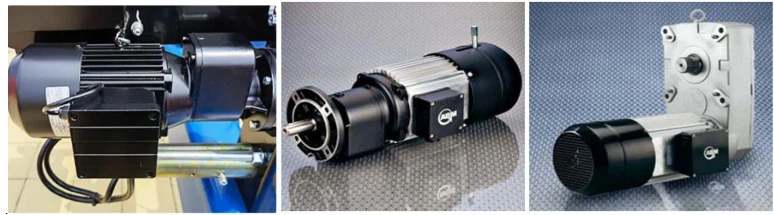
Duty-Rated Motors: Motors specifically designed for hoist duty with high torque and thermal capacity.
Planetary Gearboxes: High-efficiency, compact gearboxes for smooth power transmission.
 |
 |
Frequency-Controlled Drives:
VFDs on All Motions: Standard Variable Frequency Drives on hoist, trolley, and bridge motions for precise control.
Regenerative Braking: Ability to feed energy back into the power supply during lowering.
3. CE-Compliant Control & Safety Systems
Control Systems:
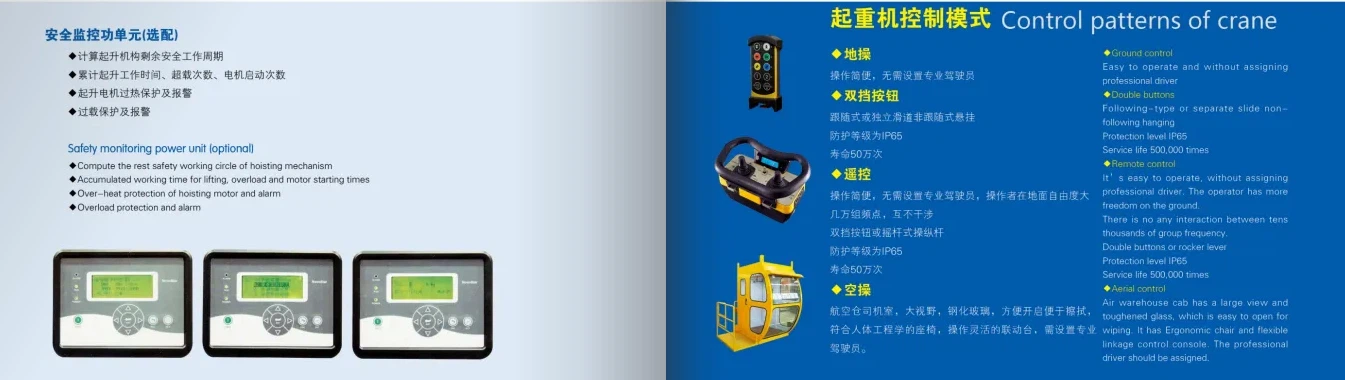
Ergonomic Pendant: Lightweight, ergonomic control pendant with integrated diagnostics display.
Radio Remote Option: Secure frequency-hopping radio control systems.
Safety PLC: Programmable Logic Controller with dedicated safety functions.
Safety Systems:
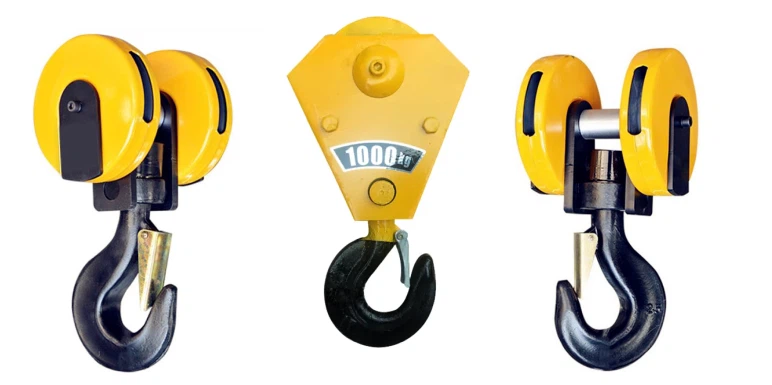
Load Moment Indicator (LMI): Certified system for load weighing and anti-collision.
Redundant Braking:
Primary mechanical brake on the hoist.
Secondary braking system (often electronic).
Emergency stop system meeting Category 3/PLd standards.
Limit Switches: Encoder-based positioning and limit switches for all motions.
Overload Protection: Mechanical and electronic overload protection devices.

4. Electrical & Power Systems
Power Supply:
Conductor Bar Systems: Fully enclosed, insulated conductor systems for safe power transmission.
Festoon Systems: Cable management systems with high-flexibility cables.
Control Panels:
IP-Rated Enclosures: Minimum IP54 rating for dust and water protection.
Thermal Management: Air conditioning or heating units for temperature control.
Modular Design: Easy access for maintenance and troubleshooting.

5. Special Features & Accessories
Monitoring Systems:
Crane Management System (CMS): Remote monitoring and diagnostics capability.
Maintenance Indicators: Automated service interval reminders.
Lighting & Communication:
LED Work Area Lighting: Energy-efficient lighting for the crane operating area.
Emergency Lighting: Battery-backed emergency lighting system.
Intercom Systems: For communication between crane operators and floor personnel.
Sketch

Main technical

Advantages
Advantages of European Type Double Girder Bridge Crane
European Type Double Girder Cranes offer a premium set of benefits centered on safety, efficiency, and long-term value.
1. Unmatched Safety and Regulatory Compliance
CE Certification: Built in full compliance with the EU Machinery Directive and other applicable standards, ensuring the highest levels of personnel and operational safety.
Advanced Safety Systems: Feature SIL-rated (Safety Integrity Level) safety functions, redundant braking systems, and comprehensive overload protection as standard.
Risk Mitigation: The integrated safety design significantly reduces the risk of accidents, protecting both personnel and valuable assets.
2. Superior Performance and Precision
Smooth Operation: Variable Frequency Drives (VFDs) are standard on all motions (hoist, trolley, and long travel), providing jerk-free acceleration and deceleration.
Precise Load Control: This allows for pinpoint positioning of loads, which is crucial for high-value products, assembly tasks, and delicate operations.
Minimized Load Swing: The controlled movement greatly reduces load swing, increasing safety and efficiency.
3. Exceptional Durability and Reliability
Premium Components: Use of high-quality, branded components (e.g., Demag hoists, SEW drives, Siemens controls) ensures exceptional reliability and a long service life.
Optimized Structure: The FEM-based design utilizes Finite Element Analysis to create a structure that is both strong and light, reducing wear on the runway and building structure.
High Uptime: The robust construction and quality of components lead to less downtime and higher overall productivity.
4. Energy Efficiency and Low Lifetime Cost
Reduced Power Consumption: VFDs and high-efficiency motors lower energy usage, especially in applications with frequent starts and stops.
Regenerative Drives: Many models can feed energy back into the power grid during lowering operations, further cutting costs.
Low Maintenance Needs: Features like sealed, pre-lubricated bearings and modular components reduce maintenance frequency and costs, resulting in a lower Total Cost of Ownership (TCO).
5. Ergonomics and Maintainability
Low Headroom Design: The compact integration of the hoist and trolley maximizes the usable lifting height under the crane, a critical advantage in facilities with height restrictions.
Easy Maintenance: Modular design and accessible components make inspection and servicing straightforward, minimizing maintenance time.
Operator-Friendly: Ergonomic controls, clear diagnostics, and excellent visibility reduce operator fatigue and enhance productivity.
Application:
Applications of European Type Double Girder Bridge Crane
This crane is the preferred choice for industries where precision, reliability, and safety are non-negotiable.
1. Automotive and Aerospace Industries
Application: Handling and positioning large vehicle body panels, aircraft components, and engines.
Why it's Used: The precision control and smooth movement prevent damage to high-value, delicate parts during assembly.
2. Advanced Manufacturing and Warehousing
Application: In high-bay warehouses and production lines for handling heavy palletized goods, machinery, and raw materials.
Why it's Used: The high reliability, speed, and precise control optimize workflow and storage density. The low headroom design maximizes vertical space.
3. Steel and Metal Service Centers
Application: Moving and stacking steel coils, sheets, and profiles.
Why it's Used: The robust FEM design handles heavy loads reliably, while the precision controls allow for safe and efficient stacking and retrieval.
4. Power Generation and Heavy Engineering
Application: Maintenance and installation of turbines, generators, transformers, and large-scale machinery.
Why it's Used: The exceptional safety features and precise load control are critical for protecting expensive equipment and ensuring personnel safety during complex lifts.
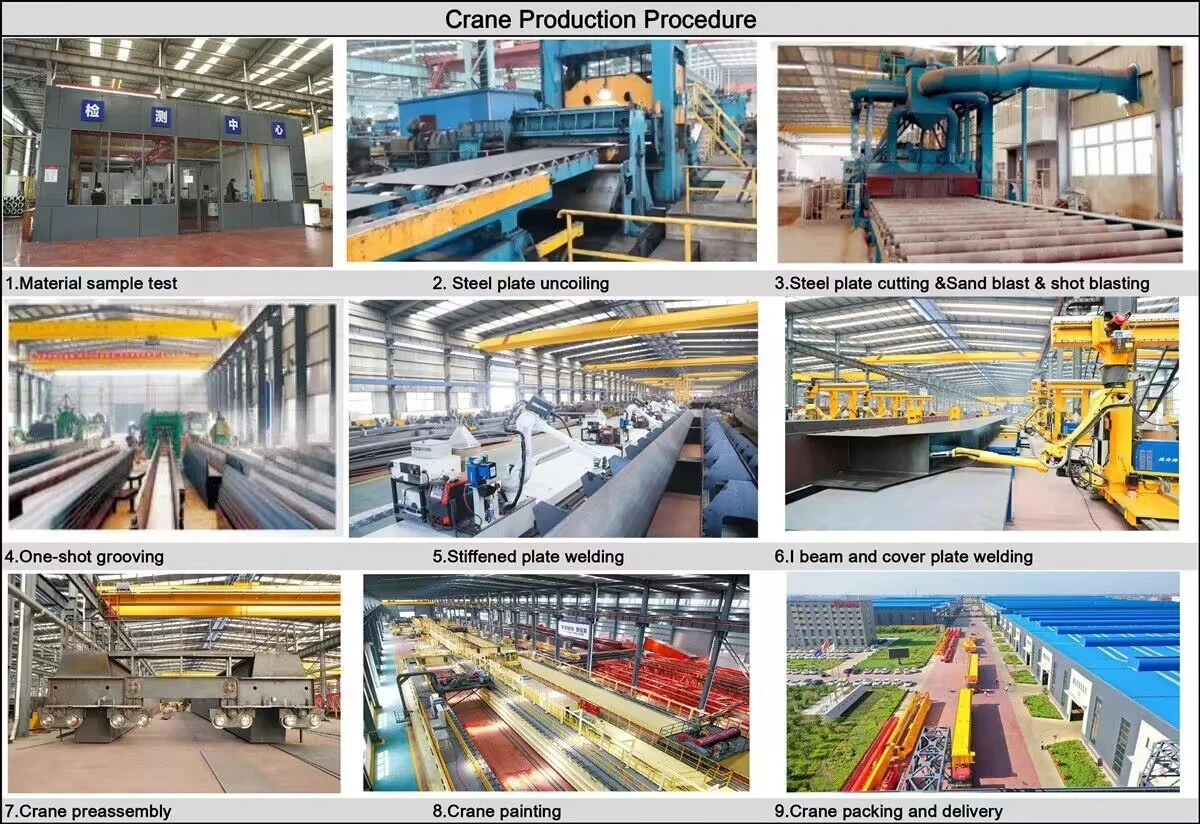
Crane production procedure
The production procedure for a European Type Double Girder Bridge Crane is a highly systematic and quality-driven process that adheres to strict European standards (like FEM and ISO) and culminates in CE certification.
Here is a detailed breakdown of the production process.
Stage 1: Design & FEM Analysis
This stage is the foundation, focusing on optimization and compliance.
Client Specification & Risk Assessment: A detailed analysis of operational requirements, environment, and a formal Risk Assessment as required by the EU Machinery Directive.
Advanced Engineering:
FEM Structural Analysis: Using Finite Element Analysis to optimize the girder and end truck design for maximum strength with minimum weight. This calculates stress, deflection, and dynamic behavior.
CE Compliance Planning: Integrating safety and design requirements from relevant standards (e.g., EN 13001, EN 60204) into the blueprint.
Bill of Materials (BOM): Creation of a detailed list specifying certified materials and approved, brand-name components (e.g., SEW drives, Siemens PLCs).
Stage 2: Material Selection & Preparation
Procurement: Sourcing of certified steel (e.g., S355JR) and CE-marked or internationally recognized components (e.g., brakes, motors).
Material Preparation: Steel plates are shot-blasted to Sa 2.5 standard and primed. Cutting is performed by CNC machines for high precision, ensuring perfect fit-up for welding.
Stage 3: Precision Structural Fabrication
This is where the crane's lightweight yet robust structure is built.
Girder Fabrication:
Automated Welding: Main girders are fabricated as box sections. Critical welds are performed using Automated Submerged Arc Welding (SAW) under controlled conditions to ensure consistent, high-quality, and repeatable welds.
Weld Inspection: All critical welds are 100% visually inspected and tested via Ultrasound (UT) or Magnetic Particle Inspection (MPI).
Stress Relieving: The completed girders undergo vibration stress relief or heat treatment to normalize internal stresses, ensuring long-term dimensional stability.
Precision Machining: Machining of drive mounting pads, rail seating surfaces, and connection points on CNC machines to guarantee perfect alignment.
Stage 4: Mechanical Assembly & Alignment
End Truck Assembly: Wheels, axles, and sealed, pre-lubricated bearing units are assembled into the end trucks. The drive motors and gearboxes are mounted and aligned.
Bridge Assembly: The girders are bolted to the end trucks using high-strength bolts. The alignment of the entire bridge is meticulously checked to ensure squareness and proper wheel contact.
Trolley and Hoist Integration: The hoist unit (often a pre-assembled module from a supplier like Demag) is integrated with the trolley frame. The entire assembly is then mounted onto the crane girders.
Stage 5: Electrical & Control System Integration
Control Panel Building: PLCs, VFDs for all motions, safety relays, and main contactors are wired in a protected, IP54-rated enclosure. The software is programmed with predefined safety functions (e.g., limit switches, overload protection).
Cable Installation: Cables are run in dedicated cable trays or conduits. All connections are made using crimped and ferruled terminals.
Safety System Installation: Load Moment Indicators (LMI), limit switches, emergency stop circuits, and anti-collision sensors are installed and wired into the safety PLC.
Stage 6: Comprehensive Testing & CE Certification (FAT)
This is a critical phase for verification and certification.
Visual & Dimensional Inspection: Verifying workmanship, paint quality, and all critical dimensions.
No-Load Test: Running all motions to check for smooth operation, abnormal noise, and proper function of limit switches.
Load Testing:
Static Load Test: Lifting a test load of 125% of the rated capacity to verify structural integrity and brake holding capacity.
Dynamic Load Test: Lifting 110% of the rated capacity and running it through all operational motions.
Safety Function Validation: Testing all safety devices, including E-stops, overload systems, and redundant brakes, to ensure they meet the performance levels required by the risk assessment.
CE Documentation: Compilation of the Technical File, including design calculations, test reports, risk assessment, and declarations of incorporation, culminating in the issuance of the EC Declaration of Conformity.
Stage 7: Dismantling, Protection & Packaging
Systematic Dismantling: The crane is disassembled into logical, transportable modules, with all components clearly tagged.
Final Painting: Application of a high-quality finish coat, often in customer-specified RAL color.
Packaging: Components are securely packaged with special protection for machined surfaces, electrical panels, and protruding parts.
Stage 8: Site Installation & Commissioning (SAT)
Supervised Erection: The crane is reassembled on-site by trained personnel, often under the supervision of the manufacturer's project engineer.
Final Connections & Checks: All systems are re-connected, and alignments are verified.
Site Acceptance Test (SAT): A final performance and safety test is conducted in the actual operating environment to ensure full functionality and compliance.
Operator Training: Comprehensive training is provided for the customer's operators and maintenance staff.
Workshop view:
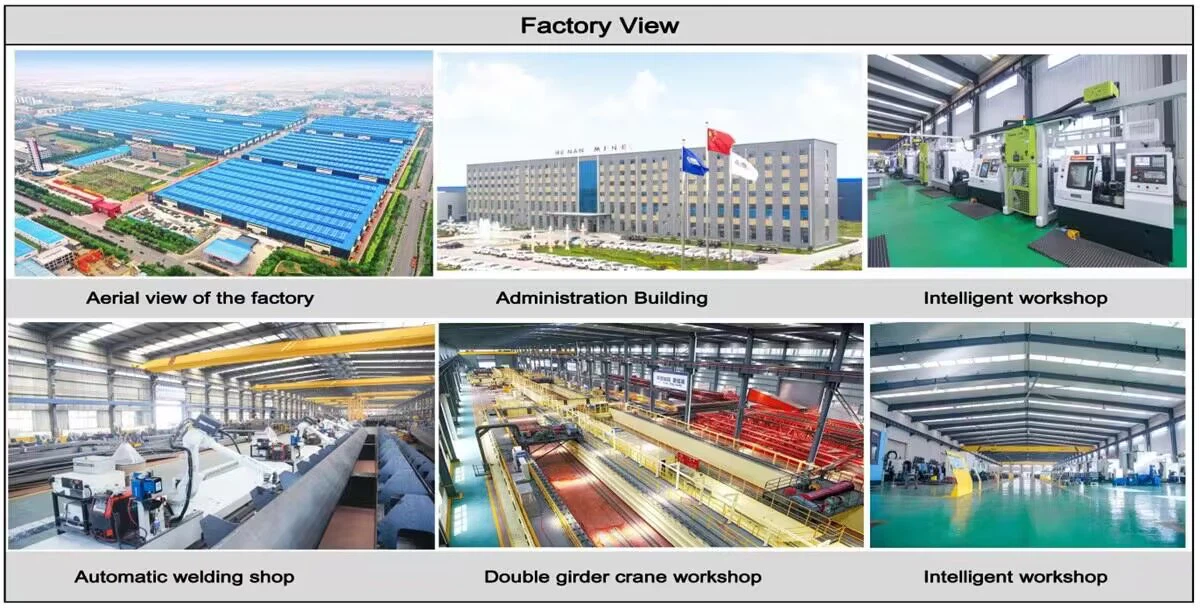
The company has installed an intelligent equipment management platform, and has installed 310 sets (sets) of handling and welding robots. After the completion of the plan, there will be more than 500 sets (sets), and the equipment networking rate will reach 95%. 32 welding lines have been put into use, 50 are planned to be installed, and the automation rate of the entire product line has reached 85%.


Hot Tags: european type double girder bridge crane, China european type double girder bridge crane manufacturers, suppliers, factory, Double Girder Overhead Crane, Double Girder Overhead Travelling Crane
Previous
Eot Bridge CraneYou Might Also Like


Send Inquiry