









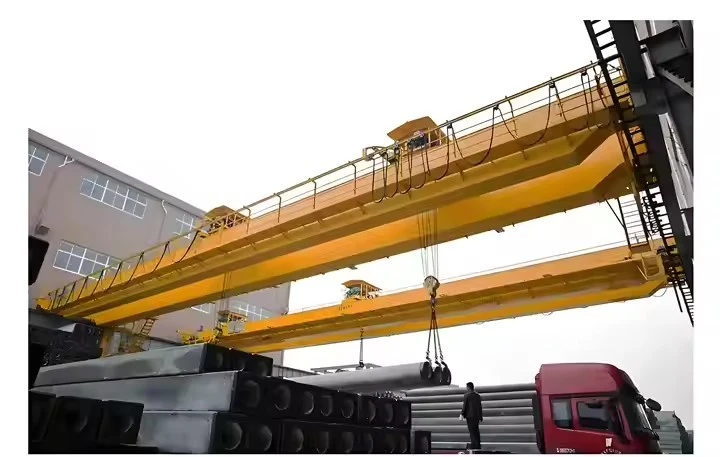
Electric Overhead Bridge Crane For Workshop
Products Description
What is an Electric Overhead Bridge Crane for a Workshop?
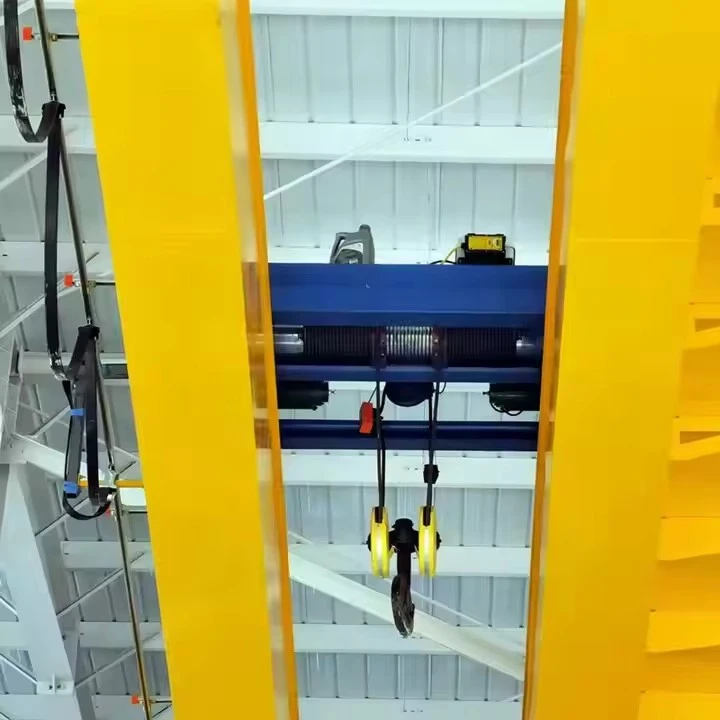
It is a system consisting of a bridge (the horizontal beam(s)) that moves along runway rails mounted to the workshop's support structure. An electric hoist and trolley move across the bridge, allowing the operator to lift, lower, and transport loads anywhere within the crane's rectangular coverage area.
Think of it as creating a "lifting grid" over your entire workshop floor, giving you the ability to pick up a load and move it precisely to any other point without using floor space.
Advantages for a Workshop
Maximizes Floor Space: By operating overhead, it keeps the entire floor clear for machinery, workstations, and storage. No aisles are needed for a forklift.
Increases Productivity & Efficiency: Drastically reduces the time and labor required to move heavy materials, components, or finished products. One person can do the work of several.
Enhances Safety:
Eliminates the risks associated with manual lifting (musculoskeletal injuries).
Reduces the need for forklifts, minimizing the risk of collisions and accidents.
Operators can control the load from a safe distance.
Improves Ergonomics: Reduces physical strain on workers, leading to less fatigue and fewer injuries.
Provides Precision Handling: Allows for slow, precise positioning of loads, which is essential for assembly, machining, and placement tasks.
Versatile and Adaptable: Can be fitted with various attachments (hooks, magnets, grabs) to handle different materials.
Key Considerations When Choosing a Workshop Crane
Capacity: Determine the weight of the heaviest item you need to lift. Common workshop capacities range from 2 to 20 tons.
Span: The distance between the runway rails. This defines the width of the area the crane can cover.
Lifting Height: How high you need to lift the load.
Duty Cycle: How frequently the crane will be used. For a busy workshop, a Class M4 (Medium Duty) or M5 (Heavy Duty) is appropriate.
Control Method: Pendant control is standard, but radio remote control is highly recommended for its safety and flexibility.
Building Structure: A professional must verify that your workshop's columns and roof can support the crane, the load, and the dynamic forces.
Conclusion: An Electric Overhead Bridge Crane is not just a lifting device; it is a fundamental workshop efficiency tool. It streamlines workflow, empowers a single worker to handle immense weights safely, and unlocks the full potential of your workshop floor space. It is one of the highest-return investments a manufacturing or repair facility can make.
Core Components:Bearing, Gearbox, Motor, Pump
Place of Origin:Henan, China
Warranty:1 Year
Weight (KG):2000 kg
Video outgoing-inspection:Provided
Machinery Test Report:Provided
Design:Double beam
Effectiveness:high efficiency
Operating speed:High speed operation
Stability:Anti-swing function
Color:Optional
Power Source:110V/220V/230V/380V/440V,customized
Span:7.5-31.5m

Pictures & Components
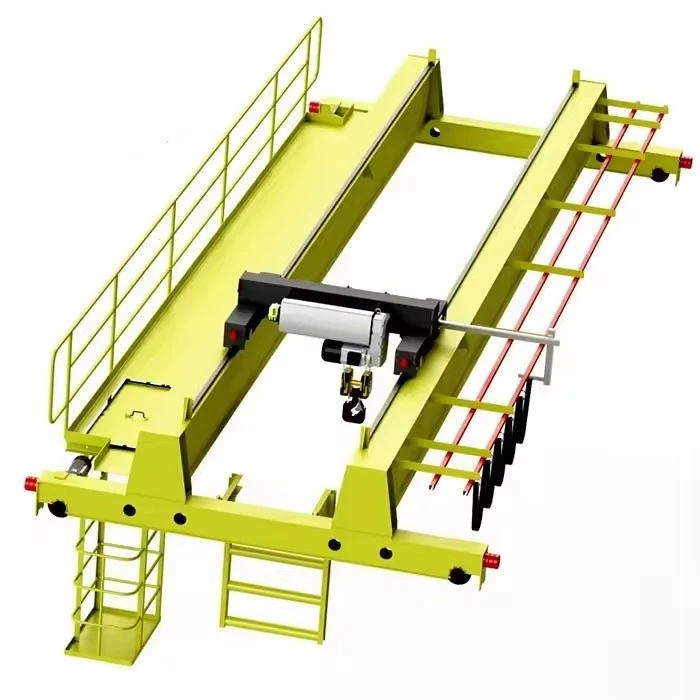
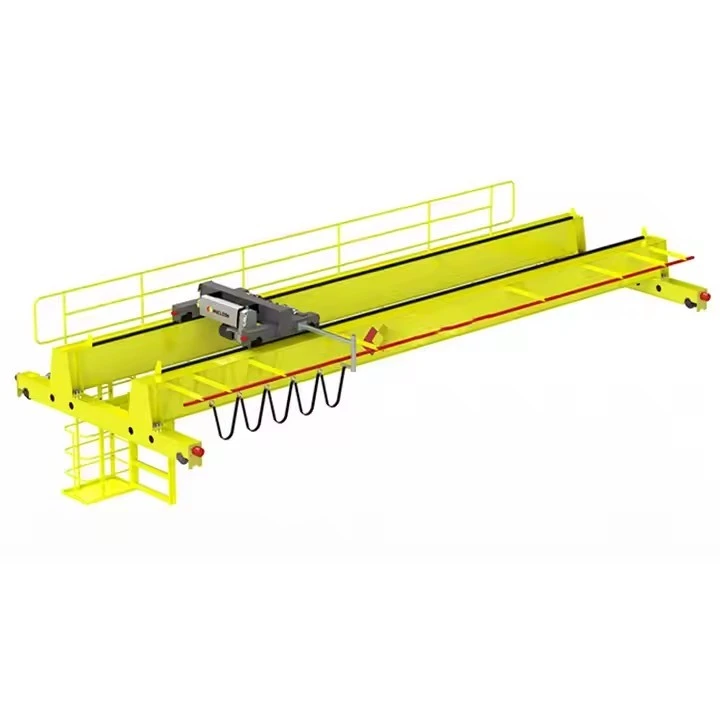
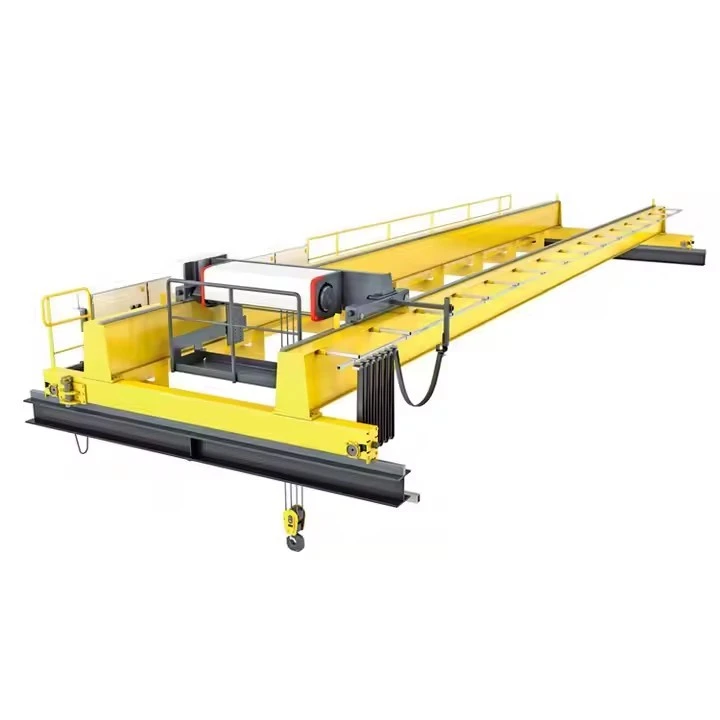
Here is a detailed breakdown of the components of an Electric Overhead Bridge Crane for a Workshop.
1. Primary Structural System (The Framework)
Bridge Girder(s): The primary horizontal beam(s) that span the workshop.
Single Girder: One beam (I-beam or box girder) where the hoist trolley runs on the bottom flange. More economical and provides good headroom.
Double Girder: Two parallel girders where the trolley runs on top of the girders. Provides higher lifting height and is better for heavier loads.

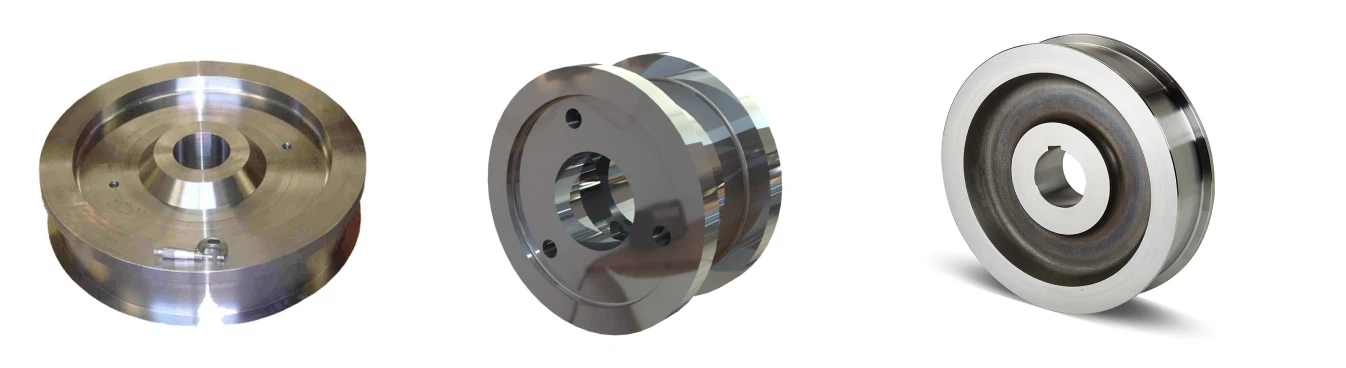
End Trucks: The structures at each end of the bridge girder that house the wheels and drive mechanisms for moving the entire crane along the runway.
Runway System:
Runway Beams: Heavy I-beams supported by the workshop's roof columns or structure.
Running Rails: Steel rails mounted on the runway beams for the crane wheels to travel on.
Crane Stops/Buffers: Physical stops at the ends of the runway to prevent over-travel.
 |
 |
2. Lifting & Travel System (The Workhorse)
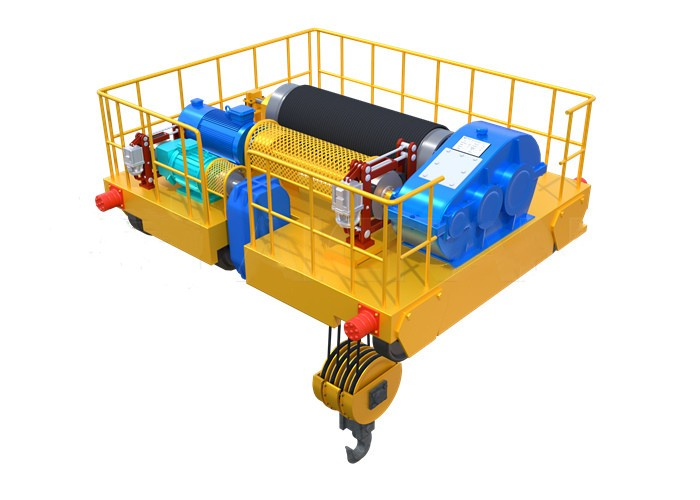
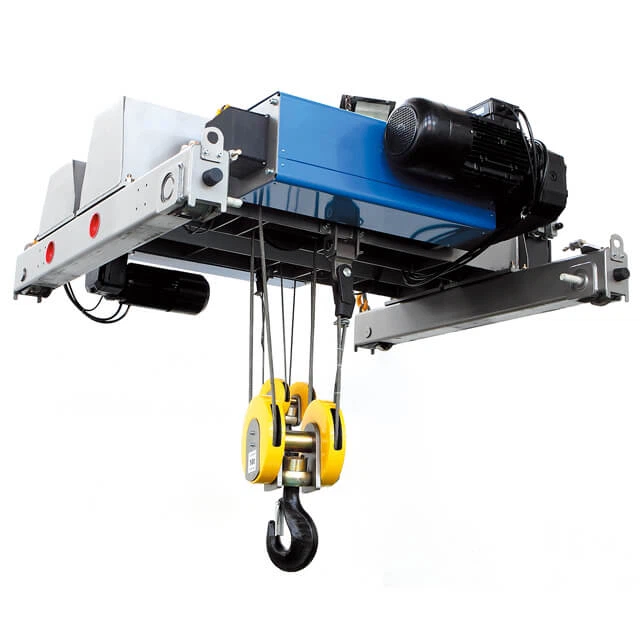
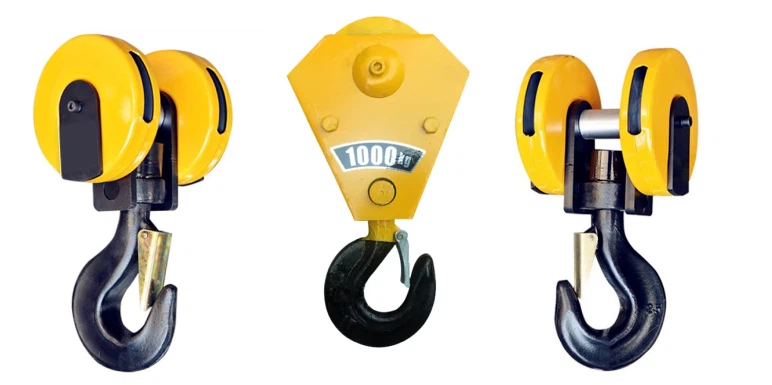
Electric Hoist Unit: The component that performs the lifting.
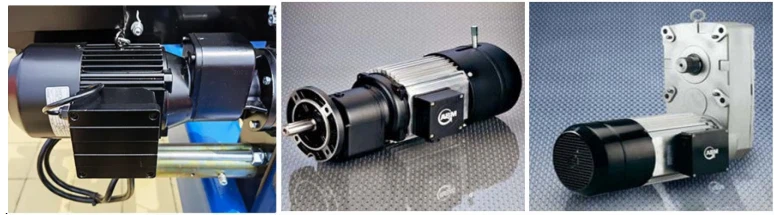
Hoist Motor: Electric motor that provides lifting power.
Gearbox: Reduces motor speed to increase lifting torque.
Drum or Sprocket: For winding wire rope or chain.
Brake: Automatically engages to hold the load when the hoist is not powered.
 |
 |
Trolley Assembly: The unit that carries the hoist along the bridge girder.
Trolley Frame: Supports the hoist.
Trolley Wheels: Run along the flange of the bridge girder.
Trolley Drive: Motor and gears that move the trolley (can be electric or manual).
Hook Block: The assembly that holds the hook, often with multiple sheaves for mechanical advantage.
Bridge Travel Drives:
Drive Motors: Mounted on the end trucks to move the entire crane.
Wheels: Flanged wheels that run on the runway rails.
3. Power & Control System (The Nerves)
Power Supply:
Festoon System: A trolley and track system that carries and manages the flexible power cable. Common in workshops.
Conductor Bar System: Enclosed rigid power bars that run parallel to the runway. More reliable for heavy-duty use.
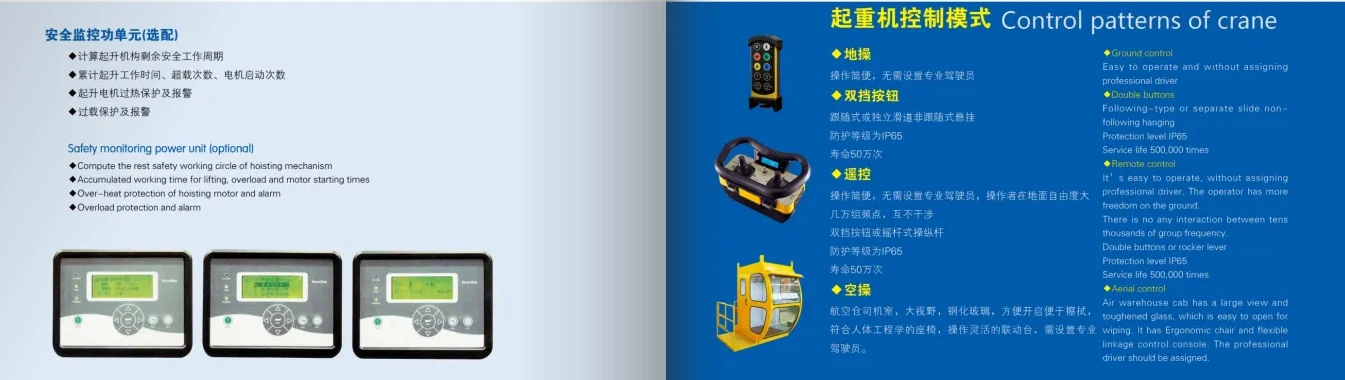
Control Interface:
Pendant Station: A hanging push-button control box connected to the crane by a flexible cable. The operator walks alongside the load.
Radio Remote Control: A wireless transmitter that allows the operator to control the crane from anywhere on the workshop floor. This is highly recommended for safety and visibility.
Control Panel: Houses electrical components like contactors, overload relays, and sometimes a Variable Frequency Drive (VFD) for smooth speed control.

4. Safety Systems (The Lifeline)
Limit Switches:
Hoist Upper/Lower Limit Switches: Automatically cut power at the extremes of hook travel.
Travel Limit Switches: Stop the crane or trolley at the ends of the runway or girder.
Overload Protection: A device that prevents the hoist from lifting a load beyond its rated capacity.
Braking Systems:
Hoist Brake: Holds the load automatically.
Travel Brakes: On the drive motors for controlled stopping.
Emergency Stop Buttons: Located on the pendant station and often at various points on the crane for instant power cutoff.
Warning Device: A horn or buzzer to alert personnel when the crane is in motion.

Workshop-Specific Considerations
Headroom: The space between the hook-lowered position and the floor. A single girder crane typically offers better headroom in a low-clearance workshop.
Clearance: Ensuring the crane does not interfere with doors, lighting, ventilation, or other overhead equipment.
Floor Space: The crane's coverage area should match the workshop's workflow, often covering key areas like receiving, machining, and assembly stations.
Conclusion: Every component of a workshop Electric Overhead Bridge Crane is designed for reliable, safe, and efficient operation in an industrial environment. The integration of a robust structure, a powerful lifting system, intuitive controls, and comprehensive safety features makes it an indispensable tool that enhances productivity while protecting both personnel and assets.
Sketch

Main technical

Advantages
Advantages of an Electric Overhead Bridge Crane in a Workshop
Installing an overhead bridge crane transforms workshop operations by delivering profound improvements in efficiency, safety, and space utilization.
1. Unmatched Space Efficiency
Maximizes Usable Floor Area: The crane operates overhead, completely eliminating the need for wide aisles required by forklifts. This frees up valuable floor space for more machinery, workstations, or storage.
Full Coverage: It creates a "lifting grid" over the entire work area, allowing loads to be picked up and transported directly to any point without obstruction.
2. Dramatic Productivity Gains
One-Person Operation: A single worker can move massive loads quickly and easily, drastically reducing labor requirements and wait times.
Faster Material Handling: Moving a load across the workshop takes a fraction of the time compared to manual methods or using a forklift, which may need to navigate around obstacles.
Streamlined Workflow: Enables a smooth, continuous flow of materials from receiving, to processing, to assembly, and finally to shipping.
3. Enhanced Safety and Ergonomics
Eliminates Manual Heavy Lifting: Removes the primary cause of musculoskeletal injuries in a workshop, protecting workers from back strains and other injuries.
Reduces Forklift Dependency: Minimizes the risk of collisions, tip-overs, and pedestrian accidents associated with forklift traffic.
Controlled Load Movement: Operators can guide loads precisely and from a safe distance (especially with a radio remote), keeping them clear of pinch points and falling hazards.
4. Superior Versatility and Precision
Handles Diverse Loads: Can be equipped with various attachments like hooks, magnets, vacuum lifters, or C-hooks to handle raw materials, finished parts, machinery, and tools.
Precise Load Placement: Allows for slow, inch-perfect positioning of loads onto machines, assembly jigs, or packaging, which is critical for quality control and preventing damage to expensive components.
5. Strong Return on Investment (ROI)
Lowers Operating Costs: Reduces labor costs, minimizes product damage from handling, and decreases reliance on multiple pieces of mobile equipment.
Increases Output: By speeding up the manufacturing or repair process, the crane directly contributes to higher throughput and revenue.
Application:
Applications in a Workshop
The electric overhead bridge crane is incredibly versatile and can be applied to nearly every facet of a busy workshop.
1. Machine Shops and CNC Centers
Loading/Unloading Machines: Lifting raw steel billets, aluminum blocks, and large castings onto lathes, milling machines, and CNC centers.
Moving Finished Parts: Transporting machined components to inspection areas or cleaning stations.
2. Fabrication and Welding Shops
Handling Plate and Sheet Metal: Moving large steel plates to cutting tables (laser, plasma, waterjet).
Positioning Weldments: Lifting and rotating heavy frames and structures for welding, ensuring optimal ergonomics for the welder and consistent quality.
3. Assembly and Production Lines
Positioning Sub-Assemblies: Lifting engine blocks, gearboxes, or large machine frames onto the assembly line.
Handling Large Components: Moving large, fragile, or awkwardly shaped parts into place with precision.
4. Maintenance and Repair Bays
Engine and Component Removal: Lifting engines, transmissions, and hydraulic units out of vehicles, machinery, and industrial equipment for overhaul.
Tooling Changes: Handling heavy molds, dies, and tooling for presses and injection molding machines.
5. Warehousing and Staging Areas
Receiving and Storing Materials: Unloading raw materials from trucks and organizing them in storage racks.
Kitting and Staging: Moving batches of components and materials to specific production zones.
Crane production procedure
The production process for an Electric Overhead Bridge Crane is a systematic sequence of engineering, fabrication, assembly, and testing. Here is a detailed breakdown.
Stage 1: Design & Engineering
This is the foundational stage where the crane's performance and safety are defined.
Client Requirements Analysis: Reviewing key parameters: capacity, span, lifting height, duty cycle, and operational needs (e.g., control method, special features).
Structural & Mechanical Design:
Structural Analysis: Calculating loads and stresses to determine the appropriate girder size and type (single/double, I-beam/box girder).
Component Selection: Specifying the hoist, trolley, drive motors, wheels, and gearboxes.
Electrical Design: Creating schematics for power supply, motor controls, and safety circuits.
Bill of Materials (BOM) Creation: Listing all raw materials and purchased components.
Stage 2: Material Procurement & Preparation
Procurement: Sourcing steel beams, plates, and purchased components (hoists, motors, electrical gear).
Material Preparation: Steel components are cut to length using saws or CNC plasma cutters. Holes are drilled or punched for bolts and connections.
Stage 3: Structural Fabrication & Assembly
This is where the crane's frame is built.
Girder Fabrication:
For I-beam girders: Preparing and reinforcing standard I-beams if necessary.
For box girders: Cutting web and flange plates, welding them together with internal stiffeners.
End Truck Fabrication: Constructing the end trucks that house the wheels and drives.
Welding: All structural connections are welded by certified welders. Critical welds may be inspected via ultrasound.
Machining: Machining mounting surfaces for rails and drives to ensure proper alignment.
Stage 4: Mechanical Assembly
The structural frame is combined with the mechanical systems.
Bridge Assembly: The main girder(s) are connected to the end trucks, forming the complete bridge structure.
Wheel & Axle Installation: Wheels are mounted to the end trucks. Axles and drive components are installed for powered travel.
Trolley Assembly: The trolley frame is built, and wheels are attached. The hoist unit is then mounted onto the trolley frame.
Hook Attachment: The hook block is attached to the hoist's wire rope or chain.
Stage 5: Electrical & Control System Installation
Wiring: Electrical cables are run along the crane structure to the travel motors, hoist motor, and control points.
Control System Installation: The pendant control station or radio receiver is installed and wired. Control panels with contactors and overload protection are mounted.
Power Supply Setup: Installation of the festoon system or conductor bars for power delivery.
Safety Devices: Installing and wiring limit switches, emergency stops, and overload protection devices.
Stage 6: Pre-Delivery Testing & Inspection (FAT)
The fully assembled crane is tested to ensure it meets all specifications and safety standards.
Visual Inspection: Checking for workmanship, proper welding, and correct assembly.
No-Load Test: Operating all motions (hoisting, trolley travel, bridge travel) without a load to check for smooth operation and abnormal noise.
Load Testing:
Static Load Test: Lifting a test load of 125% of the rated capacity and holding it to verify structural integrity and brake holding capacity.
Dynamic Load Test: Lifting 110% of the rated capacity and running it through all motions to ensure performance under working conditions.
Safety Function Test: Verifying the operation of all limit switches, brakes, E-stops, and overload protection devices.
Stage 7: Dismantling, Painting & Packaging
Dismantling: The crane is partially disassembled into logical sections (girders, end trucks, trolley) for shipping.
Painting: All components are painted with a primer and topcoat for corrosion protection.
Packaging: Components are securely packaged, with special attention to protecting machined surfaces, threads, and electrical components.
Stage 8: Site Installation & Commissioning (SAT)
Site Erection: The crane is reassembled on the customer's runway.
Final Connections: Electrical power is connected, and final checks are made.
Site Commissioning & SAT: The crane undergoes a final operational test in its actual working environment.
Operator Training: The customer's operators are trained on safe and efficient use.
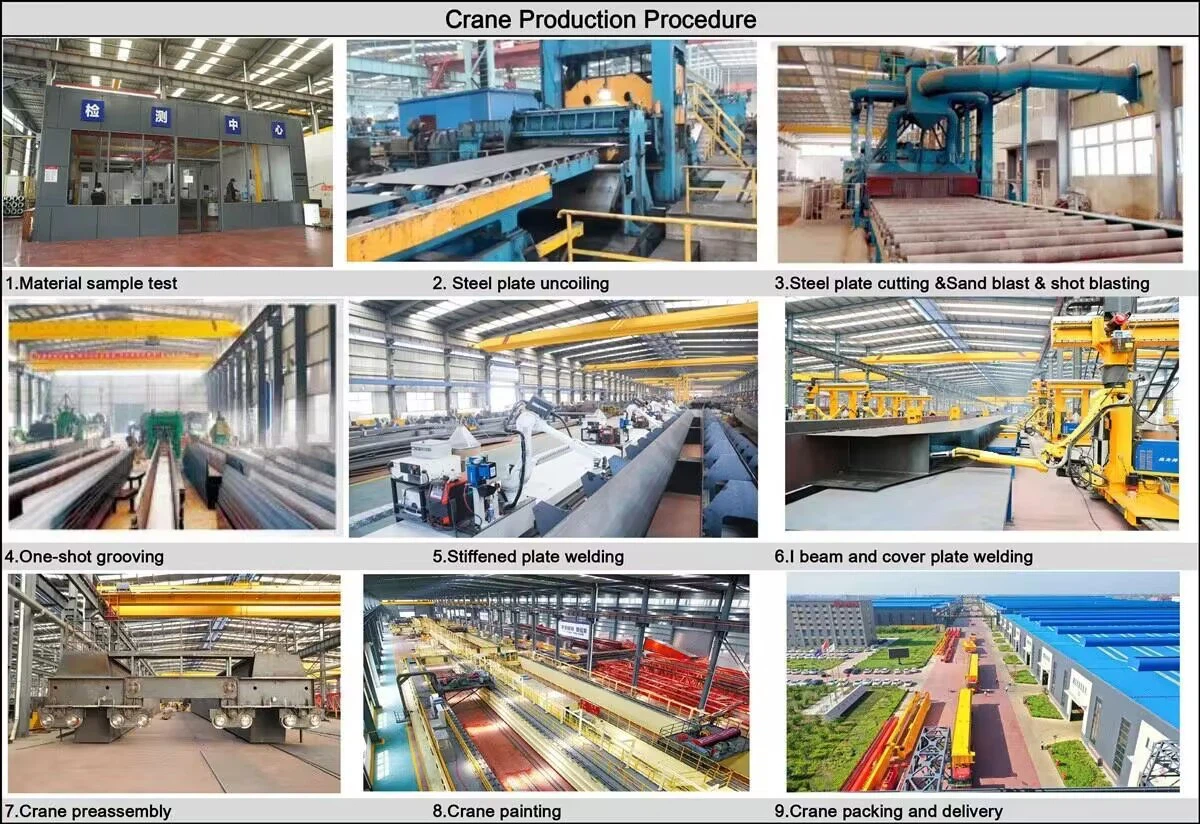
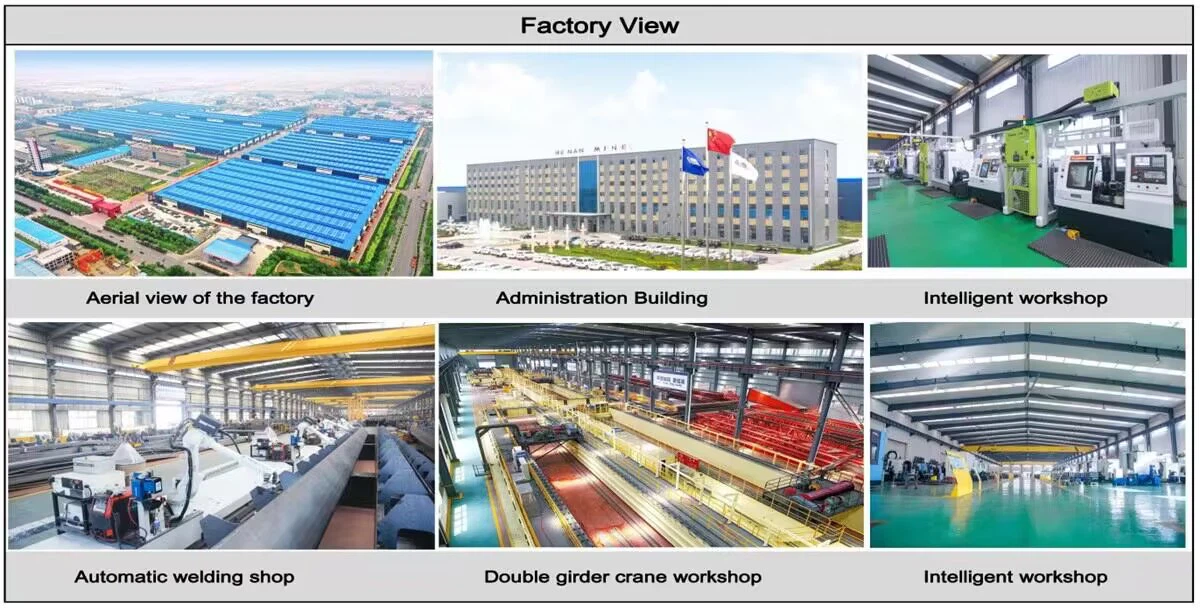
Workshop view:
The company has installed an intelligent equipment management platform, and has installed 310 sets (sets) of handling and welding robots. After the completion of the plan, there will be more than 500 sets (sets), and the equipment networking rate will reach 95%. 32 welding lines have been put into use, 50 are planned to be installed, and the automation rate of the entire product line has reached 85%.


Hot Tags: electric overhead bridge crane for workshop, China electric overhead bridge crane for workshop manufacturers, suppliers, factory, Double Girder Overhead Travelling Crane, Double Girder Overhead Crane
You Might Also Like


Send Inquiry