










16ton Single Beam Overhead Crane For Work Station
Products Description
16 Ton Single Beam Overhead Crane for Work Station
Product Introduction
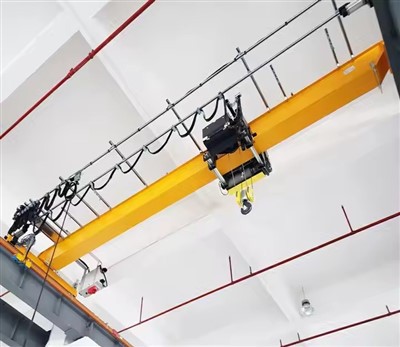
A 16 Ton Single Beam Overhead Crane (also known as a Single Girder Overhead Crane) is a versatile lifting solution designed for workstation material handling, manufacturing facilities, assembly workshops, warehouses, and maintenance areas. The crane consists of a single main girder, end carriages, and an electric wire rope hoist that travels along the girder to lift and transport loads efficiently.
With a lifting capacity of 16 tons, this crane is ideal for medium-duty applications requiring reliable performance, smooth operation, and economical investment. Its compact design maximizes workspace utilization while providing safe and efficient material movement within the workstation.
Lifting Capacity 1 – 16 tons (custom up to 50+ tons)
Span 5 – 30 meters
Lifting Height 3 – 30 meters
Lifting Speed 1 – 20 m/min (adjustable)
Trolley Speed 5 – 30 m/min
Crane Travel Speed 10 – 60 m/min
Power Supply 380V/415V, 50Hz (3-phase)
Duty Class FEM A3-A5 (Medium to Heavy Duty)

Pictures & Components
A 16-ton single beam overhead crane consists of several key mechanical, electrical, and safety components that work together to ensure safe and efficient lifting operations.
1. Main Girder (Single Beam)
Primary load-bearing structure of the crane.
Usually fabricated from welded box-type steel construction.
Supports the electric hoist and transferred load.
Designed to provide high strength with minimum deflection.
Functions
Carries the lifted load.
Supports hoist travel along the span.
Transfers load to end carriages.

2. End Carriages (End Trucks)
Installed at both ends of the main girder.
Equipped with crane travel wheels.
Connected to travel drive mechanisms.
Functions
Support the bridge structure.
Enable crane movement along runway rails.
Distribute loads to the runway system.
 |
 |
3. Electric Wire Rope Hoist
The main lifting mechanism consisting of:
Hoisting motor
Gear reducer
Rope drum
Steel wire rope
Electromagnetic brake
Hook block
Functions
Lifting and lowering materials.
Providing smooth and reliable load handling.
Supporting loads up to 16 tons.
 |
 |
4. Hoist Traveling Mechanism
Components
Travel motor
Drive wheels
Gear transmission
Wheel brackets
Functions
Moves the hoist horizontally along the main girder.
Allows precise load positioning.

5. Crane Traveling Mechanism
Components
Travel motors
Gearboxes
Drive shafts
Travel wheels
Functions
Moves the entire crane along the runway rails.
Provides longitudinal transportation of loads.

6. Hook Block Assembly
Components
Forged crane hook
Pulley sheaves
Hook nut
Safety latch
Thrust bearing
Functions
Connects the load to the lifting system.
Ensures secure and safe lifting.

7. Steel Wire Rope
High-strength wire rope wound on the hoist drum.
Manufactured from wear-resistant steel strands.
Functions
Transfers lifting force from the hoist drum to the hook block.
Supports repeated lifting cycles.
8. Electrical Control System
Components
Main electrical control panel
Contactors
Relays
Circuit breakers
Variable Frequency Drive (optional)
Functions
Controls lifting and traveling motions.
Protects electrical equipment from overload and faults.
.
9. Power Supply System
Types
Festoon cable system
Conductor busbar system
Functions
Supplies electrical power to the crane and hoist.
Ensures uninterrupted operation.
10. Control Devices
Pendant Control
Wired push-button controller.
Suitable for normal workstation operations.
Wireless Remote Control
Provides greater flexibility and visibility.
Improves operator safety.
Cabin Control (Optional)
Used for special industrial applications.


11. Runway Rail System
Components
Crane rails
Rail clips
Support beams
Alignment plates
Functions
Guides crane travel.
Supports crane wheel loads.
12. Safety Protection Devices
Overload Protection Device
Prevents lifting beyond rated capacity.
Upper and Lower Limit Switches
Prevent over-hoisting and over-lowering.
Travel Limit Switches
Restrict crane and hoist travel to safe ranges.
Emergency Stop Button
Immediately stops all crane movements during emergencies.
Phase Protection Relay
Protects motors from phase loss, phase reversal, and voltage imbalance.
Buffers
Installed at runway ends.
Absorb impact energy.
Rail Sweepers
Remove debris from crane travel paths.
Warning Alarm System (Optional)
Audible and visual warning during crane operation.
Sketch

13. Fasteners and Auxiliary Components
High-strength bolts
Connecting plates
Cable trays
Junction boxes
Maintenance platforms (optional)
Protective covers
Main technical

Advantages
1. High Lifting Capacity
Capable of handling loads up to 16 tons safely and efficiently.
Suitable for lifting machinery, steel structures, molds, dies, and heavy industrial components.
Meets the material handling requirements of most medium-duty workstations.
2. Cost-Effective Solution
Lower manufacturing and installation costs compared to double girder overhead cranes.
Reduced maintenance expenses due to a simpler structural design.
Provides excellent value for investment.
3. Space-Saving Design
Utilizes overhead workspace effectively.
Keeps production floors clear for personnel, forklifts, and equipment.
Maximizes usable workshop space.
4. Lightweight Structure
Single beam construction reduces the crane's self-weight.
Minimizes load on the building structure and runway beams.
Can reduce overall building construction costs.
5. Smooth and Precise Operation
Electric wire rope hoist provides stable lifting and lowering.
Optional Variable Frequency Drive (VFD) control enables smooth acceleration and deceleration.
Reduces load swing and improves positioning accuracy.
6. Increased Productivity
Accelerates material transportation within the workstation.
Reduces manual handling time.
Improves workflow efficiency and production output.
7. Easy Installation
Modular design simplifies transportation and assembly.
Short installation and commissioning periods.
Suitable for both new and existing workshop facilities.
8. Low Maintenance Requirements
Simple mechanical and electrical systems.
Easy access to major components for inspection and servicing.
Reduced downtime and maintenance costs.
9. Reliable Safety Performance
Equipped with comprehensive safety features, including:
Overload protection device
Upper and lower lifting limit switches
Travel limit switches
Emergency stop system
Phase-loss and phase-sequence protection
Buffers and rail sweepers
These features help protect operators, equipment, and materials.
10. Flexible Control Options
Pendant push-button control
Wireless remote control
Cabin control (optional)
Operators can select the most suitable control method based on workplace requirements.
11. Energy Efficient
High-efficiency motors reduce power consumption.
Optional VFD technology optimizes motor performance.
Lower operating costs compared with less efficient lifting systems.
12. Wide Adaptability
Suitable for various industrial environments, including:
Manufacturing workshops
Assembly stations
Steel fabrication plants
Warehouses
Maintenance facilities
Machinery workshops
Mold and die factories
13. Customizable Configuration
The crane can be customized according to project requirements:
Span length
Lifting height
Lifting speed
Travel speed
Power supply voltage
Control system
Working duty classification
14. Improved Workplace Safety
Minimizes manual lifting of heavy materials.
Reduces the risk of workplace injuries.
Provides safer and more controlled material handling operations.
15. Long Service Life
Manufactured using high-quality steel structures and reliable components.
Durable design withstands continuous industrial use.
Ensures long-term operational reliability and reduced lifecycle costs.
Summary
The 16 Ton Single Beam Overhead Crane for Work Stations offers an ideal combination of high lifting capacity, economical investment, operational efficiency, safety, and reliability. Its compact design, easy maintenance, and flexible customization make it a preferred material handling solution for manufacturing plants, workshops, warehouses, and industrial workstations.
Application
A 16 Ton Single Beam Overhead Crane is widely used for lifting, moving, loading, unloading, and positioning heavy materials within industrial workstations. Its efficient operation, compact design, and cost-effectiveness make it suitable for a broad range of industries.
1. Manufacturing Workstations
Transporting raw materials and finished products.
Moving components between production processes.
Supporting assembly and fabrication operations.
Improving workflow efficiency.
Typical Loads
Machine parts
Industrial equipment
Fabricated components
Production materials
2. Machinery Manufacturing Plants
Handling large mechanical assemblies.
Positioning components during manufacturing and testing.
Loading and unloading machinery.
Typical Loads
Motors
Gearboxes
Pumps
Machine frames
3. Steel Fabrication Workshops
Lifting steel plates, pipes, and structural sections.
Supporting welding and assembly operations.
Moving fabricated steel products within the workshop.
Typical Loads
Steel beams
Steel plates
Pipe assemblies
Structural components
4. Equipment Maintenance Facilities
Removing and installing heavy equipment.
Assisting machinery repair and overhaul work.
Supporting maintenance operations safely and efficiently.
Typical Loads
Electric motors
Compressors
Pumps
Industrial machinery
5. Mold and Die Workshops
Handling heavy molds and dies.
Transporting tooling between machining and storage areas.
Assisting mold installation and replacement.
Typical Loads
Injection molds
Stamping dies
Tooling fixtures
Precision components
6. Warehouses and Logistics Centers
Loading and unloading heavy cargo.
Moving materials between storage locations.
Improving inventory handling efficiency.
Typical Loads
Palletized goods
Industrial materials
Equipment packages
Heavy containers
7. Automotive Manufacturing and Repair Workshops
Handling engines and vehicle components.
Supporting assembly lines and maintenance operations.
Transporting heavy automotive parts.
Typical Loads
Engines
Transmissions
Chassis components
Vehicle assemblies
8. Power Equipment Manufacturing Plants
Lifting generators, transformers, and switchgear.
Supporting assembly and testing operations.
Handling large electrical equipment safely.
Typical Loads
Transformers
Generator components
Electrical panels
Power distribution equipment
9. Construction Material Production Facilities
Handling concrete products and building materials.
Supporting production and storage operations.
Loading finished products for transportation.
Typical Loads
Precast concrete elements
Reinforcement cages
Steel structures
Building materials
10. General Industrial Workshops
Daily material handling operations.
Internal logistics support.
Equipment installation and relocation.
Typical Loads
Industrial machinery
Raw materials
Semi-finished products
Finished goods
Crane Production Procedure
16 Ton Single Beam Overhead Crane Production Procedure
1. Project Planning and Engineering Design
Requirement Analysis
Confirm lifting capacity, span, lifting height, duty class, and control method.
Review workshop layout and runway beam specifications.
Determine applicable standards and customer requirements.
Engineering Design
Main girder structural calculation.
End carriage design.
Hoist selection and configuration.
Electrical system design.
Safety device configuration.
Technical Documentation
General arrangement drawings.
Manufacturing drawings.
Electrical schematics.
Quality inspection plans.
2. Raw Material Procurement and Inspection
Material Procurement
Structural steel plates and sections.
Hoist components.
Motors and gearboxes.
Electrical equipment.
Wire ropes and hooks.
Incoming Inspection
Material certificate verification.
Chemical composition and mechanical property checks.
Dimensional inspection.
Surface quality examination.
3. Main Girder Fabrication
Steel Plate Cutting
CNC plasma or flame cutting.
Groove preparation for welding.
Girder Assembly
Position web plates and flange plates.
Install stiffeners and reinforcement plates.
Check assembly dimensions.
Welding Process
Submerged Arc Welding (SAW) for major welds.
CO₂ gas shielded welding for secondary components.
Continuous weld quality monitoring.
Straightening and Correction
Correct welding deformation.
Adjust camber and alignment.
Inspection
Dimensional verification.
Weld visual inspection.
Non-destructive testing (if required).
4. End Carriage Manufacturing
Fabrication
Steel cutting and assembly.
Wheel seat machining.
Bearing housing preparation.
Assembly
Wheel installation.
Shaft and bearing assembly.
Gearbox and motor installation.
Inspection
Wheel alignment check.
Rotation testing.
Dimensional verification.
5. Hoist Manufacturing and Assembly
Mechanical Assembly
Drum installation.
Gear reducer assembly.
Motor and brake installation.
Wire Rope Installation
Rope winding on drum.
Rope anchoring and adjustment.
Hook Block Assembly
Hook installation.
Pulley assembly.
Safety latch fitting.
Testing
Hoist operation test.
Brake performance test.
6. Machining Process
Precision Machining
Crane wheels.
Shafts.
Couplings.
Bearing seats.
Quality Control
Dimensional inspection.
Tolerance verification.
Surface finish inspection.
7. Surface Preparation
Shot Blasting
Remove rust and welding scale.
Improve paint adhesion.
Cleaning
Dust removal.
Surface quality inspection.
8. Painting Process
Primer Application
Anti-corrosion primer coating.
Intermediate Coating
Increase coating thickness and durability.
Finish Painting
Customer-specified color application.
Uniform appearance and protection.
Drying and Curing
Controlled curing before assembly.
9. Electrical System Assembly
Control Panel Fabrication
Installation of contactors, relays, breakers, and VFDs (if applicable).
Wiring
Internal wiring and terminal connections.
Cable routing and labeling.
Installation of Electrical Devices
Limit switches.
Warning alarms.
Power supply systems.
Pendant or wireless control systems.
10. Complete Crane Assembly
Mechanical Assembly
Connect main girder and end carriages.
Install electric wire rope hoist.
Assemble travel mechanisms.
Electrical Integration
Connect motors and control circuits.
Install festoon cables or conductor rails.
Grounding system installation.
Safety Device Installation
Overload limiter.
Travel limit switches.
Emergency stop devices.
Buffers and rail sweepers.
11. Quality Inspection
Structural Inspection
Dimensional verification.
Weld quality examination.
Surface coating inspection.
Mechanical Inspection
Wheel alignment.
Gearbox operation.
Brake performance.
Electrical Inspection
Insulation resistance test.
Functional control test.
Safety device verification.
12. Factory Acceptance Testing (FAT)
No-Load Test
Hoisting operation.
Hoist travel test.
Crane travel test.
Static Load Test
Load test at 125% of rated capacity (20 tons).
Structural deformation measurement.
Dynamic Load Test
Load test at 110% of rated capacity (17.6 tons).
Verification of operational performance.
Safety Function Test
Overload protection.
Limit switch operation.
Emergency stop response.
Brake reliability.
13. Packing and Shipment
Protection Measures
Rust-prevention treatment.
Protection of machined surfaces.
Electrical component packaging.
Export Packing
Steel structure bundling.
Wooden crates for accessories.
Container loading preparation.
Documentation
Packing list.
Inspection certificates.
Test reports.
Operation and maintenance manuals.
14. Site Installation and Commissioning
Installation
Runway rail inspection.
Crane erection.
Hoist installation.
Electrical connection.
Commissioning
Alignment adjustment.
Functional testing.
Trial operation.
Load Testing
On-site load test according to standards.
Safety verification.
Final Acceptance
Customer inspection.
Operator training.
Handover documentation.


Workshop view:
The company has installed an intelligent equipment management platform, and has installed 310 sets (sets) of handling and welding robots. After the completion of the plan, there will be more than 500 sets (sets), and the equipment networking rate will reach 95%. 32 welding lines have been put into use, 50 are planned to be installed, and the automation rate of the entire product line has reached 85%.


Hot Tags: 16ton single beam overhead crane for work station, China 16ton single beam overhead crane for work station manufacturers, suppliers, factory
You Might Also Like



Send Inquiry