







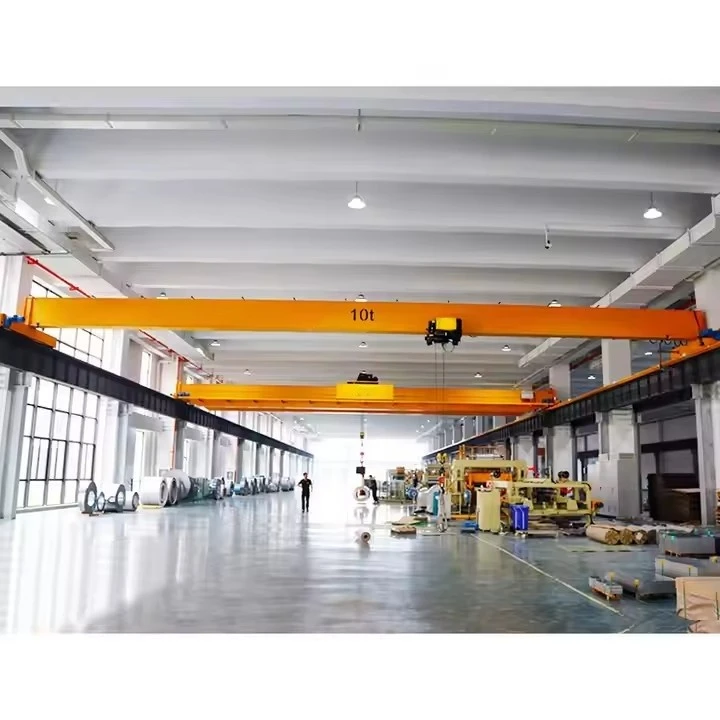
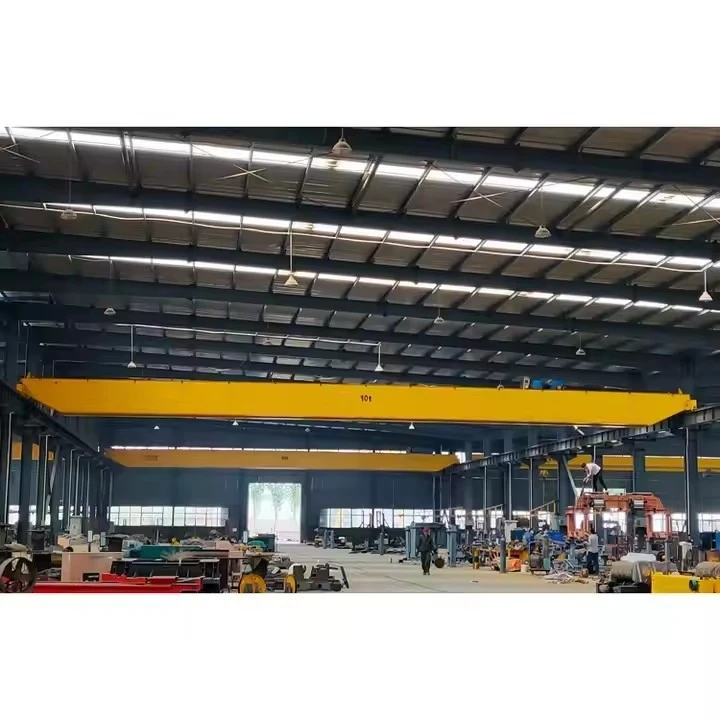

16 Ton European Single Girder Overhead Crane
Products Description
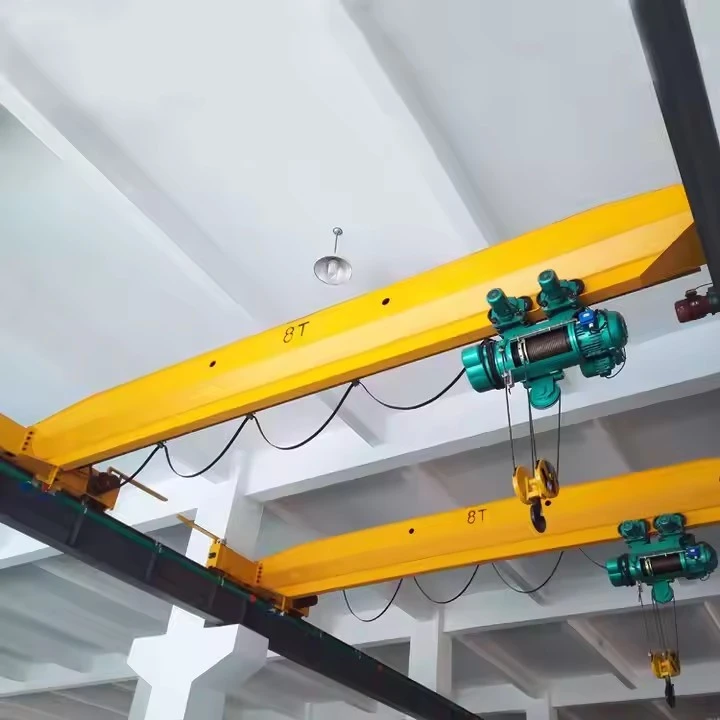
A 16-ton European single girder overhead crane is a compact, efficient, and cost-effective lifting solution designed for medium-duty industrial applications, typically moving loads up to 16 tonnes across workshop or warehouse spaces .
Lifting Capacity 1 – 30 tons (custom up to 50+ tons)
Span 5 – 30 meters
Lifting Height 3 – 30 meters
Lifting Speed 1 – 20 m/min (adjustable)
Trolley Speed 5 – 30 m/min
Crane Travel Speed 10 – 60 m/min
Power Supply 380V/415V, 50Hz (3-phase)
Duty Class FEM A3-A5 (Medium to Heavy Duty)

Pictures & Components
Main Girder: Typically a box-section girder welded from high-strength steel (e.g., Q345B). It is optimized through finite element analysis (FEA) to achieve light self-weight and low wheel loads while maintaining excellent rigidity. Some designs also use an I-beam main girder with patented structural enhancements for improved traveling stability.

End Carriage: Located at both ends of the main girder. It features a torsion-resistant box-section design, usually welded from rectangular steel tubes or steel plates. It is connected to the main girder via high-strength bolts, ensuring precision alignment and smooth crane travel.
 |
 |
Components: Integrates the lifting motor, gearbox, wire rope drum, hook block, and limit switches into a compact unit.
Design Features: Adopts a C-shape or side-mounted configuration, which offers a low headroom design. This allows the hook to reach closer to the building's side walls and maximizes usable vertical lifting height-critical for facilities with ceiling height constraints.
Performance: Motors typically have an IP55 protection rating, feature independent forced-air cooling, and are equipped with dual braking systems (electromagnetic and mechanical) for enhanced safety and reliability.
 |
 |
Traveling Mechanisms
Enable horizontal movement of both the entire crane (bridge travel) and the hoist (trolley travel).
Bridge Travel Mechanism: Mounted on the end carriages, it drives the entire crane along the runway rails.
Trolley Travel Mechanism: Mounted on the main girder, it drives the electric hoist along the girder flange.
Core Drive Unit: Both mechanisms commonly use integrated "three-in-one" gearmotors (motor, gearbox, and brake in a single compact unit). These feature hardened helical gears and disc brakes, offering low maintenance and quiet operation. Nearly all travel motions are equipped with variable frequency drive (VFD) technology, ensuring smooth acceleration, minimal load swing, reduced mechanical impact, and precise positioning.

Electrical and Control System
Provides power distribution and operator control for the entire crane.
Power Supply:
Bridge power: Usually supplied via safe conductor bars (enclosed busbars) mounted along the runway.
Trolley power: Supplied via high-flexibility flat cables running on a C-channel steel track and cable trolley system, ensuring stable and reliable power delivery.

Control Modes: Supports multiple operator interface options, including pendant push-button station, wireless radio remote control, or operator cabin, depending on application requirements.
Control Core: The electrical panel uses a modular design with an integrated PLC (Programmable Logic Controller) for logical sequencing and diagnostics. All connections use heavy-duty industrial aviation plugs for quick and secure installation.

.
Safety Protection: The system incorporates comprehensive safety features, including overload protection, under-voltage protection, end-of-travel limit switches, emergency stop, and anti-collision devices to ensure safe and reliable operation.


Sketch

Main technical

Advantages
The European-style single girder crane offers a compelling combination of performance, economy, and space efficiency. Below are its key advantages, categorized for clarity.
🏗️ 1. Lightweight yet High-Strength Design
Optimized Structure: The welded box-section main girder, made from high-strength steel and optimized via FEA (Finite Element Analysis), significantly reduces the crane's self-weight compared to traditional designs.
Lower Wheel Loads: A lighter crane imposes less stress on the building's runway beams and foundation, which can reduce the cost of civil construction and prolong the life of the facility.
Material Savings: Less steel is used in manufacturing, contributing to a more sustainable and cost-effective product.
📐 2. Compact Footprint and Space Optimization
Low Headroom Design: The European hoist features a compact, C-shaped configuration that minimizes the distance between the hook and the runway rail. This maximizes the usable lifting height within the same building clearance.
Close Hook Approach: The hoist's side-mounted design allows the hook to get closer to the building's side walls, making better use of the available floor area and enabling efficient handling near the edges of the workspace.
Smaller Workshop Requirements: For new facilities, the compact design can allow for a lower building height, resulting in significant construction cost savings.
🔧 3. Smooth and Precise Control
Standard VFD Technology: Both hoisting and traveling motions are typically equipped with Variable Frequency Drives (VFD). This provides infinitely variable speed control.
Minimized Load Swing: VFD ensures smooth acceleration and deceleration, drastically reducing load swing. This allows operators to position heavy loads with millimeter precision, improving both safety and productivity.
Reduced Mechanical Shock: The soft-start and soft-stop features of VFD extend the service life of all mechanical components, including gears, brakes, and wire ropes, lowering maintenance costs.
🔒 4. Enhanced Safety and Reliability
Dual Braking System: The hoist is equipped with two independent brakes (typically an electromagnetic disc brake and a mechanical load brake), providing a fail-safe redundant system.
Comprehensive Safety Protections: Standard features include overload protection, under-voltage protection, end-of-travel limit switches, emergency stop buttons, and anti-derailment devices.
High-Quality Components: European-style components (e.g., gearboxes, motors, brakes) are built to high international standards (IP55 motor protection, F-class insulation), ensuring long-term reliability in demanding industrial environments.
💰 5. Cost-Effectiveness
Lower Initial Investment: As a single-girder design, it is significantly more affordable to manufacture, transport, and install than a double-girder crane of the same capacity (16 tons).
Energy Efficiency: The lightweight structure reduces the motor power required for travel and hoisting, leading to lower electricity consumption and reduced operating costs over the crane's lifetime.
Reduced Maintenance: High-quality components and VFD-controlled motions minimize wear and tear. Many drive units are designed to be "maintenance-free" for extended periods.
⚡ 6. Energy Efficiency and Environmental Performance
Lower Power Consumption: The combination of lightweight design and efficient VFD motors results in a crane that consumes significantly less energy compared to traditional designs, reducing the overall carbon footprint.
Low Noise Operation: The use of hardened helical gears and precise VFD control ensures quieter operation, contributing to a better working environment for operators.
🛠️ 7. Easy Customization and Installation
Modular Design: The crane uses standardized, modular components, making it easy to customize for different spans, lifting heights, and control options.
Simplified Installation: The lightweight structure and bolted connections reduce the complexity and time required for on-site assembly and installation.
Flexible Control Options: Supports pendant control, wireless remote control, or cabin operation to suit different operator preferences and workflow requirements.
Application:
Applications of a 16-Ton European Single Girder Overhead Crane
The 16-ton European single girder overhead crane is a versatile material handling solution, bridging the gap between light-duty and heavy-duty lifting needs. Its compact design, precise control, and low wheel loads make it a top choice for industries requiring efficient and reliable lifting up to this capacity.
🏭 Key Industries and Applications
Automotive Manufacturing & EV Production
This crane is widely used for production line handling, equipment installation, and component transportation in the automotive sector. In EV manufacturing, for example, 10–16T single girder cranes support assembly and logistics in plants like Xiaomi's EV facility. In injection molding workshops for automotive parts, 16T cranes assist with handling large, heavy molds and precision assembly. The VFD (Variable Frequency Drive) control ensures smooth, precise load positioning, which is critical for aligning delicate automotive components.
Machinery Manufacturing & Heavy Equipment Assembly
In machine shops and assembly lines, the crane is used for transporting heavy equipment, parts, and assemblies. Its precise control makes it ideal for tasks requiring careful alignment, such as joining large components, handling dies and molds for stamping or injection molding, and moving fabricated steel plates and structures.
Steel & Metallurgy
The steel industry relies on these cranes for efficient handling of steel plates, coils, and other raw materials, as well as for processes like pouring molten steel. The crane's ability to operate smoothly with optional grab or magnet attachments makes it valuable for recycling and scrap handling.
Logistics, Warehousing & General Manufacturing
These cranes are a common sight in warehouses, workshops, and factories for general-purpose material handling and storage. This includes applications in paper-making (handling wood and paper rolls), building materials, and other manufacturing sectors.
Specialized Environments
The equipment can be adapted for demanding conditions. With explosion-proof features, it's suitable for the petrochemical industry where flammable materials are present. It also finds use in civil aviation for moving aircraft parts, and in clean rooms or nuclear power plants with specialized lubrication and materials.
Crane production procedure
Crane Production Procedure for a 16-Ton European Single Girder Overhead Crane
The production of a 16-ton European single girder overhead crane is a multi-stage process that transforms raw steel into a precision-engineered lifting machine. The procedure is built around a modular philosophy, ensuring quality, safety, and performance at every step.
🏗️ Stage 1: Steel Preparation & Pretreatment
The process begins with the preparation of raw materials to ensure a clean surface for subsequent manufacturing steps.
Material Selection: High-strength steel plates (e.g., Q235-B or Q345B) are selected for critical components like the main girder, end carriages, and other structural parts .
Shot Blasting: All steel plates undergo shot blasting pretreatment to achieve the Sa2.5 level standard. This process removes rust, mill scale, and other surface contaminants, preparing the steel for welding and coating .
Deburring and Edge Rounding: For cut parts, automated deburring lines are often used to remove slag, descale, and round edges. This critical step prepares the steel for subsequent fabrication and improves worker safety .
🛠️ Stage 2: Structural Fabrication (Main & End Girder Production)
This is the core of the production process, involving cutting, welding, and assembly.
Cutting and Forming: Steel plates are cut to precise dimensions using plasma, oxy-fuel, or laser cutting machines. For certain designs, cold roll forming technology is applied to create components like the "U" type grooves for the main girder, reducing the number of weld seams .
Main Girder Fabrication: The main girder is a critical structural element. A typical box-type girder is produced by welding together top and bottom plates and side web plates.
The components are assembled, and flat welding is used to join the external edges. This process is carefully sequenced to allow for rotation and welding from the optimal position .
Internal reinforcing plates (diaphragms) are welded inside the girder to maintain its shape and increase load-bearing capacity .
Welding Quality Control: To ensure structural integrity, all critical welds are subjected to X-ray nondestructive flaw detection to identify any internal defects .
End Carriage Fabrication: End carriages are typically manufactured as welded structures from rectangular steel tubes or are formed and welded from steel plates. They are often processed on CNC machine tools for precise dimensions, ensuring smooth and accurate crane travel .
🔩 Stage 3: Tensioning & Camber Control
A critical step in girder production is the application of tensioning to create a slight upward curvature, known as camber.
Purpose of Camber: This pre-engineered upward bow in the main girder compensates for the downward deflection (bending) that occurs when the crane is lifting a full load. This prevents the crane from permanently sagging over time and ensures smooth trolley travel .
Tensioning Process: The main girder is placed on supports, and a tensioning system is applied to the lower cover plate. This system exerts a longitudinal force, creating a bending moment that arches the beam upward to the required specification . The camber is carefully controlled to meet national and international standards.
⚙️ Stage 4: Surface Treatment and Painting
After fabrication and welding, the crane structure undergoes protective treatments.
Further Pretreatment: Welded assemblies may undergo additional mechanical pretreatment, like sandblasting, and a nanotechnological chemical pretreatment to protect the metal surfaces from oxidation .
Powder Coating: A high-quality powder coating is applied, often with an electrostatic system. This ensures complete coverage, excellent aesthetics, and strong adhesion. The selected powder is typically QUALICOAT Class 2 approved, guaranteeing superior durability and resistance to corrosion . The painting system is chosen based on the environmental corrosivity category and required durability (e.g., ensuring a corrosion resistance class of C4h) .
🔧 Stage 5: Assembly of Crane Kits
The final stage involves assembling the prefabricated structural components with the key mechanical and electrical systems.
Structural Assembly: The main girder and end carriages are connected using 10.9 high-strength bolts. This bolted connection ensures precision alignment and smooth running of the whole crane .
System Integration: A "crane kit" comprising core components-including the European electric hoist, end carriages, control panels, conductor rails, and remote control systems-is assembled. These components are often supplied by specialized manufacturers (e.g., Schneider for electricals, Omron for controls, SEW or ABM for gearmotors) to ensure optimal performance and reliability .
Wiring and Testing: All electrical components are wired according to detailed schematics. Following assembly, the crane undergoes a series of commissioning and verification tests, including load testing to its full 16-ton capacity and operational checks of all travel and hoisting functions .

Workshop view:
The company has installed an intelligent equipment management platform, and has installed 310 sets (sets) of handling and welding robots. After the completion of the plan, there will be more than 500 sets (sets), and the equipment networking rate will reach 95%. 32 welding lines have been put into use, 50 are planned to be installed, and the automation rate of the entire product line has reached 85%.


Hot Tags: 16 ton european single girder overhead crane, China 16 ton european single girder overhead crane manufacturers, suppliers, factory
You Might Also Like


Send Inquiry