








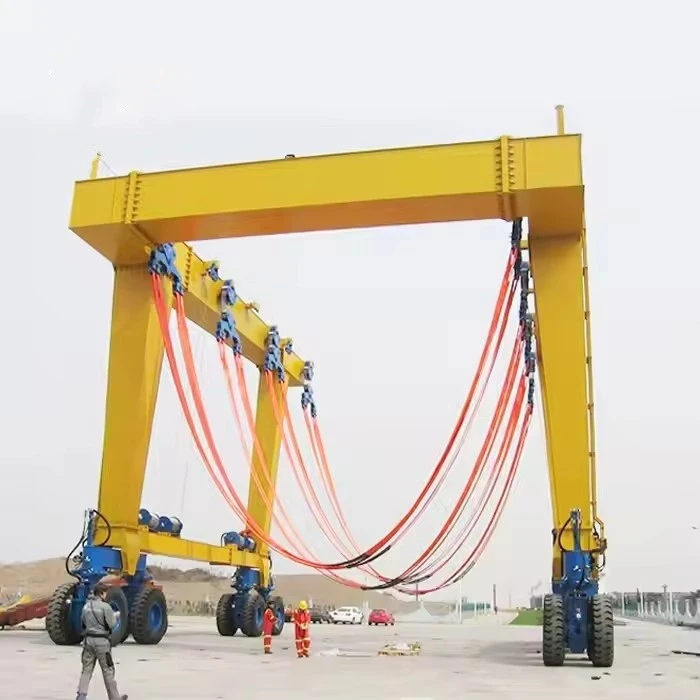

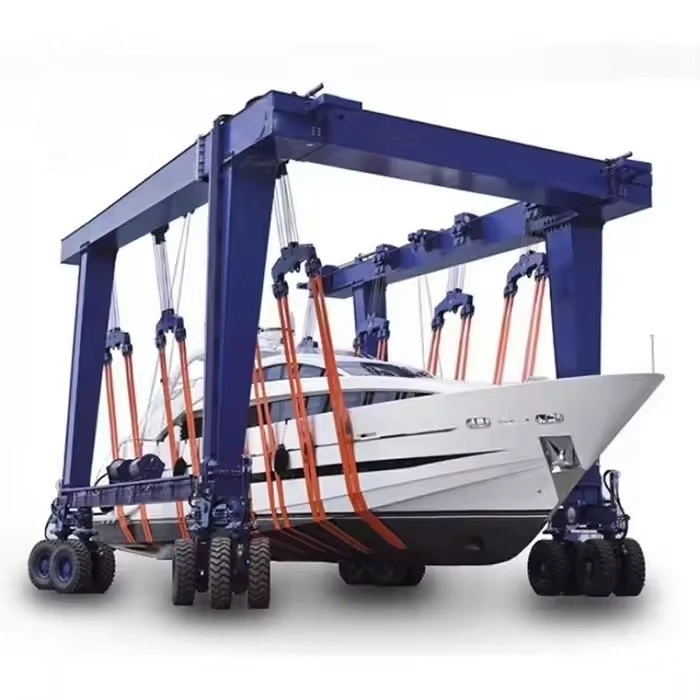
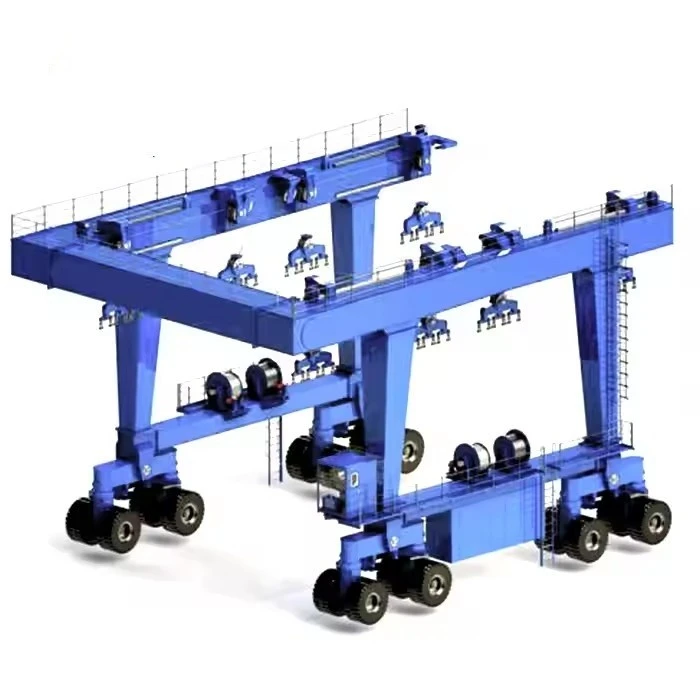
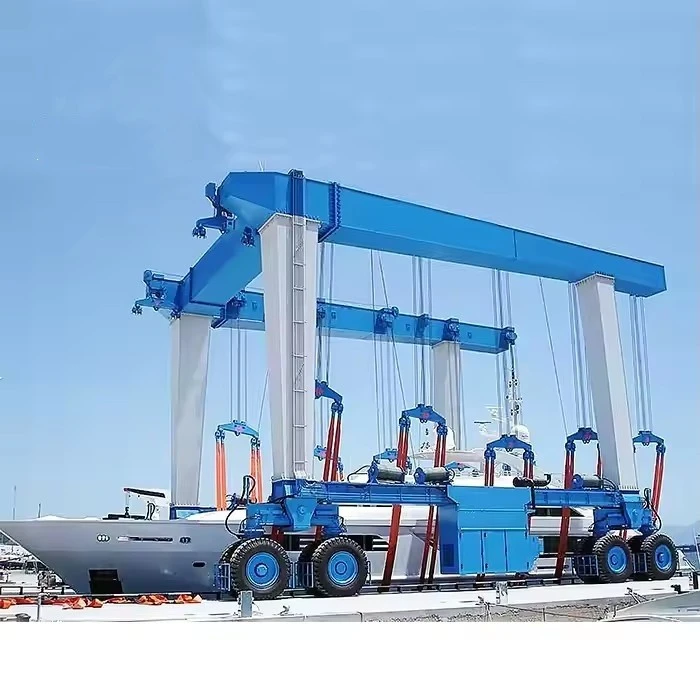
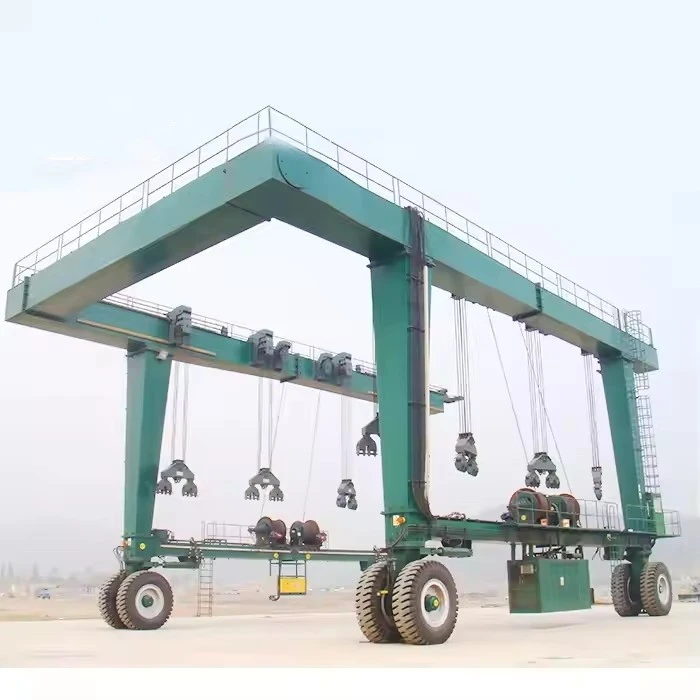
120ton Boat Lifting Hoist Crane
Products Description
Key Features
Lifting Capacity: 120 tons
Heavy-duty gantry frame designed for stable vessel handling
Flexible lifting system with multiple lifting points and adjustable slings
Hydraulic lifting and steering system for synchronized operation
Rubber-tired traveling system for flexible movement around the shipyard
Multi-directional steering, depending on the configuration
Wireless remote control or cabin operation
Overload protection and lifting-limit protection
Soft lifting slings help protect the hull and painted surfaces
Main dimensions, lifting height, span, and steering configuration can be customized according to the vessel and working site.
Comparison with Other Boat Lifting Systems
| Feature | Gantry Boat Hoist | Marine Railway | Floating Dry Dock |
|---|---|---|---|
| Mobility | High (if rubber-tired) | Low (fixed track) | Low (water-dependent) |
| Max Capacity | 10–500+ tons | 50–5,000 tons | 1,000–100,000+ tons |
| Speed | Fast (minutes) | Slow (hours) | Moderate (hours) |
| Best For | Small to medium boats | Large ships | Massive vessels |
Comparison with Other Boat Lifting Systems
| Feature | Gantry Boat Hoist | Marine Railway | Floating Dry Dock |
|---|---|---|---|
| Mobility | ✅ High (if rubber-tired) | ❌ Fixed track | ❌ Water-dependent |
| Max Capacity | 10–500+ tons | 50–5,000 tons | 1,000–100,000+ tons |
| Speed | ⚡ Fast (minutes) | 🐢 Slow (hours) | 🕒 Moderate (hours) |
| Space Needed | Compact storage | Long track area | Large water area |
| Best For | Small-medium boats | Large ships | Massive vessels |
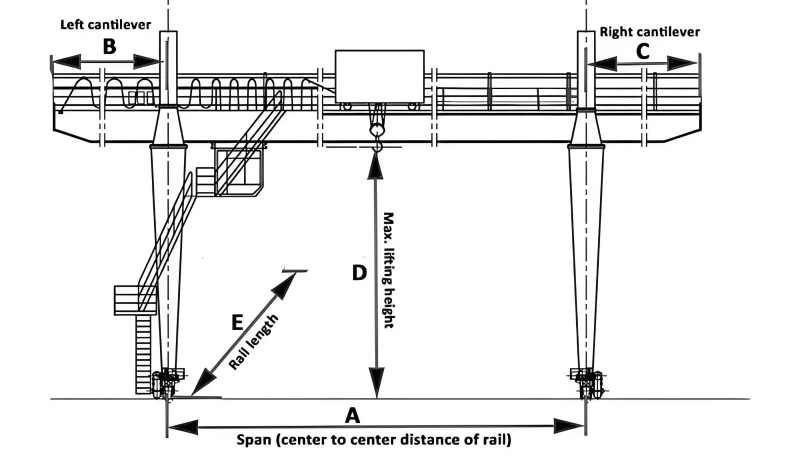
Lifting Capacity 120 tons
Span (Width) 3 - 12 meters (adjustable)
Lifting Height 3 - 10 meters
Working Class A3-A5 (light to medium duty)
Hoisting Speed 0.5 - 8 m/min (variable)
Main Beam Type Single/double girder (box-type)
Power Supply 220V/380V 3-phase or manual
Control Mode Pendant control/wireless remote
Hoist Type Electric chain hoist/wire rope hoist
Travel Drive Manual push or motorized
Corrosion Protection Hot-dip galvanized or marine-grade paint
Wind Resistance Up to Beaufort scale 6 (for outdoor use)
Operating Temp -20°C to +50°C

Pictures & Components
Main Gantry Frame
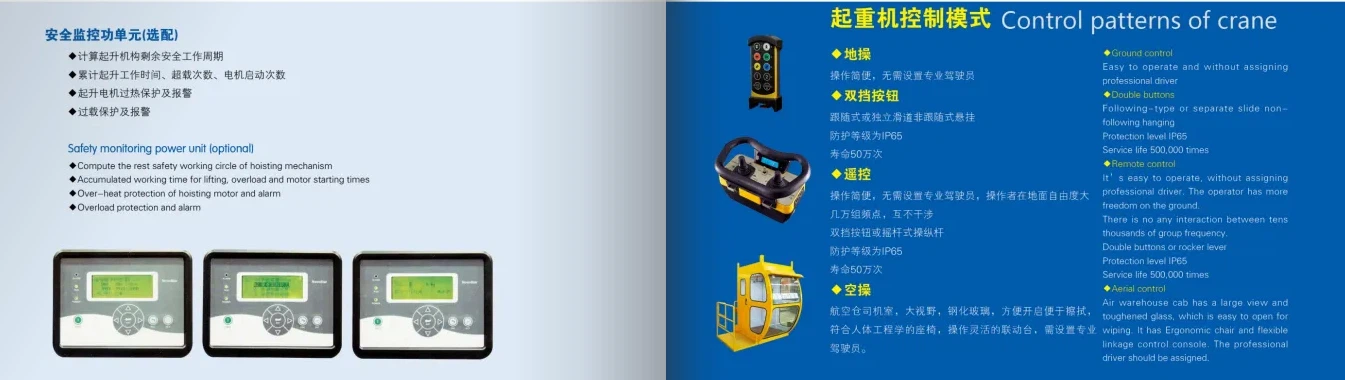
Heavy-duty steel structure that supports the entire lifting load and provides the required stability during vessel handling.
Lifting Mechanism
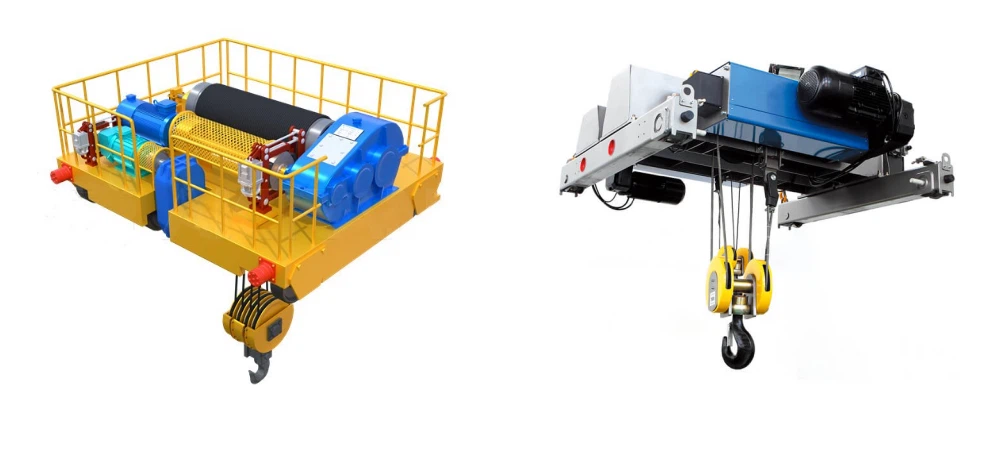
Hydraulic cylinders, winches, or hydraulic lifting units used to raise and lower boats smoothly and synchronously.
Lifting Slings
High-strength, flexible slings positioned underneath the vessel hull. They distribute the load evenly and help prevent damage to the boat.
Hydraulic System
Consists of hydraulic pumps, cylinders, valves, hoses, hydraulic tanks, and related components for lifting and steering operations.

Traveling Mechanism
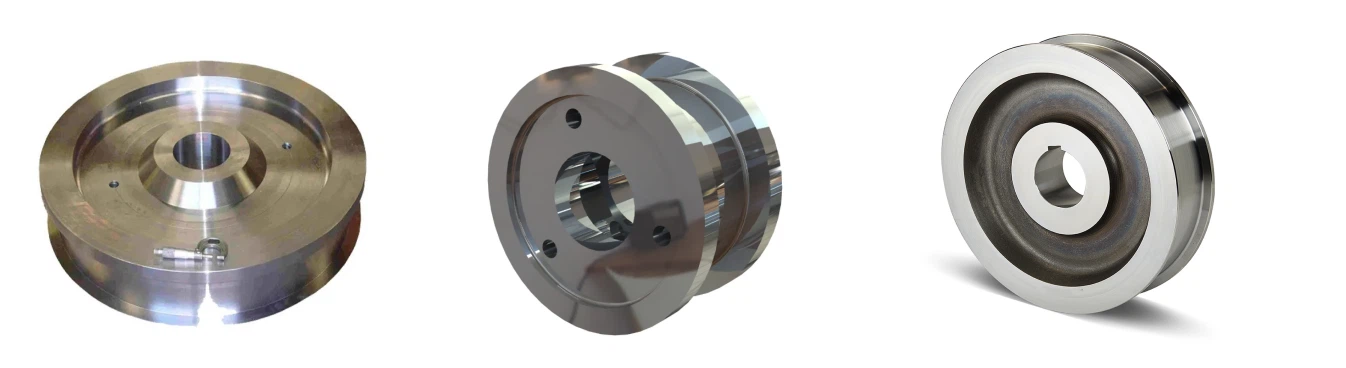
Heavy-duty wheels, drive motors, gearboxes, and axles that allow the crane to move with the vessel.
Steering System
Hydraulic or mechanical steering system allowing the crane to travel straight, turn, or move laterally according to the design.
Power Unit
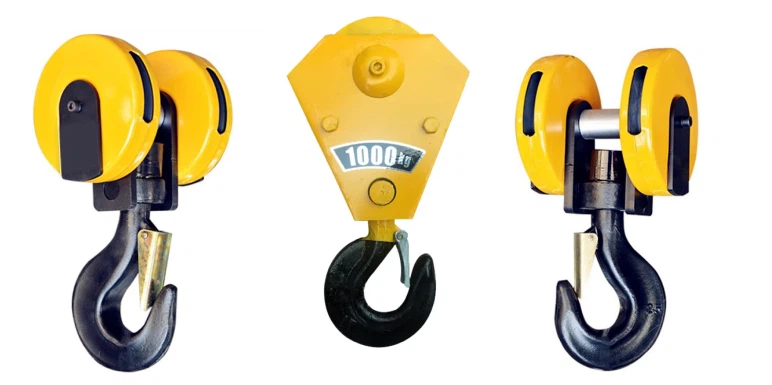
Diesel engine or electric power system that supplies energy to the hydraulic and traveling systems.

Electrical Control System
Includes PLC/control panel, sensors, switches, cables, and control devices for coordinated crane operation.

Operator Control System
Cabin, pendant control, or wireless remote control for operating lifting, traveling, steering, and emergency functions.

Safety Protection Devices
Includes overload protection, lifting-limit protection, emergency stop, hydraulic pressure protection, travel limit protection, and warning alarms.
Wheel and Axle Assembly
Heavy-duty wheels and axles designed to withstand the high loads generated by a 120-ton vessel and the crane's own weight.
Emergency and Braking System
Braking devices and emergency stopping mechanisms used to safely control and stop crane movement when required.
Applications of Each Component
| Component | Function |
|---|---|
| Gantry Frame | Supports entire structure |
| Winches & Slings | Lifts the boat |
| Trolley System | Positions boat over storage area |
| Steering Mechanism | Allows precise maneuvering |
| Load Sensors | Ensures safe lifting capacity |
SKETCH
Main technical
Advantages
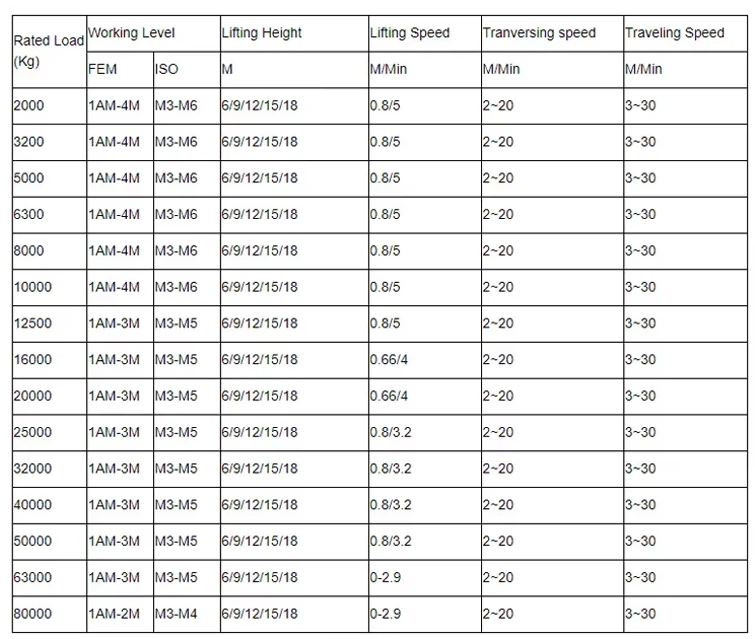
Advantages of 120 Ton Boat Lifting Hoist Crane
High Lifting Capacity
With a rated capacity of 120 tons, the crane can safely handle large yachts, workboats, fishing vessels, ferries, and other heavy marine equipment.
Flexible Operation
The rubber-tired design allows the crane to travel freely around the shipyard or marina without requiring fixed rails.
Stable and Synchronized Lifting
A coordinated hydraulic lifting system provides balanced lifting at multiple points, reducing uneven loads and improving vessel stability.
Excellent Mobility
Heavy-duty wheels and a flexible steering system allow the crane to move, turn, and position vessels efficiently within limited working areas.
Hull Protection
Flexible lifting slings distribute the vessel's weight over a larger contact area, helping minimize stress and potential damage to the hull.
High Safety Performance
Overload protection, emergency stops, lifting limits, hydraulic protection, and other safety devices help ensure reliable operation.
Efficient Boat Handling
The crane can perform boat launching, hauling out, transportation, maintenance, repair, and storage operations, reducing handling time.
Customized Design
The lifting height, span, overall dimensions, sling arrangement, steering system, and control method can be customized according to vessel size and site requirements.
Suitable for Different Vessel Types
It can be used for yachts, fishing boats, patrol boats, workboats, passenger vessels, and other marine craft.
Reduced Infrastructure Requirements
Unlike fixed gantry cranes, a mobile boat hoist generally does not require a dedicated runway or permanent rail system, making it suitable for flexible shipyard layouts.
Application
Application of 120 Ton Boat Lifting Hoist Crane
A 120 Ton Boat Lifting Hoist Crane is designed for heavy-duty vessel handling operations in shipyards, marinas, ports, and marine maintenance facilities.
Main Applications
Boat Launching and Hauling Out
Used to safely lift boats from the water and lower them back into the water for launching.
Yacht Handling
Suitable for lifting and transporting large yachts between the marina, maintenance area, and storage yard.
Ship Repair and Maintenance
Provides efficient vessel lifting for hull inspection, painting, cleaning, engine maintenance, and structural repairs.
Shipyard Operations
Used for moving newly built or repaired vessels between different working areas within a shipyard.
Boat Transportation
The mobile crane can carry vessels from the waterfront to dry storage or maintenance workshops.
Fishing Vessel Handling
Suitable for lifting and positioning fishing boats for routine inspection, repair, and maintenance.
Workboat and Patrol Boat Handling
Used for lifting service boats, patrol boats, harbor craft, and other commercial vessels.
Marine Equipment Installation
Can assist in positioning heavy marine equipment and components during vessel construction or refurbishment.
Dry Storage Operations
Used to transfer vessels from the water to land-based storage areas and accurately position them on support stands.
Marina and Port Facilities
Provides flexible vessel handling where frequent lifting and relocation of boats is required.
Typical Working Process
Crane production process
Crane Production Process – 120 Ton Boat Lifting Hoist Crane
The production of a 120 Ton Boat Lifting Hoist Crane involves structural fabrication, hydraulic system assembly, electrical installation, testing, and final commissioning.
1. Technical Design & Engineering
Confirm lifting capacity, vessel dimensions, lifting height, span, wheel load, traveling speed, and operating conditions.
Design the gantry frame, lifting system, traveling mechanism, steering system, hydraulic system, and control system.
Prepare detailed manufacturing drawings and technical documents.
2. Raw Material Inspection
Select structural steel, hydraulic components, wheels, axles, motors, pumps, cylinders, electrical components, and lifting slings.
Check material certificates, dimensions, mechanical properties, and component specifications.
Conduct incoming inspection before fabrication.
3. Steel Plate Cutting & Preparation
Cut steel plates and profiles using CNC flame cutting, plasma cutting, or laser cutting.
Perform drilling, beveling, grinding, and dimensional preparation according to the drawings.
4. Main Frame Fabrication
Assemble the main beams, legs, cross beams, and reinforcement structures.
Carry out positioning, tack welding, and full welding.
Use welding procedures appropriate for heavy-load structural components.
5. Welding & Structural Inspection
Perform controlled welding of the gantry structure.
Inspect welds using visual inspection and, where required, NDT such as ultrasonic or magnetic-particle testing.
Correct welding deformation and verify structural dimensions.
6. Machining & Surface Treatment
Machine important connection surfaces, mounting holes, axle seats, and other precision components.
Remove welding slag and surface contaminants.
Apply shot blasting and anti-corrosion primer/paint suitable for marine environments.
7. Hydraulic System Assembly
Install hydraulic cylinders, pumps, motors, valves, hydraulic tanks, hoses, filters, and pipelines.
Connect the synchronized lifting and steering circuits.
Conduct hydraulic pressure and leakage tests.
8. Traveling & Steering Mechanism Assembly
Install wheels, axles, drive motors, gearboxes, and steering components.
Check wheel alignment and mechanical clearances.
Test traveling and steering movements.
9. Lifting System Installation
Install lifting cylinders or winches and the vessel lifting slings.
Adjust the lifting points to ensure balanced load distribution.
Check synchronization between all lifting units.
10. Electrical & Control System Installation
Install the control cabinet, PLC, sensors, cables, switches, emergency-stop devices, alarms, and remote-control system.
Connect the hydraulic, traveling, steering, and safety control circuits.
Program and test the control system.
11. Factory Testing
Conduct comprehensive tests before shipment, including:
No-load lifting test
No-load traveling test
Steering test
Hydraulic pressure test
Emergency-stop test
Limit and overload protection test
Control-system function test
Rated-load lifting test
Load-holding and stability inspection
12. Final Inspection & Commissioning
Check the overall dimensions, welding quality, hydraulic system, electrical system, safety devices, and paint quality.
Verify that all components operate correctly and that the crane meets the approved technical requirements.
Prepare inspection and testing records.
13. Disassembly & Transportation
Disassemble the crane into transportable sections if required.
Protect hydraulic and electrical components against moisture and damage.
Mark components clearly for easy site installation.
14. Site Installation & Commissioning
Assemble the gantry frame, lifting system, traveling mechanism, hydraulic system, and electrical system at the customer's site.
Perform functional testing and load testing.
Train operators and maintenance personnel before handover.

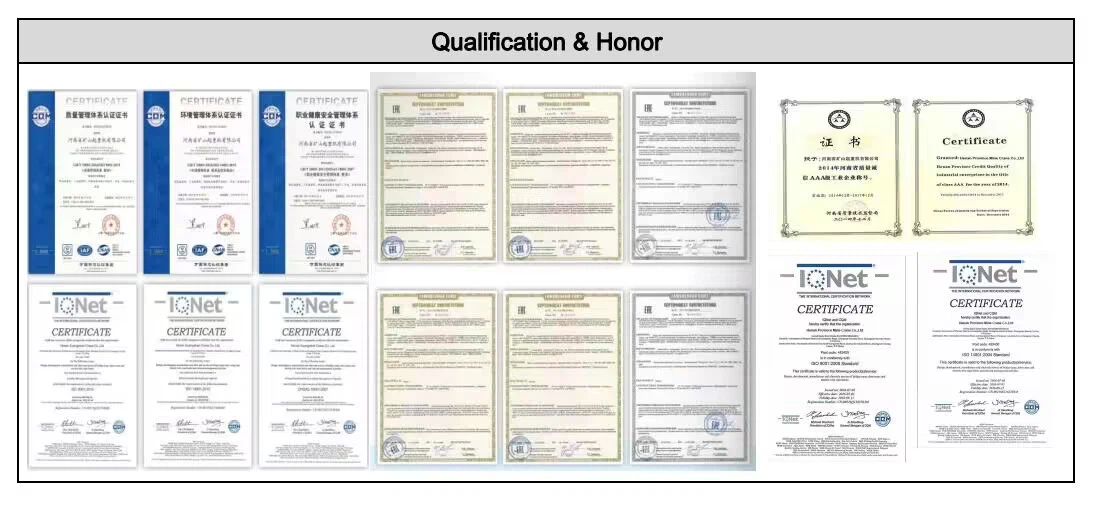
Workshop view:
The company has installed an intelligent equipment management platform, and has installed 310 sets (sets) of handling and welding robots. After the completion of the plan, there will be more than 500 sets (sets), and the equipment networking rate will reach 95%. 32 welding lines have been put into use, 50 are planned to be installed, and the automation rate of the entire product line has reached 85%.



Hot Tags: 120ton boat lifting hoist crane, China 120ton boat lifting hoist crane manufacturers, suppliers, factory
You Might Also Like


Send Inquiry