









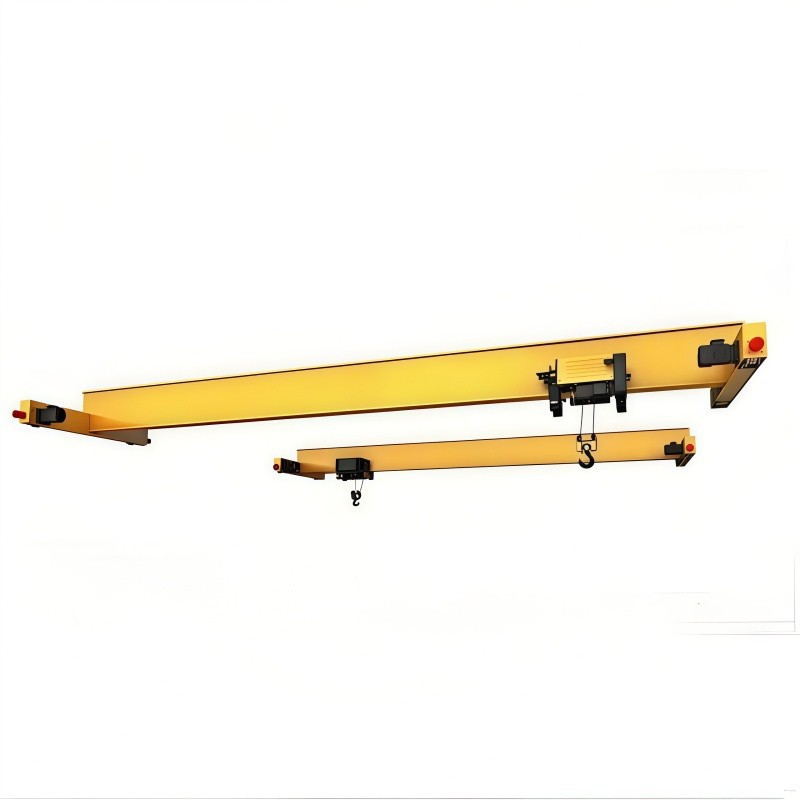
10 Ton Single Overhead Bridge Crane
Products Description
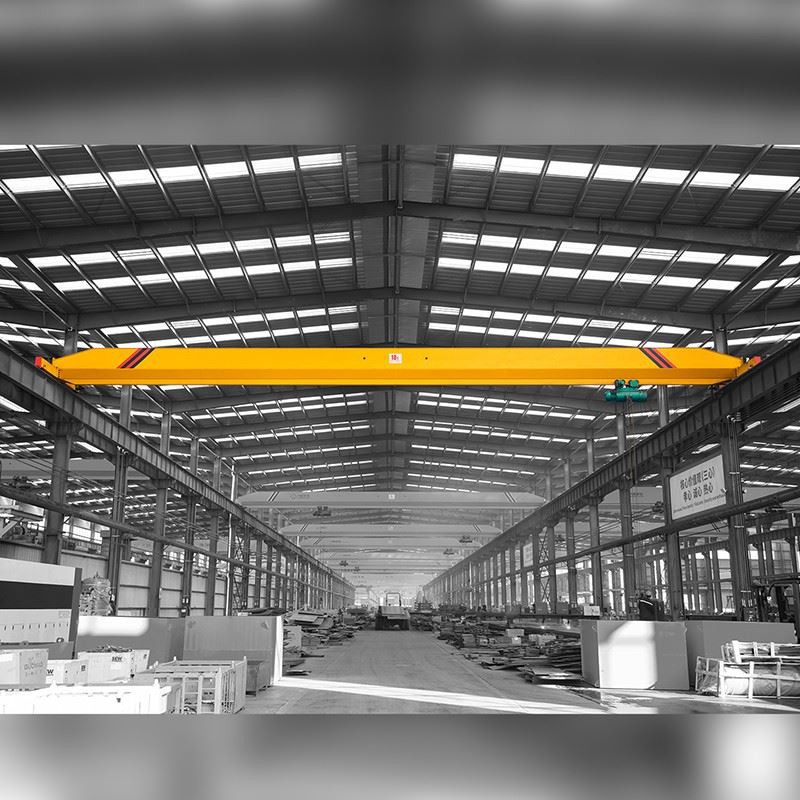
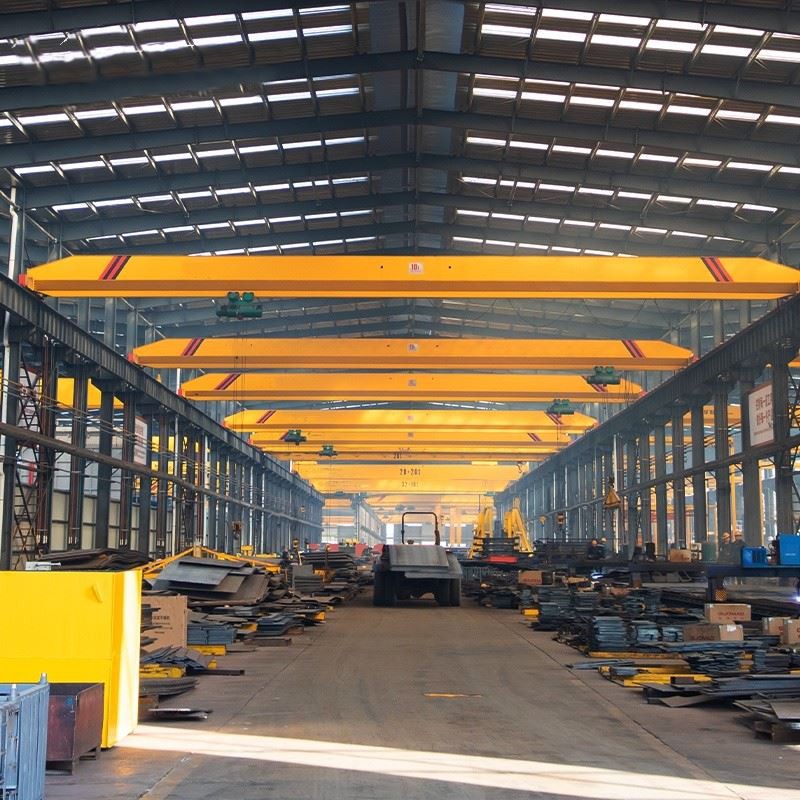
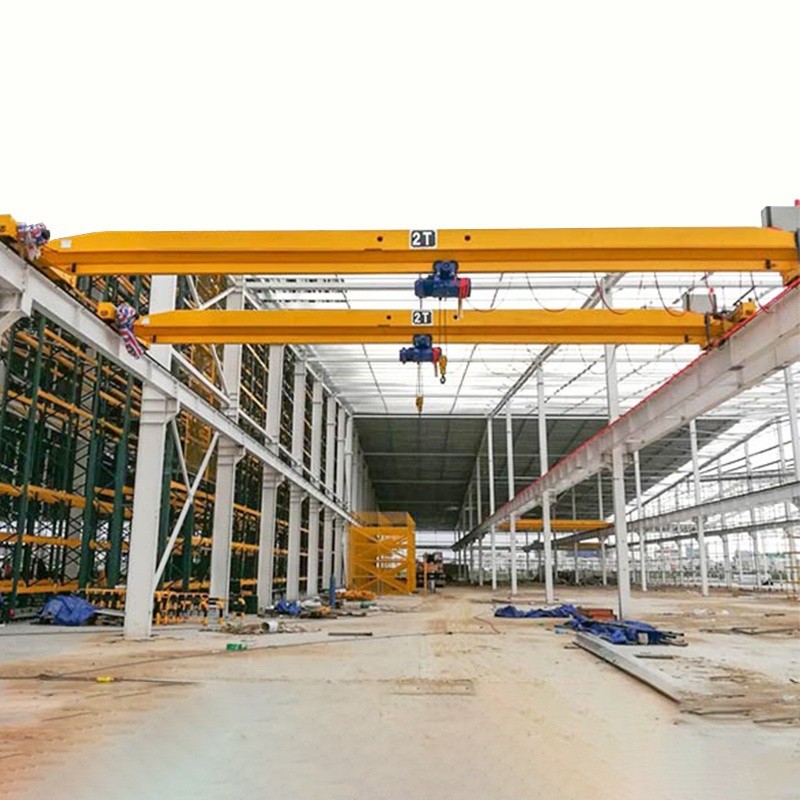
A 10 Ton Single Girder Overhead Bridge Crane is a highly efficient and economical lifting solution designed for indoor material handling operations such as factories, warehouses, workshops, and assembly lines. It is engineered with a single main girder structure, offering a lightweight design, easy installation, and cost-effective performance.
Lifting Capacity 1 – 20 tons (custom up to 50+ tons)
Span 5 – 30 meters
Lifting Height 3 – 30 meters
Lifting Speed 1 – 20 m/min (adjustable)
Trolley Speed 5 – 30 m/min
Crane Travel Speed 10 – 60 m/min
Power Supply 380V/415V, 50Hz (3-phase)
Duty Class FEM A3-A5 (Medium to Heavy Duty)

Pictures & Components
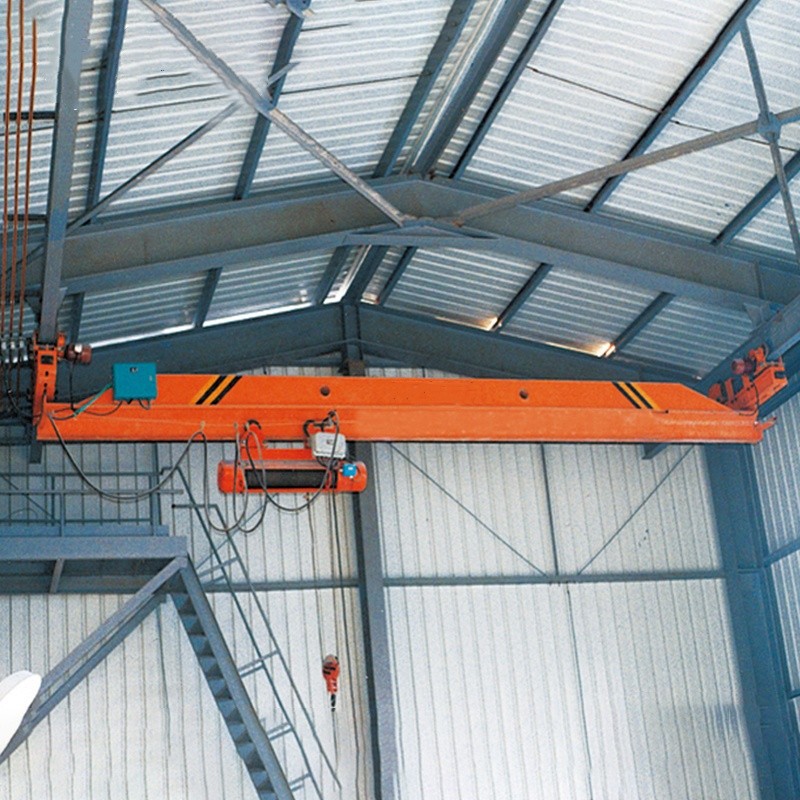
A Wireless Remote Control Overhead Bridge Crane is made up of several critical components that work together to lift, move, and lower heavy materials with precision and safety. Below is an overview of the main components and their functions:
1. Main Girder (Bridge Beam)
The primary load-bearing structure of the crane
Usually fabricated as a box girder or I-beam
Supports the hoist and trolley
Designed for strength, stiffness, and minimal deflection

2. End Carriages (End Trucks)
Located at both ends of the girder
Equipped with travel wheels
Allow the crane to move along runway rails
Driven by geared motors for smooth travel
3. Electric Hoist
The core lifting unit
Typically includes:
Motor
Gearbox
Drum & wire rope
Hook block
👉 Common types:
CD/MD wire rope hoist (standard)
European low-headroom hoist (compact & efficient)
 |
 |
4. Trolley (Cross Travel Mechanism)
Carries the hoist
Moves horizontally along the girder
Enables left–right positioning of the load
5. Crane Travel Mechanism (Long Travel)
Drives the entire crane along the runway
Includes:
Motors
Gear reducers
Wheels
👉 Provides forward/backward movement
 |
 |
6. Hook Block
The load handling device
Includes:
Hook
Pulley system (sheaves)
Designed with safety latch to prevent load slipping
7. Electrical System and Power Supply
Function: The crane requires electrical power to operate the motors, control systems, and remote.
Components:
Power Supply: The crane typically operates on 380V, 415V, or 480V industrial power for larger systems.
Circuit Breakers: Safety devices to protect the crane from power surges or electrical faults.
Cables: Heavy-duty cables deliver power from the source to the crane's various components.

8. Electrical System
Powers and controls the crane
Includes:
Control panel
Wiring & cables
Festoon system or conductor bars
👉 Ensures safe and reliable operation
9. Control System
Interface used by operator
Common types:
Pendant control (wired)
Wireless remote control
Cabin control (rare for single girder)
10. Runway System
Rails on which the crane travels
Supported by building structure or columns
Includes:
Rail tracks
Rail clamps & buffers

11. Safety Features
Emergency Stop System: A manual emergency stop button on the remote control and control panel to immediately halt all crane operations.
Anti-Sway System: Some cranes are equipped with an anti-sway system to minimize swinging of the load during movement.
Obstacle Detection: Sensors detect nearby obstacles, ensuring safe operation and preventing collisions.
12. Structural Components (Frame, Girders, etc.)
Function: These parts provide the rigidity and strength needed to carry heavy loads.
Types:
Single Girder: Lighter-duty cranes.
Double Girder: Heavy-duty cranes capable of lifting larger loads.
Materials: Typically made of high-strength steel to ensure durability under heavy load conditions.

.
⚙️ Optional / Advanced Components
Variable Frequency Drive (VFD) – smooth speed control
Anti-sway system – improves load stability
Load display system
Remote monitoring / smart controls


Sketch

Main technical

Advantages
✅ Advantages
💰 1. Cost-Effective Solution
Lower manufacturing and installation cost compared to double girder cranes
Reduced steel structure weight → saves on building construction cost
Ideal for businesses seeking high value with moderate investment
⚖️ 2. Lightweight Structure
Single girder design significantly reduces overall weight
Less load on runway beams and supporting structure
Suitable for existing workshops without major reinforcement
⚡ 3. Easy Installation & Maintenance
Simple structural design → faster installation
Fewer components → easier inspection and maintenance
Lower downtime and maintenance cost
🏭 4. Efficient Material Handling
Provides three-dimensional movement:
Lifting (up/down)
Cross travel (left/right)
Long travel (forward/backward)
👉 Improves workflow efficiency and productivity
🎯 5. Flexible Operation Options
Multiple control methods:
Pendant control
Wireless remote control
Cabin (optional)
👉 Enhances operator convenience and safety
📏 6. Space-Saving Design
Compact structure requires less headroom
Especially efficient when using low headroom or European-type hoists
Maximizes usable workspace
🔒 7. High Safety Performance
Equipped with:
Overload protection
Limit switches
Emergency stop system
Reliable braking mechanisms
👉 Ensures safe and stable operation
🔄 8. Smooth & Stable Operation
Optional Variable Frequency Drive (VFD) for:
Soft start and stop
Reduced load swing
Precise positioning
🧩 9. Customizable Design
Can be tailored to:
Span and lifting height
Power supply
Working duty (A3–A5)
Special environments (dust-proof, explosion-proof)
📉 10. Energy Efficient
Lower power consumption compared to heavier crane systems
Modern designs optimize motor and drive efficiency
Application:
🏭 Applications
A 10 Ton Single Girder Overhead Bridge Crane is widely used for medium-duty material handling across various industries. Its versatility, cost-efficiency, and compact design make it ideal for both production and maintenance operations.
🔧 Industrial Applications
1. Manufacturing Plants
Handling raw materials, components, and finished products
Supporting assembly lines and production processes
Loading/unloading machinery parts
👉 Common in:
Mechanical manufacturing
Automotive parts production
Equipment assembly workshops
2. Warehouses & Logistics Centers
Lifting and moving heavy goods and pallets
Loading/unloading trucks and containers
Organizing bulk storage efficiently
👉 Ideal for improving workflow and storage efficiency
3. Machinery & Maintenance Workshops
Equipment repair and maintenance
Handling motors, pumps, gearboxes, and heavy parts
Assisting in installation and dismantling
4. Steel & Metal Fabrication
Moving steel plates, pipes, and structures
Supporting cutting, welding, and fabrication processes
👉 Often used with:
Hooks
Magnetic lifters (optional)
Grab buckets (customized)
5. Construction Material Yards
Handling precast concrete, beams, and construction materials
Loading materials for transport
6. Power Plants & Utilities
Maintenance of turbines, generators, and heavy equipment
Lifting during installation and inspection
7. Light to Medium Duty Industrial Facilities
Suitable for operations with:
Moderate lifting frequency
Loads up to 10 tons
Standard indoor environments
⚙️ Specialized Applications
Low headroom workshops → with compact crane design
Precision handling → with VFD and anti-sway systems
Hazardous environments (optional customization):
Explosion-proof cranes
Dust-proof designs
Crane production procedure
🏗️ Crane Production Procedure
The manufacturing of a 10 Ton Single Girder Overhead Bridge Crane follows strict quality control standards to ensure safety, durability, and performance.
🔩 1. Design & Engineering
Confirm customer requirements:
Lifting capacity (10 ton)
Span & lifting height
Duty class (A3–A5)
Perform:
Structural calculations
Load analysis
Deflection and stress checks
👉 Output:
General arrangement drawings
Manufacturing drawings
🔧 2. Raw Material Preparation
Select high-quality steel (e.g., Q235 / Q345)
Inspect materials for:
Thickness
Surface defects
Mechanical properties
👉 Only approved materials proceed to fabrication
🔨 3. Girder Fabrication
Cutting & Forming
CNC cutting of steel plates
Bending and shaping
Welding
Automatic submerged arc welding for main girder
CO₂ welding for auxiliary parts
Assembly
Assemble girder sections and stiffeners
👉 Ensures high structural strength and precision
🔍 4. Welding Inspection
Non-destructive testing (NDT):
Ultrasonic testing (UT)
Magnetic particle testing (MT)
👉 Detects internal and surface defects
⚙️ 5. Machining Process
Precision machining of:
Wheel sets
Bearing housings
End carriages
👉 Guarantees alignment and smooth operation
🧩 6. Component Assembly
Install:
End carriages
Electric hoist
Trolley mechanism
Drive systems
👉 Mechanical parts are aligned and secured
⚡ 7. Electrical System Installation
Install:
Control panels
Motors and wiring
Limit switches and safety devices
👉 Includes grounding and insulation checks
🎨 8. Surface Treatment & Painting
Shot blasting (rust removal)
Primer coating
Final paint finish (custom color available)
👉 Improves corrosion resistance and appearance
🧪 9. Testing & Quality Inspection
No-load Test
Check operation without load
Load Test
Static test: 125% rated load
Dynamic test: 110% rated load
Functional Testing
Hoisting, traveling, braking, and control systems
👉 Ensures compliance with safety standards
📦 10. Packaging & Delivery
Disassemble into transportable parts
Secure packaging for:
Girder
Hoist
Electrical components
👉 Delivered by container or bulk shipment
📋 11. Installation & Commissioning (Optional)
On-site installation guidance
Rail alignment and system setup
Final operational testing

Workshop view:
The company has installed an intelligent equipment management platform, and has installed 310 sets (sets) of handling and welding robots. After the completion of the plan, there will be more than 500 sets (sets), and the equipment networking rate will reach 95%. 32 welding lines have been put into use, 50 are planned to be installed, and the automation rate of the entire product line has reached 85%.


Hot Tags: 10 ton single overhead bridge crane, China 10 ton single overhead bridge crane manufacturers, suppliers, factory
You Might Also Like


Send Inquiry