










Rail Mounted Mg Gantry Cranes
Products Description
What is a Rail Mounted Mg Gantry Crane?
A Rail Mounted Mg Gantry Crane is a double-girder gantry crane classified for heavy-duty service. The "Mg" classification (following standards like FEM or DIN) indicates a very high duty cycle, meaning it is built for intensive, continuous operation in demanding environments.
Think of it as the heavy-haul, long-distance truck of the gantry crane world, compared to the Mz's delivery van.
Key Characteristics & Design
Double Girder Design: The most defining feature. Two robust main girders span the workspace, supported by the end trucks. This provides superior strength, rigidity, and hook height compared to a single girder.
Rail Mounted: The crane runs on dedicated, fixed rails embedded in the ground or on a foundation. This allows for precise movement, higher speeds, and the ability to handle massive loads without the instability of rubber-tired gantries.
Heavy-Duty Components (Mg Classification): Every component is built for endurance:
Motors and Drives: Higher power, with better thermal capacity for frequent starts and stops.
Gearboxes: Built to withstand shock loads and continuous use.
Brakes: Redundant and fail-safe systems for maximum safety.
Electrics: Heavy-duty contactors, relays, and wiring.
Key Differences: Mz vs. Mg Gantry Cranes
| Feature | Mz Type (Single Girder) | Mg Type (Double Girder, Rail Mounted) |
|---|---|---|
| Girder Design | Single | Double |
| Duty Cycle | Light to Moderate | Heavy to Very Heavy |
| Typical Capacity | 1 - 20 Tons | 20 - 500+ Tons |
| Hook Height | Lower | Higher |
| Cost | Economical | High Investment |
| Mobility | Can be wheel-mounted or rail-mounted | Almost exclusively Rail Mounted |
| Ideal For | Workshops, warehouses, occasional use | Steel mills, shipyards, heavy industry |
Conclusion: The Rail Mounted Mg Gantry Crane is a high-capacity, heavy-duty, fixed-path lifting solution. Its double-girder, rail-mounted design and rugged construction make it the definitive choice for the most demanding industrial applications where intensity, capacity, and reliability are paramount.
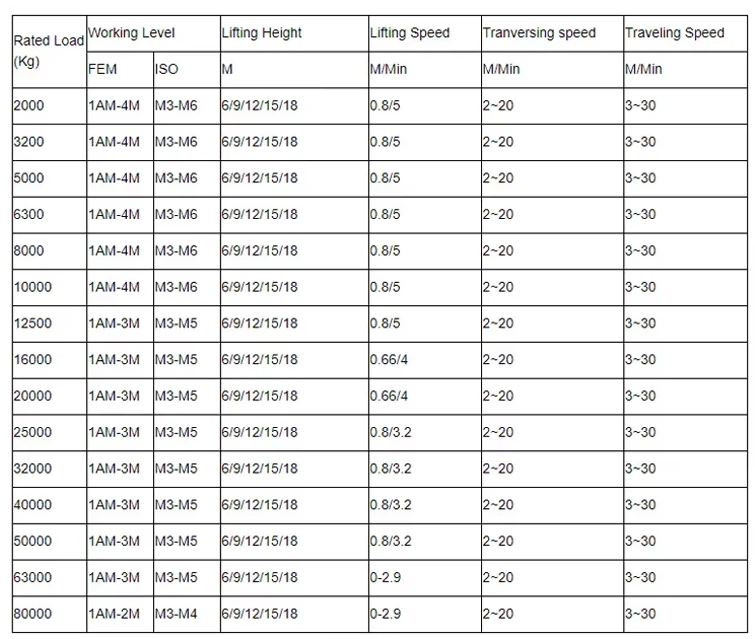
Lifting Capacity 320 tons
Span (Width) 3 - 12 meters (adjustable)
Lifting Height 3 - 10 meters
Working Class A3-A5 (light to medium duty)
Hoisting Speed 0.5 - 8 m/min (variable)
Main Beam Type Single/double girder (box-type)
Power Supply 220V/380V 3-phase or manual
Control Mode Pendant control/wireless remote
Hoist Type Electric chain hoist/wire rope hoist
Travel Drive Manual push or motorized
Corrosion Protection Hot-dip galvanized or marine-grade paint
Wind Resistance Up to Beaufort scale 6 (for outdoor use)
Operating Temp -20°C to +50°C

Pictures & Components
Here is a detailed breakdown of the components of a Rail Mounted Mg Gantry Crane. Given its heavy-duty nature, these components are more robust and complex than those on an Mz-type crane.
1. Primary Structural System (The Skeleton)
This framework is built to withstand immense stress and fatigue over years of heavy use.
Double Main Girders: The two primary, full-length, horizontal beams that form the bridge. They are typically fabricated from thick steel plate (box girders) for maximum strength and rigidity. This is the defining feature that differentiates it from a single-girder (Mz) crane.
End Trucks (Legs): The massive vertical structures at each end of the girders. They house the long travel wheels, drives, and anti-collision buffers. Legs can be rigid or articulated ("walking" legs) to accommodate long spans.

Crane Rail and Runway System: A critical, fixed infrastructure.
Running Rails: Heavy-duty steel rails (often similar to railroad tracks) on which the crane travels.
Runway Beams: Robust, often reinforced concrete or steel beams that support the rails.
Foundations: Deep concrete foundations that ensure the runway remains level and aligned under dynamic loads and over time.
2. Lifting & Travel System (The Muscles)
These are the high-performance components that perform the work.
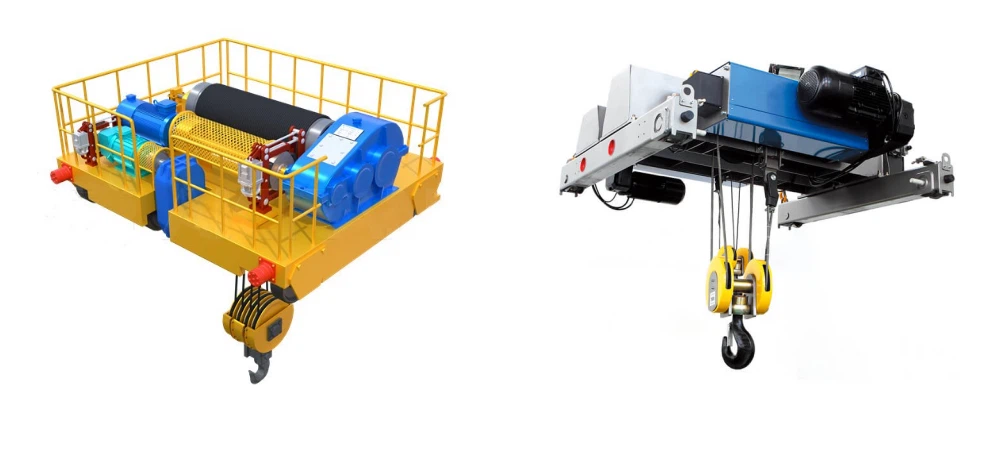
Main Hoist Unit: A powerful, heavy-duty hoist designed for Mg-class service.
Hoist Motor: High-torque, high-duty cycle motor.
Wire Rope Drum: Machined drum with precise grooving to spool multiple layers of rope.
Multiple Disc Brakes: Primary and secondary (emergency) braking systems.
High-Capacity Wire Rope: Designed for the crane's maximum capacity with a significant safety factor.
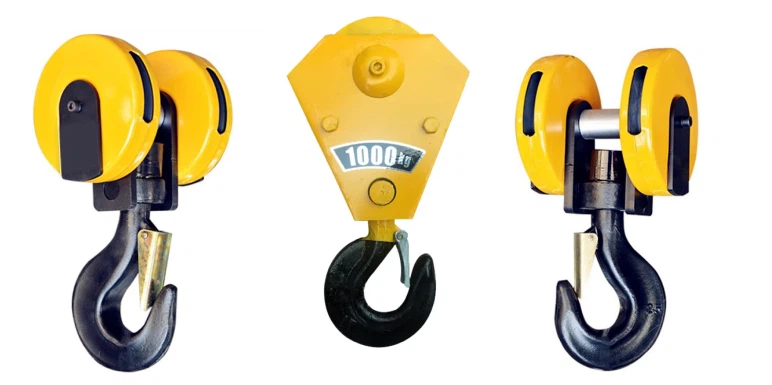
Hook Block: A sheaved block that multiplies the lifting capacity and provides a secure point for the load.

Trolley Frame: The structure that carries the main hoist and travels along the top of the double girders.
Trolley Travel Drives: Motors, gearboxes, and flanged wheels that move the trolley smoothly along the girder rails.
Trolley Rails: Rails fixed to the top of the main girders for the trolley to run on.
Gantry Long Travel Drives: The system that moves the entire crane.
Travel Motors: Multiple high-horsepower motors (one per leg or more) for synchronized movement.
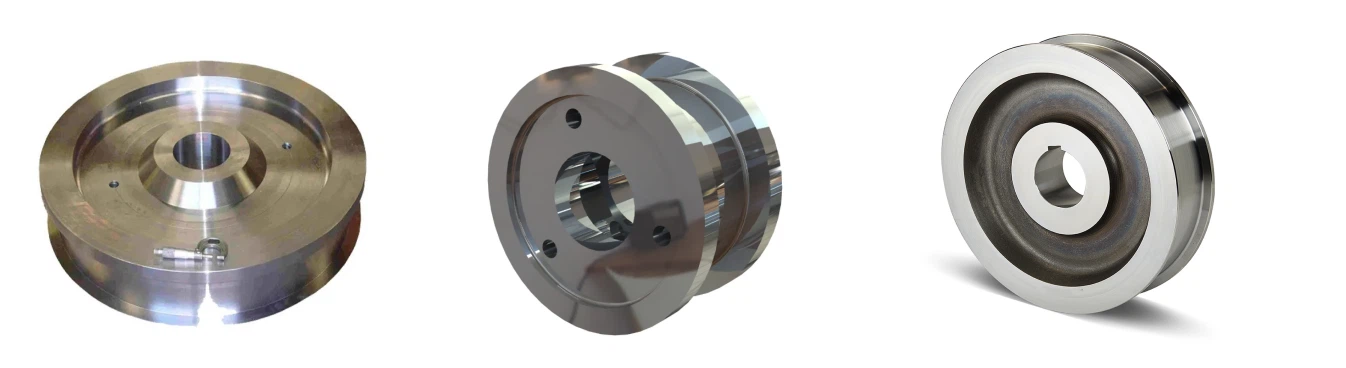
Gearboxes & Wheels: Large-diameter, forged steel wheels with hardened treads, driven through heavy-duty gear reducers.
3. Power & Control System (The Nerves)
Designed for reliability and precise control of powerful machinery.
Main Power Supply:
Conductor Bar System (Enclosed Track or Bare Bars): The most common method for rail-mounted cranes. A series of insulated bars run parallel to the crane runway, with collectors on the crane to draw power. This is more reliable for heavy-duty use than a festoon system.
Cable Reel: Used in some applications, but less common for long-travel, heavy-duty cranes.
Operator Control:
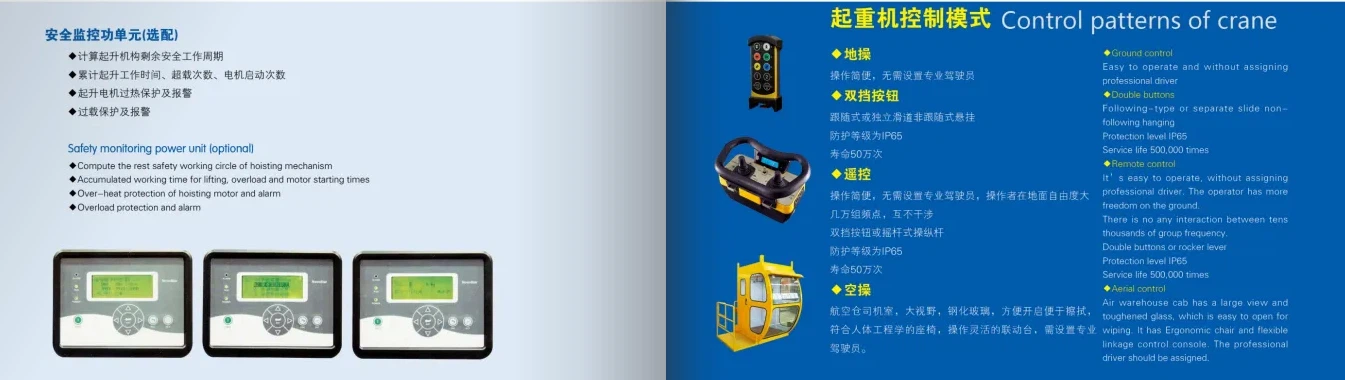
Operator's Cab: A purpose-built, climate-controlled cabin suspended from the crane structure, giving the operator a clear view of the lift. It is equipped with ergonomic controls, seats, and often vibration damping.
Radio Remote Control: Allows the operator to control the crane from the floor, providing optimal visibility and safety, especially in harsh environments (e.g., high heat in a steel mill).
Control Panels & Drives:
Main Control Panel: Houses the programmable logic controller (PLC), contactors, overload relays, and variable frequency drives (VFDs). VFDs are crucial for providing smooth, controlled acceleration and deceleration of all motions, protecting the structure and the load.

4. Safety & Auxiliary Systems (The Reflexes)
Non-negotiable features for protecting personnel and assets.
Critical Safety Devices:
Load Moment Indicator (LMI) / Load Cell: A mandatory system that monitors the load weight and prevents the crane from being overloaded. It displays the load to the operator and can cut out dangerous functions.
Limit Switches: Heavy-duty limit switches for hoist upper/lower limits, trolley travel, and gantry travel to prevent over-travel.
Anti-Collision System: Uses laser or radar to detect and prevent collisions with other cranes on the same runway or obstacles.
Anemometer: Wind speed indicator that alarms or automatically shuts down crane operations if wind speeds exceed safe limits (critical for outdoor cranes).
Rail Clamps / Anchors: Large mechanical clamps that lock the crane to the rails to prevent movement during storms or when parked.

Auxiliary Hoist: A second, smaller-capacity hoist mounted on the trolley for lighter lifts, providing two lifting speeds and capacities on one crane.
Ancillary Equipment:
Walkways & Service Platforms: Provide safe access for maintenance along the girders and machinery.
Lighting: High-intensity lights for night operation or poorly lit areas.
Sirens & Warning Lights: Audible and visual alarms that activate when the crane is in motion.

Summary: Why Components are Heavier-Duty than Mz
| Component | Mz Type (Light/Moderate) | Mg Type (Heavy Duty) |
|---|---|---|
| Girders | Single, lighter section | Double, fabricated box girders |
| Hoist | Standard duty, single speed | Heavy-duty, often with multiple speeds & VFDs |
| Power Supply | Festoon or simple cable | Robust Conductor Bar System |
| Control | Simple pendant push button | Operator's Cab and/or Radio Remote |
| Safety | Basic limit switches | Advanced LMI, Anti-Collision, Wind Monitoring |
Conclusion: Every component of a Rail Mounted Mg Gantry Crane is engineered for intensity, precision, and longevity. The combination of a double-girder structure, rail-mounted stability, and industrial-grade mechanical and electrical systems makes it a capital asset designed for the most demanding industrial environments.
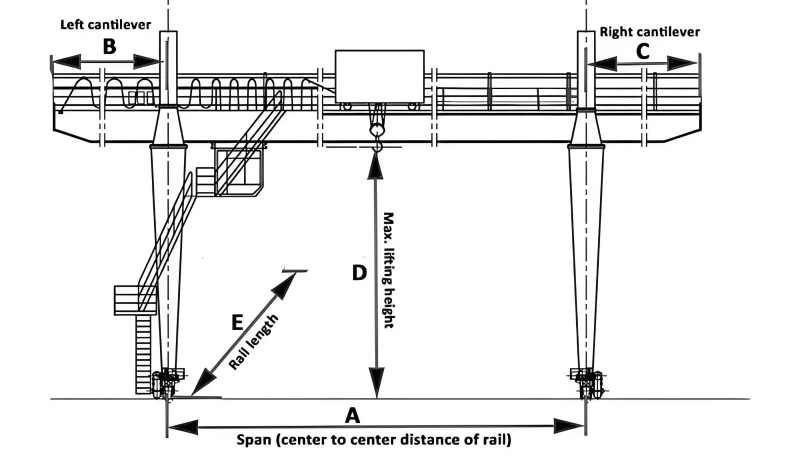
SKETCH
Main technical
Advantages
Advantages of Mz Type Grab Bucket Gantry Crane
The primary benefits stem from its integrated design, which merges mobility with automated bulk handling.
1. High Efficiency in Bulk Material Handling
This is its single greatest advantage. It transforms a labor-intensive, slow process into a fast, one-person operation.
Eliminates Manual Labor: Replaces multiple workers with shovels or smaller equipment.
Continuous Cycle: The integrated grab allows for a seamless cycle of digging, lifting, traveling, and dumping without needing to attach/detach any equipment.
2. Cost-Effectiveness
For the functionality it provides, it is a very economical solution.
Lower Initial Cost: The single-girder (Mz-type) design is significantly cheaper to manufacture and purchase than a double-girder gantry crane of similar span.
Reduced Operational Cost: One operator can manage the entire material handling process, leading to substantial labor savings.
Versatility as an Advantage: One machine can serve multiple purposes (unloading, stockpiling, feeding), reducing the need for several dedicated machines.
3. Space Optimization and Low Headroom Design
Maximizes Storage Volume: The crane operates overhead, keeping the floor space completely clear for storage, trucks, or other equipment.
Ideal for Low-Clearance Facilities: The compact single-girder and top-mounted trolley design provide maximum hook height, making it suitable for buildings with lower ceilings.
4. Exceptional Versatility and Mobility
Wide Range of Materials: Can handle various dry, loose bulk materials simply by changing the bucket type (e.g., rock, sand, grain, wood chips, scrap metal).
Large Coverage Area: Unlike fixed conveyors, the crane travels along its runway, covering the entire length and width of a storage bay or outdoor pile.
5. Improved Operational Control and Safety
Precision Handling: The operator has direct control over the grabbing, lifting, and placement of materials.
Safer Operation: The operator controls the crane from a safe distance (via pendant or radio remote), away from dust and falling materials.
Application
Applications of Mz Type Grab Bucket Gantry Crane
This crane is the ideal solution wherever loose, bulk materials need to be moved within a defined rectangular area. Its typical applications are found in industries dealing with raw materials, agriculture, and recycling.
1. Agriculture and Grain Handling
Grain Silos and Elevators: For unloading trucks, transferring grain between storage bins, and loading out for shipment.
Animal Feed Plants: Handling raw ingredients like corn, soybeans, and finished feed pellets.
2. Building Materials and Aggregates
Sand and Gravel Yards: Stockpiling raw materials and loading them into trucks for transport.
Ready-Mix Concrete Plants: Handling aggregates (sand, stone) and moving them to the concrete batching hoppers.
3. Recycling and Waste Management
Scrap Metal Yards: The quintessential application. Ideal for grabbing and sorting ferrous and non-ferrous scrap.
Material Recovery Facilities (MRFs): Handling and sorting bulk recyclables like paper, cardboard, and plastics.
Biomass Power Plants: Handling wood chips, straw, and other organic fuels.
4. Ports and Inland Terminals
Barge Unloading: Unloading bulk materials like coal, fertilizer, or aggregates from barges on inland waterways.
5. Energy and Industrial Processing
Coal-Fired Boilers: Moving coal from storage piles to the crusher house or boiler feed system.
Foundries: Handling bulk materials like sand (for molding), coke, and limestone.
Crane production process
The production process of an RMG (Rail-Mounted Gantry) Crane is a complex feat of heavy engineering, involving meticulous planning, advanced fabrication, and precise assembly. It's typically carried out by specialized heavy machinery manufacturers in large, dedicated facilities.
Here is a detailed breakdown of the production process, from concept to commissioning.
Phase 1: Design & Engineering (The Digital Blueprint)
This is the most critical phase, where the crane is born digitally before any steel is cut.
Conceptual & Detailed Design:
Client Requirements: Engineers work with the client (the port terminal) to define specifications: lifting capacity (e.g., 40-50 tons under spreader), span width, stacking height (1-over-7), lifting speed, and degree of automation.
Structural Analysis: Using Finite Element Analysis (FEA), engineers simulate the stresses, strains, and deflections on the entire structure (girders, legs) under various load conditions to ensure integrity and safety.
Mechanical & Electrical Design: Detailed designs are created for all systems: hoist and trolley gearboxes, wire rope reeving, drive motors, and the complete electrical schematics for power and control.
Automation & Control Systems Design:
For modern RMGs, this is paramount. Software for the Programmable Logic Controllers (PLCs), anti-collision systems, auto-steering, and container positioning is developed and simulated.
Procurement of Long-Lead Items:
While fabrication begins, the company orders specialized components with long manufacturing lead times, such as:
Hoist and travel motors
Gearboxes
PLCs and VVVF drives (Siemens, ABB, etc.)
Specialized steel grades
Wire ropes and sheaves
Phase 2: Fabrication & Manufacturing (The Physical Build)
This phase transforms raw steel and components into the crane's major parts. It happens in a large, covered fabrication shop.
Steel Preparation & Cutting:
Large steel plates and sections (beams) are delivered to the factory.
They are cleaned (shot blasted) and then cut to precise shapes using computer-controlled methods like Plasma Cutting or Oxy-Fuel Cutting.
Sub-Assembly Fabrication:
Cut plates are welded together to form smaller components. For example:
Box Girders: Steel plates are welded into large, hollow rectangular sections for the main girder and legs.
End Carriages: The complex structures that house the wheels and drives are fabricated.
Trolley Frame: The structure that will carry the hoisting machinery is built.
Major Assembly & Welding:
Sub-assemblies are brought together in large jigs and fixtures to ensure dimensional accuracy.
The Main Girder is assembled in sections (if it's very long) or as a single piece.
The Gantry Legs are fully assembled.
This stage involves extensive welding, often performed automatically by robotic welding machines for consistency and quality. Highly skilled welders perform critical manual welds.
Post-Weld Treatment & Quality Control:
Stress Relieving: Critical welded structures like the main girder are heated in a large furnace to relieve internal stresses created during welding, preventing distortion and cracking.
Non-Destructive Testing (NDT): Every critical weld is inspected using methods like Ultrasonic Testing (UT) or Radiographic Testing (X-rays) to find any hidden defects.
Dimensional Checks: The entire structure is laser-scanned to ensure it meets the design tolerances.
Surface Preparation & Painting:
The entire steel structure is shot-blasted to remove rust and mill scale, creating a perfect surface for paint adhesion.
It is then painted with multiple layers of high-performance, corrosion-resistant paint, often in a controlled environment to ensure a flawless finish. This is crucial for the harsh, salty port environment.
Phase 3: Pre-Assembly & Factory Acceptance Testing (FAT)
Before shipment, the crane is partially assembled at the factory to verify its function.
Erection in the Factory Yard:
The gantry legs and main girder are bolted or welded together on a test track to form the complete gantry structure.
The trolley, hoist machinery, and cab (if any) are installed.
Electrical Installation:
Electricians run thousands of meters of cable, connecting motors, sensors, and control panels.
Factory Acceptance Testing (FAT):
The client visits the factory to witness a series of rigorous tests:
No-Load Tests: All movements (crane travel, trolley travel, hoisting) are tested without a load to check for smooth operation, speed, and brake function.
Load Tests: This is the critical test. A Static Load Test is performed with a test weight (typically 25% above the rated capacity) lifted and held to check structural integrity. A Dynamic Load Test is performed at the rated capacity to test all functions under working conditions.
Safety System Tests: All limit switches, emergency stops, and alarms are tested.
Phase 4: Dismantling, Shipping & Site Erection
Dismantling & Logistics:
After passing FAT, the crane is carefully dismantled into transportable sections. The main girder is cut into segments, legs are separated, etc.
These massive components are loaded onto specialized ocean-going heavy-lift vessels for transport to the port.
Site Preparation:
While the crane is being built, the client's site is prepared: the heavy concrete foundation is poured, and the long, parallel rail tracks are installed with extreme precision.
Site Erection:
A team of specialized erection engineers and heavy crane operators from the manufacturer travels to the port.
Using large mobile cranes, they reassemble the RMG on its permanent rails, following a reverse sequence of the dismantling process.
All mechanical and electrical connections are remade.
Phase 5: Commissioning & Site Acceptance Testing (SAT)
Final Checks and Calibration:
The entire system is powered up.
Crucially, all automation systems are calibrated: the laser positioning systems for the spreader, the anti-collision sensors, and the auto-steering are fine-tuned to the actual site conditions.
Site Acceptance Testing (SAT):
A final round of testing, often more comprehensive than the FAT, is performed with the client to prove the crane performs to specification in its real environment.
Once signed off, the crane is handed over to the client, and operator training begins.

Workshop view:
The company has installed an intelligent equipment management platform, and has installed 310 sets (sets) of handling and welding robots. After the completion of the plan, there will be more than 500 sets (sets), and the equipment networking rate will reach 95%. 32 welding lines have been put into use, 50 are planned to be installed, and the automation rate of the entire product line has reached 85%.




Hot Tags: rail mounted mg gantry cranes, China rail mounted mg gantry cranes manufacturers, suppliers, factory
You Might Also Like



Send Inquiry