










Double-Legged Gantry Cranes
Products Description
Double-legged gantry cranes are ideal for heavy-duty outdoor and indoor lifting, offering superior stability, mobility, and load capacity. They are widely used in:
✅ Ports & shipbuilding
✅ Steel & power plants
✅ Construction & logistics
Advantages
✔ High Stability – Four-point support reduces tipping risks.
✔ Heavy-Duty Capacity – Handles 5–500+ tons, ideal for shipyards and steel plants.
✔ Mobility Options – Can be rail-guided or wheel-mounted for flexibility.
✔ No Building Modifications – Freestanding design eliminates need for runway beams.
✔ Outdoor Suitability – Wind-resistant and corrosion-protected for harsh environments.
Single vs. Double-Legged Gantry Cranes
| Feature | Double-Legged | Single-Legged (Semi-Gantry) |
|---|---|---|
| Stability | High (4-point support) | Moderate (2-point support) |
| Max Capacity | Up to 500+ tons | Typically ≤50 tons |
| Mobility | Rail or rubber-tired | Usually fixed or light mobile |
| Applications | Heavy industry, shipyards | Workshops, small warehouses |
Core Components PLC, Engine, Bearing, Gearbox, Motor, Pressure vessel, Gear, Pump
Place of Origin Henan, China
Warranty 1 Year
Weight (KG) 30000 kg
Application Precast yard, construction site, warehouse, etc.
Product name 40 ton straddle carrier rubber tired single girder gantry cranes
Crane Type A Type, Single Girder, Double Girder Straddle Carrier
Lifting mechanism Customer Requirements
Control Method Cabin Control+Remote Control
Lifting Capacity 5~1200 Ton
Multiple Steering Modes Go straight, transverse traveling, carousel steering, etc.
Install On-site and online
Motor Famous brand
Work Duty A3~A5

Pictures & Components
A Double-Legged Gantry Crane is a freestanding lifting system with two supporting legs on each side, enabling mobility and heavy-load handling without requiring an overhead runway structure. Below is a detailed breakdown of its key components:
1. Main Structural Components
A. Gantry Frame
Double Legs (Two on Each Side) – Provide stability and distribute load weight.
Top Beam (Bridge Girder) – Connects the legs and supports the hoist/trolley.
Cross Beams & Bracing – Reinforce structural integrity to prevent swaying.

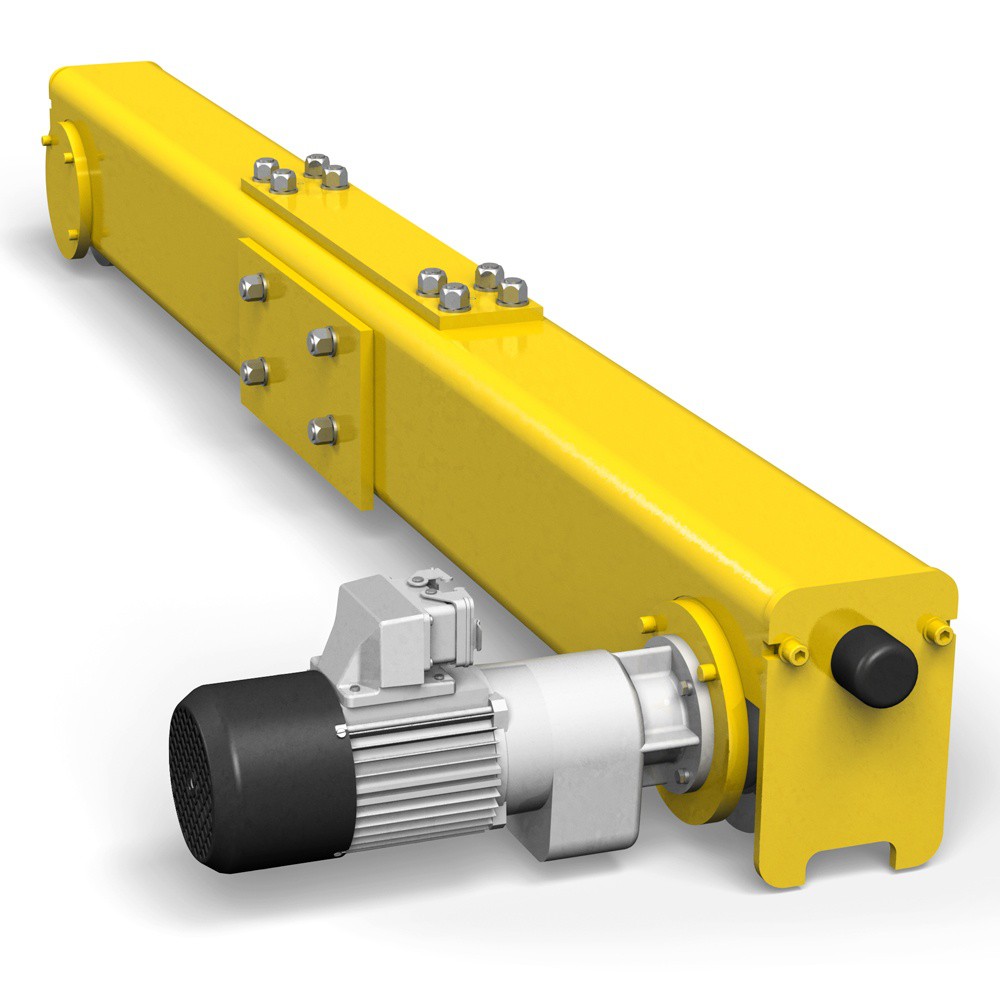
B. End Trucks (Travel Units)
Wheels/Tracks – Allow the crane to move along rails or ground surfaces.
Drive Motors – Power the gantry's longitudinal movement (rail-mounted or rubber-tired).
Buffers/Bumpers – Absorb shocks during travel.
 |
 |
2. Lifting Mechanism
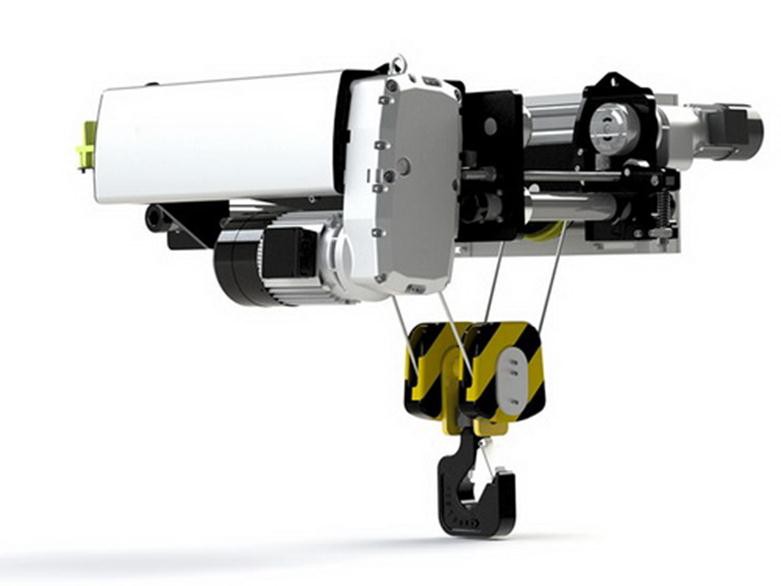
A. Hoist Unit
Electric Wire Rope Hoist – Common for heavy loads (e.g., 10–500 tons).
Chain Hoist – Used for lighter capacities or hazardous environments.
Drum & Rope/Chain – Lifting medium with high tensile strength.
 |
 |
B. Trolley Assembly
Trolley Frame – Moves horizontally along the top beam.
Trolley Drive Motor – Powers transverse movement (across the girder).
Guide Rollers – Keep the trolley aligned.

3. Support & Mobility Systems
A. Runway/Rail System
Fixed Rails – For precise movement in industrial settings.
Rubber-Tired Wheels – For mobility on flat surfaces (no rails needed).
B. Outriggers/Stabilizers (Optional)
Extendable supports for additional stability when lifting heavy loads.

4. Power & Control Systems
Cabin Control – Operator cabin mounted on the gantry.
Pendant Control – Handheld remote (wired/wireless).
Festoon/Cable Reel – Manages power and signal cables.
Variable Frequency Drive (VFD) – Ensures smooth acceleration/deceleration.


5. Safety Components
Limit Switches – Prevent over-travel of hoist/trolley.
Overload Protector – Blocks operation if load exceeds capacity.
Anti-Collision System – For multiple gantry cranes in the same area.
Emergency Stop (E-Stop) – Instantly cuts power.
Windproof Anchors – Secure the crane in outdoor applications.

6. Optional Features
Cabin with AC/Heating – For operator comfort.
Automated Positioning (GPS/Laser Guide) – For precision in shipyards.
Weighing System – Integrated load measurement.
LED Lighting – For low-light conditions.

Sketch

Advantages
Enhanced Stability & Safety
Four-point support system (two legs per side) provides superior balance
Reduced sway and oscillation during heavy load movements
Lower risk of tipping compared to single-leg designs
Heavy Load Capacity
Typical capacity range: 5-500+ tons
Robust construction handles extreme weights in industrial settings
Ideal for massive components like ship sections or power plant equipment
Flexible Mobility Options
Rail-mounted versions for precise, guided movement
Rubber-tired models for versatile positioning
Some models feature track-changing capability for multi-line operations
Freestanding Operation
Doesn't require building support structures
Can be installed without modifying existing facilities
Ideal for outdoor applications where overhead cranes aren't feasible
Adaptable to Harsh Environments
Corrosion-resistant coatings for marine/coastal use
Wind-resistant designs with optional anchoring
Suitable for extreme temperatures (-20°C to +50°C)
Precision Handling
Optional anti-sway systems for delicate positioning
Fine-control options for sensitive loads
Can integrate with automated positioning systems
Application
1. Ports & Shipbuilding
Container loading/unloading
Ship section assembly
Dry dock maintenance operations
Offshore platform component handling
2. Heavy Industry
Steel mill coil and slab transfer
Foundry ladle handling
Heavy machinery installation
Transformer positioning in power plants
3. Construction & Infrastructure
Precast concrete beam installation
Bridge segment placement
Tunnel construction material handling
Dam construction equipment movement
4. Energy Sector
Wind turbine assembly
Nuclear plant component installation
Hydroelectric generator maintenance
Oil refinery equipment handling
5. Specialized Manufacturing
Aerospace component movement
Railway rolling stock assembly
Mining equipment maintenance
Large-scale fabrication workshops
Crane production procedure
1. Design stage: Determine the parameters of the crane, such as rated load, span and lifting height, according to the customer's needs and working environment. Carry out detailed structural design, including main beam, end beam, crane, lifting mechanism, etc., to ensure that the design meets safety standards and usage requirements. Select appropriate materials according to the design, usually high-strength steel to ensure the stability and durability of the structure.
2. Manufacturing stage: Prepare the required raw materials and parts according to the design drawings. Cut, bend and shape the steel to prepare structural components such as main beams and end beams. Weld the various components and assemble them into an overall structure. This step requires guaranteed welding quality to ensure strength and stability.
3. Machining: Machining key components such as motors, gears, bearings, etc. to ensure that their size and accuracy meet the requirements. Anti-corrosion treatment of components, such as painting and galvanizing, increases the durability and aesthetics of the equipment.
4. Electrical system installation: Install electrical components such as motors, controllers, switches, sensors and alarm systems. Connect and wire cables to ensure the normal operation of the electrical system.
5. Assembly phase: Assemble all components and systems as a whole, connect the lifting mechanism, trolley running mechanism and control system. Perform a comprehensive inspection of the assembled crane to ensure that all components and systems are working properly, and perform preliminary debugging.
6. Testing phase: Perform static load test on the crane to check the structural strength and stability. Perform dynamic test on the crane, including tests on lifting, moving, braking and other functions, to ensure that its performance meets the design requirements. Check the functions of safety devices, such as limit switches, overload protection, etc., to ensure the safety of the equipment during operation.
7. Quality control: Perform quality control on each link in the production process to ensure compliance with industry standards and customer requirements. Record various data and inspection results in the production process for subsequent traceability and analysis.
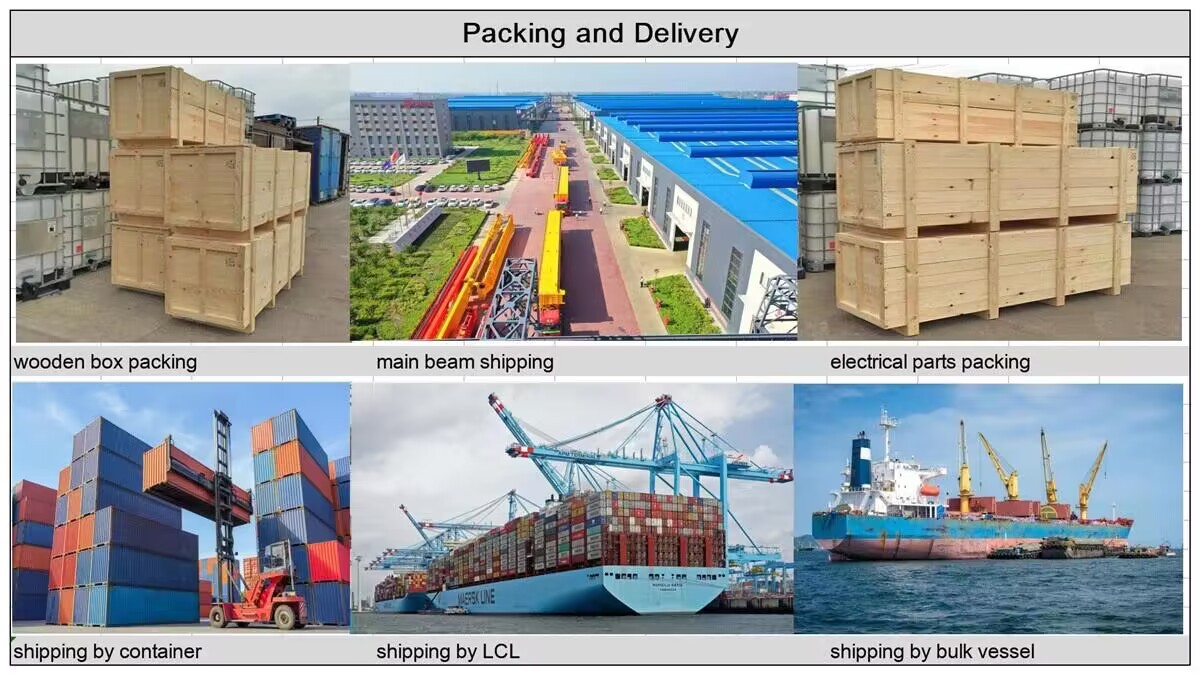
8. Delivery and installation: Pack and prepare the completed crane for transportation to ensure that it is not damaged during transportation. Deliver the crane to the customer's site for installation, and perform on-site debugging and acceptance. Provide operation training to customers to ensure that they are proficient in the use and maintenance of the crane.

Workshop view:
The company has installed an intelligent equipment management platform, and has installed 310 sets (sets) of handling and welding robots. After the completion of the plan, there will be more than 500 sets (sets), and the equipment networking rate will reach 95%. 32 welding lines have been put into use, 50 are planned to be installed, and the automation rate of the entire product line has reached 85%.


Hot Tags: double-legged gantry cranes, China double-legged gantry cranes manufacturers, suppliers, factory
You Might Also Like


Send Inquiry