







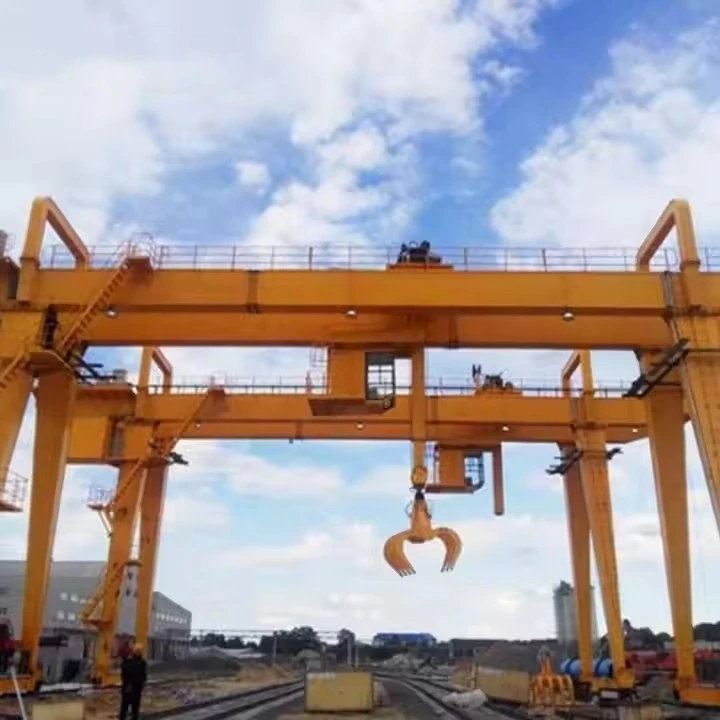
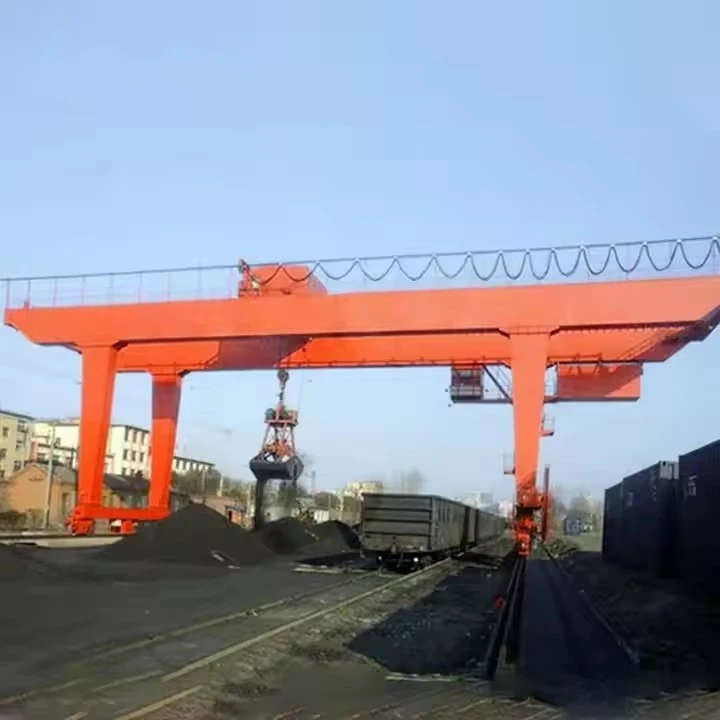
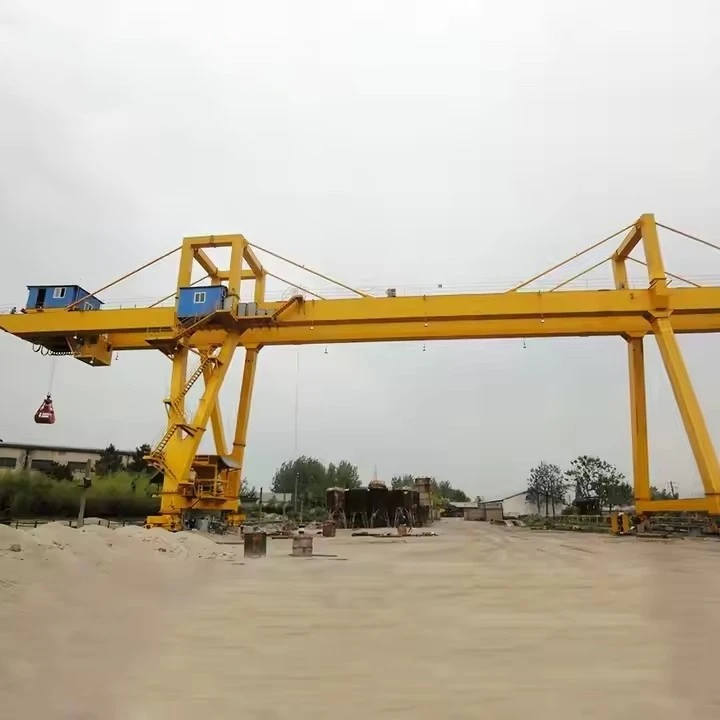
Mz Type Grab Bucket Gantry Crane
Products Description
What is an Mz Type Grab Bucket Gantry Crane?
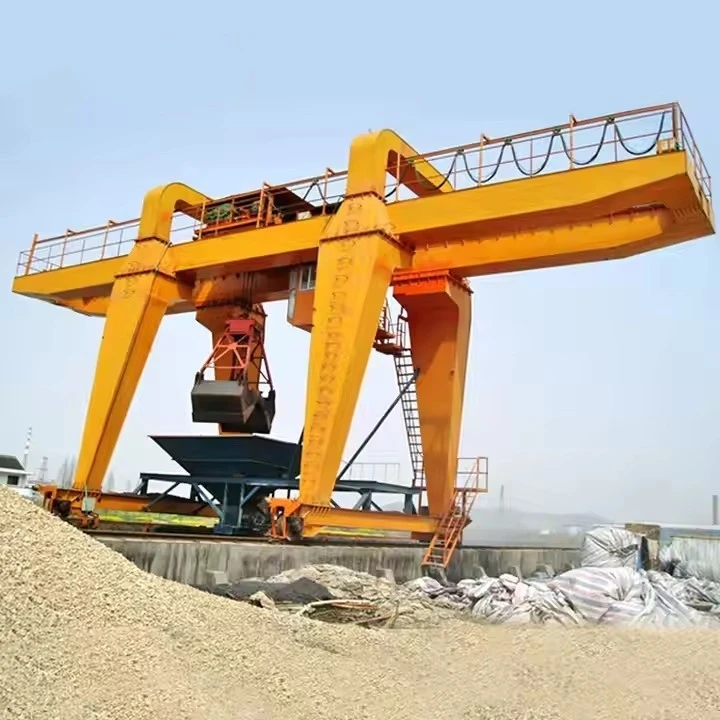
An Mz Type Grab Buckot Gantry Crane is a single-girder gantry crane, classified for light to moderate duty (Mz), that is equipped with a motorized grab bucket instead of a standard hook.
The key differentiator is the grab bucket, which is a self-closing, clamshell-like attachment that allows the crane to pick up, transport, and dump loose bulk materials without manual assistance.
Key Advantages of this System
High Efficiency for Bulk Materials: Dramatically faster than using manual labor with shovels or even a hook with a separate bucket.
Automated Handling: The entire pick-and-place cycle for bulk goods is integrated into one machine.
Versatility in Material: Can handle a wide range of dry bulk goods like grain, coal, sand, gravel, fertilizer, wood chips, and scrap metal.
Reduced Labor Costs: One operator can manage the entire loading/unloading/stockpiling process.
Mobility of a Gantry: Unlike a fixed bucket elevator or conveyor, it can cover a large storage area (e.g., a stockpile or barge).
Limitations and Considerations
Higher Cost: The grab bucket and the specialized multi-motor hoist system are significantly more expensive than a standard hook hoist.
Complexity: The control system is more complex, requiring synchronized operation of the open/close and lift/lower functions.
Duty Cycle Consideration: While the structure is "Mz" (moderate duty), the actual use with a grab bucket is often very intense. It's crucial to ensure the Mz classification is adequate for the planned cycles per hour and load. In practice, many grab cranes are built to a higher duty class (Mm or Hm) to withstand the abrasive and continuous operation.
Spillage and Dust: Can create more dust and potential spillage compared to enclosed systems like conveyor belts.
Summary: Mz Gantry vs. Mz Grab Bucket Gantry
| Feature | Standard Mz Gantry Crane | Mz Grab Bucket Gantry Crane |
|---|---|---|
| Lifting Device | Hook | Motorized Grab Bucket |
| Primary Function | Lift and move unit loads (crates, machines) | Dig, lift, and dump bulk materials (grain, sand) |
| Hoist System | Single motor (lift/lower) | Multiple motors (lift/lower + open/close) |
| Operational Cycle | Simple | Complex, automated digging cycle |
| Ideal For | General manufacturing, warehouses | Agriculture, bulk material processing, recycling |
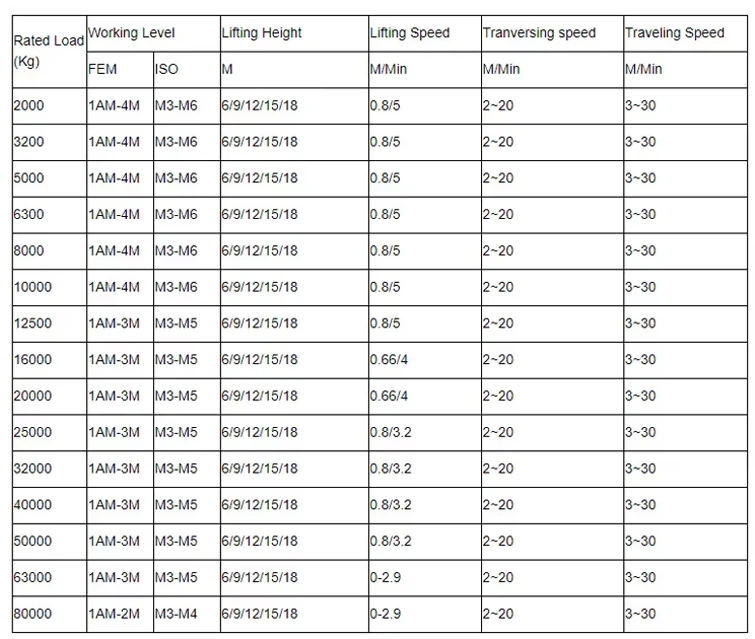
Lifting Capacity 320 tons
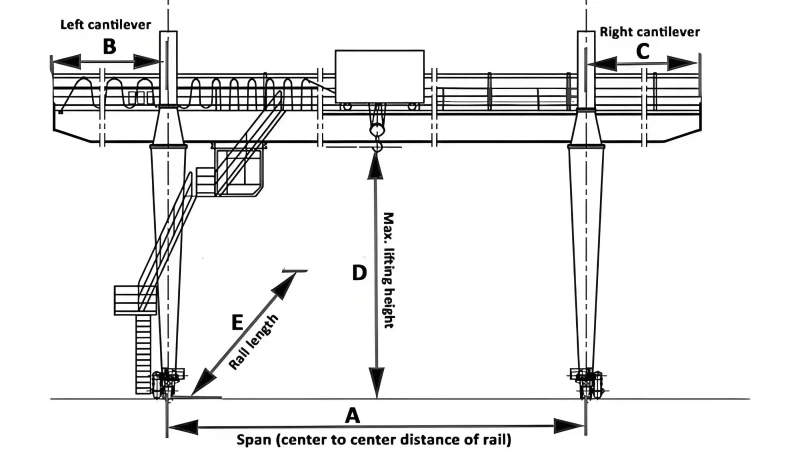
Span (Width) 3 - 12 meters (adjustable)
Lifting Height 3 - 10 meters
Working Class A3-A5 (light to medium duty)
Hoisting Speed 0.5 - 8 m/min (variable)
Main Beam Type Single/double girder (box-type)
Power Supply 220V/380V 3-phase or manual
Control Mode Pendant control/wireless remote
Hoist Type Electric chain hoist/wire rope hoist
Travel Drive Manual push or motorized
Corrosion Protection Hot-dip galvanized or marine-grade paint
Wind Resistance Up to Beaufort scale 6 (for outdoor use)
Operating Temp -20°C to +50°C
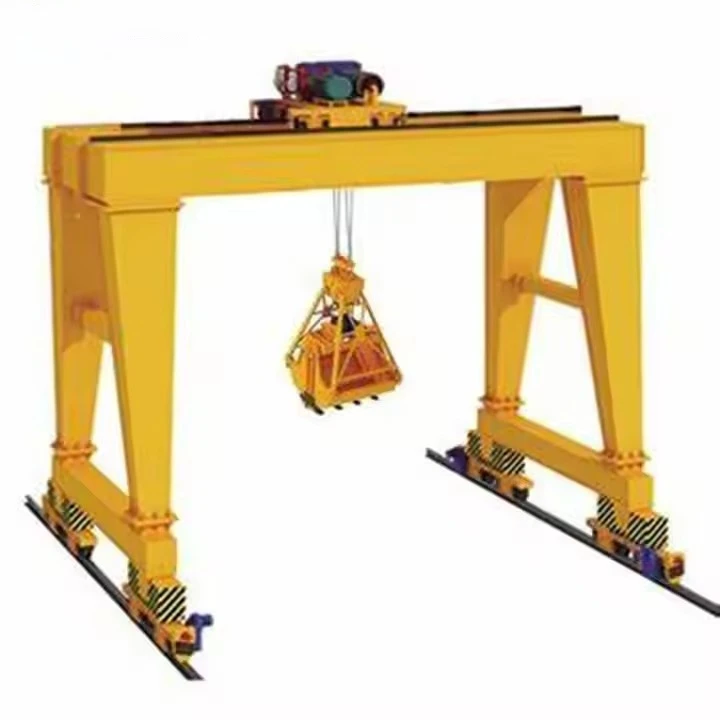
Pictures & Components
Here is a detailed breakdown of the components of an Mz Type Grab Bucket Gantry Crane, organized by system for clarity.
Understanding the components is key because the grab bucket system adds significant complexity compared to a standard hook crane.
1. Gantry Crane Structure & Framework
This is the crane's "skeleton" that provides support and mobility.
Main Girder (Single): The primary horizontal beam that spans the working area. It's designed to support the trolley, hoist, and the load. For a grab bucket crane, it must handle dynamic forces from the grabbing action.
End Trucks (Legs): The rigid vertical structures at each end of the main girder. They house the wheels and drive mechanisms for long travel.
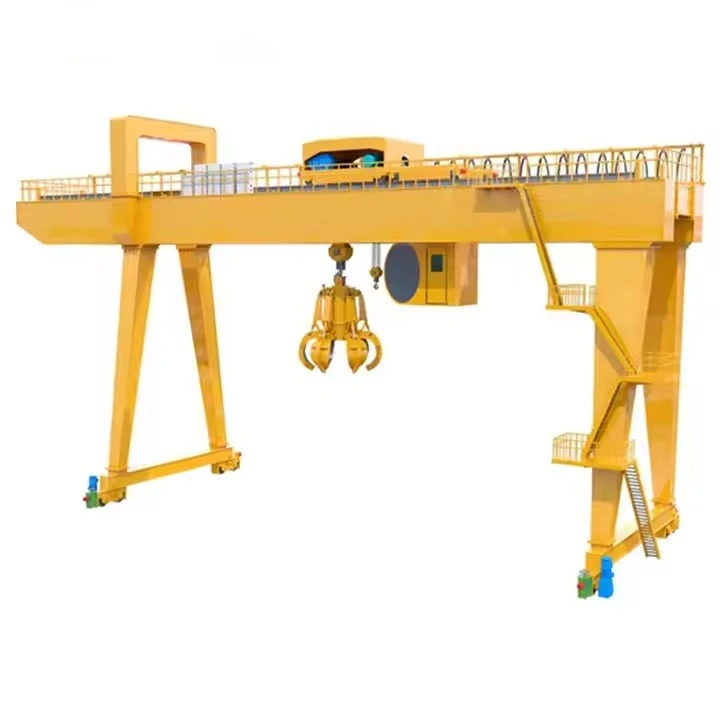
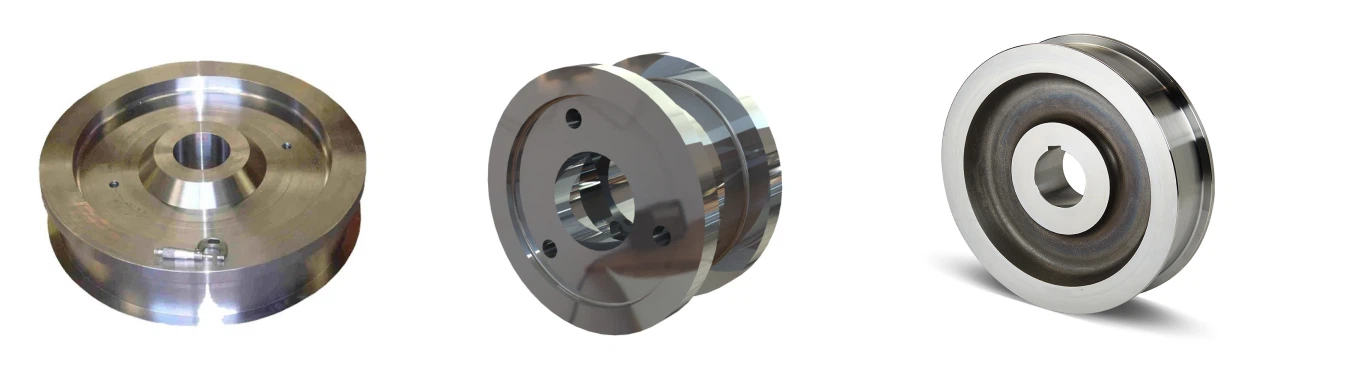
Long Travel Drives: The motors, gearboxes, and wheels mounted on the end trucks that allow the entire crane to move along its runway.
Runway Rails & Beams: The fixed tracks installed on the floor (or ground) that the crane runs on. This includes the rails and the supporting beams or foundations.
Bumpers & End Stops: Physical buffers at the ends of the crane runway and trolley travel to prevent over-travel and collisions.
2. Lifting & Grabbing System
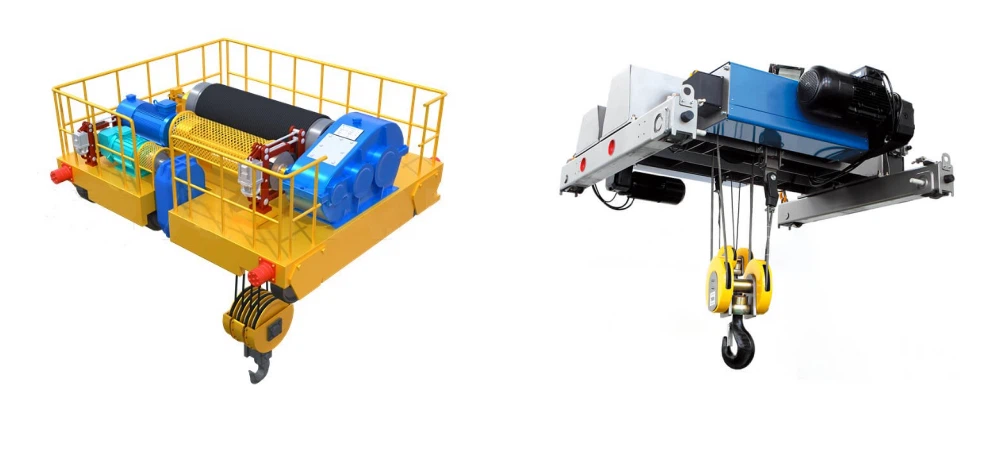
This is the core functional system that differentiates it from a standard crane.
Grab Bucket (The Tool):
Clamshell Jaws: The two or more hinged halves that close to scoop material and open to release it. They are often made from high-strength, abrasion-resistant steel.
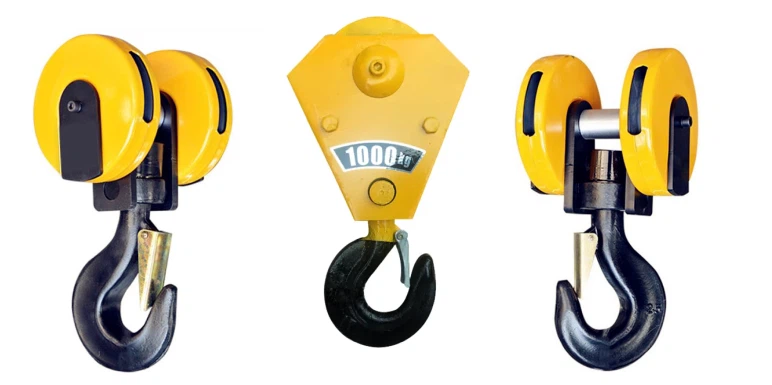
Head & Sheaves: The top assembly of the bucket that contains the sheaves (pulleys) around which the hoist ropes are threaded.
Rope Guide: Ensures the ropes are correctly aligned with the sheaves on the trolley.

Specialized Hoist Unit:
Hold Rope Drum & Motor: One set of machinery dedicated to hoisting and lowering the entire grab assembly.
Close Rope Drum & Motor: A separate set of machinery dedicated to opening and closing the jaws of the grab bucket.
Ropes (Cables): High-strength steel wire ropes. There are two sets: the Hold Ropes and the Close Ropes. Their synchronized operation is what makes the grab work.
Sheaves (Pulleys): Mounted on the trolley and the grab bucket head, they guide the ropes from the hoist drums to the bucket.
Trolley Frame:
The frame that carries the entire hoist unit and travels along the main girder (cross travel).
Trolley Travel Drives: The motor, gearbox, and wheels that move the trolley back and forth along the girder.
Trolley Wheels: The wheels that ride on the bottom flange of the main girder.
3. Power & Control System
The "nervous system" that operates the crane.
Power Supply System:
Main Power Source: Often a Festoon System or Cable Reel that delivers electricity from a fixed point to the moving crane.
Distribution: Circuit breakers, contactors, and transformers located in a main control panel on the crane bridge.
Control Interface:
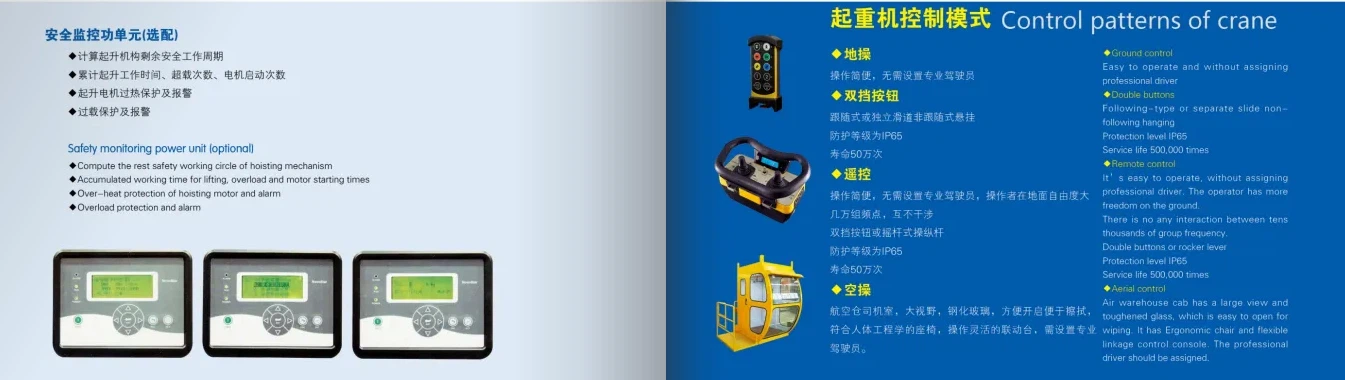
Pendant Control Station: A hanging control box with buttons that the operator uses to control all crane functions (Hoist Up/Down, Grab Open/Close, Trolley Travel, Gantry Travel). The cable is attached to the trolley, allowing the operator to walk with the load.
Radio Remote Control: A wireless transmitter that allows the operator to control the crane from a distance, providing better visibility and safety, especially for grab operations.
Control Cabin: (Less common for Mz type) An operator's cab mounted on the crane.

4. Safety Systems
Critical components to protect personnel, the crane, and the load.
Limit Switches:
Hoist Upper/Lower Limit Switch: Cuts power to the hoist motor to prevent over-hoisting (damaging the machinery) or letting the rope slacken too much.
Trolley Travel Limit Switches: Stops the trolley at the ends of the main girder.
Gantry Travel Limit Switches: Stops the entire crane at the ends of the runway.
Brakes:
Hold Brake: A primary brake on the hoist motor that automatically engages when the motor is off, holding the load.
Emergency Brake: An additional mechanical brake for fail-safe operation.
Travel Brakes: Brakes on the trolley and gantry travel motors to ensure precise stopping.

Ancillary Safety Devices:
Load Moment Indicator (LMI): Although less common on simpler Mz cranes, it's a critical safety device that monitors the load to prevent tipping, especially when handling dense materials.
Anti-Collision Systems: Used when multiple cranes operate on the same runway.
Warning Devices: Lights and alarms to alert personnel of crane movement.

Key Interaction: How the Components Work Together for Grabbing
The magic lies in the coordination of the Hold and Close systems:
To Grab Material: The bucket is lowered onto the pile with jaws open. The Close Motor is activated, winding in the close ropes and pulling the jaws shut, digging into the material. The Hold Motor may pay out rope slightly to allow the bucket to settle and fill.
To Lift & Transport: Once full, both the Hold and Close Motors work in unison to lift the bucket. The crane and trolley then move to the dump point.
To Dump Material: The crane hovers over the target. The Close Motor is reversed, releasing the close ropes. Gravity and the weight of the material force the jaws to swing open, dumping the load. The Hold Motor keeps the bucket suspended.
SKETCH
Main technical
Advantages
Advantages of Mz Type Grab Bucket Gantry Crane
The primary advantages stem from its integrated design, which merges the cost-effectiveness of a single-girder gantry with the specialized function of a grab bucket.
1. High Efficiency in Bulk Material Handling
This is its single greatest advantage. It transforms a labor-intensive, slow process into a fast, one-person operation.
Eliminates Manual Labor: Replaces multiple workers with shovels, front-end loaders, or other slow methods.
Continuous Cycle: The integrated grab allows for a seamless cycle of digging, lifting, traveling, and dumping without needing to attach/detach any equipment.
2. Cost-Effectiveness
For the functionality it provides, it is a very economical solution.
Lower Initial Cost: The single-girder (Mz-type) design is significantly cheaper to manufacture and purchase than a double-girder gantry crane of similar span and capacity.
Reduced Operational Cost: One operator can manage the entire material handling process, leading to substantial labor savings.
Versatility as an Advantage: One machine can serve multiple purposes (unloading, stockpiling, feeding), reducing the need for several dedicated machines.
3. Exceptional Versatility and Mobility
Wide Range of Materials: Can handle various dry, loose bulk materials simply by changing the bucket type (e.g., rock, sand, grain, wood chips, scrap metal).
Large Coverage Area: Unlike fixed conveyors or elevators, the crane travels along its runway, covering the entire length and width of a storage bay, outdoor pile, or barge.
Relocatable: While runways are fixed, the entire crane structure can often be disassembled and moved to a new location if facility needs change, unlike a permanent structure.
4. Space Optimization and Low Headroom Design
Maximizes Storage Volume: The crane operates overhead, keeping the floor space completely clear for storage, trucks, or other equipment. This is ideal for managing large, central stockpiles.
Ideal for Low-Clearance Facilities: The compact single-girder and top-mounted trolley design provide maximum hook height, making it suitable for buildings with lower ceilings.
5. Improved Operational Control and Safety
Precision Handling: The operator has direct control over the grabbing, lifting, and placement of materials, allowing for precise stockpile management and accurate loading of hoppers or trucks.
Reduced Contamination: Handles materials without the constant traffic and potential fuel/oil contamination from front-end loaders.
Safer Operation: The operator controls the crane from a safe distance (via pendant or radio remote), away from dust, falling materials, and the direct handling area.
Application
Applications of Mz Type Grab Bucket Gantry Crane
This crane is the ideal solution wherever loose, bulk materials need to be moved within a defined rectangular area. Its typical applications are found in industries dealing with raw materials, agriculture, and recycling.
1. Agriculture and Grain Handling
Grain Silos and Elevators: For unloading trucks, transferring grain between storage bins, and loading out for shipment.
Animal Feed Plants: Handling raw ingredients like corn, soybeans, and finished feed pellets.
2. Building Materials and Aggregates
Sand and Gravel Yards: Stockpiling raw materials and loading them into trucks for transport to construction sites.
Ready-Mix Concrete Plants: Handling aggregates (sand, stone) and moving them to the concrete batching hoppers.
Cement Terminals: Moving bulk cement from storage to loading stations.
3. Recycling and Waste Management
Scrap Metal Yards: The quintessential application. Ideal for grabbing and sorting ferrous and non-ferrous scrap.
Material Recovery Facilities (MRFs): Handling and sorting bulk recyclables like paper, cardboard, and plastics.
Biomass Power Plants: Handling wood chips, straw, and other organic fuels and moving them to the feed hopper.
4. Ports and Inland Terminals
Barge Unloading: Unloading bulk materials like coal, fertilizer, or aggregates from barges on inland waterways.
Small-Scale Port Operations: Transferring cargo between docks, storage piles, and trucks.
5. Energy and Industrial Processing
Coal-Fired Boilers: Moving coal from storage piles to the crusher house or boiler feed system.
Foundries: Handling bulk materials like sand (for molding), coke, and limestone.
Crane production process
The production process of an RMG (Rail-Mounted Gantry) Crane is a complex feat of heavy engineering, involving meticulous planning, advanced fabrication, and precise assembly. It's typically carried out by specialized heavy machinery manufacturers in large, dedicated facilities.
Here is a detailed breakdown of the production process, from concept to commissioning.
Phase 1: Design & Engineering (The Digital Blueprint)
This is the most critical phase, where the crane is born digitally before any steel is cut.
Conceptual & Detailed Design:
Client Requirements: Engineers work with the client (the port terminal) to define specifications: lifting capacity (e.g., 40-50 tons under spreader), span width, stacking height (1-over-7), lifting speed, and degree of automation.
Structural Analysis: Using Finite Element Analysis (FEA), engineers simulate the stresses, strains, and deflections on the entire structure (girders, legs) under various load conditions to ensure integrity and safety.
Mechanical & Electrical Design: Detailed designs are created for all systems: hoist and trolley gearboxes, wire rope reeving, drive motors, and the complete electrical schematics for power and control.
Automation & Control Systems Design:
For modern RMGs, this is paramount. Software for the Programmable Logic Controllers (PLCs), anti-collision systems, auto-steering, and container positioning is developed and simulated.
Procurement of Long-Lead Items:
While fabrication begins, the company orders specialized components with long manufacturing lead times, such as:
Hoist and travel motors
Gearboxes
PLCs and VVVF drives (Siemens, ABB, etc.)
Specialized steel grades
Wire ropes and sheaves
Phase 2: Fabrication & Manufacturing (The Physical Build)
This phase transforms raw steel and components into the crane's major parts. It happens in a large, covered fabrication shop.
Steel Preparation & Cutting:
Large steel plates and sections (beams) are delivered to the factory.
They are cleaned (shot blasted) and then cut to precise shapes using computer-controlled methods like Plasma Cutting or Oxy-Fuel Cutting.
Sub-Assembly Fabrication:
Cut plates are welded together to form smaller components. For example:
Box Girders: Steel plates are welded into large, hollow rectangular sections for the main girder and legs.
End Carriages: The complex structures that house the wheels and drives are fabricated.
Trolley Frame: The structure that will carry the hoisting machinery is built.
Major Assembly & Welding:
Sub-assemblies are brought together in large jigs and fixtures to ensure dimensional accuracy.
The Main Girder is assembled in sections (if it's very long) or as a single piece.
The Gantry Legs are fully assembled.
This stage involves extensive welding, often performed automatically by robotic welding machines for consistency and quality. Highly skilled welders perform critical manual welds.
Post-Weld Treatment & Quality Control:
Stress Relieving: Critical welded structures like the main girder are heated in a large furnace to relieve internal stresses created during welding, preventing distortion and cracking.
Non-Destructive Testing (NDT): Every critical weld is inspected using methods like Ultrasonic Testing (UT) or Radiographic Testing (X-rays) to find any hidden defects.
Dimensional Checks: The entire structure is laser-scanned to ensure it meets the design tolerances.
Surface Preparation & Painting:
The entire steel structure is shot-blasted to remove rust and mill scale, creating a perfect surface for paint adhesion.
It is then painted with multiple layers of high-performance, corrosion-resistant paint, often in a controlled environment to ensure a flawless finish. This is crucial for the harsh, salty port environment.
Phase 3: Pre-Assembly & Factory Acceptance Testing (FAT)
Before shipment, the crane is partially assembled at the factory to verify its function.
Erection in the Factory Yard:
The gantry legs and main girder are bolted or welded together on a test track to form the complete gantry structure.
The trolley, hoist machinery, and cab (if any) are installed.
Electrical Installation:
Electricians run thousands of meters of cable, connecting motors, sensors, and control panels.
Factory Acceptance Testing (FAT):
The client visits the factory to witness a series of rigorous tests:
No-Load Tests: All movements (crane travel, trolley travel, hoisting) are tested without a load to check for smooth operation, speed, and brake function.
Load Tests: This is the critical test. A Static Load Test is performed with a test weight (typically 25% above the rated capacity) lifted and held to check structural integrity. A Dynamic Load Test is performed at the rated capacity to test all functions under working conditions.
Safety System Tests: All limit switches, emergency stops, and alarms are tested.
Phase 4: Dismantling, Shipping & Site Erection
Dismantling & Logistics:
After passing FAT, the crane is carefully dismantled into transportable sections. The main girder is cut into segments, legs are separated, etc.
These massive components are loaded onto specialized ocean-going heavy-lift vessels for transport to the port.
Site Preparation:
While the crane is being built, the client's site is prepared: the heavy concrete foundation is poured, and the long, parallel rail tracks are installed with extreme precision.
Site Erection:
A team of specialized erection engineers and heavy crane operators from the manufacturer travels to the port.
Using large mobile cranes, they reassemble the RMG on its permanent rails, following a reverse sequence of the dismantling process.
All mechanical and electrical connections are remade.
Phase 5: Commissioning & Site Acceptance Testing (SAT)
Final Checks and Calibration:
The entire system is powered up.
Crucially, all automation systems are calibrated: the laser positioning systems for the spreader, the anti-collision sensors, and the auto-steering are fine-tuned to the actual site conditions.
Site Acceptance Testing (SAT):
A final round of testing, often more comprehensive than the FAT, is performed with the client to prove the crane performs to specification in its real environment.
Once signed off, the crane is handed over to the client, and operator training begins.

Workshop view:
The company has installed an intelligent equipment management platform, and has installed 310 sets (sets) of handling and welding robots. After the completion of the plan, there will be more than 500 sets (sets), and the equipment networking rate will reach 95%. 32 welding lines have been put into use, 50 are planned to be installed, and the automation rate of the entire product line has reached 85%.




Hot Tags: mz type grab bucket gantry crane, China mz type grab bucket gantry crane manufacturers, suppliers, factory
You Might Also Like


Send Inquiry