










Mh Single Beam Gantry Crane
Products Description
An MH Single Beam Gantry Crane is a lightweight and cost-effective type of gantry crane designed for lifting medium-weight loads. It is commonly used in workshops, warehouses, construction sites, and outdoor yards for material handling. The "MH" designation refers to a standard model of a single girder or beam gantry crane, which typically features a single horizontal girder supported by legs.
Key Features:
Single Beam Design: It has one main girder (beam) that supports the hoist and trolley. The single girder design makes it simpler and more economical compared to double-girder cranes.
Portable and Flexible: The MH single beam gantry crane is often mobile, with the ability to move on wheels or along rails. This provides flexibility in material handling across different areas.
Moderate Load Capacity: It is generally designed to lift loads between 3 to 20 tons, making it suitable for medium-scale operations.
Simple Structure: The crane has a simple construction with fewer components than a double beam crane, making it easier to install, maintain, and operate.
Electric Hoist: The crane is typically equipped with an electric hoist, which moves along the beam for lifting and lowering loads.
Core Components:Gearbox, Motor
Place of Origin:Henan, China
Warranty:2 years
Weight (KG):22600 kg
Video outgoing-inspection:Provided
Machinery Test Report:Provided
Application:Widely
cantilever length:0-15m
Trolley running speed:20-40M/MIN
Working system:A5-A7
Lifting speed:5-15M/MIN
Crane running speed:30-50M/MIN
Control method:cabin control/wire rope remote control
Color:Request
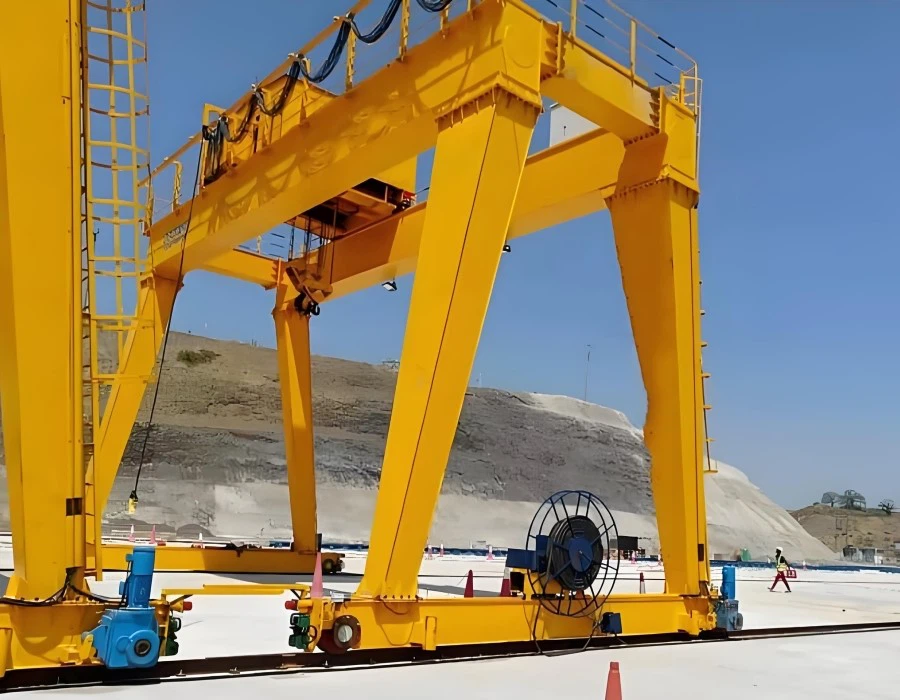
Pictures & Components
1.Single Beam (Girder)
The single beam, or girder, is the horizontal structure that spans across the crane. It supports the hoist and trolley, allowing them to move horizontally along its length. This beam is the main load-bearing element of the crane and is designed for moderate load capacities.

Hoist
The hoist is the component responsible for lifting and lowering loads. It is usually an electric hoist that moves along the beam. The hoist includes a motor, a lifting mechanism (wire rope or chain), a drum, and a hook that attaches to the load. Electric hoists are commonly used for efficiency and control.
 |
 |
3.End Carriages
The end carriages are located at both ends of the single beam. They house the wheels or rollers that allow the crane to move along the track or rail. These end carriages ensure the smooth travel of the entire gantry crane.
 |
 |
4.Crane travelling mechanism
1) Working principle
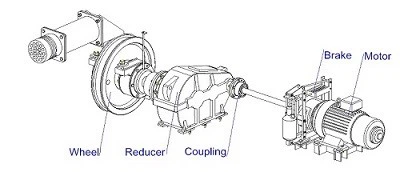
The crane is powered by an electric motor, which can be single or three-phase, depending on the crane's design and power requirements.The motor's power is transmitted to the wheels through a gearbox or transmission, causing the wheels to rotate.The wheels, often fitted with flanges, ensure that the crane stays aligned on the track, preventing derailment and enabling smooth movement.The crane is equipped with brakes that can be activated to stop the crane safely at any point on the track. These can be electromagnetic or mechanical brakes that engage when the motor is turned off.The operator controls the crane's travel through a control panel, which may include push buttons, joysticks, or a remote control. The system allows for forward, reverse, and emergency stopping.
2) Functions of the crane operating mechanism
1. Horizontal Movement
Function: The crane travelling mechanism allows the gantry crane to move laterally across the indoor space, positioning the hoist and trolley system over the desired work area.
Importance: This movement is essential for reaching different locations within the crane's operating area to lift, carry, and place loads as needed.
2. Load Transportation
Function: It facilitates the transportation of loads across the workspace, enabling the crane to transfer heavy materials from one point to another efficiently.
Importance: This is critical in manufacturing, shipping, and warehouses, where materials need to be moved to specific stations or storage areas.
3. Precision and Accuracy
Function: The travelling mechanism must be designed to provide smooth and precise movement, ensuring that loads are accurately positioned for lifting or dropping.
Importance: High precision reduces the risk of accidents, minimizes load swinging, and enhances productivity by enabling precise load placement.
4. Safety and Stability
Function: The crane's travel mechanism includes safety features such as limit switches, brakes, and sensors to monitor movement and stop the crane if it moves beyond safe limits.
Importance: These safety mechanisms are crucial to protect both the crane and the operators from potential hazards during operation.
5.Trolley travelling mechanism
1) Structural composition
1. Trolley Frame
Main Body: The main structural framework that supports all other components. It is usually made of steel or other heavy-duty metals to bear the load.
Brackets and Cross Members: Reinforce the structure and provide additional stability.
2. Travel Wheels and Axles
Travel Wheels: Mounted on the trolley frame, these wheels move along the rail system of the crane bridge.
Axles: Connect the travel wheels and allow them to rotate smoothly while supporting the load.
3. Drive Mechanism
Electric Motor: The primary power source that drives the wheels.
Gearbox and Transmission: Transfers power from the motor to the wheels, enabling movement. Some systems may use a direct drive, while others utilize a chain, belt, or gear train.
Brake System: Ensures safe stopping and holding of the trolley when stationary. It can be mechanical, electromagnetic, or hydraulic.
4. Track and Rail System
Rails on the Bridge: The surface on which the trolley wheels travel. These are often mounted on the top or bottom of the crane bridge.
Rail Supports: Secure the rails and maintain alignment over the entire length of the crane.
5. Electrical and Control Systems
Wiring and Cable System: Supplies power from the crane's power source to the motor, brake, and control units.
Control Panel: Interface for the operator to control the movement of the trolley.
Limit Switches and Sensors: Used to monitor the position and travel limits of the trolley to prevent over-travel and collisions.
6. Load Handling Mechanism
Hoist or Lifting Device: Typically mounted on the trolley to handle the load.
Hoist Frame and Hooks: The part that interfaces directly with the load.
Wire Rope or Chain: Used for lifting and lowering the load.
7. Structural Reinforcements and Supports
Side Plates and Stiffeners: Added to strengthen the trolley frame and minimize deflection or twisting.
Support Brackets: Reinforce attachment points for components like the motor and gearbox.
2) Function of the trolley operating mechanism
1. Horizontal Movement
The trolley moves along the crane's beam, enabling it to transport the hoist and payload to different locations within the crane's working span.
This allows the crane to cover a wide area in a workshop, warehouse, or manufacturing facility.
2. Load Transportation
The trolley carries the hoist and lifting equipment, which are essential for lifting and lowering loads.
It moves the hoist in a way that ensures the load can be positioned accurately over the desired area for lifting, lowering, or placing.
3. Flexibility and Efficiency
By enabling the trolley to travel along the crane's span, the mechanism improves the overall efficiency of lifting operations. This allows workers to transport goods quickly and safely across the width of the work area.
The system typically incorporates a motor-driven mechanism for smooth and controlled movement.
4. Drive System and Components
The trolley travelling mechanism usually consists of a drive unit, which can be electric or sometimes manual, depending on the crane design.
Wheels or rollers mounted on the trolley allow it to move along the rail or beam with minimal friction.
Motors and gears are commonly used to drive the trolley, providing controlled acceleration and deceleration to avoid sudden movements that could potentially damage equipment or pose safety risks.
5. Safety and Control
Advanced trolley travelling mechanisms include safety features like limit switches, which stop the trolley at the end of its travel path to prevent it from running off the track.
Modern systems may also have sensors or automated control mechanisms that enhance safety by detecting obstructions and automatically stopping or slowing down the movement.
6. Coordination with Other Crane Movements
The trolley's movement is coordinated with the hoisting mechanism and crane girder movement (if applicable) for efficient, three-dimensional operation (i.e., up/down, forward/backward, and side-to-side movements).
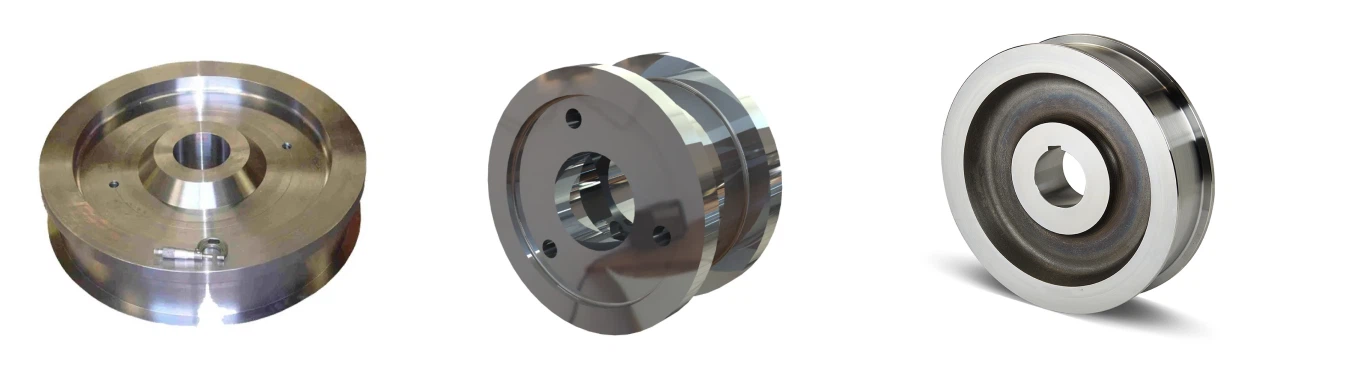
6.Crane wheel
1) Function of wheels
The crane wheels are designed to support the load of the gantry crane structure and facilitate its smooth movement across the rails. They play a crucial role in ensuring that the crane operates with stability and precision.
2) Design requirements
The wheels usually have a flange on the side to keep them on the rail, preventing derailment. Some wheels are designed with a tapered profile to accommodate wear and maintain stability over time.These wheels are typically made from high-strength materials such as forged steel or cast steel to handle the heavy loads and stresses encountered during operation. The surface may be hardened or treated to improve wear resistance and durability.
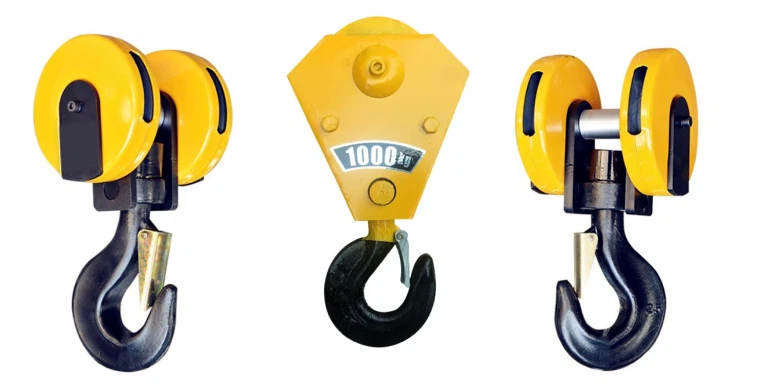
7.Crane Hook
1)A crane hook used in an indoor gantry crane is an essential component designed for lifting and carrying loads.The crane hook is attached to the hoist mechanism of the gantry crane, allowing it to lift and move heavy items.It typically features a sturdy, high-strength steel construction capable of supporting the maximum load capacity of the crane.Most crane hooks are designed with a safety latch or mechanism to secure the load during lifting and prevent accidental dislodging.
2) Specifications:
Load Capacity: Varies according to the crane's design, from several hundred kilograms to tens of tons.
Material: Typically forged or cast steel with high tensile strength to resist bending and breaking.
Safety Features: Latches or safety hooks are incorporated to prevent accidental release, and may include features like locking pins or manual/automatic mechanisms..
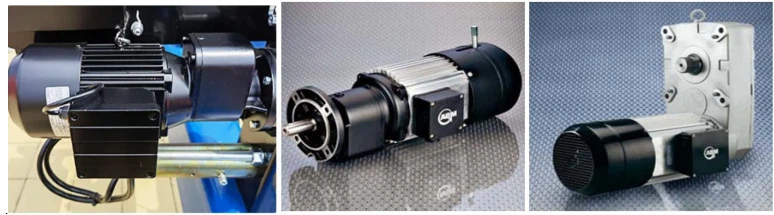
Motor
1) The motor of an indoor gantry crane is a crucial component for its operation. It provides the necessary power to move the crane's hoist, trolley, and bridge along their respective tracks. The choice of motor depends on several factors, including the crane's load capacity, speed requirements, and application specifics..
2) The motor should be powerful enough to handle the crane's maximum load and provide adequate torque for lifting and horizontal movement.Common power ratings range from a few kilowatts (kW) to several hundred kW, depending on the crane's size and capacity.Motors typically come with built-in braking systems to ensure safety during lifting and to prevent the load from dropping when power is cut.Electromagnetic brakes or mechanical brakes are often used to secure the motor when it stops.
3) Motors can be fitted with variable frequency drives (VFDs) to enable adjustable speed control. This is useful for fine-tuning lifting operations and ensuring smooth starts and stops.For precise movements, some gantry cranes use dual-speed motors, allowing for both low and high-speed operation.The motor should be designed for durability, with sealed bearings and minimal maintenance requirements to reduce operational downtime.
Regular inspection and maintenance are essential to prolong the life of the motor and avoid costly failures.
.
Sound and light alarm system & limit switch
1) Sound and light alarm system
A sound and light alarm system for an indoor gantry crane is designed to enhance safety by providing visual and audible warnings to operators and personnel in the vicinity. This system helps prevent accidents by alerting people when the crane is in use or approaching critical points of operation.
Sound Alarm (Horn or Siren):Types: Electric horns, sirens, or buzzers.Purpose: To provide an audible warning when the crane is operating, moving, or approaching a hazardous area.
Volume: Must be loud enough to be heard over ambient noise in the workspace, but not so loud as to cause hearing damage or discomfort.
2) Limit switch
A limit switch on an indoor gantry crane is a safety device that is used to control and restrict the movement of the crane's hoist, trolley, or bridge. It ensures that the crane operates within designated safe boundaries and prevents over-travel that could damage the equipment, cause operational malfunctions, or pose safety risks to personnel and other equipment in the area.
Key Functions of a Limit Switch on an Indoor Gantry Crane:
Over-Travel Protection: Stops the crane's movement when it reaches its maximum allowable travel limits, preventing the crane from moving past its design boundaries.
Position Feedback: Provides feedback to the control system to indicate the current position of the crane's components, such as the hoist or trolley.
Emergency Cutoff: Acts as an emergency stop to shut down the movement if any malfunction occurs, helping prevent accidents and damage.

10.Safety Devices
1) 1. Overload Protection
Overload Limiters: These devices prevent the crane from lifting weights that exceed its rated capacity, ensuring that the crane operates within safe limits.
Load Cells: Installed to monitor and measure the weight of the load being lifted and trigger alarms or shutdowns when an overload is detected.
2. Emergency Stop Button
Emergency Stop Switch: Provides a quick way to halt the crane's movement in case of an emergency, preventing potential accidents and damage.
3. Anti-Collision Systems
Bumper Sensors: These sensors detect nearby objects or structures and activate a braking mechanism to avoid collisions.
Proximity Sensors: Help detect if the crane is approaching a dangerous area and prevent movement when it's unsafe.
4. Limit Switches
End-of-Travel Limit Switches: Automatically stop the crane when it reaches the end of its track to prevent damage to the crane or surrounding structures.
Height Limit Switches: Ensure the hook or hoist does not move beyond a predetermined height, protecting against lifting items too high.
5. Signal and Warning Systems
Warning Lights: Alert nearby personnel when the crane is in operation.
Audible Alarms: Produce sounds to indicate when the crane is moving or approaching an area that requires caution.
Horn and Bell Systems: Used for signaling operators and nearby workers of the crane's movements.
6. Remote Control and Safety Locks
Wireless Remote Controls: Allow operators to control the crane from a safe distance.
Safety Lock Mechanisms: Ensure the crane cannot be operated unintentionally or by unauthorized personnel.
7. Anti-Sway Devices
Sway Prevention Systems: Minimize load swinging by using dampers or control algorithms that stabilize the load during movement.
8. Brake Systems
Emergency Brakes: Automatically activate in the event of a power failure or when a sudden stop is needed.
Manual Brakes: Used for additional control when stopping or securing the crane during non-operation periods.
11.Control Mode
1)1. Manual Control Mode
Description: Operated by a crane operator using a handheld pendant or joystick.
Features: The operator has direct control over the crane's movement, including the hoist, trolley, and gantry movement.
Use Case: Suitable for tasks that require detailed handling and adjustments, such as lifting or moving delicate items.
2. Remote Control Mode
Description: Allows the operator to control the crane using a wireless remote control.
Features: Enhances mobility for the operator, enabling them to manage the crane from a distance.
Use Case: Useful for improving safety and efficiency in environments where the operator needs to move around the crane's area.
3. Automatic Control Mode
Description: The crane operates autonomously based on pre-programmed settings or commands.
Features: Includes the use of sensors, cameras, and software that guide the crane through its tasks with minimal human input.
Use Case: Ideal for high-precision operations or repetitive tasks where the same movements are required consistently.
4. Semi-Automatic Control Mode
Description: Combines manual operation with automated functions.
Features: The operator can initiate or guide the crane but relies on automated systems for certain movements, like positioning or speed adjustments.
Use Case: Used when operators need assistance with repetitive tasks but still require oversight.
5. Joystick or Panel Control Mode
Description: Operated using a control panel or joystick that manages all crane functions.
Features: Offers more precise control over the crane's operations, often used in applications requiring complex or multi-directional movements.
Use Case: Common for cranes in areas where manual operation is preferred but requires more fine-tuned control.

12.Sketch

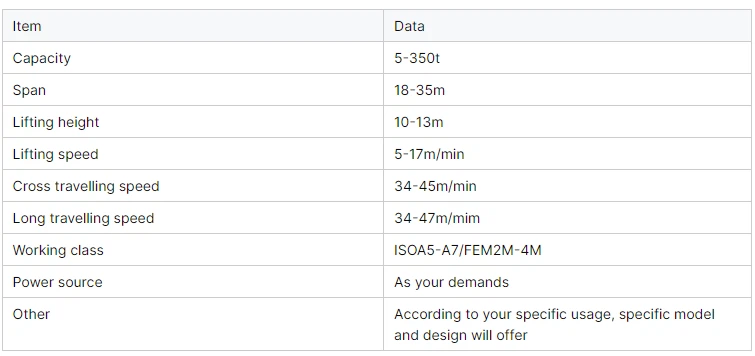
Main technical
Advantages
The MH Single Beam Gantry Crane offers several advantages, making it an efficient and cost-effective solution for lifting and material handling in various industries. Here are the key benefits:
1. Cost-Effective
The single beam design requires less material and fewer components than a double-beam gantry crane, making it more economical to produce, install, and maintain. This is especially beneficial for medium-duty applications where high load capacities are not necessary.
2. Simple and Lightweight Structure
The MH single beam crane has a relatively simple and lightweight structure, making it easy to install and dismantle. This also reduces the need for heavy infrastructure or modifications to the workshop or yard, making it ideal for smaller or temporary setups.
3. Efficient for Medium-Duty Lifting
The crane is designed for medium-duty lifting applications, typically handling loads between 3 to 20 tons. This makes it suitable for a wide range of tasks in mechanical workshops, warehouses, and construction sites without the need for more complex or heavy-duty equipment.
4. Versatility
MH single beam gantry cranes can be used in both indoor and outdoor environments. Their mobility allows them to handle material inside a workshop or move freely in an open yard. This versatility makes them adaptable to various industries, such as manufacturing, construction, and logistics.
5. Mobility and Flexibility
Many MH gantry cranes are equipped with wheels or run on tracks, allowing them to be moved easily to different locations within the workshop or yard. This provides flexibility in material handling and makes it easier to handle loads at multiple points.
6. Space-Saving Design
The single beam design requires less headroom compared to double-beam gantry cranes, which makes it a good fit for spaces with height restrictions. Its efficient use of space also allows more room for other activities or equipment in the workspace.
7. Ease of Operation
MH single beam gantry cranes come with straightforward controls, such as pendant or remote controls, which allow for easy and precise operation. Operators can lift, lower, and move loads safely and efficiently with minimal training.
8. Low Maintenance
The simple construction of the MH single beam crane translates to lower maintenance costs. Fewer components mean fewer potential points of failure, which reduces the likelihood of breakdowns and prolongs the equipment's lifespan with minimal maintenance requirements.
9. Customizable
These cranes can be customized in terms of span, height, and load capacity to meet the specific needs of a workshop or yard. Whether for a small workshop or a larger industrial space, the crane can be tailored to the required dimensions and lifting specifications.
10. Enhanced Safety Features
MH single beam gantry cranes are equipped with safety features such as limit switches, brakes, and end stops to ensure safe operation. These features prevent overloading and excessive travel, reducing the risk of accidents during operation.
11. Short Lead Time
The simple design and standardized components mean that MH single beam gantry cranes are often available with shorter lead times for production and delivery. This allows businesses to get their crane up and running quickly, minimizing downtime.
12. Portability (for Mobile Models)
Some MH single beam cranes are designed with wheels or castors, making them portable and allowing them to be relocated within the workshop or yard. This is particularly advantageous for businesses that need flexible material handling solutions in multiple areas.
Summary of Advantages:
Cost-effective and economical
Simple and lightweight structure
Efficient for medium-duty lifting
Highly versatile for indoor and outdoor use
Mobility and flexibility within the workshop or yard
Space-saving design
Easy to operate with user-friendly controls
Low maintenance and durable
Customizable to specific workshop or yard requirements
Enhanced safety features for secure operation
Short lead time for quick setup
Portable for relocation within the workspace
In summary, the MH Single Beam Gantry Crane is a practical and efficient choice for medium-duty lifting tasks, offering a combination of cost-effectiveness, ease of use, flexibility, and safety for material handling in various industries.
Application
The MH Single Beam Gantry Crane is widely used in various industries due to its versatility, cost-effectiveness, and ability to handle medium-duty lifting tasks. Here are some common applications of the MH single beam gantry crane:
1. Mechanical Workshops
Used to lift and move machinery components, tools, and heavy parts. It helps in assembling, disassembling, and relocating mechanical equipment, making operations more efficient in automotive, aerospace, and general mechanical workshops.
2. Warehouses
MH single beam gantry cranes are employed to handle heavy goods and materials in warehouses. They are ideal for loading and unloading pallets, crates, or large materials from trucks, and transporting them to storage areas, reducing manual labor and speeding up processes.
3. Manufacturing and Fabrication Plants
In manufacturing facilities, these cranes are used to transport raw materials, semi-finished, and finished products across different stages of production. They are particularly useful in fabricating large metal sheets, pipes, and other structural components.
4. Construction Sites
On construction sites, the MH gantry crane assists in lifting and positioning building materials like steel beams, concrete blocks, and large equipment. It facilitates efficient material handling, enabling construction crews to complete tasks more quickly and safely.
5. Outdoor Material Yards
Used in outdoor environments such as material storage yards, these cranes help in handling bulk materials like steel plates, pipes, and timber. Their ability to operate in open spaces and on rails makes them ideal for organizing and moving heavy materials in these settings.
6. Automotive Workshops
In automotive repair shops, the crane is used to lift and transport engines, transmissions, and other large vehicle components. It aids in the disassembly and reassembly of vehicles, making repairs and maintenance more efficient and less labor-intensive.
7. Ports and Shipping Yards
MH single beam gantry cranes are used to load and unload containers, crates, and other cargo from trucks or ships. They are especially helpful in smaller shipping yards or warehouses with limited space where overhead cranes may not be feasible.
8. Railway Maintenance Yards
These cranes are used in railway yards to lift and move heavy rail components, such as wheels, axles, and other train parts, during maintenance or repairs. Their mobility and flexibility allow them to work in different areas of the yard.
9. Machinery Installation
MH single beam gantry cranes are used to lift and position heavy machinery during installation in factories, plants, or workshops. This helps reduce the time and labor required for installing large equipment, improving efficiency in industrial settings.
10. Mold Handling in Manufacturing
In industries that use heavy molds, such as plastic injection or metal casting, MH gantry cranes are essential for lifting and moving large molds between machines. They ensure safe handling of bulky items, reducing the risk of damage or injury.
11. Temporary Lifting Requirements
When workshops or factories need temporary lifting solutions for specific projects or during expansions, portable MH gantry cranes are ideal. Their mobility allows them to be easily relocated and set up as needed for short-term tasks.
12. Assembly Lines
In industries with assembly lines, MH single beam gantry cranes assist in transporting heavy components from one station to another. They improve workflow by automating the lifting and moving of parts, which speeds up production and reduces the need for manual labor.
13. Pipe and Steel Section Fabrication
MH single beam gantry cranes are widely used in pipe manufacturing plants and steel fabrication shops to handle long and heavy materials like steel beams, pipes, and metal sheets. They help in lifting and positioning materials for cutting, welding, or assembly.
14. Shipyards
In shipbuilding and maintenance, MH gantry cranes lift heavy ship parts such as engines, anchors, or propellers. Their flexibility allows them to move parts around the shipyard and position them for repairs or assembly.
15. Outdoor Repair Facilities
These cranes are ideal for outdoor repair facilities where large machinery or equipment needs to be repaired or maintained. They can lift and transport equipment for repairs or maintenance, making operations more efficient in outdoor settings.
Summary of Applications:
Mechanical workshops: Moving and lifting machinery parts.
Warehouses: Handling heavy goods and materials.
Manufacturing plants: Transporting raw materials and finished products.
Construction sites: Lifting building materials and equipment.
Outdoor material yards: Organizing and moving bulk materials.
Automotive workshops: Assisting in vehicle repair and maintenance.
Ports and shipping yards: Loading/unloading cargo.
Railway maintenance yards: Moving train parts for repair.
Machinery installation: Positioning heavy machinery.
Mold handling: Moving large molds in manufacturing.
Temporary lifting: Flexible lifting solutions for short-term tasks.
Assembly lines: Transporting heavy parts along production lines.
Steel and pipe fabrication: Handling long, heavy materials.
Shipyards: Lifting ship parts for assembly and repair.
Outdoor repair facilities: Lifting heavy equipment for repair.
In conclusion, the MH Single Beam Gantry Crane is a versatile tool for lifting and moving medium-duty loads across a variety of industries, from manufacturing and construction to repair and warehousing. Its mobility, flexibility, and cost-efficiency make it suitable for both indoor and outdoor applications.
Workshop view:
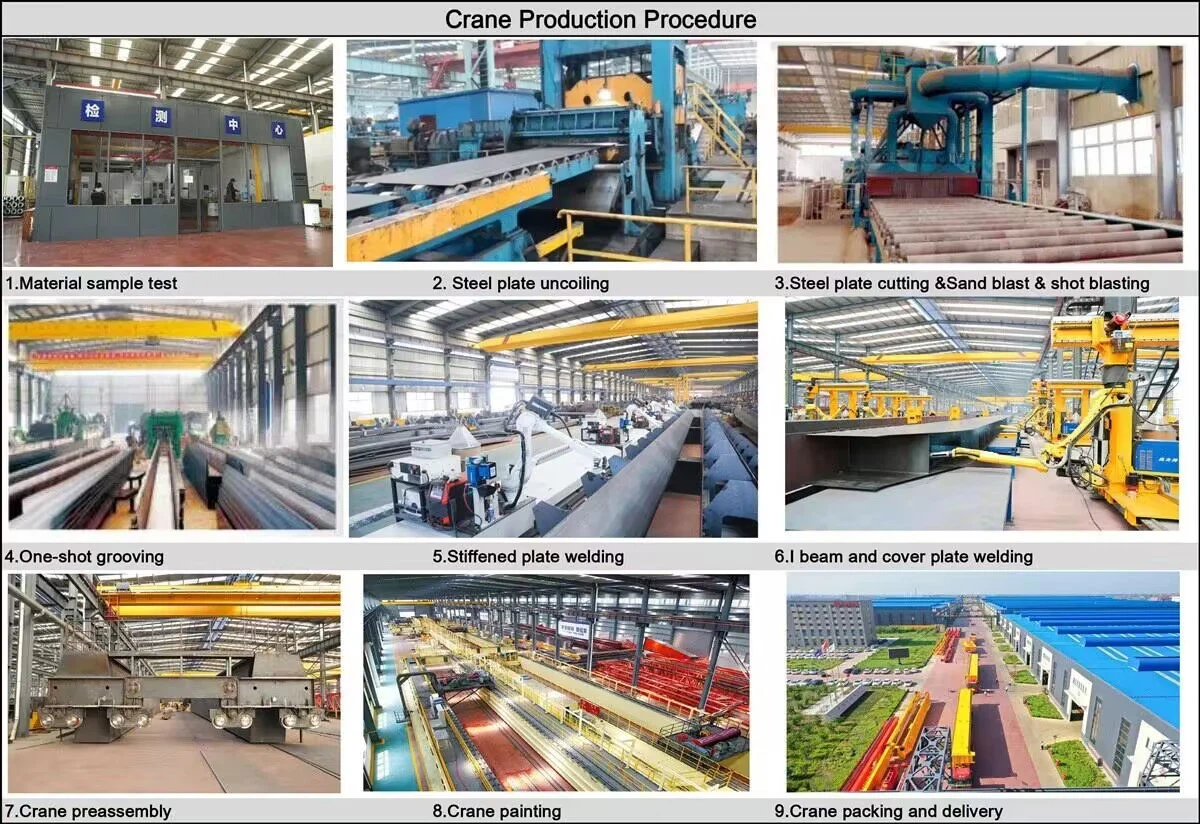
The company has installed an intelligent equipment management platform, and has installed 310 sets (sets) of handling and welding robots. After the completion of the plan, there will be more than 500 sets (sets), and the equipment networking rate will reach 95%. 32 welding lines have been put into use, 50 are planned to be installed, and the automation rate of the entire product line has reached 85%.





Hot Tags: mh single beam gantry crane, China mh single beam gantry crane manufacturers, suppliers, factory, Forged Part, Single Girder Gantry Crane, Rolling Mill Overhead Crane, Railway Wheel, Wheels, Upper Rotary Electromagnetic Bridge Crane
You Might Also Like




Send Inquiry