










Harbor Freight Gantry Crane
Products Description
A harbor freight gantry crane is a robust and versatile lifting equipment widely used for heavy-duty outdoor material handling. It is designed with two parallel main girders supported by a set of legs, forming a gantry structure that runs along rails on the ground. This crane can handle large loads, operate in harsh environments, and provide significant clearance for high and wide objects. It is commonly used in ports, warehouses, shipyards, construction sites, and steel plants for lifting, loading, and unloading heavy goods.
A harbor freight gantry crane consists of a crane frame, hoisting mechanism, trolley, lifting system, electric drive, and control systems. This type of crane is ideal for tasks requiring lifting and transferring heavy materials in open spaces, as well as in environments where large spans are necessary, such as ports or industrial yards.
3.The harbor freight gantry crane is an essential piece of equipment for handling heavy and large loads in open environments. Its durable structure, powerful lifting capabilities, and advanced control features make it ideal for use in industries such as shipping, construction, logistics, and manufacturing. With its high safety standards, efficiency, and low maintenance requirements, this crane is an excellent investment for businesses that require reliable and heavy-duty lifting solutions.
Warranty:1 Year
Weight (KG):30000 kg
Video outgoing-inspection:Provided
Machinery Test Report:Provided
Application:Open storage, stock ground, ports, etc.
Product Name:10 ton 15 ton 20 ton load capacity harbor freight gantry crane
Color:Customized
Power Supply Mode:Synchro lines, cable reels or generators
Spreader:Customized
Control Method:Wireless romote, pendent or cabin control
Warning Device:Provided
Cross-over Track Design:Provided
Electrical:Schnider, SIMENS or as request
Wearing Parts:Random free wearing parts
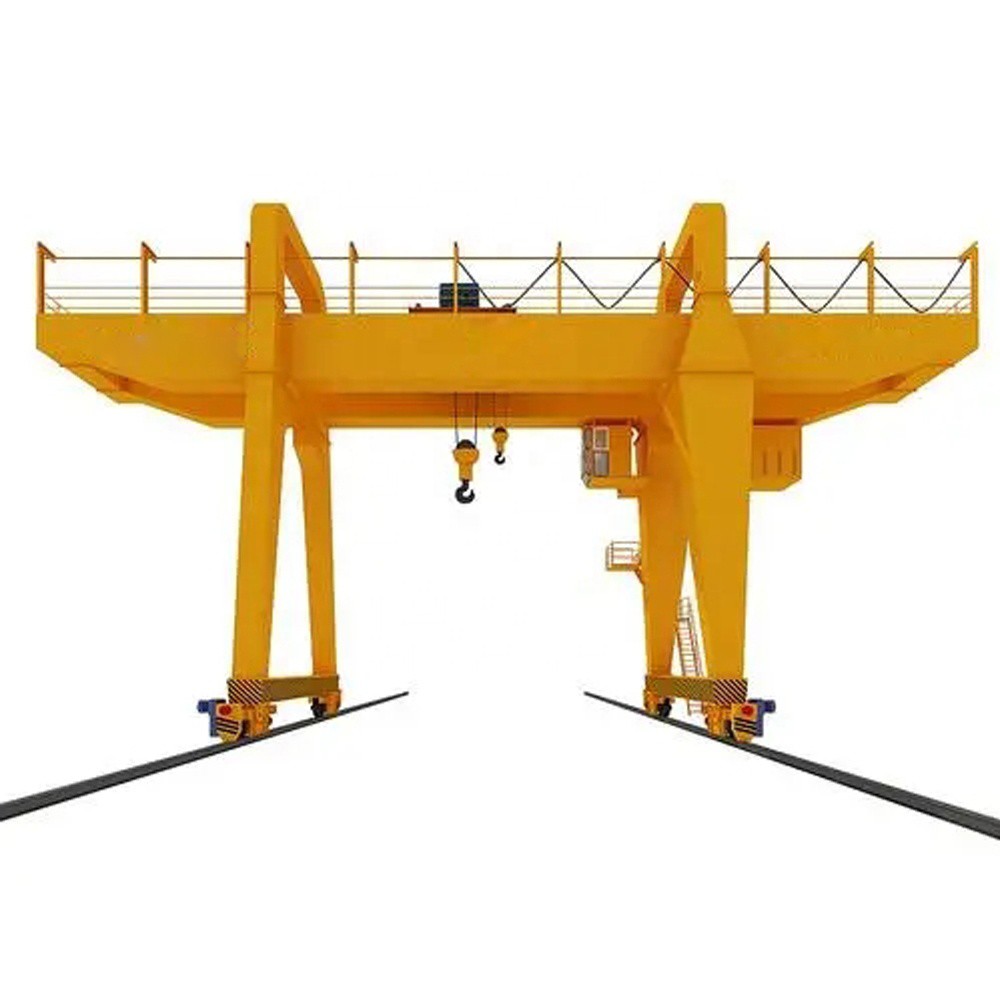
Pictures & Components
1.Main beam
1)The main beam of a harbor freight gantry crane is a critical component that supports the crane's load-carrying capacity and overall structure. It is one of the two primary girders (the other being the opposite main beam) that run parallel and form the top part of the crane's gantry structure.
2)The main beam, along with the opposite beam, serves as the primary structural element that carries the load of the crane. It provides the necessary support for the hoisting mechanism (trolley and hoist), lifting the load and allowing the crane to travel along its rails. The main beam ensures the stability, strength, and durability of the crane under heavy loads.
3)The main beam is designed to carry both the static load (the weight of the object being lifted) and dynamic loads (such as acceleration, deceleration, and wind forces). It is designed with specific factors of safety to ensure it can handle unexpected loads and stresses during operation.
Lifting System
1)The lifting system of a harbor freight gantry crane is one of its most important components, responsible for lifting and lowering loads. This system is designed to handle heavy, often cumbersome, materials with precision and safety. The lifting system consists of several key components that work together to ensure smooth, reliable, and efficient lifting operations.
2)Lifting System Operation:
Lifting and Lowering: The operator uses the control panel to activate the hoist motor and raise or lower the load. The motor's power is transmitted to the lifting mechanism, moving the rope or chain around the drum or sprockets to control the load's vertical movement.
Trolley Movement: The trolley can move along the crane's beams, positioning the load horizontally across the span. The operator can control the movement of the trolley using the crane's controls.
Precise Positioning: The lifting system is designed to provide fine control over load positioning, allowing the crane to place loads with high accuracy, even in tight spaces.
 |
 |
3.End carriage
1)The end carriage of a harbor freight gantry crane plays a crucial role in supporting the crane's main girders (beams) and allowing it to travel along the rails. The end carriage is essentially the set of wheels, motors, and frames that allow the gantry crane to move horizontally (typically along a track or rail system). It connects the crane's lifting system (main girder and trolley) to the ground-based rail system, ensuring stability and smooth movement during crane operation.
2)The end carriage frame is the structural component that supports the crane's main girder and allows it to traverse the rails. It connects the crane's two main girders and houses the wheels, motors, and other critical mechanisms.The end carriage provides the structural support for the main girders of the crane. The main girders carry the lifting system, including the hoist, trolley, and hook. The end carriage frames are designed to bear the total load of the crane, which can range from several tons to hundreds of tons.
 |
 |
4.Crane travelling mechanism
1)The crane travelling mechanism of a harbor freight gantry crane is essential for the horizontal movement of the crane along the rails. This mechanism is responsible for moving the entire gantry structure (including the main girders, lifting system, and end carriages) along the ground-based track or rail system. The smooth and efficient operation of the travelling mechanism ensures that the crane can position its load over the desired work area with precision, making it critical for various heavy-duty operations in industries such as shipping, construction, and steel manufacturing.
2)Maintenance of the Crane Travelling Mechanism:
Regular maintenance is crucial for ensuring the longevity and smooth operation of the crane's travelling mechanism.
Inspecting Travel Wheels: Regularly check for wear and tear on the travel wheels and rails. Ensure that the wheels are free from debris and properly aligned.
Lubricating Bearings and Gearboxes: Periodically lubricate the bearings, wheels, and gearbox to reduce friction and ensure smooth operation.
Checking Control System: Test the control system and brakes to ensure they respond correctly to commands and that the crane stops safely.
Monitor Motor Health: Regularly inspect the travel motors for signs of overheating or excessive wear. Keep wiring and electrical connections in good condition.
5.Trolley travelling mechanism
1)The trolley travelling mechanism of a harbor freight gantry crane enables the trolley, which houses the hoisting mechanism, to move horizontally along the main girders. This movement allows precise positioning of the hoist and the load within the crane's span, making it a critical system for efficient material handling operations.
2)Advantages of the Trolley Travelling Mechanism:
Precision Positioning: Allows for accurate placement of the load within the crane's span.
Smooth Operation: Bearings, VFDs, and properly aligned rails ensure minimal friction and smooth travel.
Heavy Load Handling: Designed to carry the hoist and heavy loads efficiently.
Safety Features: Includes limit switches, overload protection, and braking systems for safe operations.
Durability: High-quality materials and components ensure long-lasting performance, even in demanding environments.
6.Crane wheel
Maintenance of Crane Wheels:
To ensure optimal performance, crane wheels require regular inspection and maintenance:
1)Wheel Wear Inspection:
Check for wear: Inspect the tread surface and flanges for wear or damage. Worn-out wheels may cause misalignment and lead to poor performance.
Check for cracks: Look for cracks, chips, or any structural damage to the wheels.
2)Wheel Alignment:
Track Alignment: Ensure that the rails or tracks are aligned properly and that the wheels run smoothly. Misalignment can cause excessive wear or derailment.
3)Lubrication of Bearings:
Lubrication: Regularly lubricate the wheel bearings to reduce friction and prevent premature wear.
Sealing: Ensure that the bearings are sealed properly to prevent contamination by dirt or water.
4)Wheel Cleaning:
Debris Removal: Remove any debris or dirt from the wheels and rails to avoid unnecessary friction or wear.
5)Regular Monitoring:
Monitor Noise and Vibration: Any unusual noise or vibration during crane movement could indicate issues with the wheels or track alignment.

7.Crane Hook
1)The hook of a harbor freight gantry crane is one of the most critical components in the crane's lifting system. It is the part of the crane that directly interacts with the load to be lifted, providing a secure attachment point. The hook must be designed for high strength, reliability, and safety, as it is responsible for carrying the full load during lifting, lowering, and positioning operations.
2)The hook is used in conjunction with various lifting accessories like slings, chains, or ropes to connect the crane to the load.In harbor freight gantry cranes, the hook is often part of a hook block or hoist block assembly. This assembly typically includes the hook, a block, and the necessary bearings or pulleys to support the lifting and lowering of the load.
3)The hook of a harbor freight gantry crane plays a crucial role in lifting, securing, and moving loads. It is designed for strength, durability, and safety, with features like safety latches, high-quality materials, and the capacity to handle significant loads. Proper maintenance and regular inspections are essential to ensure the hook's continued safe operation, preventing accidents and ensuring the efficiency of the crane in heavy-duty lifting tasks.

Motor
Maintenance of the Crane Motor:
Regular maintenance is essential to ensure the motor performs optimally and has a long service life:
1)Lubrication: Ensure that the motor bearings are properly lubricated to reduce friction and prevent wear.
2)Cleaning: Dust, dirt, and debris should be regularly cleaned from the motor to prevent overheating and ensure efficient operation.
3)Inspection: Regularly inspect the motor for signs of wear, overheating, or electrical issues. Check for loose connections, damaged cables, and any signs of damage to the motor housing.
4)Vibration Monitoring: Check for unusual vibrations or noise during operation, which can indicate wear or imbalance in the motor or its components.
5)Cooling System Maintenance: Ensure that the motor's cooling system is functioning correctly to prevent overheating, especially in heavy-duty applications.

.
Sound and light alarm system & limit switch
1)Sound and Light Alarm System:
The sound and light alarm system is a safety feature used to provide audible and visual warnings to operators and personnel about various crane operations, particularly when the crane is moving, lifting heavy loads, or approaching dangerous limits. This system helps ensure that people in the vicinity of the crane are aware of its movements and can take necessary precautions.
2)Limit Switches:
Limit switches are mechanical or electronic devices used to define and restrict the movement of the crane's components, such as the hoist, trolley, or gantry crane's traveling mechanism. They serve as safety devices that prevent the crane from exceeding its designed operational limits, thus protecting the crane from damage and preventing accidents.
10.Safety Devices
1)Overload Protection System:
An overload protection system is one of the most critical safety devices for a gantry crane. It ensures that the crane does not lift loads exceeding its rated capacity, preventing damage to the crane and reducing the risk of accidents.
2)Limit Switches:
Limit switches are used to restrict the movement of various crane components, ensuring that they do not exceed safe travel limits. These switches can be found in the hoisting system, trolley system, and traveling mechanism.
3)Safety Latches on the Hook:
A safety latch (or hook latch) is a device that is attached to the crane hook to prevent the load from accidentally falling off during lifting and lowering operations.
4)Emergency Stop System:
An emergency stop system is a safety device that allows the crane operator to immediately stop all crane movements in the event of an emergency or unexpected hazard.
5)Warning Lights and Audible Alarms (Sound and Light Alarm System):
The warning lights and audible alarms provide visual and auditory signals to alert operators and nearby personnel about crane movements and potential hazards.
11.Control Mode
1)Cabin Control (Pendant Control)
This is the most common method for controlling a harbor freight gantry crane, where the crane operator is positioned in a cabin or uses a pendant (wired control) to control crane movements.
2)Radio Remote Control
Radio remote control is a modern and flexible control mode, commonly used in industrial and construction applications where the crane operator is located on the ground, sometimes far from the crane.
3)Local Control (Control Station)
In some cranes, local control is provided through a control station positioned near the crane or on the ground. This is typically used for cranes that operate in fixed locations or for maintenance purposes.
4)Automatic Control (Automation / PLC Control)
For more advanced applications, some harbor freight gantry cranes are equipped with automatic control systems, such as programmable logic controllers (PLC), automated load positioning, or integration with warehouse management systems (WMS).

12.Sketch
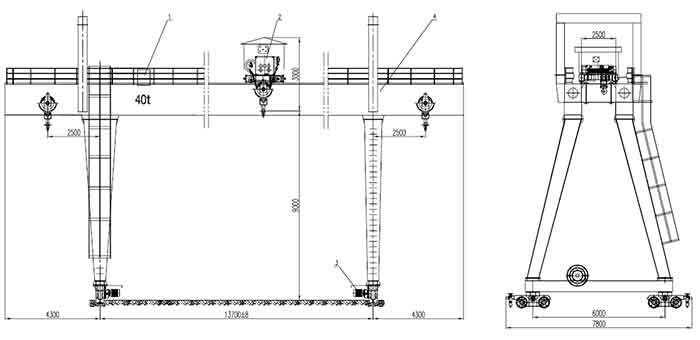
Main technical

Advantages
1. High Load Capacity
Description: harbor freight gantry cranes are designed to handle extremely heavy loads, often in the range of several tons to hundreds of tons, depending on the crane's design and the specific requirements.
Advantage: The double girder configuration provides enhanced structural strength and load distribution, making it ideal for lifting large, heavy items like shipping containers, heavy machinery, and construction materials.
2. Greater Span and Lifting Height
Description: With two parallel girders, harbor freight gantry cranes can achieve wider spans and greater lifting heights compared to single girder cranes.
Advantage: The larger span allows the crane to cover a wider operational area, which is particularly useful in large facilities such as container terminals, industrial plants, or warehouses. Additionally, greater lifting height enhances the crane's versatility, allowing it to lift loads over obstacles or to higher storage levels.
3. Stability and Rigidity
Description: The double girder design provides superior rigidity and stability, ensuring the crane can handle large loads without experiencing excessive sway or distortion.
Advantage: This increased stability is crucial when working with heavy loads, especially in windy conditions or when precise movements are required. The rigidity also ensures smoother and more controlled operation, reducing the risk of accidents or load instability.
4. Versatility in Application
Description: harbor freight gantry cranes are highly adaptable and can be used for a wide range of applications, including outdoor operations, such as loading and unloading shipping containers, as well as indoor tasks, such as lifting heavy machinery in factories and warehouses.
Advantage: Their ability to operate in both indoor and outdoor environments, combined with various configurations, allows these cranes to handle different lifting tasks, making them versatile in industries like manufacturing, logistics, construction, and shipping.
5. High Operational Efficiency
Description: The dual girder system allows for improved lifting speeds and greater lifting heights, along with the ability to carry heavier loads without sacrificing speed or stability.
Advantage: This means that the crane can move loads quickly and efficiently over long distances, helping to boost overall productivity, especially in environments that require continuous or high-volume lifting operations, like ports or large factories.
Application:
1. Ports and Shipping Yards
Use Case: Loading, unloading, and transporting shipping containers and cargo.
Why It's Used:
Can handle large, heavy loads like containers and bulky cargo.
Covers a large operational area, making it ideal for outdoor operations in ports.
High lifting height allows it to stack containers efficiently.
2. Construction Sites
Use Case: Moving heavy construction materials like steel beams, precast concrete segments, and heavy machinery.
Why It's Used:
High load capacity supports lifting of heavy construction materials.
Enhanced stability and precision ensure safety in busy and hazardous construction environments.
Customizable designs cater to various construction needs.
3. Warehouses and Logistics Centers
Use Case: Handling and storing goods, materials, and pallets in large warehouses or distribution centers.
Why It's Used:
Wide spans and lifting height accommodate high-volume operations.
Efficient material handling reduces operational time and increases productivity.
Integrates easily with automated systems for storage and retrieval.
4. Manufacturing and Assembly Plants
Use Case: Lifting and positioning heavy components during the manufacturing or assembly process.
Why It's Used:
High precision allows for accurate placement of materials and parts.
Supports assembly of large items like machinery, vehicles, or aerospace components.
Provides flexibility for multi-bay operations in factories.
5. Steel Mills and Metal Processing Plants
Use Case: Transporting heavy steel coils, sheets, billets, and ingots within production lines.
Why It's Used:
Designed to withstand extreme temperatures and demanding conditions.
High load capacity is suitable for handling dense materials like steel and metals.
Custom hooks and spreaders are available for specific lifting needs.
Crane production procedure
1. Design and Planning
Understand customer specifications, including load capacity, span, lifting height, operational environment, and any special requirements.Use CAD (Computer-Aided Design) and simulation software to create detailed designs for the crane, including the main girders, end carriages, trolley, hoist, and other components.
2. Material Selection and Procurement
Choose high-quality materials, such as structural steel, for the main girder and other load-bearing components.Select durable materials for critical parts like wheels, hooks, and motors.Procure specialized components such as hoists, motors, electrical systems, and safety devices from reliable suppliers.Inspect all raw materials and purchased components to ensure they meet quality standards.
3. Fabrication of Main Components
Main Girder Fabrication:
Cut steel plates and sections to the required dimensions using CNC machines.Weld components together using automatic welding machines to form the double girder structure.
End Carriages and Supporting Structures:Manufacture the end carriages and other support structures according to design specifications.
4. Machining and Surface Treatment
Machine critical parts such as wheels, axles, and connections for precise assembly.Ensure tolerance levels meet design specifications.Clean all metal surfaces using sandblasting or shot blasting to remove rust and impurities.Apply anti-corrosion coatings and paint to protect against environmental factors.
5. Electrical System Integration
Install the electrical system, including motors, control panels, limit switches, and safety alarms.Program the control systems (e.g., PLC for automation) and configure the control modes (manual, remote, or automatic).Test the electrical systems for functionality and safety.
6. Pre-Assembly
Assemble the main components (main girders, end carriages, trolley, and hoist) to ensure proper alignment and fit.Verify dimensional accuracy and alignment using measuring tools.
Perform initial functionality tests.
7. Quality Inspection
Conduct static and dynamic load tests to ensure the crane can handle its rated capacity safely.Check the integrity of the main girders, welds, and connections.Test limit switches, overload protection, emergency stop systems, and alarms to ensure they function correctly.Ensure the crane meets relevant industry standards (e.g., ISO, FEM, DIN) and customer requirements.
8. Final Assembly
Assemble the complete crane, including all mechanical, electrical, and safety systems.Ensure the crane's load distribution is balanced for smooth operation.Apply final coatings and safety labels.

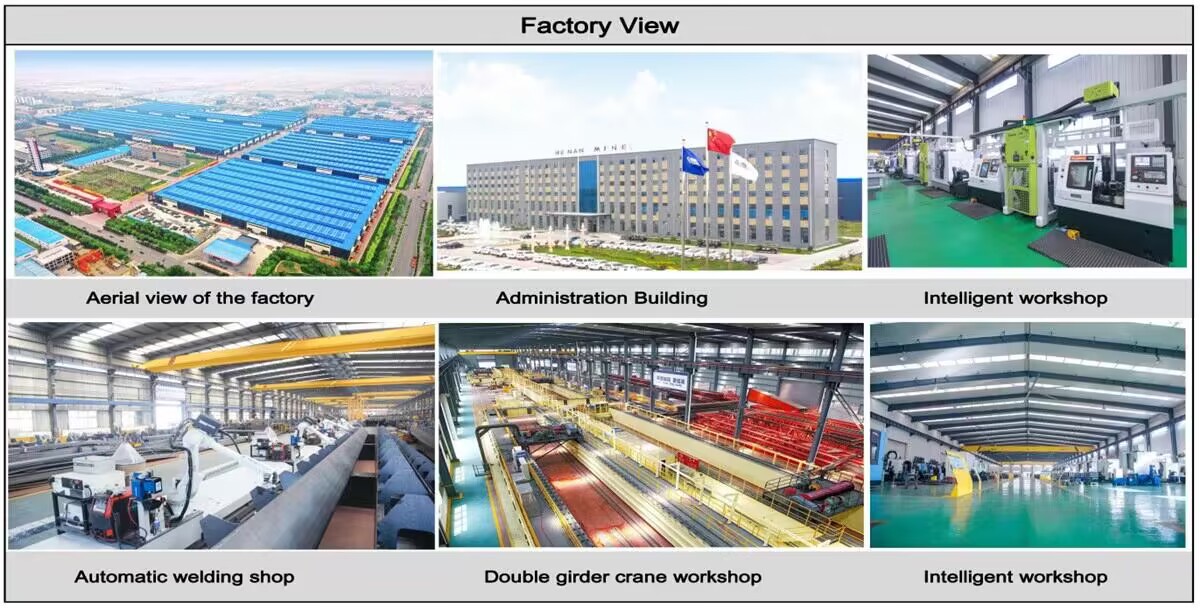
Workshop view:
The company has installed an intelligent equipment management platform, and has installed 310 sets (sets) of handling and welding robots. After the completion of the plan, there will be more than 500 sets (sets), and the equipment networking rate will reach 95%. 32 welding lines have been put into use, 50 are planned to be installed, and the automation rate of the entire product line has reached 85%.


Hot Tags: harbor freight gantry crane, China harbor freight gantry crane manufacturers, suppliers, factory, Explosion Proof Overhead Crane, Bridge Crane, Ladle Foundry Bridge Crane, Rolling Mill Overhead Crane, Railway Wheel, Electromagnetic Overhead Crane with Rotary Carrier Beam
Previous
Ceiling Mounted Gantry CraneYou Might Also Like


Send Inquiry