










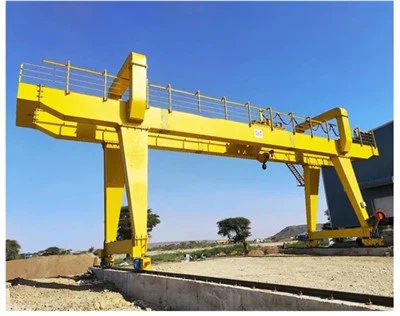
100 Ton Hydraulic Gantry
Products Description
100 Ton Hydraulic Gantry is a kind of lifting equipment widely used in the fields of industry, warehousing and construction, mainly used for lifting and moving heavy objects. Due to its unique structural design and superior performance, 100 Ton Hydraulic Gantry is regarded as an ideal lifting solution in many occasions.
100 Ton Hydraulic Gantry can carry large loads and is generally suitable for handling heavy objects ranging from 10 tons to more than 500 tons. The gantry structure makes the crane more stable when handling heavy objects, reducing the risk of tilting and shaking. This crane can be used in a variety of environments, including indoor and outdoor workplaces, and is suitable for the handling of heavy equipment. Its trolley moves freely along the main beam, which can achieve a larger operating range and improve work efficiency. The structural design is reasonable, and the components are easy to replace and maintain, which reduces the cost of daily maintenance. At the same time, it is equipped with an advanced electrical control system, which supports remote control, intelligent monitoring and fault diagnosis, and improves the convenience and safety of operation.
3. 100 Ton Hydraulic Gantry has become an important lifting equipment in the fields of industry, construction and logistics with its superior carrying capacity and stability. Through reasonable design and configuration,100 Ton Hydraulic Gantry can effectively improve operating efficiency, reduce labor costs, and ensure safety at the same time. It is suitable for various heavy object handling needs and is one of the indispensable equipment in modern factories and construction projects.
Core Components:Gearbox, Motor, Gear
Condition:New
Warranty:2 years
Weight (KG):100000 kg
Feature:Gantry Crane
Application:warehouse, ports, yard, etc
Rated Lifting Moment:100kn
Control way:Ground Handle Control(push Button)
Capacity:10-600t
Material:Q235B/Q345B
Lifting speed:1-15m/min
Lifting mechanism:Electric Winch Trolley
Work Duty:A5-A6

Pictures & Components
1.Main beam
1) The main beam of a double-beam gantry crane usually consists of two parallel main beams, which are connected by a gantry and support the trolley and lifting mechanism. The main structural features of the main beam include:
Main beam shape: The main beam is generally made of I-beam or box-shaped structure. The I-beam design makes the main beam light and has good load-bearing capacity, while the box-shaped structure provides higher rigidity and stability.
Span: The span of the main beam is usually designed according to actual use requirements and working environment. The span size will affect the overall stability and work efficiency of the crane.
Connectors: The main beam is fixed to the end beam and the gantry through connectors to ensure the overall stability of the structure.
2) Function
Carrying heavy objects: The main beam is the main component of the crane to carry heavy objects, and the load is transmitted to the structural foundation of the crane through the main beam.
Supporting trolley: The main beam provides a track for the movement of the trolley, allowing the trolley to move freely on the main beam to complete the lifting operation.
Stable structure: The cooperation between the main beam and the gantry ensures the overall stability of the crane and prevents the risk of tilting or collapse during operation.

Lifting System
The lifting system is usually composed of several key components, mainly including:
1) Motor:
Provides power for the lifting system, usually using asynchronous motors or servo motors, with high efficiency and reliability.
2) Reducer:
Connected between the motor and the drum, used to reduce the speed of the motor and increase the torque to meet the lifting needs of heavy objects.
3) Drum:
Used to wind the wire rope or chain for lifting, and realize the lifting and lowering of goods through the rotation of the drum.
4) Hook:
Connected to the end of the lifting wire rope or chain, used to directly hang and carry goods.
5) Lifting chain or wire rope:
The lifting chain or wire rope responsible for carrying the goods must have sufficient strength and wear resistance to ensure safety.
 |
 |
3.End carriage
1) Structure
The end beam is usually a crossbeam connected to both ends of the main beam of a double-beam gantry crane to form an integral frame structure. Its main structural features include:
Transverse connection: The end beam provides the necessary stability and rigidity for the crane by connecting the main beam transversely.
Supporting structure: The end beam supports the operating mechanism of the crane (such as the trolley operating mechanism) and ensures the balance of the entire system during operation.
Design shape: The end beam is usually constructed of I-beam or other steel sections, and the specific shape depends on the design requirements.
2) Material
The material selection of the end beam is also crucial. Commonly used materials include:
High-strength steel: such as Q235, Q345, etc. These materials have good load-bearing capacity and durability and can withstand large loads.
Corrosion-resistant materials: When used in harsh environments, the end beam may be rust-proofed or made of corrosion-resistant materials to extend its service life.
 |
 |
4.Crane travelling mechanism
1) Structure
The crane running mechanism is mainly composed of the following parts:
Motor: Provides power to drive the crane along the track, usually using an asynchronous motor or a DC motor.
Reducer: Connected between the motor and the axle, it is used to reduce the speed of the motor and increase the torque, so that the crane can carry heavy objects and run smoothly.
Wheel: The wheel installed at the bottom of the crane moves through the track. The design of the wheel needs to take into account the load-bearing capacity and friction performance.
Frame: The structural frame of the crane, connecting the motor, reducer and wheels, supporting the crane and lifting system.
2) Working principle
The working principle of the crane running mechanism is as follows:
Starting the motor: The operator starts the motor through the control panel or remote control.
Driving the reducer: The rotation of the motor drives the reducer to work, and the reducer converts the high speed of the motor into a low-speed, high-torque output.
Wheel rotation: The reducer drives the wheel to rotate, and the crane moves forward and backward along the track to achieve horizontal handling of goods.
Braking control: When stopping, the motor will stop the wheel through the braking system to ensure that the crane can stop safely.
5.Trolley travelling mechanism
1) Main components
Trolley frame: reasonable structural design, good strength and rigidity, carrying the lifting system and load.
Motor: provides power for the trolley, requiring high efficiency and low noise.
Reducer: used to adjust the speed of the motor to ensure the smooth operation of the trolley.
Wheels: the design should meet the standards of the track to ensure the stability and flexibility of the trolley.
Limit switch: prevent the trolley from exceeding the set maximum and minimum movement range to ensure safety.
2) Features
Flexibility: the trolley operating mechanism can quickly respond to the operator's instructions, achieve rapid movement, and improve work efficiency.
Stability: under high load conditions, the operating mechanism remains stable, reduces vibration, and ensures the safety of the goods.
Strong adaptability: can work in different environments and conditions, and adapt to various operating needs.
Easy maintenance: the trolley operating mechanism has a simple structure, which is convenient for daily maintenance and inspection.
6.Crane wheel
1) Material
The material selection of the wheel is very important. Commonly used materials include:
High-strength steel: such as Q235, Q345, etc., which have good load-bearing capacity and wear resistance and can withstand the weight and load of the crane.
Cast iron or alloy material: In some cases, the wheel may use cast iron or alloy material to provide better strength and wear resistance.
Surface treatment: The surface of the wheel is usually heat-treated or coated to improve wear resistance and corrosion resistance.
2) Function
Carrying heavy objects: The wheel carries the entire structure of the crane and its load, and transfers the load to the ground through the track.
Mobile support: The wheel enables the crane to move freely on the track, thereby completing the lifting operation at different locations.
Shock absorption effect: The wheel can absorb certain shocks and vibrations during operation, improving the stability and safety of the equipment.

7.Crane Hook
1) Material
The material selection of the hook is crucial to its strength and durability. Commonly used materials include:
High-strength steel: such as Q345, 35CrMo, etc., which have good tensile strength and toughness and can withstand heavy loads.
Surface treatment: The surface of the hook is usually heat-treated and spray-painted to improve wear resistance and corrosion resistance.
2) Function
Carrying heavy objects: The main function of the hook is to carry and lift the goods, and to move the heavy objects through cooperation with the lifting mechanism.
Fixed connection: The hook needs to firmly fix the objects to ensure that they do not fall off accidentally during the lifting process.
Safety protection: The safety lock design ensures the safety of the goods during transportation.

Motor
1) Types
Common motor types for double-beam gantry cranes include:
Asynchronous motors: widely used in the drive system of cranes, with advantages such as high efficiency and simple maintenance.
DC motors: used in some special occasions, with good speed regulation performance, but with high maintenance requirements.
Variable frequency motors: used in combination with frequency converters, can achieve smooth speed regulation and adapt to the needs of different working conditions.
2) Working principle
The working principle of the motor is as follows:
Power on: When the motor is powered on, the stator generates a rotating magnetic field.
Magnetic field action: The stator magnetic field acts on the rotor, generating torque and driving the rotor to rotate.
Load drive: The rotation of the rotor is transmitted to the trolley or car running mechanism through a reducer or coupling to complete the handling of goods.
Brake and braking: When stopping or decelerating, the motor achieves a smooth stop through the braking system to ensure safety.

.
Sound and light alarm system & limit switch
1) Sound and light alarm system
Function
Warning function: When the crane moves to a dangerous area, the sound and light alarm system will emit sound and flashing lights to warn the operator and surrounding personnel.
Prevent collision: During the movement of the crane, the sound and light alarm will remind the surrounding personnel to avoid accidental collision accidents.
Working status indication: When the crane starts, stops or performs specific operations, the sound and light alarm system provides status indication to ensure the safety of operation.
2) Limit switch
Function
Position control: The limit switch is used to monitor the extreme position reached by the crane movement to prevent damage caused by overtravel.
Safety protection: Once the moving parts reach the set limit position, the limit switch will immediately cut off the power supply, stop the equipment operation, and avoid accidents.
Improve reliability: The limit switch can ensure that the equipment operates within a safe range and improve the reliability of the system.

10.Safety Devices
(1) Overload protection device
Function: Monitor the load to ensure that the load does not exceed the maximum load of the crane.
Structure: Generally composed of sensors and alarm systems. The sensors detect the load in real time and alarm and stop the equipment when overloaded.
(2) Limit switch
Function: Monitor the movement position of the crane to prevent it from exceeding the set maximum and minimum strokes.
Structure: The limit switch is connected to the moving parts and sends a signal to cut off the power supply and stop the equipment when triggered.
(3) Emergency stop button
Function: In an emergency, quickly cut off the power supply and stop all running mechanisms.
Structure: Generally set on the operation panel or remote control to ensure that the operator can quickly trigger it when needed.
(4) Braking system
Function: Provide braking when the crane stops or fails to ensure the stability of the equipment and load.
Structure: Includes motor brakes and mechanical brakes to ensure that the machine can be quickly shut down in the event of power loss or abnormal conditions.
(5) Safety lock
Function: Prevent the hook or gripper from accidentally falling off during lifting to ensure the safety of the cargo.
Structure: The safety lock connected to the hook is designed to close automatically.
(6) Sound and light alarm system
Function: When the equipment runs into a dangerous area or is in an abnormal state, an alarm is sounded to alert the operator and surrounding personnel.
Structure: It consists of a buzzer and an LED indicator light, which emit different sound and light signals according to different working conditions.
(7) Grounding protection device
Function: Ensure the safety of the equipment's electrical system and prevent electric shock accidents caused by leakage.
Structure: The equipment casing is grounded through a grounding wire to ensure effective conduction in the event of leakage to avoid personal injury.
11.Control Mode
(1) Manual control
Description: The operator directly controls the various operating mechanisms of the crane through manual control devices (such as rockers, buttons, etc.).
Application: Suitable for small or simple cranes, the operation is relatively intuitive, and it is suitable for short-term operations.
(2) Electric control
Description: The operation of the crane is controlled by electric switches or buttons, and various movements are realized by electrical components.
Application: Commonly used in small and medium-sized cranes, it is simple to operate, convenient for centralized control, and improves efficiency.
(3) Remote control
Description: The movement of the crane is controlled by a wireless remote control, and the operator can control it within a certain distance.
Application: Suitable for occasions that require frequent movement, especially in environments with limited space or where personnel safety needs to be ensured.
(4) PLC control
Description: It uses a programmable logic controller (PLC) for control and can achieve automatic control.
Application: Suitable for complex automated operations, with strong programmability, and suitable for intelligent transformation of production lines.
(5) Computer control
Description: The crane is centrally controlled by a computer system, which can realize data recording, monitoring and analysis.
Application: It is mostly used in large cranes and industrial environments with a high degree of automation, and can provide real-time monitoring and fault diagnosis.

12.Sketch

Main technical

Advantages
1. High load-bearing capacity
Strong load-bearing capacity: Double-beam gantry cranes are usually supported by two main beams, with a more solid structure, capable of carrying heavier objects, and suitable for heavy-duty operations.
2. Good stability
Structural stability: The double-beam design increases overall stability, which can effectively reduce the tilting and shaking of the equipment when lifting heavy objects, ensuring safety.
3. High lifting height
High lifting height: Due to the large distance between the main beam and the ground, it can provide a large lifting height, which is suitable for high-altitude operations.
4. Wide operating range
Large working range: The double-beam gantry crane has a large span and can cover a wider operating area, suitable for use in large workshops or outdoor places.
5. Flexibility and adaptability
Diverse configurations: Different lifting devices, hooks and other accessories can be selected according to the operating requirements to adapt to different operating environments and requirements.
6. High safety
Multiple safety devices: Equipped with limit switches, overload protection devices, emergency stop buttons and other safety devices to ensure the safety of operators and equipment.
7. Easy operation
Humanized design: The control system is usually reasonably set up to facilitate monitoring and operation by operators, reducing labor intensity.
8. Easy maintenance
Easy maintenance and overhaul: The design of the double-beam gantry crane makes the maintenance and overhaul of each component more convenient, reducing maintenance costs.
Application:
1. Industrial production
Heavy machinery manufacturing: In machinery manufacturing plants, double-beam gantry cranes are used to transport and assemble heavy machinery parts.
Metallurgical industry: In steel mills and aluminum smelters, they are often used to lift heavy objects such as steel billets and aluminum ingots to meet the requirements of high temperature and heavy loads.
2. Construction
Construction sites: On construction sites, double-beam gantry cranes are used to lift concrete prefabricated parts, steel structures and other building materials to improve construction efficiency.
Bridge construction: In bridge construction, they are responsible for lifting large-span components and equipment to ensure the smooth progress of construction.
3. Logistics and warehousing
Container loading and unloading: In ports or cargo yards, double-beam gantry cranes can be used for the handling, stacking and loading and unloading of containers to improve logistics efficiency.
Warehouse management: In large warehouses, they are used to carry heavy objects, help improve the efficiency of storing and retrieving items, and facilitate the management of goods.
4. Shipbuilding
Shipyards: In shipbuilding and repair, double-beam gantry cranes are used to carry hulls, hatch covers and other heavy equipment to ensure safe and efficient operation.
5. Power and Energy
Power station construction: In the power industry, especially in the construction of wind power and hydropower stations, it is used to hoist large equipment and facilities to ensure construction quality and efficiency.
6. Mining and quarrying
Mining operations: In mining, it is responsible for carrying heavy objects such as ore and equipment, and adapting to harsh working environments.
Quarry: In stone processing and quarrying, double-beam gantry cranes are used to lift large blocks of stone to improve work efficiency.
Crane production procedure
1. Design stage
Demand analysis: Communicate with customers to understand their specific needs, including the crane's load-bearing capacity, working environment, and operating methods.
Preliminary design: Carry out preliminary design according to the needs, draw design drawings, and determine the specifications and materials of major components (such as main beams, end beams, lifting mechanisms, etc.).
Structural optimization: Optimize the design through technical means such as finite element analysis to ensure structural strength and stability.
2. Material selection
Material procurement: Select suitable materials, such as steel, alloys, etc., to ensure that the materials meet relevant standards and quality requirements.
Material inspection: Inspect the purchased materials to ensure that their physical and chemical properties meet the design requirements.
3. Processing stage
Cutting and forming: Cut, bend, weld and other processes are carried out on the materials according to the design drawings to manufacture structural parts such as main beams and end beams.
Machining: Machining of welded structural parts, such as drilling and milling, to achieve the designed size and accuracy.
4. Surface treatment
Cleaning and rust removal: Clean the processed parts to remove impurities such as oil and rust on the surface.
Spraying or hot-dip galvanizing: spray or galvanize the parts to improve their corrosion resistance and aesthetics.
5. Assembly stage
Preliminary assembly: preliminarily assemble the various components (main beam, end beam, lifting mechanism, etc.) to ensure the matching and docking of the various components.
Adjustment and welding: adjust the preliminarily assembled structure to ensure the accuracy and then weld and fix it.
6. Electrical and control system installation
Electrical component installation: install electrical components such as motors, inverters, control boxes, and connect cables and wires.
Control system debugging: install the control system, including remote controllers, PLC, etc., and perform preliminary debugging.
7. Testing and acceptance
Static load test: perform static load test on the crane to check the strength and stability of each component.
Dynamic test: perform dynamic test to check the various performance of the crane, including lifting, walking and other functions.
Safety performance inspection: check whether all safety devices are working properly, including limit switches, overload protection, etc.
8. Final assembly and packaging
Final assembly: make necessary adjustments and optimizations based on the test results to complete the final assembly.
Packaging preparation: Clean, spray, and pack the finished products for shipment.
9. Delivery and after-sales service
Delivery to customers: Deliver the double-beam gantry crane to customers and provide necessary operating manuals and training.
After-sales service: Provide warranty and maintenance services to ensure the normal operation of the equipment during use.

Workshop view:
The company has installed an intelligent equipment management platform, and has installed 310 sets (sets) of handling and welding robots. After the completion of the plan, there will be more than 500 sets (sets), and the equipment networking rate will reach 95%. 32 welding lines have been put into use, 50 are planned to be installed, and the automation rate of the entire product line has reached 85%.

Workshop view
Material Inspection
Quality Inspection: Strict quality inspection is carried out on the purchased raw materials to ensure that they meet the design requirements and national standards.
Material Storage: Qualified materials are stored according to classification to prevent corrosion or damage.
Cutting and Forming
Steel Cutting: Use plasma cutting, laser cutting or flame cutting and other technologies to cut the steel according to the size of the design drawing.
Forming Processing: Form the steel plate through bending, rolling, welding and other processes to manufacture the main beam, end beam and other structural parts.
Welding
Component Welding: The cut and formed steel parts are welded into the main structures such as the main beam, end beam and trolley. The welding process needs to be strictly controlled to ensure the structural strength and welding quality.
Weld Inspection: Use non-destructive testing technology (such as ultrasonic testing, radiographic testing) to inspect the welds to ensure that there are no cracks or other defects.
Machining
Precision Machining: Precision machining is performed on the key components of the crane, such as wheel sets, bearing seats, pulleys, etc., to ensure their dimensional accuracy and surface quality.
Assembly of the whole machine
General assembly: On the basis of pre-assembly, the overall assembly of the crane is carried out, including the final installation of the main beam, end beam, lifting mechanism, walking mechanism, etc.
Commissioning and testing
Under dynamic conditions, the operating performance of the crane is tested, including the testing of lifting, walking, steering and other functions. The overall size of the assembled bridge crane is checked to ensure that all dimensions meet the design requirements.
Spraying and anti-corrosion treatment
Surface treatment Rust removal: Rust removal on the surface of the crane, common methods include sandblasting, pickling, etc. Primer spraying: Spray anti-corrosion primer on the treated surface to prevent metal oxidation and corrosion. Topcoat spraying Color spraying: Spray topcoat according to customer requirements or industry standards to give the crane a protective and decorative effect. Marking: After spraying, mark the crane's identification information in accordance with the specifications, such as model, rated load, etc.
Factory and installation
Packaging and transportation
Packaging protection: Protectively package the key components of the crane to prevent damage during transportation. Transportation arrangement: According to the equipment size and transportation conditions, select a suitable transportation method to transport the crane to the customer's site.
Acceptance and delivery
Customer acceptance
On-site acceptance: The customer conducts on-site acceptance of the crane according to the contract requirements and technical specifications to check the performance and quality of the equipment.
Problem rectification: If any problems are found, the manufacturer needs to rectify them in time to ensure that the equipment fully meets the customer's requirements. Delivery and use Operation training: The manufacturer usually trains the customer's operators to ensure that they can operate the crane correctly and safely.


Hot Tags: 100 ton hydraulic gantry, China 100 ton hydraulic gantry manufacturers, suppliers, factory, Forged Crane Wheels, Forged Wheel, Double Girder Overhead Cranes, Overhead Crane, Forged Train Wheels, Bridge Crane
Previous
Outdoor Gantry CraneYou Might Also Like



Send Inquiry