










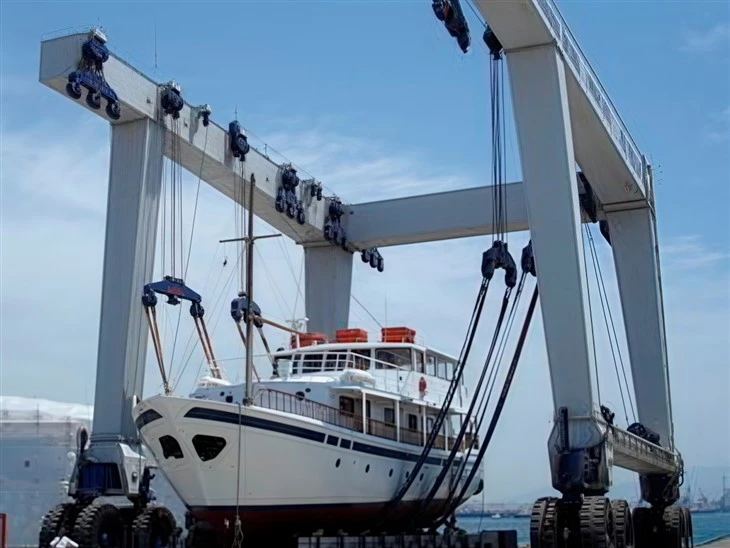


Boat Marine Travel Lift
Products Description
A boat marine travel lift is a specialized piece of equipment used in marinas, boatyards, and shipyards to hoist boats and watercraft out of the water for maintenance, storage, or transport. Unlike traditional boat hoists or cranes, a travel lift is mobile and can move boats horizontally after lifting them.
Key Features of a Marine Travel Lift:
Lifting Capacity – Ranges from a few tons for small boats to over 1,000 tons for large yachts and ships.
Adjustable Straps or Slings – Used to cradle the hull safely during lifting.
Mobility – Runs on rubber tires or rails, allowing the lift to move boats from the water to storage areas or work bays.
Hydraulic or Electric Operation – Modern travel lifts use hydraulic systems for smooth and controlled lifting.
Wide Span Design – Allows the lift to straddle docks and boat storage areas.
.
Comparison with Other Marine Lifting Solutions
| Feature | Small Boat Gantry Crane | Travel Lift | Forklift (Marine) |
|---|---|---|---|
| Mobility | Portable, some wheeled | Fixed or rail-mounted | Highly mobile |
| Capacity | 1–20 tons | 10–100+ tons | 2–10 tons |
| Best For | Small boats, DIY yards | Large marinas | Lightweight boats |
| Cost | Lower | Higher | Moderate |
Lifting Capacity 1 - 20 tons
Span (Width) 3 - 12 meters (adjustable)
Lifting Height 3 - 10 meters
Working Class A3-A5 (light to medium duty)
Hoisting Speed 0.5 - 8 m/min (variable)
Main Beam Type Single/double girder (box-type)
Power Supply 220V/380V 3-phase or manual
Control Mode Pendant control/wireless remote
Hoist Type Electric chain hoist/wire rope hoist
Travel Drive Manual push or motorized
Corrosion Protection Hot-dip galvanized or marine-grade paint
Wind Resistance Up to Beaufort scale 6 (for outdoor use)
Operating Temp -20°C to +50°C

Pictures & Components
A Travel Lift is a specialized piece of equipment used in marinas and boatyards to hoist, transport, and launch boats. Here are the key components of a marine Travel Lift:
1. Main Frame (Gantry)
The primary structural component that spans the width of the boat.
Made of heavy-duty steel to support large loads.
Includes vertical legs and a horizontal crossbeam.
2. Lifting Straps (Slings)
Heavy-duty nylon or polyester straps that cradle the boat.
Adjustable to fit different hull shapes and sizes.
Some systems use spreader bars to prevent hull damage.

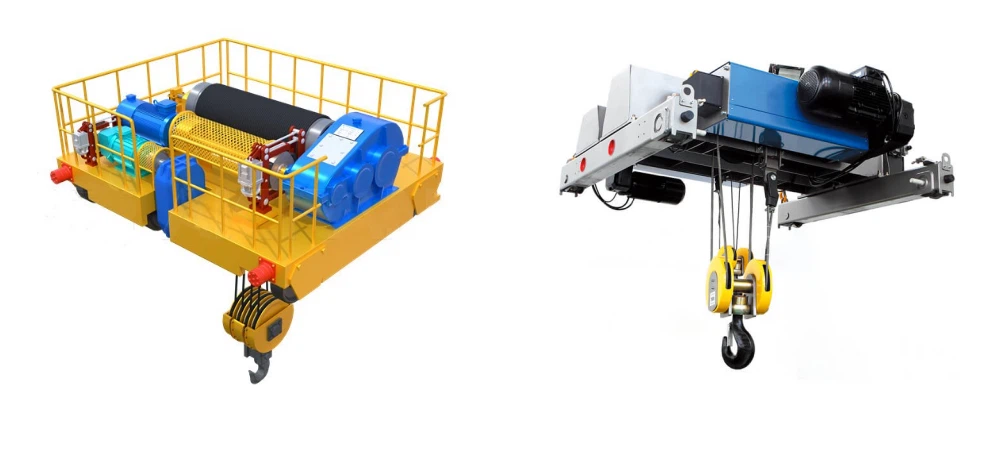
3. Hoist Mechanism
Electric or hydraulic winches that raise and lower the straps.
Typically features multiple motors for synchronized lifting.
4. Trolley & Drive System
Moves the boat horizontally along the gantry.
Powered by electric or hydraulic motors with wheels or tracks.
5. Wheels & Tires (for Mobile Travel Lifts)
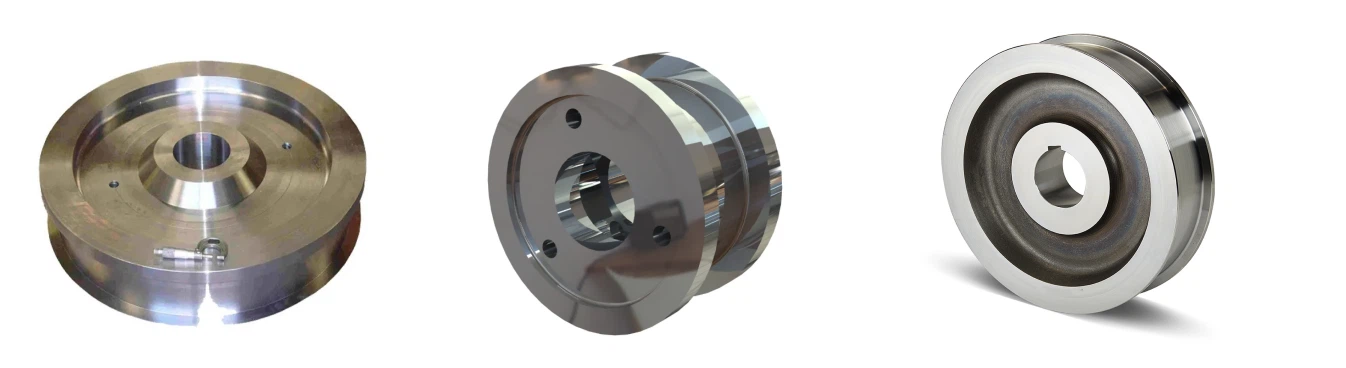
Heavy-duty pneumatic or solid rubber tires.
Allows the Travel Lift to move boats around the yard.
6. Hydraulic System
Powers lifting, lowering, and movement (if hydraulic).
Includes pumps, cylinders, hoses, and control valves.
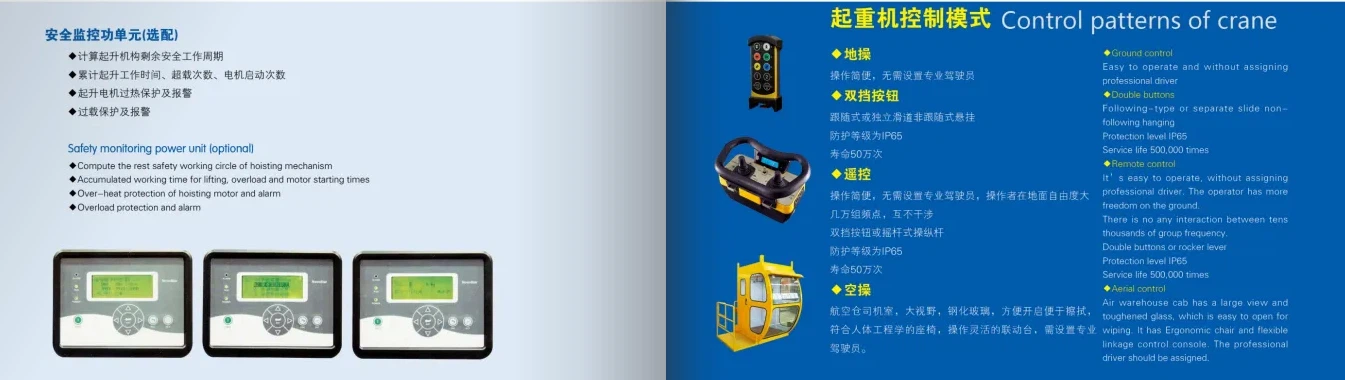
7. Control Panel / Operator Cabin
Allows the operator to control lifting, lowering, and movement.
May include joysticks, buttons, and safety cutoffs.
8. Outriggers / Stabilizers
Extendable arms for additional stability when lifting heavy loads.
Helps prevent tipping during operation.
9. Safety Features
Load Sensors – Prevent overloading.
Emergency Stop (E-Stop) – Halts operations in case of malfunction.
Anti-Drop Valves – Prevent sudden lowering if hydraulic failure occurs.
10. Power Source
Diesel engine (for self-powered units).
Electric motor (for stationary or grid-powered lifts).
11. Spreader Bars (Optional)
Used to distribute strap pressure evenly on wide or delicate hulls.
12. Remote Control (Optional)
Wireless remote for easier maneuvering in tight spaces.

2. Lifting & Hoisting Mechanism
A Boat Marine Travel Lift is a specialized piece of equipment used in marinas, boatyards, and shipyards to lift, transport, and launch boats and small ships. The lifting and hoisting mechanism is a critical component that ensures safe and efficient handling of vessels. Below is a detailed breakdown of its key components and functionality:
1. Main Components of a Marine Travel Lift Lifting & Hoisting System
A. Structural Frame
Gantry/Frame: The steel structure spans the boat, with legs that ride on rails or wheels for mobility.
Spreaders/Arms: Adjustable arms extend over the vessel to position slings correctly.
B. Lifting Mechanism
Hoist Winches: Electrically or hydraulically powered winches control the lifting cables.
Wire Ropes or Synthetic Slings: High-strength cables or straps connect to the boat's lifting points.
Sheaves/Pulleys: Guide the cables smoothly during lifting and lowering.
C. Power System
Hydraulic System: Most modern lifts use hydraulic cylinders for smooth, controlled lifting.
Electric Motors: Drive the winches and travel functions (if not fully hydraulic).
Diesel/Electric Power Unit: Provides energy for operations.
D. Controls
Operator Cabin or Remote Control: Allows precise maneuvering of the lift.
Load Monitoring System: Ensures weight is evenly distributed and within capacity.
2. How the Lifting & Hoisting Mechanism Works
Positioning: The travel lift is moved over the boat (on rails or tires).
Sling Attachment: Adjustable slings are placed under the hull at reinforced lifting points.
Lifting: The winches tighten the slings, evenly distributing the load before lifting.
Transport: Once lifted, the travel lift moves the boat to storage or launch area.
Lowering: The boat is gently lowered into the water or onto a storage stand.


4. Optional Accessories
1. Spreader Bars / Adjustable Lifting Straps
Used for better weight distribution when lifting wide or delicate hulls.
Adjustable straps accommodate different boat widths.
Often made from durable polyester or nylon with protective sleeves.
2. Hydraulic Outriggers or Stabilizers
Provide additional stability when lifting heavy or unbalanced loads.
Useful in uneven terrain or high-wind conditions.
3. Remote Control System
Wireless or wired remote controls for operator convenience.
Allows precise maneuvering of the travel lift.
4. Scale System (Load Monitoring)
Integrated digital scales to measure the weight of the lifted vessel.
Helps prevent overloading and ensures safe lifting capacity.
5. Boat Cradles / Custom Support Pads
Customizable cradles for different hull shapes (e.g., sailboats, powerboats, catamarans).
Padded or non-slip surfaces to protect the hull.
6. Extended Height or Width Kits
Allows the travel lift to handle taller or wider boats (e.g., sailboats with high masts).
7. Laser or Camera Guidance Systems
Improves precision when positioning straps or cradles.
Reduces the risk of hull damage during lifting.
8. Self-Aligning or Pivoting Straps
Automatically adjust to the boat's shape for even weight distribution.
9. Weather Protection Covers
Protective canopies or covers for boats stored temporarily in the lift.
10. Trailer Adapter Kits
Allows the travel lift to move boat trailers in and out of the water.
11. Anti-Sway Systems
Reduces boat movement during lifting and transport for added safety.
12. Diesel or Electric Power Options
Some lifts offer alternative power sources (e.g., electric for indoor use, diesel for outdoor/mobile operations).
13. Emergency Stop & Safety Systems
Additional safety brakes, alarms, or emergency shutdown features.
SKETCH
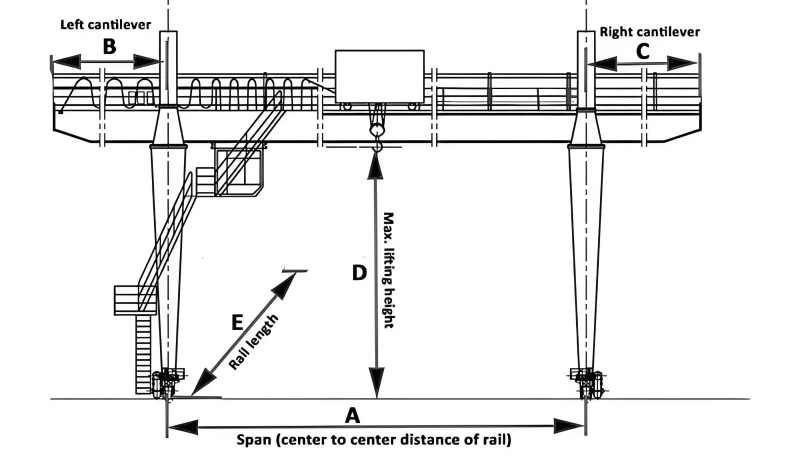
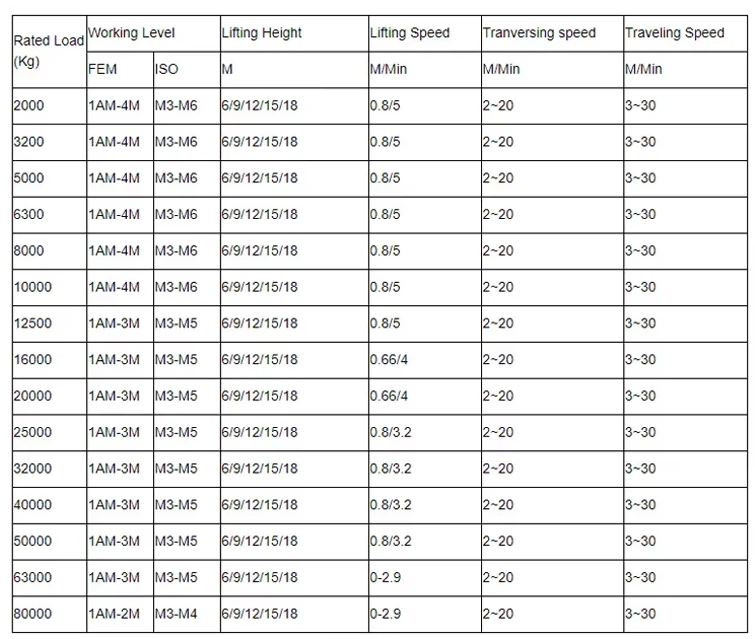
Main technical
Advantages
Boat marine travel lifts are essential for boatyards, marinas, and repair facilities, offering a versatile and efficient way to move vessels in and out of the water. Here are some key advantages of using a marine travel lift:
1. Versatility in Handling Different Boat Sizes
Can lift a wide range of boat sizes (from small fishing boats to large yachts, typically up to 1,000 tons depending on the model).
Adjustable spreader bars and straps accommodate various hull shapes and widths.
2. Mobility and Flexibility
Travel lifts operate on rubber tires or rails, allowing easy movement around the yard.
Can transport boats over land to storage, repair areas, or dry docks.
Ideal for facilities with limited space or no fixed crane infrastructure.
3. Gentle and Secure Boat Handling
Uses soft slings to cradle the hull, reducing stress compared to traditional crane lifts.
Provides better weight distribution, minimizing the risk of hull damage.
4. Faster Operations Than Traditional Methods
Quicker than railway systems or hydraulic trailers for launching/hauling boats.
Reduces downtime for boat owners and increases yard efficiency.
5. Cost-Effective for Marinas and Boatyards
Lower operational costs compared to fixed cranes or synchro lifts.
Requires minimal infrastructure (no need for deep pits or complex systems).
6. Safe and Stable Lifting
Equipped with hydraulic controls for smooth lifting and lowering.
Some models have self-leveling features to keep the boat balanced.
7. Multi-Purpose Use
Can be used for launching, hauling, transporting, and storing boats.
Useful for emergency boat recovery operations.
8. Reduced Environmental Impact
Minimizes sediment disturbance compared to travel lifts that require submerged rails.
No need for grease or heavy lubrication, making it cleaner for marine environments.
9. Adaptability to Different Terrain
Can operate on gravel, concrete, or asphalt surfaces.
Some models are rough-terrain capable for yards with uneven ground.
10. Increased Storage Capacity
Allows stacking or tight storage of boats, maximizing yard space.
Conclusion
Marine travel lifts are a reliable, efficient, and cost-effective solution for boat handling, making them a preferred choice for modern marinas, repair yards, and boat storage facilities. Their flexibility, safety, and speed make them indispensable in marine operations.
Application
A Boat Marine Travel Lift is a specialized piece of equipment used in marinas, boatyards, and shipyards to safely lift, transport, and launch boats and yachts. These systems are essential for boat maintenance, storage, and haul-out operations. Below is an overview of their applications, features, and benefits:
Applications of Marine Travel Lifts
Boat Haul-Out & Launching
Used to lift boats from the water for dry storage, maintenance, or transport.
Safely launch boats back into the water.
Marina & Boatyard Operations
Essential for moving boats between storage, work areas, and docks.
Facilitates efficient yard management.
Boat Transport & Relocation
Can move boats over land within a marina or between nearby facilities.
Some models are road-transportable for relocating boats to different locations.
Maintenance & Repair
Positions boats for hull cleaning, painting, engine work, and other servicing.
Enables safe access to the underside of vessels.
Boat Storage Management
Places boats on cradles or trailers for long-term dry storage.
Used in rack storage systems (for smaller boats).
Emergency Recovery
Can be used to salvage sunken or damaged boats.
Crane production process
The production process of a Boat Marine Travel Lift Crane involves several stages, from design and material selection to fabrication, assembly, testing, and final delivery. Below is a detailed breakdown of the typical production process:
1. Design & Engineering
Requirements Analysis: Determine lifting capacity (e.g., 10T to 500T), span width, lifting height, and operational conditions (saltwater resistance, etc.).
CAD Modeling: Use 3D design software (SolidWorks, AutoCAD, etc.) to create structural and mechanical designs.
Structural Calculations: Ensure load-bearing capacity, stability, and compliance with ISO, ABS, DNV, or Lloyd's Register standards.
Electrical & Hydraulic System Design: Plan power systems, controls, and safety mechanisms.
2. Material Procurement
Steel Selection: High-quality marine-grade steel (e.g., ASTM A572) for corrosion resistance.
Components Sourcing:
Hydraulic cylinders, motors, and pumps.
Wire ropes, sheaves, and lifting slings.
Electrical systems (PLC, sensors, remote controls).
Rubber tires or rail-mounted systems for mobility.
3. Fabrication Process
A. Structural Fabrication
Cutting: Plasma/Laser cutting for steel beams and plates.
Welding: Automated and manual welding (MIG/TIG) for the main frame, legs, and spreader beams.
Machining: Precision drilling and milling for bolt holes and assembly points.
Surface Treatment:
Sandblasting (SA 2.5 standard).
Anti-corrosion coatings (epoxy primer + polyurethane topcoat).
B. Mechanical & Hydraulic Assembly
Gearbox & Winch Installation: For lifting and travel mechanisms.
Hydraulic System Integration: Pipes, valves, and cylinders are installed.
Tire/Rail System Mounting: Depending on the model (rubber-tired or rail-based).
C. Electrical & Control System Installation
Wiring & Sensors: Limit switches, load cells, and overload protection.
Control Panel & Remote System: Tested for smooth operation.
4. Quality Control & Testing
NDT (Non-Destructive Testing): Ultrasonic/X-ray welding inspections.
Load Testing:
Static Test: 125% of SWL (Safe Working Load).
Dynamic Test: Operational checks at full capacity.
Functionality Tests: Travel, lifting, and emergency stop systems.
5. Painting & Final Assembly
Marine-Grade Painting: Anti-rust coatings for saltwater environments.
Labeling & Safety Markings: SWL, warnings, and compliance tags.
6. Delivery & Installation
Disassembly (if needed): For large cranes, components are shipped separately.
On-Site Assembly: Supervised by engineers.
Operator Training: Safety and operational guidelines.
Key Components of a Marine Travel Lift Crane
Main Girder & Legs: Supports the load.
Lifting Mechanism: Hydraulic or electric winches with wire ropes.
Travel System: Wheels/tracks for movement.
Control System: Cabin or remote-operated.
Safety Devices: Overload protection, limit switches, emergency brakes.
Compliance & Standards
ISO 4301, ISO 9001 (Quality Management)
ABS, DNV, GL (Marine Certification)
OSHA/CE (Safety Compliance)

Workshop view:
The company has installed an intelligent equipment management platform, and has installed 310 sets (sets) of handling and welding robots. After the completion of the plan, there will be more than 500 sets (sets), and the equipment networking rate will reach 95%. 32 welding lines have been put into use, 50 are planned to be installed, and the automation rate of the entire product line has reached 85%.




Hot Tags: boat marine travel lift, China boat marine travel lift manufacturers, suppliers, factory
You Might Also Like




Send Inquiry