










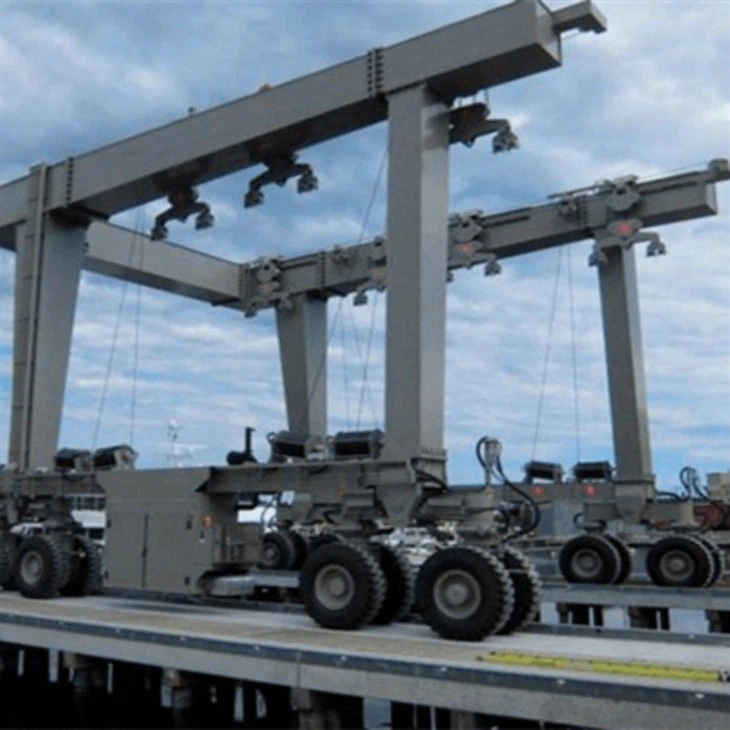


200 Ton Mobile Boat Hoist Lift Boat Marine
Products Description
The 200-ton mobile boat hoist is a high-capacity marine travel lift designed for safe and efficient handling of large yachts, fishing vessels, and commercial boats. Built for durability and precision, it offers excellent performance in lifting, transporting, and launching boats in shipyards or marinas.
Key Features:
Lifting Capacity: 200 tons
Lifting Method: Synchronous multi-point sling lifting
Drive Type: Hydraulic or electric motor-driven
Steering Mode: 90° steering, diagonal driving, and Ackermann steering for maximum maneuverability
Remote Control: Wireless or wired remote for safe and convenient operation
Customizable Width/Height: Adaptable to various boat sizes
Corrosion Resistance: Marine-grade coating and materials suitable for coastal environments
Comparison with Other Marine Lifting Solutions
| Feature | Small Boat Gantry Crane | Travel Lift | Forklift (Marine) |
|---|---|---|---|
| Mobility | Portable, some wheeled | Fixed or rail-mounted | Highly mobile |
| Capacity | 1–20 tons | 10–100+ tons | 2–10 tons |
| Best For | Small boats, DIY yards | Large marinas | Lightweight boats |
| Cost | Lower | Higher | Moderate |
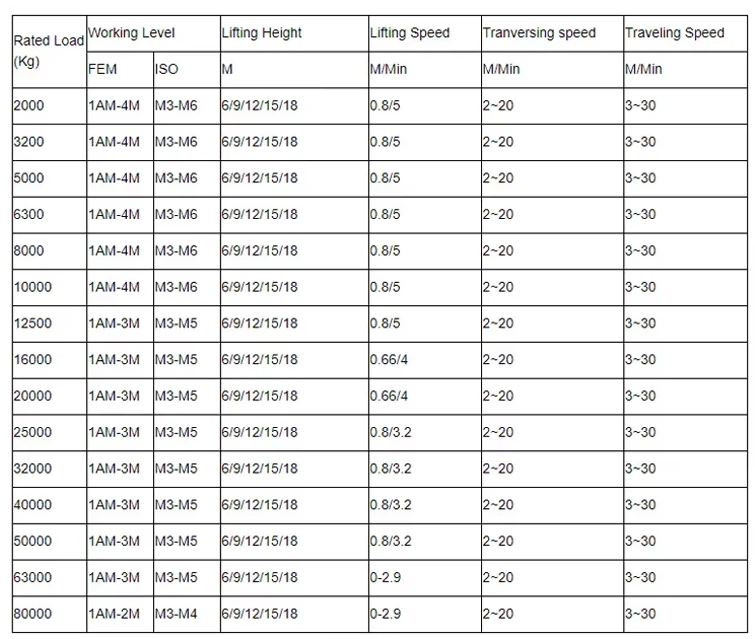
Lifting Capacity 1 - 20 tons
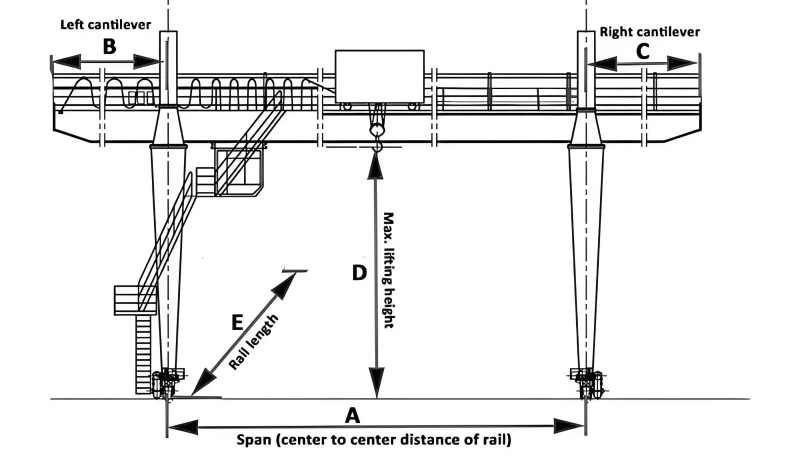
Span (Width) 3 - 12 meters (adjustable)
Lifting Height 3 - 10 meters
Working Class A3-A5 (light to medium duty)
Hoisting Speed 0.5 - 8 m/min (variable)
Main Beam Type Single/double girder (box-type)
Power Supply 220V/380V 3-phase or manual
Control Mode Pendant control/wireless remote
Hoist Type Electric chain hoist/wire rope hoist
Travel Drive Manual push or motorized
Corrosion Protection Hot-dip galvanized or marine-grade paint
Wind Resistance Up to Beaufort scale 6 (for outdoor use)
Operating Temp -20°C to +50°C

Pictures & Components
Key Components:
Main Structure (Steel Frame):
Heavy-duty steel frame with anti-corrosion coating, designed for marine environments.
Hoisting Mechanism:
Equipped with multiple wire rope winches and slings for safe and stable lifting.
Wheel System:
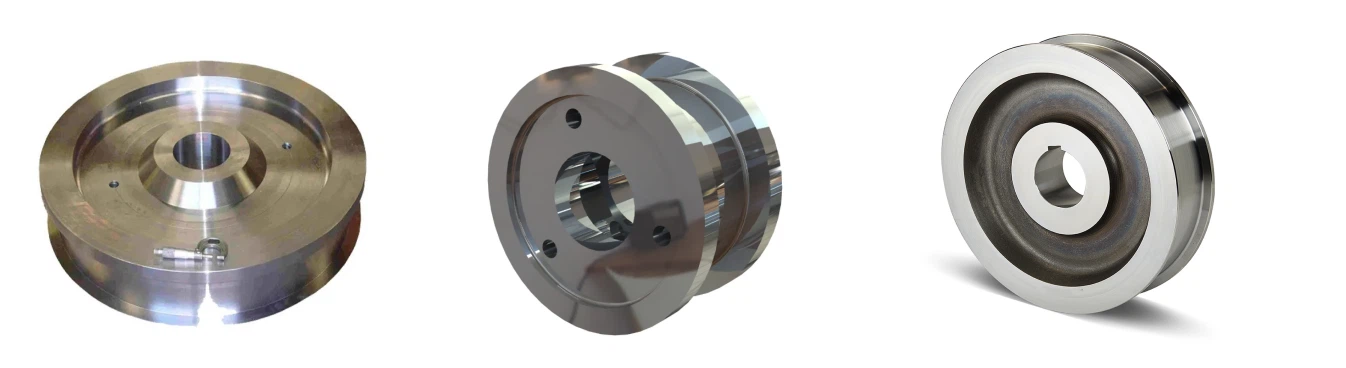
Heavy-load solid rubber tires with independent steering and drive systems for tight turning radius and smooth movement.
Hydraulic System:
High-performance hydraulic components for synchronized lifting and steering.
Control System:
PLC-based intelligent control system with wireless remote or cabin control, safety sensors, and diagnostics.
Sling System:
Soft and durable lifting slings with adjustable spreaders to accommodate various hull shapes.
Power System:
Options include Cummins or other branded diesel engines, or full electric motor setup for zero-emission operation.

B. Support Legs (End Carriages)
🛠️ Key Features:
Capacity: 200 Tons
Structure: U-frame design for optimal stability and boat clearance
Lifting Method: Multiple lifting points with high-strength polyester slings
End Carriages:
Heavy-duty steel fabrication
Equipped with wheels or track systems
Steerable wheels for maneuverability (usually hydraulic steering)
Drive System: Hydraulic or electric (depending on model)
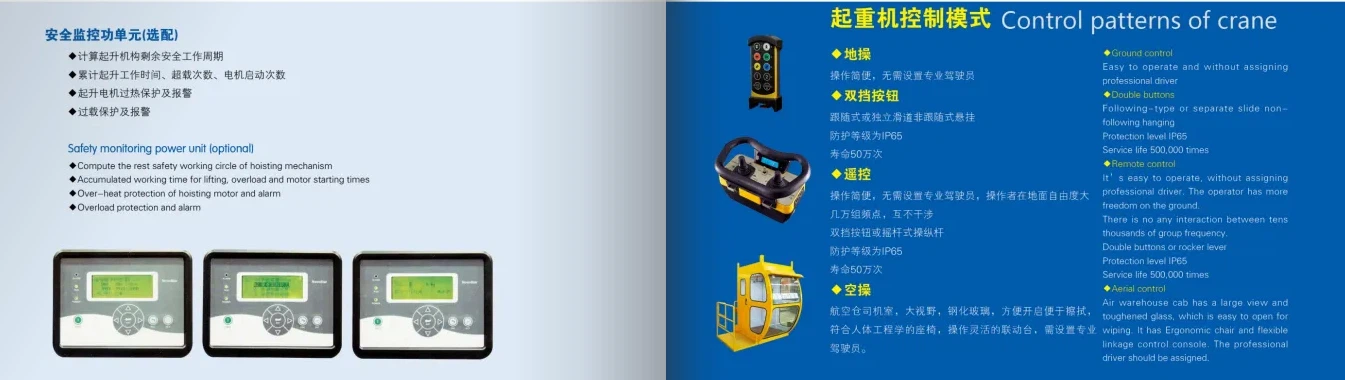
Control Mode: Wireless remote control + onboard cabin (optional)
Wheel Configuration: Typically 8 to 16 wheels depending on load spread
⚙️ Marine End Carriages Overview:
These are the load-bearing sections at both ends of the hoist that:
Support the vertical lifting structures
Carry the hoist on rubber tires or rails
House steering mechanisms
Include drive motors for movement (electric or hydraulic)
Offer anti-corrosion coating for marine environments
C. Base Frame (Runway System)
This refers to the launch/retrieval track or slipway, often including:
Concrete or steel-reinforced ramps
Guide rails or tracks for alignment
Drainage and anti-skid surfaces
Boat cradle or landing platform (optional)

2. Lifting & Hoisting Mechanism
1. Gantry Structure
The gantry crane consists of a large framework with two vertical legs connected by a horizontal beam (also called the crossbeam or girder). The crane is mounted on rails, allowing it to move along the dock or shipyard.
The 100-ton capacity is determined by the strength of the gantry frame, ensuring it can support heavy loads while moving across the facility.
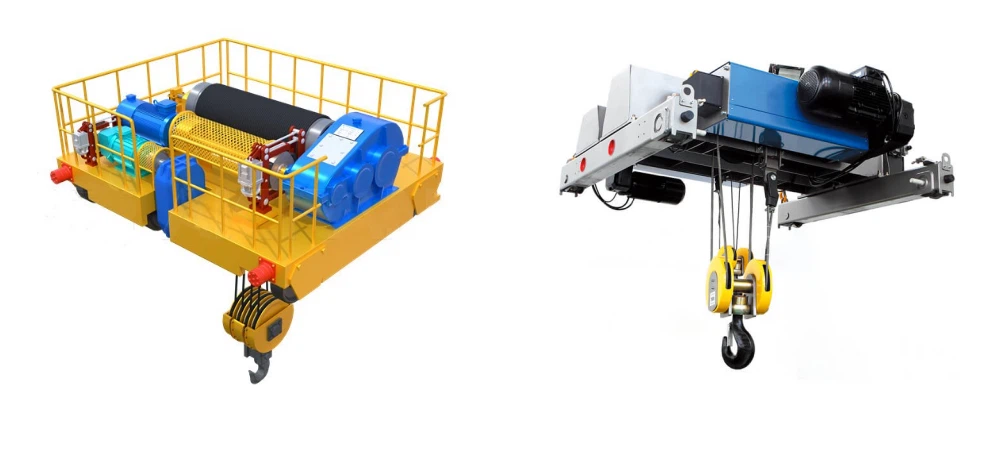
2. Hoisting Mechanism
Hoist: The hoisting mechanism typically involves an electric winch or drum system. The hoist is connected to a strong steel cable or chain, which is wound or unwound to lift or lower the load.
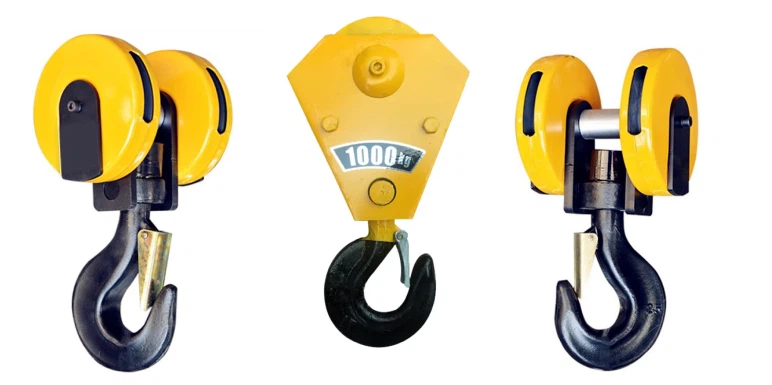
Lifting Hooks: The hook or lifting attachment is attached to the boat or vessel being lifted. Depending on the design, the crane may use slings or lifting beams to securely hold the boat, which ensures the weight is evenly distributed during lifting.
3. Electric Motor/Power System
The crane's hoisting operation is powered by electric motors that drive the winch. The motor can be controlled via a control panel or remote control to precisely manage the lifting and lowering motions.
Hydraulic or electric-powered systems are used to adjust the height of the gantry or move it along the rails.
4. Load Sensors and Safety Features
Load Monitoring: Load cells or sensors are often integrated into the crane to monitor the weight being lifted, ensuring the crane does not exceed its rated capacity.
Limit Switches: To prevent overloading, limit switches are used to stop the movement of the crane at predetermined points, preventing excessive strain on the components.
Safety Brakes: These are employed to hold the load securely in place when lifting or lowering the boat, preventing it from dropping if there's a failure in the hoisting mechanism.
5. Movement Mechanism
Rail Movement: The gantry crane moves along rails that are usually installed along the dockside or marina. The crane's movement is driven by electric motors that control the travel speed.
Slewing Mechanism: Some cranes have a rotating ability to change the angle or direction of the lift, making it easier to position the boat for transport or storage.
6. Control System
The crane's operations are typically controlled by a user interface, either on the crane itself or via a wireless remote control.
Pendant Control: Many gantry cranes use a pendant or wired control system with buttons for specific movements such as raising, lowering, and moving horizontally.
Remote Control: A wireless remote is another option that allows operators to control the crane from a distance, enhancing safety and visibility.


4. Optional Accessories
Remote Control System – For improved safety and convenience
Load Weighing System – Real-time load monitoring during lifting
Camera System – Enhanced visibility for operators
Automatic Sling Adjustment – For different hull shapes
Night Operation Lights – LED working lights for low visibility conditions
Non-Marking Tires – Prevent damage to marina surfaces
Spreader Beam Modifications – For specialized hull types
Corrosion-Resistant Coating – For saltwater or humid environments
Exhaust Filtration System – Especially for enclosed or sensitive environments
Custom Paint Color / Branding – Match marina or company colors
SKETCH
Main technical
Advantages
✅ Advantages of a 200 Ton Mobile Boat Hoist
1. High Lifting Capacity
Can handle boats and yachts up to 200 tons, including large fishing vessels, catamarans, and luxury yachts.
Suitable for both commercial and recreational marine industries.
2. Mobility & Flexibility
Designed with rubber tires and hydraulic steering, it can move vessels around the yard or marina easily.
Ideal for boatyards with limited space or irregular terrain.
3. Precise Control
Equipped with wireless remote control or cabin controls for accurate positioning.
Smooth lifting and lowering reduces risk of hull damage.
4. Customizable Sling Positions
Adjustable lifting points (slings) to suit different hull shapes and sizes.
Minimizes pressure points on delicate hulls.
5. Efficiency in Operations
Speeds up the process of launching or retrieving boats from water.
Reduces manual labor and time compared to crane lifting.
6. Versatile Applications
Used for maintenance, repair, cleaning, painting, storage, and inspection of boats.
Suitable for marinas, shipyards, navy bases, and yacht clubs.
7. Enhanced Safety Features
Emergency stop systems, overload protection, and anti-sway technology.
Designed to prevent accidents during lifting or transportation.
8. Durability & Weather Resistance
Built with corrosion-resistant materials to withstand harsh marine environments.
Long service life with proper maintenance.
Application
A 200 Ton Mobile Boat Hoist (also known as a Travel Lift, Boat Lifter, or Boat Gantry Crane) is a specialized piece of marine equipment designed to lift, transport, launch, and retrieve boats and yachts up to 200 tons. It is commonly used in shipyards, marinas, boatyards, and ports.
🌊 Marine Applications
Boat launching and retrieval from water
Transporting boats between repair bays and water
Positioning boats in boatyards or storage areas
Used in:
Marinas
Ship repair yards
Naval bases
Yacht clubs
Crane production process
The production process of a 200-ton mobile boat hoist lift (also known as a boat lift or marine crane) involves multiple stages, combining engineering, manufacturing, and assembly. Here's an overview of the typical steps involved:
1. Design and Engineering
Specifications: Determine the load capacity, lifting height, travel distance, and other technical specifications based on customer requirements.
Engineering Calculations: Structural, mechanical, electrical, and safety calculations are carried out. Finite element analysis (FEA) and load simulations may be used to ensure safety and performance.
Design: The design of the boat hoist crane is finalized, including key components such as the frame, hoisting system, wheels, hydraulic system, control panel, and safety features.
2. Procurement of Materials
Raw Materials: High-strength steel, alloy metals, and other materials are sourced.
Components: Electric motors, hydraulic pumps, valves, control systems, wheels, cables, and bearings are sourced from specialized suppliers.
3. Manufacturing
Frame Construction: The steel structure, or frame, is cut, welded, and assembled. This part of the hoist needs to be sturdy and durable enough to support the full weight of the boat and the crane.
Hydraulic System Fabrication: The hydraulic lift system, which includes hydraulic cylinders and hoses, is built. Hydraulic testing is performed to ensure proper function.
Mechanical Assembly: The lifting system, including the winches, pulleys, and hooks, are assembled. These parts work together to raise and lower the boat efficiently.
Electrical System: The electrical system is set up, including the control panel, wiring, sensors, and safety alarms. The crane needs precise control for safe operation.
4. Assembly
Integration of Components: The frame, hydraulic system, mechanical parts, and electrical systems are integrated into the final crane. This step requires precise alignment to ensure smooth operation.
Testing Systems: The hydraulic and mechanical systems are tested individually and as a complete system for proper lifting and lowering operations. Electrical testing is also done to ensure that the control systems are responsive.
5. Safety and Quality Control
Load Testing: The hoist is tested by loading it with weights that simulate the expected weight of boats. This is done to ensure the hoist performs under maximum capacity.
Safety Features Testing: Safety features such as limit switches, emergency stop buttons, and overload protection systems are tested to meet safety regulations.
Visual Inspection: The hoist is inspected for any potential defects or issues in the structure or components. This is done by both the manufacturer and a third-party inspection agency if required.
6. Painting and Finishing
Surface Preparation: The frame is sandblasted or cleaned to remove dirt and rust, ensuring a smooth surface for painting.
Painting: A protective coating, typically anti-corrosive paint, is applied to the hoist to protect it from environmental damage, especially if it is used in saltwater.
Final Inspection: After painting, a final inspection is conducted to ensure that everything is in order.
7. Delivery and Installation
Transport: The boat hoist is transported to the customer's location. Depending on the hoist size, this may require special transport arrangements.
On-Site Assembly: If the hoist is not fully assembled, the final assembly is completed on-site.
Installation and Calibration: The hoist is installed, calibrated, and connected to the local power supply and hydraulic systems.
8. Training and Handover
Operator Training: The customer's staff is trained on how to operate the crane safely, including maintenance procedures.
Testing and Commissioning: Final testing is done on-site to ensure the boat lift operates smoothly and safely in the intended environment.
9. After-Sales Service
Warranty and Support: Manufacturers typically offer a warranty period for the hoist. Support services are available for any technical issues or maintenance needs during the warranty period.
Regular Maintenance: Routine checks and maintenance ensure the crane remains in optimal working condition throughout its operational life.
This process ensures that the 200-ton mobile boat hoist is durable, reliable, and safe for use in lifting and transporting boats in a marine environment.

Workshop view:
The company has installed an intelligent equipment management platform, and has installed 310 sets (sets) of handling and welding robots. After the completion of the plan, there will be more than 500 sets (sets), and the equipment networking rate will reach 95%. 32 welding lines have been put into use, 50 are planned to be installed, and the automation rate of the entire product line has reached 85%.



Hot Tags: 200 ton mobile boat hoist lift boat marine, China 200 ton mobile boat hoist lift boat marine manufacturers, suppliers, factory, Forged Wheel, Steel Mill Overhead Cranes, Double Girder Overhead Crane, Single Girder Gantry Crane, Grab Overhead Crane, Eot Crane
You Might Also Like


Send Inquiry