








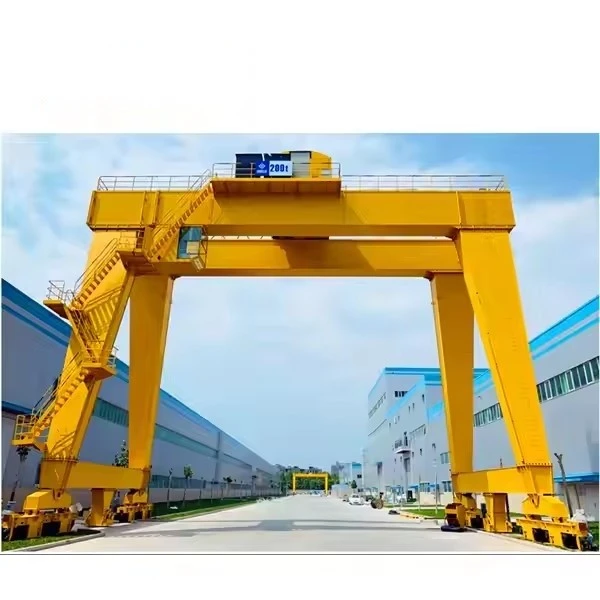
15m Span Gantry Crane
Products Description
1. Product Overview
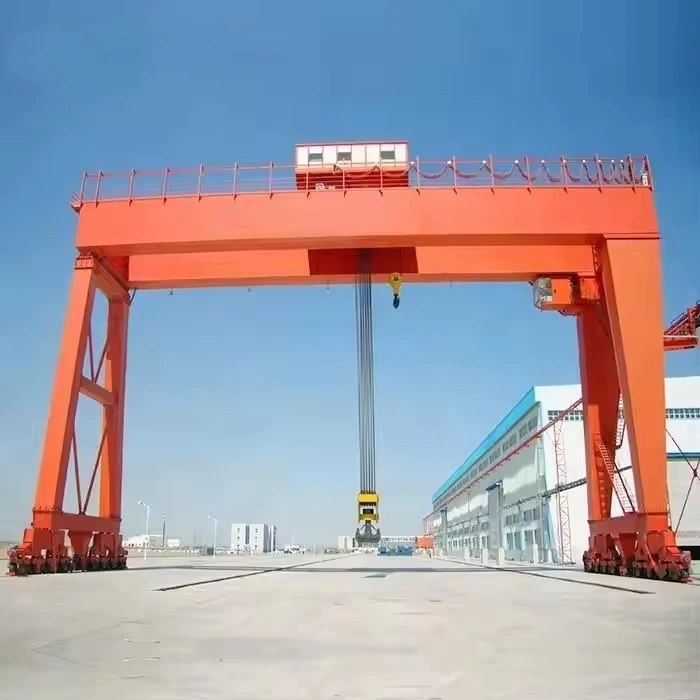
A 15m span gantry crane is a versatile lifting solution designed for handling heavy loads in various industrial and logistical settings. It is widely used in ports, construction sites, manufacturing facilities, and warehouses due to its robust design, high efficiency, and adaptability to different working environments
Technical Specifications
Lifting Capacity: Typically ranges from 5 to 50 tons, depending on the model and application.
Span: 15 meters (customizable based on requirements).
Lifting Height: Up to 12 meters, adjustable to suit specific needs.
Power Supply: Electric or diesel-powered, with options for hybrid systems.
Mobility: Rail-mounted or rubber-tired options available for flexibility in movement.
Core Components:Engine, Bearing, Gearbox, Motor, Gear
Place of Origin:Henan, China
Warranty:2 years
Weight (KG):50000 kg
Video outgoing-inspection:Provided
Machinery Test Report:Provided
Application:Outdoor
Keywords:15m span gantry crane
Rated Loading Capacity:50Ton
Cross travelling speed:44.6m/min
Long travelling speed:47.1m/min
Control way:cabin
Power supply:Cable reel
Steel track:QU80
Power:3-phase AC 50HZ 380V

Pictures & Components
1.Main beam
The horizontal beam that spans 15 meters, supporting the trolley and hoist mechanism.
Designed to handle heavy loads and resist bending.
1)Overview
The main beam is the primary load-bearing structure of a 15m span gantry crane. It consists of two parallel girders that span across the crane's width and provide support for the trolley and hoisting mechanism. The design ensures high strength, stability, and load distribution, making it suitable for lifting heavy loads in industrial environments.
2)Structural Design & Construction
Double Girder Configuration – Provides better load distribution and higher lifting capacity compared to single girder designs.
High-Quality Steel Material – Typically made of Q235B or Q345B steel, ensuring durability and strength.
Box Girder or Truss Girder Design –
Box girder: Fully enclosed structure, offering higher rigidity and load-bearing capacity.
Truss girder: Lightweight, wind-resistant, suitable for large spans.
Welded & Machined for Precision – Main beams are welded using submerged arc welding (SAW) and machined to high accuracy to ensure smooth trolley movement.
2.Lifting System
Includes the winch, wire ropes, and drums for lifting and lowering loads.
Designed for precise control and smooth operation.
1)Hoisting Mechanism
The hoisting mechanism is responsible for lifting and lowering loads. It includes:
Electric Wire Rope Hoist: The primary lifting device, typically mounted on a trolley that moves along the girders.
Wire Rope & Hook: The wire rope is wound around a drum and connected to a hook to lift the load.
Lifting Motor: Provides the power needed to lift and lower loads.
Gearbox & Brake System: Controls speed and ensures safety by preventing accidental load drops.
2)Trolley System
The trolley moves horizontally along the double girders, allowing for precise positioning of the load. It consists of:
Trolley Frame: Supports the hoist and other components.
Trolley Wheels: Run on rails mounted on the girders.
Trolley Motor & Drive System: Powers the horizontal movement.
3)Electrical & Control System
The electrical system ensures smooth operation and includes:
Control Panel: Houses the electrical components, including contactors and relays.
Limit Switches: Prevents over-travel of the hoist and trolley.
Pendant Control / Remote Control: Allows the operator to control lifting, lowering, and trolley movement.
Variable Frequency Drive (VFD) (Optional): Provides smooth speed control for precise operation.
4)Safety Features
Overload Protection: Prevents lifting beyond the rated capacity.
Emergency Stop System: Stops operations in case of an emergency.
Anti-collision Sensors: Prevents collisions with other objects.
 |
 |
3.End carriage
A specialized lifting device that attaches to the top of containers or other loads.
Can handle different sizes and weights, depending on the application.
1)Structure & Design
Main Beam Connection: The end carriages are attached to the double girders, providing stability and load distribution.
Robust Steel Frame: Made from high-strength steel to withstand heavy loads and operational stresses.
Box-Type or Welded Structure: Ensures durability and rigidity.
2)Traveling Mechanism
The end carriage is equipped with a traveling system that moves the crane along the ground rails:
Wheel Assemblies: Large-diameter, high-strength steel wheels designed for smooth movement.
Drive Units (Motor & Gearbox):
Powered by electric motors (usually with a VFD for smooth acceleration and deceleration).
Gearboxes transmit power efficiently to the wheels.
Rail Clamps & Buffers (Optional): Prevents unwanted movement during strong winds.
Braking System:
Electromagnetic or Hydraulic Brakes to ensure safe stopping.
Emergency Stop System for additional safety.
  |
4.Crane travelling mechanism
Traveling Drive System
The crane moves along the ground rails using motorized drive units, consisting of:
1)Driving Motors:
Typically three-phase asynchronous motors.
May use Variable Frequency Drive (VFD) for smooth acceleration, speed control, and energy efficiency.
2)Gearbox & Transmission System:
The motor drives a hardened gearbox that reduces speed and increases torque.
Uses helical or planetary gears for efficient power transmission.
3)Wheel System:
Driven Wheels: Powered by the motors and gearboxes.
Idle Wheels: Free-moving support wheels to balance the load.
Material: Forged steel with heat treatment for durability.
Flanged design to keep the wheels securely on the rail track.
4)Braking System:
Electromagnetic or hydraulic brakes for controlled stopping.
Emergency brakes for additional safety.
5.Trolley travelling mechanism
Moves along the main girder to position the spreader or lifting mechanism over the load.
Equipped with motors for horizontal movement.
1)Structural Components
Trolley Frame:
A heavy-duty steel frame that houses the hoisting mechanism.
Designed to move smoothly along the top flange of the double girders.
Trolley Wheels:
Four or more wheels, depending on the design.
Made of forged steel with heat treatment for durability.
Flanged wheels to prevent derailment.
2)Safety & Control Features
Limit Switches: Prevent over-travel beyond the designated range.
Braking System:
Electromagnetic or hydraulic brakes ensure controlled stopping.
Emergency brakes for additional safety.
Anti-Slip & Anti-Skew Systems: Ensures smooth movement and prevents misalignment.
Overload Protection: Prevents excessive loads from damaging the system.
6.Crane wheel
1)Types of Crane Wheels
A 20-ton double girder goliath gantry crane typically uses the following types of wheels:
Driven Wheels: Connected to the motor and gearbox, providing movement.
Idle Wheels (Non-driven): Support the crane's weight and roll freely.
Flanged Wheels: Have a raised edge (flange) to keep the crane aligned on the rails.
Double-Flanged Wheels (Optional): Provide extra stability for high-precision applications.
2)Material & Manufacturing Process
Material:
High-strength forged steel (e.g., 42CrMo, 65Mn, or ZG430-640).
Heat-treated for high wear resistance and durability.
Hardness:
Surface hardness: HRC 40–50 (for wear resistance).
Core hardness: Lower to maintain toughness.
Manufacturing Process:
Forging → Machining → Heat Treatment → Final Grinding & Testing.

7.Crane Hook
A specialized lifting device that attaches to the top of containers or other loads.
Can handle different sizes and weights, depending on the application.
1)Types of Crane Hooks
The choice of hook depends on the lifting application:
Single Hook:
Used for general lifting applications.
Simple design with a rotating swivel to prevent twisting.
Double Hook:
Used for wide or heavy loads to ensure even weight distribution.
Provides better stability than a single hook.
Forged Hook vs. Laminated Hook:
Forged Hook: Made from a single piece of high-strength steel, stronger and more durable.
Laminated Hook: Made from multiple steel plates, used for extra safety (reduces risk of sudden failure).
2)Material & Manufacturing
Material:
High-strength carbon steel or alloy steel (e.g., 20MnSi, 34CrMo4).
Designed to handle high loads and resist deformation.
Heat Treatment:
Increases hardness and durability.
Reduces wear and extends service life.
Safety Factor:
Typically 4:1 or 5:1 to ensure safe lifting operations.

8.Motor
Features & Specifications
1)Power Supply:
Three-phase power supply is the standard, as it provides a more balanced, efficient, and reliable power source for heavy-duty applications.
Frequency: Typically 50 Hz or 60 Hz, depending on local electrical standards.
2)Enclosure & Protection:
IP54 or IP55 protection rating to protect against dust and water.
Class F or H insulation to handle higher operating temperatures.
Cooling system: Most motors are equipped with forced ventilation or cooling fans to prevent overheating during extended operations.
3)Starting System:
Star-Delta (Wye-Delta) or Autotransformer starters for smooth motor startup and to reduce inrush current.
Soft Starter or VFD: Often used for trolley and traveling motors to gradually ramp up the speed, improving the longevity of the motor and reducing mechanical stress.

.
9.Sound and light alarm system & limit switch
1)Sound and Light Alarm System
The sound and light alarm system provides visual and audible alerts to warn of specific crane operating conditions such as approaching overload, limit range, or emergency situations.
2)Limit Switches
Limit switches are safety devices that prevent the crane from exceeding its designed operational range. These switches are critical for ensuring safe operation and avoiding mechanical damage or safety hazards.

10.Safety Devices
Equipped with advanced safety mechanisms, such as:
Overload protection to prevent lifting beyond capacity.Anti-collision systems to avoid accidents with other cranes or obstacles.Limit switches to stop the crane at the end of its travel range.Emergency stop buttons for immediate shutdown in case of emergencies.Ensures safe operation in demanding environments like ports, construction sites, and industrial facilities.
11.Control Mode
1)Pendant Control (Wired Control)
Description:
A pendant control is a handheld device connected to the crane via a flexible cable. It allows the operator to control crane movements from a distance while staying on the ground or within the crane's vicinity.
2)Radio Remote Control (Wireless Control)
Description:
A radio remote control allows the crane to be operated wirelessly from a distance using a hand-held device with buttons, joysticks, or touchscreens.
3)Cabin Control (Operator Cabin)
Description:
In cabin control, the operator is seated in a fully enclosed cabin on the crane, providing a clear view of the load, lifting area, and crane components.
4)Automatic / Semi-Automatic Control
Description:
Automatic control refers to systems where the crane is programmed to perform specific tasks automatically, based on pre-set parameters or programmed commands.
Semi-automatic control allows the operator to set certain parameters (such as speed or travel distance) while still having manual control over certain movements.

12.Sketch

Main technical

Advantages
A 15m span gantry crane offers numerous advantages, making it a highly efficient and versatile lifting solution for various industries. Below are the key advantages of using a 15m span gantry crane:
1. Wide Coverage
The 15-meter span provides extensive coverage, allowing the crane to handle loads across a large area.
Ideal for applications like container stacking in ports, material handling in construction sites, and large-scale manufacturing.
2. High Load Capacity
Designed to handle heavy loads, typically ranging from 5 to 50 tons or more, depending on the model.
Suitable for lifting containers, steel coils, machinery, and other heavy materials.
3. Versatility
Can handle a wide range of loads, including.Shipping containers (20ft, 40ft, etc.).Construction materials (steel beams, concrete panels).Industrial machinery and equipment.Large components in shipbuilding and aerospace.Adjustable spreaders and hoists allow for customization based on load type and size.
4. Space Optimization
Enables vertical stacking of containers or materials, maximizing storage space in ports, warehouses, and storage yards.Reduces the need for additional storage facilities, saving costs and improving efficiency.
5. Improved Efficiency
Speeds up material handling processes, reducing operational time and labor costs.Automates or semi-automates lifting and stacking tasks, minimizing human intervention and errors.
6. Mobility and Flexibility
Available in rubber-tired (RTG) or rail-mounted (RMG) configurations, offering flexibility in movement.Rubber-tired gantry cranes are highly maneuverable, while rail-mounted cranes provide stability and precision.
7. Durability and Reliability
Built with high-strength steel and robust components to withstand harsh working conditions, such as saltwater exposure, heavy winds, and extreme temperatures.Designed for continuous operation, ensuring reliability in high-volume applications.
8. Customizability
Can be tailored to meet specific operational needs, including:
Adjustable span and lifting height.Custom lifting capacities.Integration with automation systems for unmanned operation.Suitable for a wide range of industries and applications.
9. Cost-Effectiveness
Reduces labor costs by automating or semi-automating material handling tasks.Minimizes downtime and maintenance costs with durable and reliable components.Optimizes space utilization, reducing the need for additional storage facilities.
10. Environmental Benefits
Electrified rail-mounted gantry cranes (RMG) and hybrid rubber-tired gantry cranes (RTG) reduce fuel consumption and emissions.Supports greener and more sustainable operations in ports and industrial facilities.
11. Enhanced Logistics Flow
Facilitates faster and more efficient movement of goods, improving supply chain performance.Supports just-in-time logistics by reducing delays in material handling and transportation.
12. Adaptability to Automation
Can be integrated with automation systems for unmanned or semi-automated operation.Uses sensors, cameras, and software for precise container handling and stacking.
Application
A 15m span gantry crane is a versatile and robust lifting solution used across various industries for handling heavy loads. Its 15-meter span makes it suitable for applications requiring wide coverage and efficient material handling. Below are the key applications of a 15m span gantry crane:
1. Ports and Terminals
Container Handling:Loading and unloading shipping containers from trucks, trains, and ships.Stacking containers in storage yards for efficient organization and retrieval.
Ship-to-Shore Operations:Assisting in the transfer of containers between ships and the dock.
Intermodal Yards:Transferring containers between different modes of transport, such as trucks and trains.
2. Construction Sites
Material Handling:Lifting and moving heavy construction materials like steel beams, concrete panels, and prefabricated sections.
Equipment Installation:Assisting in the installation of heavy machinery and equipment.
Bridge and Road Construction:Handling large components during the construction of bridges, highways, and other infrastructure projects.
3. Manufacturing and Warehousing
Heavy Load Movement:Transporting heavy raw materials, finished products, and machinery within factories or warehouses.
Assembly Lines:Supporting assembly processes by lifting and positioning large components.
Storage Optimization:Stacking heavy materials vertically to maximize storage space.
4. Shipbuilding and Repair Yards
Component Handling:Lifting and moving large ship components, such as hull sections, engines, and propellers.
Assembly Support:Assisting in the assembly of ships by positioning heavy parts accurately.
Maintenance and Repair:Facilitating the repair and maintenance of ships by lifting heavy equipment and materials.
5. Steel and Metal Industries
Steel Coil Handling:Lifting and moving heavy steel coils during production and storage.
Machinery Movement:Transporting heavy machinery and equipment within the facility.
Scrap Handling:Moving and stacking scrap metal for recycling or disposal.
6. Power Plants and Energy Sector
Turbine and Generator Installation:Assisting in the installation and maintenance of heavy turbines and generators.
Heavy Component Handling:Moving large components like transformers, boilers, and reactors.
Maintenance Operations:Supporting maintenance activities by lifting heavy equipment and tools.
7. Aerospace Industry
Aircraft Assembly:Lifting and positioning large aircraft components during assembly.
Maintenance and Repair:Supporting the maintenance of aircraft by handling heavy parts and equipment.
8. Mining and Heavy Industries
Material Handling:Transporting heavy mining equipment, ores, and raw materials.
Maintenance Support:Assisting in the maintenance of heavy machinery and vehicles.
9. Logistics and Distribution Centers
Container Handling:Moving and stacking containers in logistics hubs and distribution centers.
Heavy Cargo Movement:Transporting oversized or heavy cargo within the facility.
10. Military and Defense
Equipment Handling:Moving heavy military equipment, vehicles, and supplies.
Logistics Support:Assisting in the deployment and transportation of materials in military logistics operations.
Crane production procedure
1. Design & Engineering
Requirement Analysis: Determine specifications, including span, height, duty cycle, and environmental conditions.
CAD Drawings & Load Calculations: Engineers design the crane structure, ensuring compliance with international safety standards like FEM, CMAA, or ISO.
Selection of Key Components: Includes double girders, end carriages, trolley mechanism, hoisting system, and electrical controls.
2. Material Procurement
Structural Steel: High-strength steel plates and beams for girders, legs, and supporting structures.
Hoisting Mechanism: Motor, gearbox, wire rope, and drum are sourced.
Electrical & Control Components: Inverters, limit switches, PLC, and control panels.
3. Fabrication of Structural Components
Double Girder Manufacturing
Cutting: Steel plates are cut into precise shapes.
Welding: Girders are welded using submerged arc welding (SAW) to ensure strength.
Machining: Precision machining for proper alignment of rails and trolley.
Legs & End Carriages
Welded and machined for smooth wheel and rail movement.
Installation of rail tracks for trolley motion.
4. Assembly of Mechanical & Hoisting Components
Trolley & Hoist System
Gearbox, motor, drum, rope guide, and safety brakes are assembled.
Wire rope is wound on the drum.
Drive Mechanism Installation
Motors and reducers are installed on the end carriages.
Wheels are assembled with proper alignment to ensure smooth movement.
5. Electrical System Installation
Control Panel Assembly: Includes VFD, contactors, and safety relays.
Wiring & Connections: Motor wiring, limit switches, and emergency stop system.
Remote Control & Cabin Installation: Depending on client requirements, either a radio remote control or operator cabin is installed.
6. Testing & Quality Control
Mechanical Testing:
Load testing with 1.25 times the rated capacity.
Checking trolley movement and hoisting performance.
Electrical Testing:
Verification of motor speeds, limit switches, and control panel operations.
Emergency brake function tests.
Safety Inspections:
Ensuring compliance with OSHA, ISO, or local safety regulations.
7. Surface Treatment & Painting
Sandblasting: Removes rust and prepares metal surfaces.
Priming & Painting: Corrosion-resistant epoxy primer followed by industrial-grade paint.
8. Packaging & Transportation
Component Packing: Each part is securely packed for transport.
Loading & Shipping: Loaded onto trucks or containers for delivery.
9. Installation & Commissioning
On-site Assembly: Main components are bolted and welded into place.
Final Testing: Load testing at the installation site to ensure full functionality.
Handover & Training: Operator training and final approval from the client.
10.Final Deliverables
Complete Gantry Crane System with operational manuals.
Warranty & After-Sales Support for long-term maintenance.

Workshop view:
The company has installed an intelligent equipment management platform, and has installed 310 sets (sets) of handling and welding robots. After the completion of the plan, there will be more than 500 sets (sets), and the equipment networking rate will reach 95%. 32 welding lines have been put into use, 50 are planned to be installed, and the automation rate of the entire product line has reached 85%.


Hot Tags: 15m span gantry crane, China 15m span gantry crane manufacturers, suppliers, factory
You Might Also Like



Send Inquiry