







100 Ton Boat Lifting Gantry Crane
Products Description
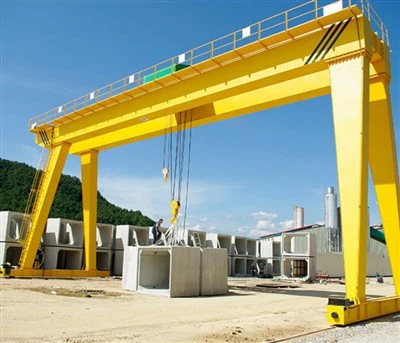
A 100-ton boat lifting gantry crane is a heavy-duty crane designed for lifting and moving boats, yachts, or other large marine vessels that weigh up to 100 tons. These cranes are typically used in shipyards, marinas, or dry docks for the maintenance, repair, or transportation of boats.
Key Features and Description:
Capacity:
Weight Limit: Can lift boats up to 100 tons.
This lifting capacity makes it suitable for large commercial vessels, luxury yachts, and industrial boats.
Design:
The crane is built with two vertical support legs (the gantry structure) and a horizontal crossbeam that spans between them.
The crane moves along tracks or wheels, allowing it to travel across a designated area (such as a shipyard or dock).
The gantry system can be designed to be mobile or stationary, depending on the location and operational needs.
Lift Mechanism:
Equipped with a hoisting system (usually electric or hydraulic), it uses wire ropes, chains, or slings to lift the boat safely.
The lifting mechanism is designed for precise control to prevent damage to the boat and ensure stability during the lift.
Safety Features:
Load sensors: To ensure the crane does not exceed its lifting capacity.
Overload protection: Prevents lifting more than the rated weight.
Emergency stop systems: Allow for immediate stopping of the crane in case of malfunction.
Anti-sway system: Helps to control the boat's movement during the lift to avoid swinging or tipping.
Materials:
The gantry crane is made of high-strength steel or alloy materials, designed to withstand heavy loads and harsh marine environments.
Corrosion-resistant coatings are often applied to protect the crane from saltwater and other environmental factors.
Operation:
The crane can be operated using a manual control panel or remote control.
It may include slewing (rotating) and trolley systems for precise positioning of the boat.
Comparison with Other Marine Lifting Solutions
| Feature | Small Boat Gantry Crane | Travel Lift | Forklift (Marine) |
|---|---|---|---|
| Mobility | Portable, some wheeled | Fixed or rail-mounted | Highly mobile |
| Capacity | 1–20 tons | 10–100+ tons | 2–10 tons |
| Best For | Small boats, DIY yards | Large marinas | Lightweight boats |
| Cost | Lower | Higher | Moderate |
Lifting Capacity 1 - 20 tons
Span (Width) 3 - 12 meters (adjustable)
Lifting Height 3 - 10 meters
Working Class A3-A5 (light to medium duty)
Hoisting Speed 0.5 - 8 m/min (variable)
Main Beam Type Single/double girder (box-type)
Power Supply 220V/380V 3-phase or manual
Control Mode Pendant control/wireless remote
Hoist Type Electric chain hoist/wire rope hoist
Travel Drive Manual push or motorized
Corrosion Protection Hot-dip galvanized or marine-grade paint
Wind Resistance Up to Beaufort scale 6 (for outdoor use)
Operating Temp -20°C to +50°C

Pictures & Components
A 100-ton boat lifting gantry crane typically includes several essential components designed to safely and efficiently lift heavy loads, such as boats, onto dry docks or other locations. Here are the key components:
Gantry Frame: The structure that supports the entire crane system. It consists of two vertical legs (pillars) and a horizontal beam (bridge) that connects them. The gantry frame is typically made from steel to provide strength and stability.
Bridge: The horizontal part of the gantry crane that spans across the boat or load area. It is equipped with rails that allow the trolley to move along the length of the crane.
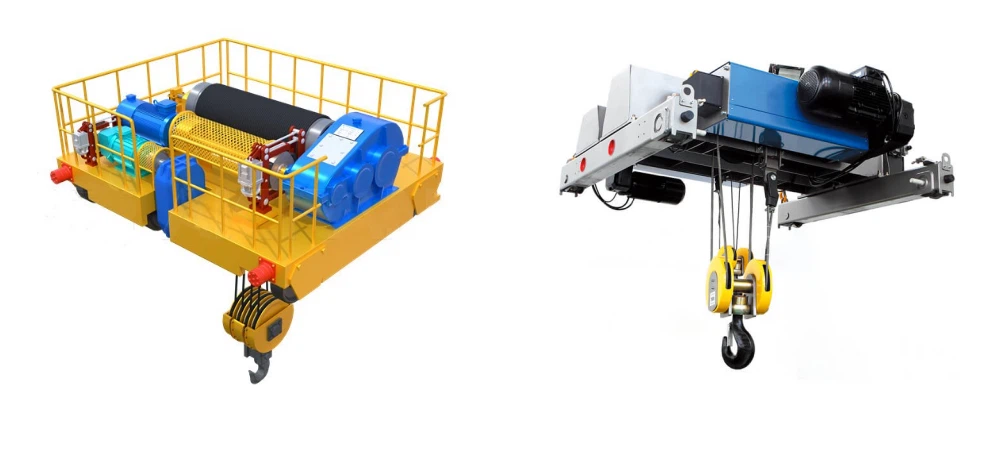
Trolley: A movable component that travels along the bridge. The trolley is used to transport the lifting mechanism (such as hoists or hooks) across the boat or load. It can be powered by motors.
Hoist: The lifting device attached to the trolley. The hoist contains the winch, motor, and lifting mechanism (such as a hook or sling) to lift the load. For a 100-ton capacity crane, a powerful hoist is necessary to handle heavy loads.
Lifting Hooks or Slings: Attached to the hoist, these components directly engage with the boat or load. Slings or spreader bars are used to evenly distribute the weight and protect the boat's hull.
Power Supply System: A system that powers the crane, typically including an electric motor and associated wiring, as well as backup power systems for safety.
Control System: The system used by the crane operator to control the movement of the trolley, hoist, and gantry. This includes buttons, joysticks, or remote control systems, sometimes combined with safety interlocks to prevent accidents.
Movement Mechanisms:
Lateral Movement: Allows the crane to move along tracks or wheels on the ground. For a gantry crane, this could involve rail-mounted wheels or rubber-tired wheels.
Vertical Movement: Allows the gantry crane to raise or lower the load using the hoist mechanism.
Trolley Movement: The ability to move the hoist horizontally along the length of the bridge.
Safety Systems: These may include overload protection, emergency stops, limit switches, anti-sway mechanisms, and load monitoring systems to ensure safe operation.
Rails and Wheels: Tracks are laid down on the ground for the crane to move along. The wheels are mounted on the gantry frame and enable lateral movement of the crane.
Counterweights: To balance the crane when lifting heavy loads, counterweights are often added to the gantry structure. These prevent tipping and ensure stability.
Operator Cabin: Some large cranes come with an operator cabin that provides a clear view of the load and surrounding environment. This can be located at the top of the gantry or on the crane structure.

B. Support Legs (End Carriages)
A 100-ton boat lifting gantry crane end carriage is part of a larger crane system used in industries such as shipbuilding, maintenance, and repair facilities for lifting and moving large boats or ships. The end carriage is an essential component of the crane, supporting the horizontal movement of the crane along a track or rail.
Key Features:
Weight Capacity: Capable of lifting boats or ships up to 100 tons.
End Carriage: This is the part of the gantry crane that runs along the rails, carrying the load from the hoisting mechanism and helping to move it horizontally across a dock or yard.
Material and Design: Made from heavy-duty steel to support high weights and stresses. The design will often be customized to meet the specific needs of the facility.
Electric or Hydraulic Drive: Most end carriages feature either electric or hydraulic drive systems for smooth and controlled movement.
Safety Features: Includes limit switches, overload protection, and emergency stop functions to ensure safe operations.
C. Base Frame (Runway System)
A 100 Ton Boat Lifting Gantry Crane Runway System is a heavy-duty lifting system designed for use in maritime operations, where large boats, ships, or other marine vessels are lifted and moved. Here's an overview of how such a system typically works and what it consists of:
Components:
Gantry Crane: The main lifting component that uses a crane structure mounted on wheels or tracks. It can move horizontally along the runway system and is equipped with lifting mechanisms such as hoists or winches.
Runway Rails: These are the tracks along which the gantry crane moves. The runway system must be sturdy and precisely installed to support the weight of the crane and the load it is lifting.
Hoisting Mechanism: A hoist attached to the gantry crane that provides the lifting function, usually capable of handling heavy loads like 100 tons.
End Trucks: These are the components attached to either end of the crane structure that help it move along the runway rails.
Power Supply: The system needs a strong power supply for operation. This can be either electrical or hydraulic, depending on the crane's design.
Control System: Typically, the crane would have both remote and manual control systems for operation, including safety features to ensure safe handling of heavy vessels.
Support Beams: The crane is supported by large, strong beams to carry the weight of the load and the crane itself.
Track and Structural Support: The runway system needs to have solid foundation tracks that can handle the weight of the boat, crane, and other structural components.

2. Lifting & Hoisting Mechanism
1. Gantry Structure
The gantry crane consists of a large framework with two vertical legs connected by a horizontal beam (also called the crossbeam or girder). The crane is mounted on rails, allowing it to move along the dock or shipyard.
The 100-ton capacity is determined by the strength of the gantry frame, ensuring it can support heavy loads while moving across the facility.
2. Hoisting Mechanism
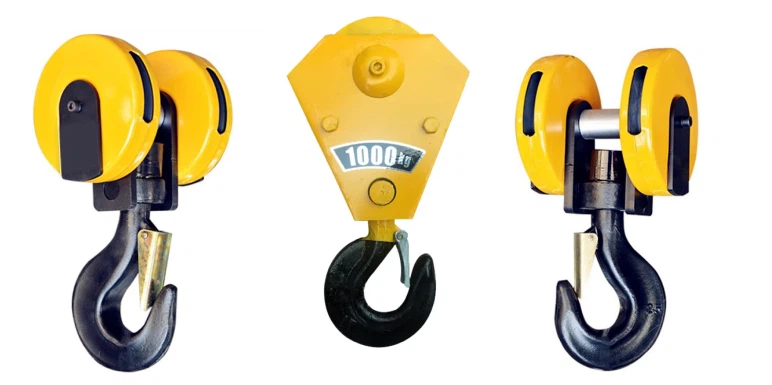
Hoist: The hoisting mechanism typically involves an electric winch or drum system. The hoist is connected to a strong steel cable or chain, which is wound or unwound to lift or lower the load.
Lifting Hooks: The hook or lifting attachment is attached to the boat or vessel being lifted. Depending on the design, the crane may use slings or lifting beams to securely hold the boat, which ensures the weight is evenly distributed during lifting.

3. Electric Motor/Power System
The crane's hoisting operation is powered by electric motors that drive the winch. The motor can be controlled via a control panel or remote control to precisely manage the lifting and lowering motions.
Hydraulic or electric-powered systems are used to adjust the height of the gantry or move it along the rails.
4. Load Sensors and Safety Features
Load Monitoring: Load cells or sensors are often integrated into the crane to monitor the weight being lifted, ensuring the crane does not exceed its rated capacity.
Limit Switches: To prevent overloading, limit switches are used to stop the movement of the crane at predetermined points, preventing excessive strain on the components.
Safety Brakes: These are employed to hold the load securely in place when lifting or lowering the boat, preventing it from dropping if there's a failure in the hoisting mechanism.
5. Movement Mechanism
Rail Movement: The gantry crane moves along rails that are usually installed along the dockside or marina. The crane's movement is driven by electric motors that control the travel speed.
Slewing Mechanism: Some cranes have a rotating ability to change the angle or direction of the lift, making it easier to position the boat for transport or storage.
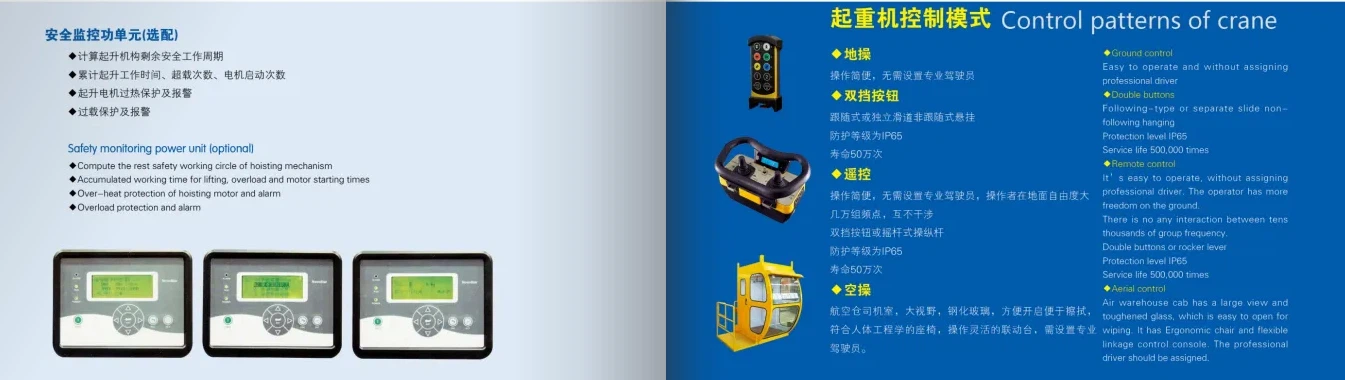
6. Control System
The crane's operations are typically controlled by a user interface, either on the crane itself or via a wireless remote control.
Pendant Control: Many gantry cranes use a pendant or wired control system with buttons for specific movements such as raising, lowering, and moving horizontally.
Remote Control: A wireless remote is another option that allows operators to control the crane from a distance, enhancing safety and visibility.


4. Optional Accessories
For a 100-ton boat lifting gantry crane, various optional accessories can enhance its functionality and performance. Here are some common ones:
1. Wireless Remote Control
Allows the operator to control the crane from a distance, improving safety and convenience.
2. Spreaders and Lifting Beams
These help distribute the weight of the load evenly, especially for boats with uneven weight distribution or irregular shapes.
3. Vibration Dampening System
Reduces vibrations during lifting, which helps to protect the boat and equipment.
4. Anti-Sway System
Controls the movement of the load, reducing swaying during lifting, lowering the risk of accidents, and improving precision.
5. Electric Chain Hoists or Wire Rope Hoists
Hoists with higher lifting capacities and efficiency. Some come with additional features like overload protection and limit switches.
6. Safety Limit Switches
Stops the crane automatically when the load reaches a certain height, reducing the risk of accidents.
7. Rotating Hook
Allows the hook to rotate 360 degrees, making it easier to position the load accurately.
8. Environmental Protection System
Includes features like corrosion-resistant coatings, which are especially important for outdoor and marine environments.
9. LED Lighting
Provides better visibility when operating the crane in low-light conditions.
10. Load Indicator
Displays the weight of the load being lifted, helping to avoid overloading the crane.
11. Platform for Operators
A platform or cabin where the operator can safely control the crane, often with air conditioning and ergonomic controls.
12. Rain Covers/Canopies
Protects the crane from weather elements, ensuring it functions in various conditions.
13. Automatic Lubrication System
Ensures the crane's moving parts are consistently lubricated, reducing wear and extending service life.
14. Overload Protection System
Prevents the crane from lifting beyond its rated capacity, ensuring safety during operation.
These optional accessories can be selected based on specific operational needs, safety requirements, and the environment in which the gantry crane will be used.
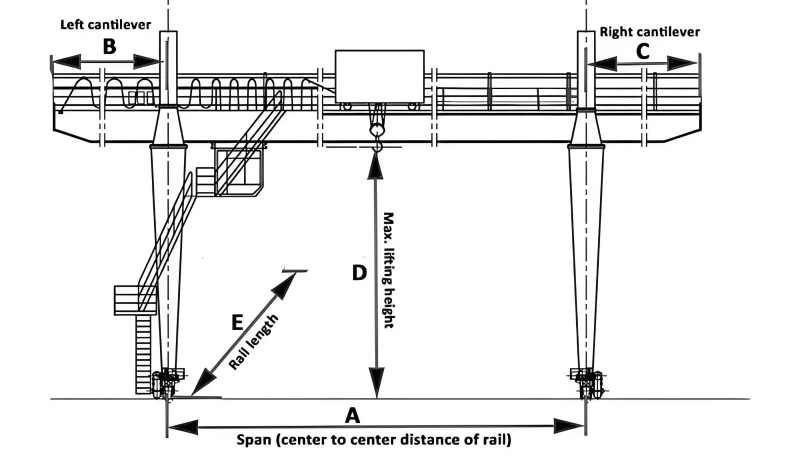
SKETCH
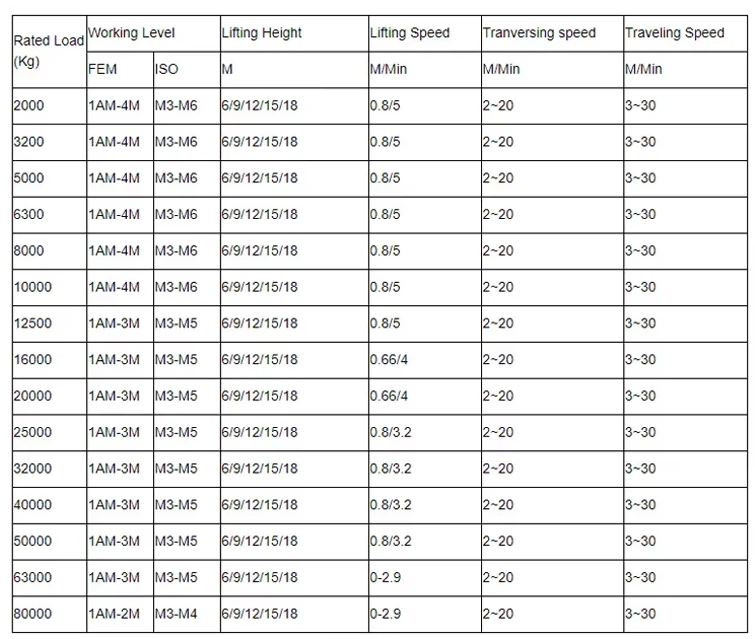
Main technical
Advantages
A 100-ton boat lifting gantry crane offers several key advantages, making it ideal for heavy-duty lifting operations, especially in boatyards, docks, and shipbuilding facilities. Here are the main advantages:
1. Heavy Lifting Capacity
A 100-ton capacity allows for the lifting of large boats and vessels that would otherwise be impossible to handle with smaller cranes. It ensures that even the heaviest boats can be safely and efficiently lifted.
2. Versatility
These cranes are often designed to lift a wide range of boats, from smaller recreational vessels to larger commercial ships, making them versatile tools for various industries.
3. Increased Safety
With robust construction and modern technology (such as anti-sway systems, load monitoring, and overload protection), these cranes ensure safe lifting and handling, reducing the risk of accidents or damage to both the boat and surrounding structures.
4. Efficient and Fast
The crane's design typically enables fast lifting and lowering, reducing downtime and increasing the productivity of boat handling operations. This is especially beneficial in busy marinas, dry docks, and boat maintenance facilities.
5. Space-Saving Design
The gantry crane's design allows it to operate in confined spaces where other types of cranes may not be practical. It can be used in areas with limited headroom, allowing for efficient space utilization.
6. Durability and Longevity
Built to withstand harsh environmental conditions, including exposure to saltwater, wind, and heavy use, these cranes are durable and can operate for many years with minimal maintenance.
7. Customization Options
These cranes can be tailored with additional features such as hydraulic lifting systems, extendable arms, and more, depending on specific needs or the types of vessels being handled.
8. Reduced Labor Costs
By automating the lifting and transportation process, gantry cranes reduce the need for manual labor, cutting down on labor costs and minimizing human error.
9. Improved Handling Efficiency
With advanced control systems, operators can handle boats with precision, ensuring that boats are lifted and placed gently and accurately without causing damage.
10. Environmental Adaptability
Many gantry cranes are designed to function in various environmental conditions, such as coastal areas, harsh weather, and even areas with limited infrastructure.
In summary, a 100-ton boat lifting gantry crane is a reliable, safe, and efficient tool for boat handling, offering versatility and durability for long-term use in marine environments.
Application
A 100-ton boat lifting gantry crane is used for heavy lifting operations, typically in shipyards, docks, or maritime facilities. These cranes are designed to handle large loads, such as boats, yachts, and ships, making them ideal for maintenance, repair, launching, or transporting large marine vessels. Here are some of the main applications of a 100-ton boat lifting gantry crane:
1. Boat and Ship Launching/Recovery
The crane is used to lift large boats or ships in and out of the water. It is especially useful for launching or retrieving vessels for maintenance, storage, or relocation.
2. Vessel Maintenance and Repairs
For repairs or modifications, large vessels need to be lifted out of the water to prevent further damage, inspect hulls, or work on submerged components. The crane can be used to hold the vessel while repairs are conducted.
3. Storage and Relocation of Vessels
In shipyards or marinas, this crane can help in shifting vessels to storage areas or reposition them for easy access to different parts of the facility.
4. Marine Construction Projects
When constructing large marine structures, such as piers or docks, the crane can assist in lifting heavy construction materials or machinery onto the site.
5. Boat Transport
The crane is essential for lifting boats or yachts onto transportation trailers or flatbeds for road transportation, especially when transporting them long distances or to another location.
6. Heavy Load Lifting
Besides boats and ships, the gantry crane can be used for general heavy load lifting, including large industrial equipment, engines, or other oversized components that need to be moved or installed.
7. Cleaning and Inspections
Some gantry cranes also provide a platform for cleaning the hulls or inspecting large vessels while they are out of the water, especially for routine checks like bottom cleaning, repainting, or antifouling applications.
These cranes are highly versatile, typically equipped with adjustable lifting mechanisms and can handle weights of up to 100 tons, making them suitable for a variety of large-scale lifting needs in the maritime industry.
Crane production process
The production process for a 100-ton boat lifting gantry crane involves several key stages. This type of crane is typically used in shipyards or docks for lifting and moving large boats, ships, or other heavy structures. Below is a step-by-step overview of the general production process:
1. Design and Engineering
Requirement Analysis: Understanding the lifting capacity, environment, and other specifications required for the crane.
Preliminary Design: A design is developed by engineers based on the requirements. The design includes the size, lifting mechanism, structural components, and safety features.
Structural Analysis: Engineers perform structural and stress analysis using software tools to ensure the crane can handle the 100-ton load.
Approval and Optimization: Final design approval from the client or regulatory bodies. Any changes or optimizations are made based on feedback.
2. Material Procurement
Material Selection: High-strength steel, alloy materials, and specialized components are selected based on the crane's design and lifting requirements.
Supplier Coordination: Suppliers of materials like steel, ropes, electric motors, and hydraulics are coordinated for timely delivery.
3. Fabrication and Manufacturing
Structural Frame Manufacturing: The main components like the gantry, cross beams, and columns are fabricated from steel using cutting, welding, and machining processes.
Lifting Mechanism Production: The hoist, trolley, and winches are produced. This includes installing the motors and drives, and ensuring they meet safety standards.
Assembly of Main Components: The fabricated frame and lifting mechanism are assembled into a full gantry crane. This involves bolting or welding the gantry to the main supporting columns.
4. Electrical System Integration
Wiring and Controls: Electrical panels, wiring, and control systems are integrated. The crane will have a complex electrical system to control the lifting, moving, and safety functions.
Installation of Motors and Drives: Motors for lifting, trolleys, and hoists are installed, including their electrical connections and controllers.
Testing of Electrical Systems: The crane's control systems, limit switches, and safety interlocks are tested to ensure proper functioning.
5. Hydraulic Systems (if applicable)
Hydraulic Power Pack Manufacturing: If the crane uses hydraulics for lifting, a hydraulic power pack and associated systems are manufactured.
Hydraulic System Installation: The hydraulic cylinders and pumps are installed on the crane.
6. Painting and Coating
Surface Treatment: The steel components are cleaned, treated for rust prevention, and coated with primer.
Final Painting: The crane is painted with weather-resistant paint suitable for the working environment (marine, coastal, etc.).
7. Assembly and Integration
Final Assembly: All parts, including the gantry, trolley, hoist, control panels, and electrical systems, are assembled into the final crane.
Preliminary Testing: Initial tests are conducted to ensure proper mechanical integration and functioning.
8. Load Testing
Weight Test: The crane is tested with loads up to the rated 100-ton capacity, often in stages to ensure stability, strength, and lifting accuracy.
Safety Tests: Tests for overload, stability, and emergency stop mechanisms are carried out.
9. Quality Control and Inspection
Inspection: A detailed inspection of all components and systems (mechanical, electrical, hydraulic) to ensure compliance with industry standards and client specifications.
Certifications: The crane is certified for use by appropriate safety and regulatory agencies.
10. Delivery and Installation
Shipping to Site: The crane is disassembled into manageable parts and shipped to the client's location.
On-site Assembly: The crane is reassembled at the shipyard or dock where it will be used.
Final Testing: A final round of testing and commissioning takes place on-site to ensure everything works perfectly.
11. Training and Handover
Operator Training: The client's personnel are trained on how to safely operate the crane.
Final Handover: The crane is officially handed over to the client after successful testing and training.
This process can vary slightly depending on the manufacturer, but these stages are common for producing a 100-ton boat lifting gantry crane.

Workshop view:
The company has installed an intelligent equipment management platform, and has installed 310 sets (sets) of handling and welding robots. After the completion of the plan, there will be more than 500 sets (sets), and the equipment networking rate will reach 95%. 32 welding lines have been put into use, 50 are planned to be installed, and the automation rate of the entire product line has reached 85%.




Hot Tags: 100 ton boat lifting gantry crane, China 100 ton boat lifting gantry crane manufacturers, suppliers, factory
You Might Also Like


Send Inquiry