






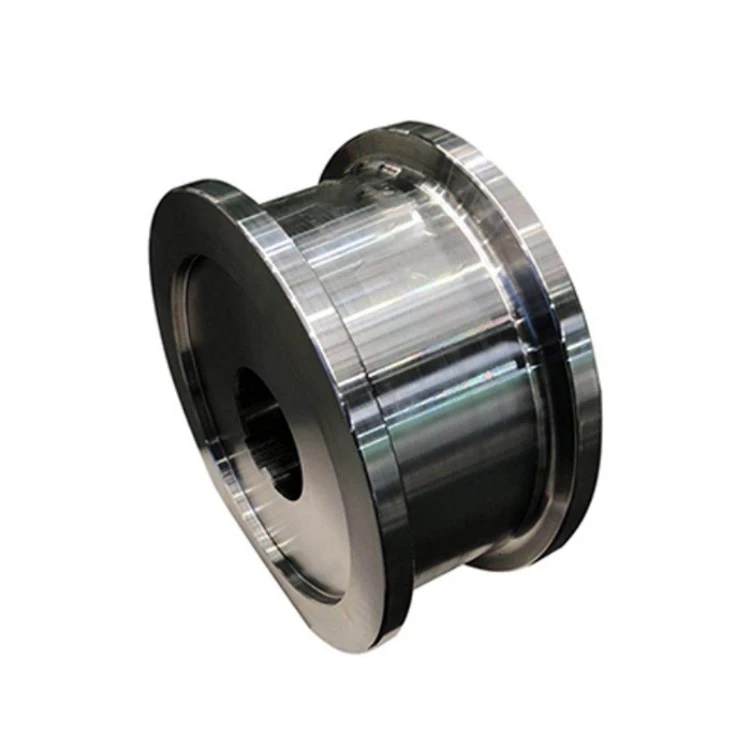
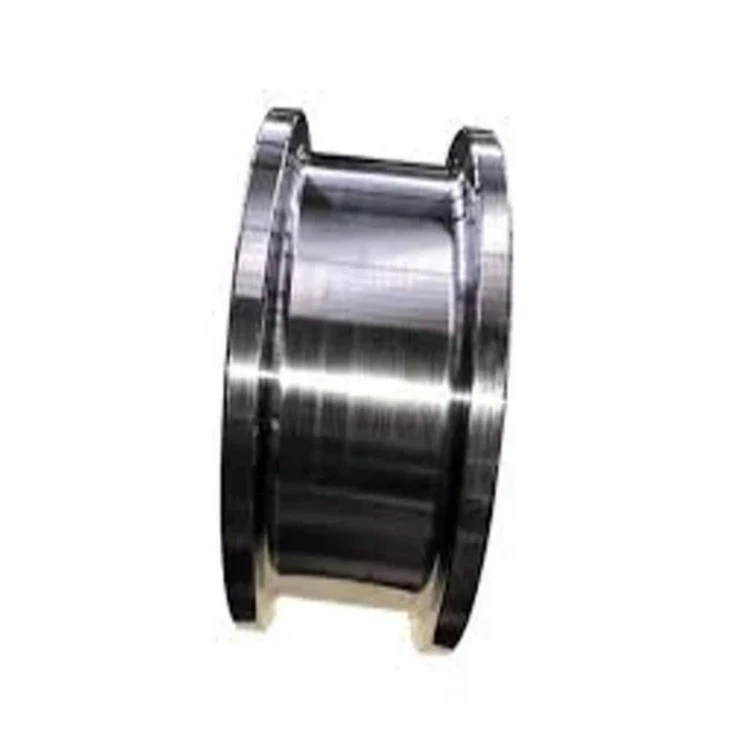
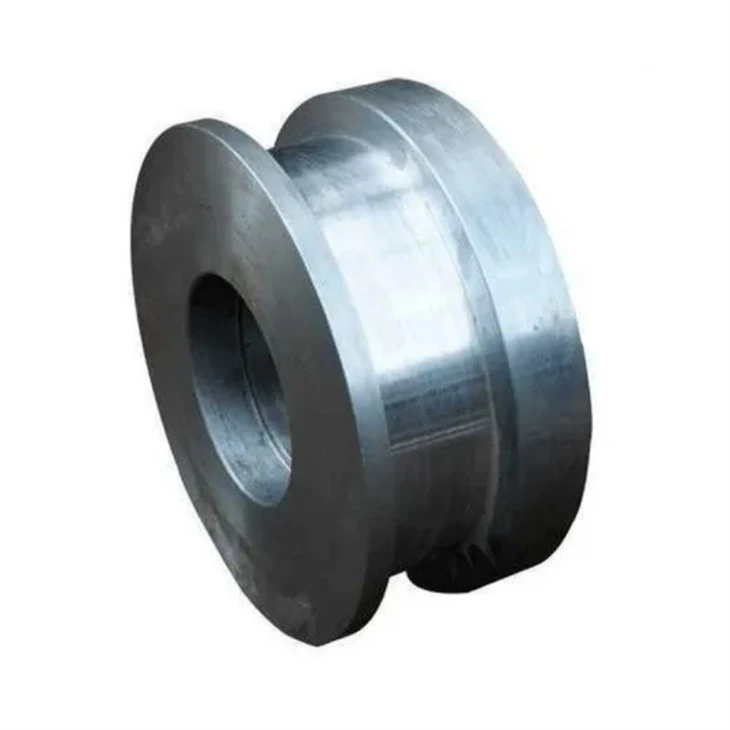
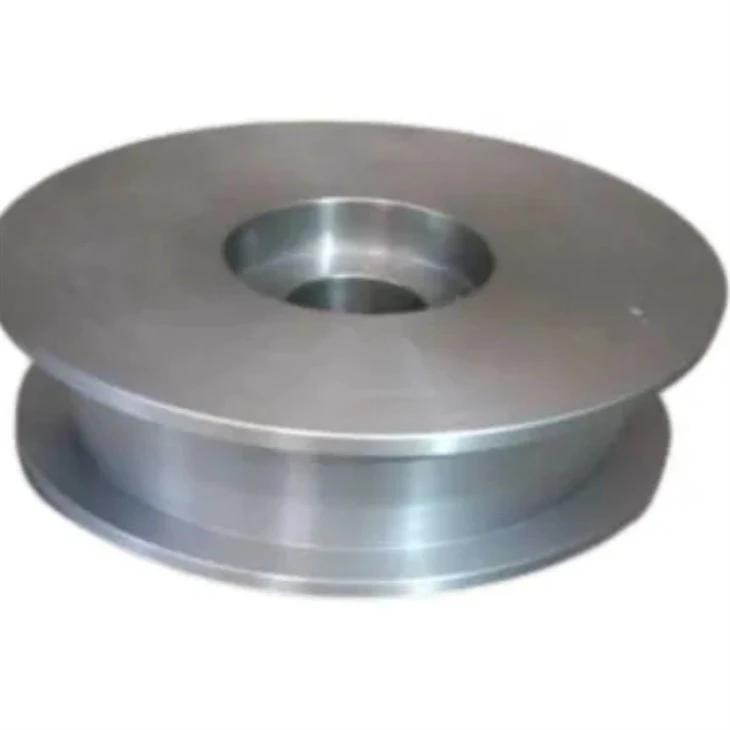
Industrial Crane Wheel
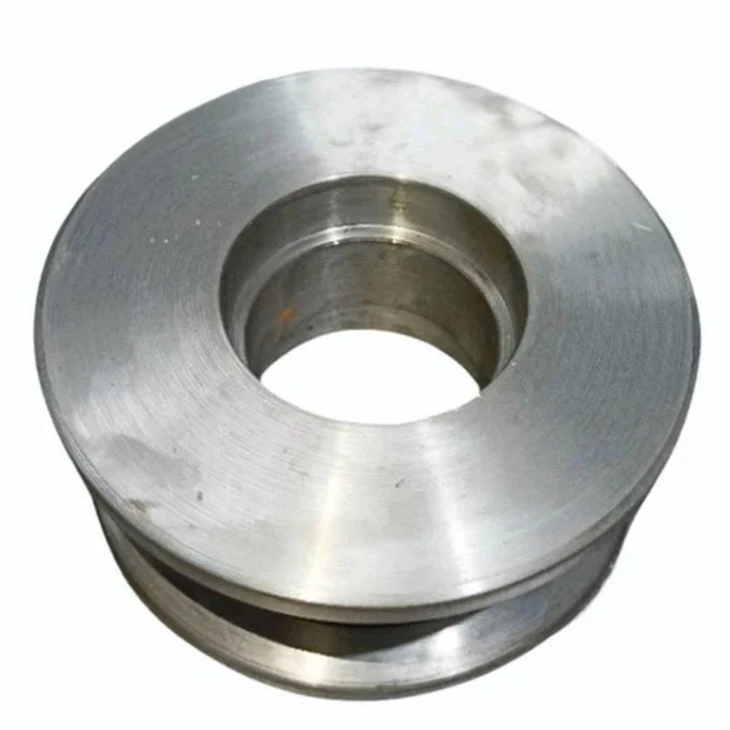
Industrial crane wheels are critical components that enable the movement of cranes, such as overhead cranes, gantry cranes, and mobile cranes. They are designed to withstand heavy loads, provide smooth movement, and ensure long-term durability. Here's an overview of key aspects:
Types of Industrial Crane Wheels
Overhead Crane Wheels
Used on bridge girders for smooth travel along rails.
Typically made of forged steel or ductile iron for high load capacity.
Can be flat-faced (for flat rails) or double-flanged (to prevent derailment).
Gantry Crane Wheels
Similar to overhead crane wheels but designed for ground-based rails.
Often larger in diameter to handle outdoor conditions.
Mobile Crane Wheels
Found on crawler cranes or rubber-tired gantry cranes (RTGs).
May use solid rubber or steel wheels depending on terrain.
Rail Wheels vs. Flanged Wheels
Flat wheels – Used with separate guide rails.
Flanged wheels – Have an integrated flange to keep the crane aligned on the rail.
Materials & Manufacturing
Forged Steel Wheels – High strength, ideal for heavy-duty applications.
Ductile Iron Wheels – Good wear resistance and cost-effective for moderate loads.
Heat-Treated Wheels – Enhanced hardness for extended lifespan.
Polyurethane or Rubber-Coated Wheels – Reduce noise and vibration (used in some indoor applications).
Key Considerations When Selecting Crane Wheels
Load Capacity – Must support the crane's maximum load plus dynamic forces.
Wheel Diameter & Width – Larger wheels reduce wear and rolling resistance.
Bearing Type – Common options include roller bearings or tapered bearings.
Rail Compatibility – Must match rail profile (e.g., AISC, DIN, or custom rails).
Environmental Conditions – Corrosion resistance may be needed for outdoor use.
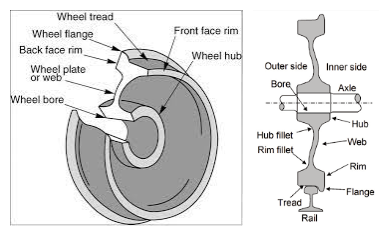
5) The high quality wheel set is made of 45# steel die forging, roughing, conditioning and finishing. The hardness of heat treatment is HB305 ~ 385, and the hardness of hardening layer at 18mm depth is not less than HB250. The wheel shaft is made of 45# steel, which is roughed, tempered and finished. The hardness of heat treatment is 250 ~ 280HB.

Material:
The wheels of industrial cranes are typically made from high-strength, wear-resistant materials to withstand heavy loads, constant movement, and harsh working conditions. Common materials used include:
1. Forged Steel
Grades: 1045, 1060, or alloy steels like 4140, 4340
Properties: High strength, durability, and resistance to deformation under heavy loads.
Common Use: Heavy-duty overhead cranes, gantry cranes, and rail-mounted systems.
2. Cast Steel
Grades: ASTM A148, ASTM A27 (65-35, 70-40)
Properties: Good wear resistance and toughness, suitable for large wheels.
Common Use: Found in foundry cranes, ladle cranes, and other high-temperature applications.
3. Ductile Iron (Spheroidal Graphite Iron - SGI)
Grades: EN-GJS-500-7, ASTM A536 (65-45-12)
Properties: Good strength, impact resistance, and machinability.
Common Use: Medium-duty cranes where cost-effectiveness is important.
4. Alloy Steel with Heat Treatment
Grades: 42CrMo4, 50Mn
Properties: High hardness (HRC 50-60) after quenching and tempering, excellent wear resistance.
Common Use: High-speed crane wheels, mining cranes, and severe-duty applications.
5. Polyurethane or Nylon (for Light-Duty or Noise Reduction)
Properties: Reduced noise, corrosion resistance, but lower load capacity.
Common Use: Light-duty cranes, cleanroom applications, or where steel-on-steel contact is undesirable.
Sketch
Advantages
Industrial crane wheels are crucial components in overhead cranes, gantry cranes, and other material handling systems. They ensure smooth movement, load-bearing capacity, and durability. Here are some key advantages of high-quality industrial crane wheels:
1. High Load-Bearing Capacity
Designed to support heavy loads without deformation.
Made from robust materials like forged steel, cast iron, or polyurethane for enhanced strength.
2. Durability & Long Service Life
Resistant to wear, abrasion, and impact, reducing frequent replacements.
Heat-treated or hardened surfaces improve longevity.
3. Smooth & Efficient Movement
Precision-engineered for minimal rolling resistance, ensuring smooth crane operation.
Reduces energy consumption by lowering friction.
4. Reduced Noise & Vibration
Polyurethane or rubber-coated wheels dampen noise and vibrations, improving workplace conditions.
5. Corrosion & Chemical Resistance
Stainless steel or coated wheels resist rust and harsh industrial environments.
6. Customizable Designs
Available in different sizes, tread profiles (flat, conical, or grooved), and materials to suit specific applications.
7. Low Maintenance Requirements
Self-lubricating or sealed bearing options reduce maintenance needs.
Minimal downtime due to wear-resistant properties.
8. Enhanced Safety
Prevents derailment with proper flange designs.
High traction reduces slippage, especially in wet or oily conditions.
9. Cost-Effective Operation
Long lifespan and reduced maintenance lower overall operational costs.
10. Adaptability to Various Environments
Suitable for indoor workshops, outdoor yards, and harsh industrial settings (e.g., steel mills, ports).
Application
Industrial crane wheels are critical components in overhead cranes, gantry cranes, and other material handling equipment. They facilitate smooth movement along rails, ensuring stability, load-bearing capacity, and operational efficiency. Below are key aspects of their application:
1. Types of Crane Wheels
Double Flange Wheels: Prevent derailment by guiding the crane along the rail (common in bridge/gantry cranes).
Single Flange Wheels: Used where one side requires guidance (e.g., curved tracks).
Flangeless Wheels: Rely on external guides, suitable for systems with separate tracking mechanisms.
2. Material & Design
Materials: Typically forged steel (e.g., 65Mn, 42CrMo) for high hardness (HRC 45-55) and wear resistance.
Heat Treatment: Quenching and tempering improve durability under heavy loads.
Tread Profile: Convex or flat designs to reduce rail contact stress and minimize wear.
3. Key Applications
Overhead Cranes: Wheels mounted on end trucks, supporting hoist movement along girders.
Gantry Cranes: Travel along ground rails, often with double-flange wheels for outdoor stability.
Jib Cranes: Use smaller wheels for rotational movement on circular tracks.
Stacker Cranes (Automated Warehouses): Precision wheels for high-speed, repetitive motion.
4. Performance Factors
Load Capacity: Rated for dynamic/static loads (e.g., 10–100+ tons per wheel).
Rail Compatibility: Must match rail profile (e.g., AISC, DIN standards) to prevent uneven wear.
Environmental Resistance: Coatings (e.g., zinc) for corrosion protection in harsh conditions.
5. Maintenance & Lifespan
Regular inspection for cracks, flat spots, or wear.
Lubrication to reduce friction and prevent seizing.
Replacement when wear exceeds 5–10% of the wheel diameter.
6. Industry Standards
ISO 16881: Design requirements for crane wheels.
FEM 1.001: Fatigue and load calculations.
ASME B30.2: Safety standards for overhead cranes.
7. Innovations
Polyurethane-Coated Wheels: Reduce noise and vibration in sensitive environments.
Smart Wheels: Embedded sensors for real-time wear monitoring.
Conclusion
Crane wheels are engineered for reliability under extreme loads and continuous use. Proper selection (material, flange type, hardness) and maintenance are crucial to prevent downtime and ensure safety in industrial operations.


Production Procedure
The production procedure of steel rail wheels involves several steps:
The production of industrial crane wheels involves several key steps to ensure durability, load-bearing capacity, and smooth operation. Below is a structured production procedure:
1. Material Selection
Primary Material: Typically forged or cast steel (e.g., ASTM A148, AISI 1045, or alloy steels for high-load applications).
Alternative Materials: Nodular cast iron (for lighter loads) or heat-treated alloys for wear resistance.
Quality Check: Raw material certification (chemical composition, mechanical properties).
2. Cutting & Preforming
Cutting: Raw steel billets are cut to required sizes using band saws or flame cutting.
Preforming: Forged or cast into a rough wheel shape:
Forging: Enhances grain structure (better strength).
Casting: Used for complex designs (sand casting or investment casting).

3. Machining Process
Turning: CNC lathe machines shape the wheel profile (outer diameter, tread, flanges).
Boring: Inner diameter is machined to fit the axle/bearing.
Drilling/Tapping: Bolt holes (if applicable) for mounting.
Grinding: Precision grinding for smooth surface finish.
4. Heat Treatment
Hardening: Induction hardening or quenching & tempering for wear resistance.
Case Hardening: For wheels requiring a hard surface but tough core.
Stress Relieving: Eliminates internal stresses from machining.

5. Surface Finishing
Shot Blasting: Removes scale and improves fatigue resistance.
Coating/Painting: Anti-rust coatings (zinc plating, powder coating, or oil film).

6. Quality Control & Testing
Dimensional Inspection: CMM (Coordinate Measuring Machine) or manual gauges.
Hardness Test: Rockwell or Brinell hardness testers.
NDT (Non-Destructive Testing): Ultrasonic, magnetic particle, or dye penetrant inspection for cracks.
Load Testing: Simulated load conditions (if required).

7. Assembly (if applicable)
Bearing Pressing: Bearings are fitted into the wheel bore.
Lubrication: Grease application for smooth rotation.

8. Packaging & Dispatch
Protective Wrapping: VCI (Vapor Corrosion Inhibitor) paper or rust-proof coatings.
Wooden Crating: For heavy-duty wheels during shipping.


Workshop View
The company has installed an intelligent equipment management platform, and has installed 310 sets (sets) of handling and welding robots. After the completion of the plan, there will be more than 500 sets (sets), and the equipment networking rate will reach 95%. 32 welding lines have been put into use, 50 are planned to be installed, and the automation rate of the entire product line has reached.


Hot Tags: industrial crane wheel, China industrial crane wheel manufacturers, suppliers, factory, Forged Crane Wheels, Train Wheels, Forged Train Wheels, Wheels, Steel Rail Wheels, Crane Parts
Previous
Forged Wheels For CraneYou Might Also Like


Send Inquiry