










Crane Wheels
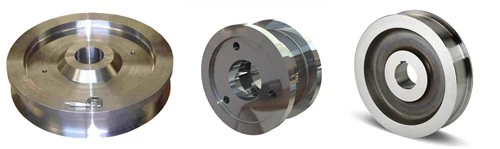
Crane wheels are critical components in the mobility and functionality of overhead cranes, gantry cranes, and other material-handling equipment. These wheels enable cranes to travel smoothly along rails or tracks, supporting heavy loads while ensuring stability, precision, and operational efficiency. Designed to withstand extreme loads and harsh environments, crane wheels play a pivotal role in industries such as construction, manufacturing, shipping, and logistics.
Load Distribution: Crane wheels distribute the weight of the crane and its payload across the rail system, preventing excessive stress on any single point.
Guidance and Alignment: Flanged wheels (with raised edges) keep the crane aligned on the rails, preventing derailment.
Smooth Movement: Precision-engineered wheels reduce friction, allowing for quiet, efficient travel even under heavy loads.

4)Load Distribution: Crane wheels distribute the weight of the crane and its payload across the rail system, preventing excessive stress on any single point.
Guidance and Alignment: Flanged wheels (with raised edges) keep the crane aligned on the rails, preventing derailment.
Smooth Movement: Precision-engineered wheels reduce friction, allowing for quiet, efficient travel even under heavy loads.

6) The high quality wheel set is made of 45# steel die forging, roughing, conditioning and finishing. The hardness of heat treatment is HB305 ~ 385, and the hardness of hardening layer at 18mm depth is not less than HB250. The wheel shaft is made of 45# steel, which is roughed, tempered and finished. The hardness of heat treatment is 250 ~ 280HB.

Material:
A) Carbon steel: A350LF2, A105, Q235, Q355D, A694F52, A516-GR65, EN10222, P280GH, P245GH, P250GH, JIS S25C, SS400, S20C, 16Mn, C22.8, Q345B/C/D, 1055, 1045, C50, C45, 10#, 20#, 35#, 45#, 40#, 50#, 55#, 60# and other carbon steel forgings.
B) Stainless steel: ASTM, A182, F304/304L, F316/316L, F316H, F310, F321, JB4728-2000, OCR18Ni10Ti, JB4728-2000, OCR17NI12Mo2, 2205, 2507, 2103, 904L, 254SMD, 304LN , 316LN, 1CR13, 2cr13, 3cr13, 4cr13, 321, 302, W1813N, W2014N, W2018N, W2020N, P550, Cr18Mn18N, 06Cr19Ni10(S30408), 022Cr19Ni10(S30403), 06Cr17Ni12Mo2(S31608), 022Cr17Ni 12Mo2(S31603), 06Cr25Ni20(S31008), 06Cr18Ni11Ti(S32168), 022Cr19Ni13Mo (S31703), 0Cr17Ni4Cu4Nb, 06Cr19Ni10N, 14Cr17Ni2, 13Cr13Mo, 06Cr13 and other stainless steel forgings.
C) Alloy steel: 40Cr, 15CrMo, 20CrMo, 25CrMo, 30CrMo, 35CrMo, 35CrMoV, 42CrMo, 20Cr2Ni4, 20CrNiMo, 40CrNiMo, 30Cr2Ni2Mo, 35CrMoV, 12Cr1MoV, 38CrMoAl, 18Cr2Nio4W, 40CrNi2Mo, 30CrMnSi, 25Cr2MoV, 17 Cr2Ni2Mo, 20MnMo, 20MnMoNb, 34CrNi3Mo, 20CrMnTi , 40CrMnMo, 30Cr2Ni2Mo, 34CrMo1, 20CrMnMo, 24CrMoV, 30Cr2MoV, 34CrNi1Mo, 17Cr2Ni2Mo, 34CrNi3MoV, 20CrMnTi, A182F1, F5, F9, F11, F22, 12Cr2Mo1, 10Cr9Mo1VNbN (F91), 10Cr9Mo W2VNbBN (F92), 12CrMoV, 4140, 4340, 4330 , 4130, 4150, 9CR2MO, 17NiCrMo6-4, 18CrNiMo7-6, 30CrNiMo8, 34CRNIMO, 34CrNiMo6, 36CrNiMo4, 34CrNi3Mo, 40CRNIMO, 40CrNiMoA, 50CrMo4, Q345D, 300M, 17-4PH, PH13-8Mo, 15-5PH, AerMet 100 and other alloys steel forgings.
- Diameter: Φ250, Φ350, Φ400, Φ500, Φ600, Φ700, Φ800, Φ 1000, Φ 1200 or as your requirement
- Technique: Casting or forging
- Quenching Depth: more than 25mm
- Heat Treatment: Quenching and tempering
- Work environment temperature: -25℃~+40℃, relative humidity ≤85%
- Reference Price Range: $80-1000/piece
- Rated Loading Capacity: 1~1200 ton
Sketch

Advantages
1. Exceptional Load-Bearing Capacity
Heavy-Duty Performance: Designed to support massive loads (from tons to hundreds of tons), crane wheels distribute weight evenly across rails, minimizing stress on tracks and infrastructure.
High Strength: Made from forged steel, ductile iron, or heat-treated alloys, they resist deformation even under extreme loads.
2. Enhanced Durability and Longevity
Wear Resistance: Hardened surfaces and precision machining reduce wear from friction, abrasion, and repetitive use.
Corrosion Resistance: Coatings (e.g., galvanization) or material choices (stainless steel) protect against rust in harsh environments like ports or chemical plants.
3. Precision and Stability
Flange Guidance: Flanged wheels (single or double) prevent derailment by keeping the crane aligned on rails, even during high-speed operations.
Smooth Movement: Tapered or crowned tread profiles optimize rail contact, ensuring vibration-free travel and precise load positioning.
4. Adaptability to Diverse Applications
Customizable Designs: Wheels come in flanged, flangeless, or double-flanged configurations to suit specific needs (e.g., tight spaces, outdoor tracks, or automated systems).
Compatibility: Work seamlessly with different rail types (flat-bottomed, grooved) and mounting systems (rigid axles, pivoting bogies).
5. Reduced Maintenance and Operating Costs
Low Friction: Precision engineering minimizes energy loss, lowering power consumption for crane movement.
Self-Lubricating Options: Some wheels incorporate lubricant reservoirs or polymer coatings, reducing the need for frequent greasing.
Long Service Life: Durable materials and robust designs reduce replacement frequency, cutting downtime and costs.
6. Safety Enhancements
Derailment Prevention: Flanges and alignment systems ensure the crane stays on track, even during sudden stops or lateral forces.
Shock Absorption: Spring-loaded or pivoting bogies absorb impacts from rail irregularities, protecting both the crane and its load.
7. Noise and Vibration Reduction
Polyurethane Treads: Coated wheels operate quietly, ideal for indoor facilities like warehouses or hospitals.
Vibration Damping: Flexible mounting systems reduce noise and wear caused by rail joints or uneven surfaces.
Application
1. Overhead Cranes (Factory and Warehouse Use)
Material Handling: Move raw materials, machinery, and finished products in manufacturing plants, automotive assembly lines, and warehouses.
Precision Tasks: Facilitate positioning of delicate or heavy components in aerospace or electronics production.
Wheel Type: Single-flange or double-flange wheels for alignment on indoor rails.
2. Gantry Cranes (Ports and Shipyards)
Container Handling: Load and unload shipping containers from vessels at ports using rail-mounted gantry cranes (RMGs).
Shipbuilding: Transport heavy ship parts (e.g., engines, hull sections) in shipyards.
Wheel Type: Large-diameter, corrosion-resistant wheels (e.g., stainless steel or coated alloys) to withstand saltwater exposure.
3. Bridge Cranes (Steel Mills and Foundries)
Steel Production: Handle molten metal, ingots, and rolled steel in high-temperature environments.
Foundries: Move molds and castings with heat-resistant wheels designed for extreme thermal loads.
Wheel Type: Forged steel wheels with heat-treated surfaces to resist deformation.
4. Rail-Mounted Cranes (Construction Sites)
Heavy Lifting: Transport construction materials (beams, concrete panels) on temporary rail systems.
Tunnel Boring: Guide machinery and materials in underground tunneling projects.
Wheel Type: Robust, flanged wheels for uneven outdoor tracks.
5. Automated Storage and Retrieval Systems (AS/RS)
Warehouse Automation: Enable robotic cranes to retrieve goods in high-density storage facilities.
E-commerce Fulfillment: Ensure rapid, precise movement of inventory in distribution centers.
Wheel Type: Flangeless wheels paired with guide rollers for tight spaces and high-speed operation.
6. Mining and Heavy Industry
Ore Handling: Transport extracted minerals in mining operations using heavy-duty gantry cranes.
Cement Plants: Move bulk materials like limestone and clinker.
Wheel Type: Extra-wide treads to distribute weight on rugged, debris-laden rails.
7. Energy and Power Generation
Wind Turbine Assembly: Lift and position turbine blades and nacelles during installation.
Nuclear Facilities: Handle radioactive materials with precision-engineered, fail-safe wheel systems.
Wheel Type: Non-sparking alloys (e.g., bronze) for hazardous environments.
8. Aerospace and Defense
Aircraft Assembly: Position fuselage sections and engines in hangars.
Military Logistics: Load heavy equipment (tanks, artillery) onto transport vehicles.
Wheel Type: Low-vibration, noise-reducing polyurethane-coated wheels for sensitive environments.
9. Automotive Industry
Production Lines: Move car bodies, engines, and components through assembly stages.
Paint Shops: Transfer vehicles using cranes with contamination-resistant wheels.
Wheel Type: Flangeless wheels for smooth transitions between rail sections.
10. Specialized Applications
Theater and Stage Rigging: Silent, compact wheels for moving lighting and scenery.
Disaster Recovery: Mobile cranes with adaptable wheels for debris clearance and rescue operations.
Wheel Type: Custom tread profiles or hybrid designs for unique operational needs.
Production Procedure
The production procedure for forged crane wheels generally involves the following steps:
1. Design and engineering: The design and engineering stage involves determining the specifications of the crane wheels, such as the size, load capacity, and material composition.
2. Material selection: The material for the wheels is typically selected based on the load capacity and operating conditions. Common materials used for forged crane wheels include carbon and alloy steels, with higher grade steels being used for heavier loads.
3. Forging: The forging process involves heating the selected material to a high temperature and then shaping it using a press or hammer. The hot metal is then quenched to cool it down and increase its hardness.

4. Machining: The wheels are machined to achieve the desired shape and dimensions, and to ensure that the wheel is properly balanced.

5. Heat treatment: The forged wheels are then heat-treated to improve their mechanical properties and ensure uniform hardness.

6. Surface treatment and finishing: The wheels may undergo surface treatment, such as shot blasting or painting, to protect them from corrosion and wear.

7. Quality control: Inspection: The finished wheels are inspected to ensure that they meet the required specifications for quality and performance.

8. Packaging and shipment: The finished wheels are packaged and shipped to the customer for installation onto the crane.

Overall, the process of producing forged crane wheels requires a high level of expertise and attention to detail. The quality of the finished product is crucial for ensuring the safe and reliable operation of the crane.

Workshop View
The company has installed an intelligent equipment management platform, and has installed 310 sets (sets) of handling and welding robots. After the completion of the plan, there will be more than 500 sets (sets), and the equipment networking rate will reach 95%. 32 welding lines have been put into use, 50 are planned to be installed, and the automation rate of the entire product line has reached.


Hot Tags: crane wheels, China crane wheels manufacturers, suppliers, factory, Forged Train Wheels, Forged Wheel, Forged Crane Wheels, Wheels, Crane Parts, Steel Rail Wheels
Previous
Crane Rail WheelsNext
Forged WheelYou Might Also Like


Send Inquiry