







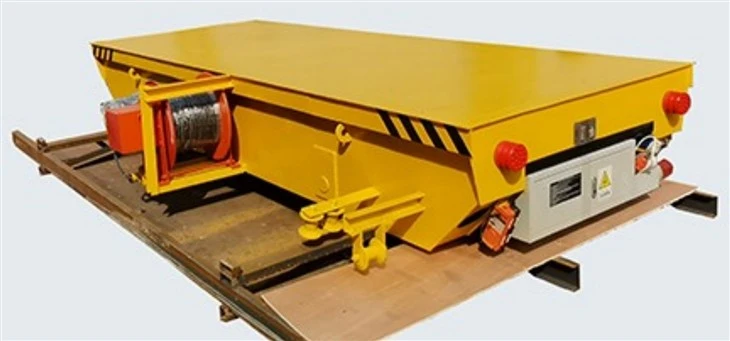
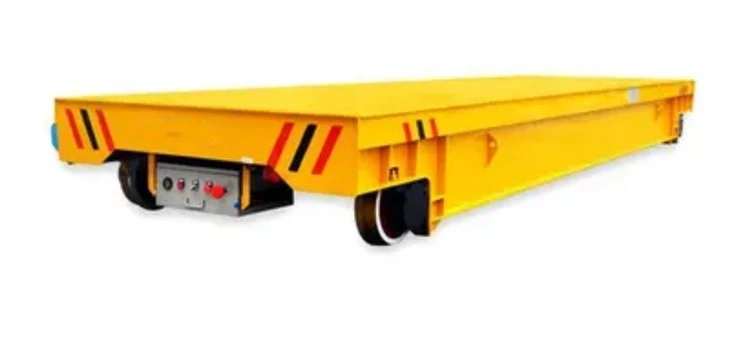
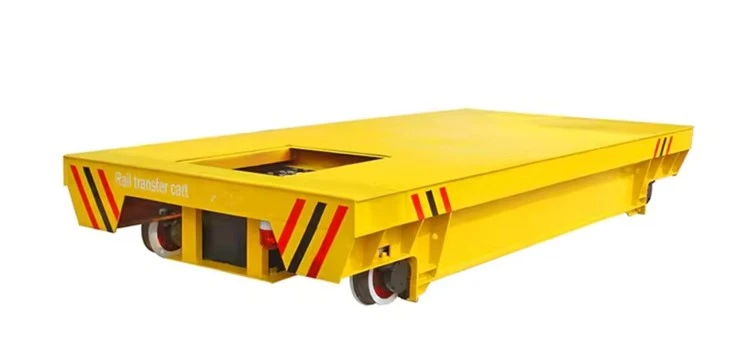
Electric Transfer Carts
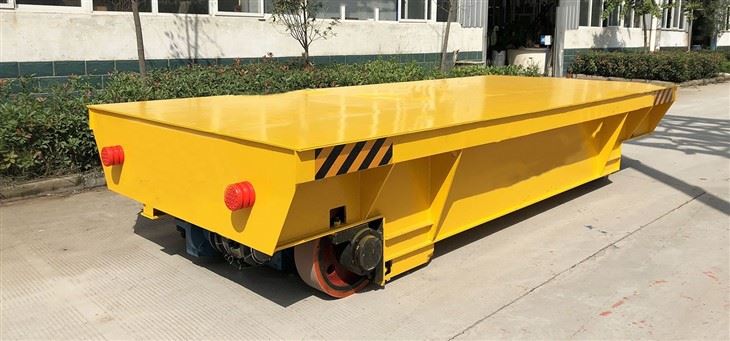
Electric transfer carts are self-propelled material handling vehicles designed for transporting heavy loads within factories, warehouses, and industrial plants. These carts provide a safe, efficient, and cost-effective solution for moving goods across production lines, assembly areas, and storage zones.
Key Features
- Electric Power Drive: Operates on battery, rail, or cable power, ensuring smooth and energy-efficient transport.
- Heavy Load Capacity: Capable of handling loads from a few tons to over 100 tons, suitable for various industrial applications.
- Customizable Design: Available in different sizes, load capacities, and configurations to meet specific operational needs.
- Safety Mechanisms: Equipped with emergency stop buttons, anti-collision sensors, and warning alarms to ensure safe operation.
- Automation Options: Some models feature remote control or fully automated navigation for increased efficiency.

Parts & Components
1. Power System
Battery-Powered (Lead-Acid or Lithium-Ion) – Provides mobility without cables.
Rail-Powered (Conductor Rail / Busbar) – Draws power from rails for continuous operation.
Cable Reel / Drag Chain – Uses an external power source through a retractable cable.
2. Drive System
Electric Motor – Provides traction power, usually an AC or DC motor.
Gearbox / Transmission – Reduces motor speed and increases torque.
Wheel Assembly – Includes polyurethane or steel wheels for movement on rails or floors.
3. Control System
Remote Control / Pendant Control – Allows operators to control movement wirelessly or via a wired pendant.
PLC (Programmable Logic Controller) – Ensures automation and safety.
Speed Control (VFD – Variable Frequency Drive) – Adjusts speed smoothly.
4. Safety Features
Emergency Stop Button – Ensures immediate stop during emergencies.
Bumper Sensors & Proximity Sensors – Detects obstacles and prevents collisions.
Warning Lights & Alarms – Alerts nearby workers about movement.
5. Structural Components
Main Frame / Load Platform – Heavy-duty steel structure to support loads.
Lifting Mechanism (Optional) – Hydraulic or mechanical lift for height adjustment.
Guide Rails / Navigation System – Helps in precise movement for automated carts.

Notes:
● Load capacity,table size and rail gauge can be customized
● Options
■ Cable reel: spring type, magnetic coupling type, motor-driven type
■ Automatic stop when detecting obstacle or person, limit switches (to limit travel)
■ Operation model: hand held control pendant, remote radio control or operation platform with the cart
■ Electrical parts: imported or made in China
■ Power supply position middle or two ends
■ Variable speed control
■ Can be designed to meet special working environment such as high temperature
Sketch

Technical Parameter

Advantages
Electric transfer carts are widely used in industrial settings for material handling and transportation. Here are some key advantages of using electric transfer carts:
1. Efficiency & Productivity
Fast & Smooth Operation: Electric transfer carts provide quick and stable movement of heavy loads, improving workflow efficiency.
Automated Options: Some models are fully automated (AGVs), reducing manual labor and increasing productivity.
2. Cost-Effective
Lower Operational Costs: Compared to diesel or fuel-powered alternatives, electric transfer carts have lower energy costs.
Minimal Maintenance: Fewer moving parts mean lower maintenance requirements and costs.
3. Eco-Friendly
Zero Emissions: Since they run on electricity, they produce no harmful emissions, making them environmentally friendly.
Reduced Noise Pollution: They operate quietly, improving the working environment.
4. Customizability & Versatility
Various Load Capacities: Can be designed to carry loads from a few hundred kilograms to hundreds of tons.
Multiple Power Options: Available with battery power, cable reel, busbar, or rail-guided systems to suit different needs.
Adaptability: Can be used in factories, warehouses, shipyards, and steel plants for different applications.
5. Safety & Control
Enhanced Safety Features: Equipped with emergency stop functions, sensors, alarms, and speed control to prevent accidents.
Remote & Wireless Control: Operators can control them from a safe distance, reducing the risk of workplace injuries.
6. Long Lifespan
Durable Construction: Built with high-quality materials to withstand harsh industrial environments.
Efficient Energy Use: Batteries last longer, reducing replacement frequency and downtime.

Application
Electric transfer carts are used in various industries to transport heavy loads safely and efficiently. These battery-powered or rail-guided carts provide a flexible material handling solution. Below are some key applications:
1. Manufacturing and Assembly Lines
Transporting raw materials, semi-finished, or finished products between workstations.
Moving heavy machinery parts in automobile, aerospace, and shipbuilding industries.
Used in steel, aluminum, and metalworking plants for handling large metal components.
2. Warehouse and Logistics Centers
Efficiently moving pallets, crates, or bulk materials within warehouses.
Reducing manual labor in inventory management.
Transferring goods between different sections of a distribution center.
3. Steel and Metal Industry
Handling steel coils, billets, slabs, and heavy metal sheets.
Transferring hot materials in foundries and forging plants.
Used in welding and cutting operations.
4. Rail and Shipyard Applications
Moving railway bogies, train parts, or even entire carriages.
Transporting heavy shipbuilding components like hull sections and engines.
Facilitating maintenance work in large industrial shipyards.
5. Heavy Equipment and Machinery Transport
Used in power plants for moving turbines and generators.
Transporting heavy mining equipment and tools in mining operations.
Moving industrial molds and dies in plastic and rubber manufacturing.
6. Automotive and Aerospace Industry
Transferring car chassis and engines in automobile manufacturing plants.
Moving aircraft components such as fuselage parts, wings, and engines in aerospace factories.
7. Energy and Power Sector
Transporting transformers, generators, and other electrical components.
Used in nuclear and renewable energy plants for handling heavy parts.
8. Construction and Prefabrication Industry
Moving large precast concrete slabs and building components.
Used in tunnel and bridge construction for transporting heavy materials.

Production Procedure
1. Design & Engineering
Confirm customer requirements (load capacity, trackless or rail-guided, power supply type).
Create CAD drawings and 3D models.
Electrical system design, including battery type, motor specifications, and control systems.
2. Material Procurement
Purchase raw materials (steel, motors, batteries, wheels, control panels, etc.).
Quality inspection of materials before production.
3. Cutting & Fabrication
Laser cutting of steel sheets for the cart frame.
CNC machining and welding of structural components.
Surface grinding and finishing.
4. Frame Assembly
Assemble the main cart structure.
Install wheelsets (track wheels or rubber wheels).
Ensure proper alignment and balance.
5. Electrical System Installation
Install motors, gearboxes, and drive systems.
Wiring of battery, control panel, and remote-control system.
Set up safety features (emergency stop, sensors, alarms).
6. Painting & Coating
Sandblasting and anti-rust treatment.
Apply primer and final paint coat.
Drying and quality inspection.
7. Final Assembly & Testing
Install covers, seats (if applicable), and additional accessories.
Conduct load testing and functionality tests.
Test movement, braking, and remote control operation.
8. Quality Control & Inspection
Check load capacity, electrical components, and safety systems.
Verify compliance with international standards.
9. Packaging & Shipping
Secure packaging for transportation safety.
Arrange for shipment and provide user manuals & operation guides.
10. Installation & After-Sales Service
Provide installation support if needed.
Offer maintenance guidance and technical support.

Workshop View


Hot Tags: electric transfer carts, China electric transfer carts manufacturers, suppliers, factory
Previous
Heavy Duty Transfer CartYou Might Also Like



Send Inquiry