










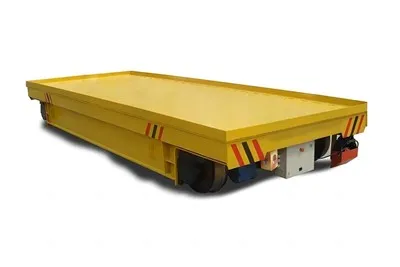
Trackless Flat Transfer Cart
Trackless flat transfer cart is an electric transporter commonly used in factories, warehouses and logistics centers. It can transport materials along a predetermined route without tracks and is usually used to carry heavy goods and equipment. The vehicle uses batteries as power, can provide long-term operation, and can be customized with different loads and sizes according to needs.
Key Features
- Unmatched Versatility: Our Electric Transfer Cart can be tailored to suit a wide range of applications. From transporting raw materials to finished products, this cart can handle it all. Its adaptability ensures it seamlessly integrates into your existing workflow.
- High Load Capacity: Designed to carry substantial loads, this transfer cart can transport equipment, machinery, and materials of various sizes and weights. You can rely on it to handle even your heaviest items with ease.
- Precise Control: The integrated control system allows for precise maneuvering, ensuring safe and accurate transportation. With adjustable speed and direction controls, your operators can easily navigate through tight spaces and around obstacles.
- Cable Reel Power: Say goodbye to the limitations of traditional power sources. Our Electric Transfer Cart derives its energy from a cable reel system, providing uninterrupted power for extended periods. This means fewer downtime interruptions for recharging.
- Durability and Safety: Built to last, our transfer cart boasts a robust construction, ensuring longevity and safety in even the most demanding environments. Safety features such as emergency stop buttons, warning lights, and obstacle sensors come standard.
- Eco-Friendly: By eliminating the need for fossil fuels or high-power consumption, our cable reel system reduces your carbon footprint. You'll not only save on operational costs but also contribute to a greener future.
- Customization: We understand that every business is unique. That's why our Electric Transfer Cart can be customized to meet your specific needs. From size and load capacity to specialized attachments, we'll work with you to create the perfect solution.
- Easy Maintenance: We've designed our transfer cart with ease of maintenance in mind. Regular upkeep is straightforward, reducing downtime and ensuring your cart remains in peak condition.

Parts & Components
A Electric Transfer Cart is a complex piece of equipment designed for material handling and transportation within various industries. It comprises several crucial parts and components that work together to ensure its efficient and safe operation.
- Frame: The frame is the foundational structure of the transfer cart, providing support for all other components. It is typically made of steel or other durable materials to withstand heavy loads and harsh environments.
- Wheels: Transfer carts are equipped with wheels that allow them to move along tracks or on the ground. The type of wheels (e.g., steel, polyurethane, rubber) and their configuration (e.g., number of wheels, wheel arrangement) depend on the specific application and load capacity requirements.
- Electric Motor: The electric motor is responsible for providing the power needed to move the transfer cart. It can be AC or DC powered, and its size and capacity depend on the cart's load and speed requirements.
- Gearbox: The gearbox is often used to control the speed and torque of the transfer cart. It helps to transmit power from the electric motor to the wheels efficiently.
- Cable Reel System: The cable reel system is a critical component that supplies power to the transfer cart. It consists of a cable reel drum, electrical cables, and a collector or trolley system. The cable reel drum stores and releases the cable as the cart moves, ensuring a continuous power supply.
- Control System: The control system includes various components like control panels, buttons, switches, and programmable logic controllers (PLCs). It allows operators to control the movement, speed, and direction of the transfer cart. Safety features like emergency stop buttons and obstacle sensors may also be part of the control system.
- Bumpers: Bumpers or buffers are typically installed on the front and rear of the transfer cart to absorb impact and protect both the cart and surrounding equipment or structures.

Notes:
● Load capacity,table size and rail gauge can be customized
● Options
■ Cable reel: spring type, magnetic coupling type, motor-driven type
■ Automatic stop when detecting obstacle or person, limit switches (to limit travel)
■ Operation model: hand held control pendant, remote radio control or operation platform with the cart
■ Electrical parts: imported or made in China
■ Power supply position middle or two ends
■ Variable speed control
■ Can be designed to meet special working environment such as high temperature
Sketch

Technical Parameter

Advantages
1. Flexibility in Movement
Trackless transfer carts don't require fixed rails, which means they can move freely in any direction within the facility. This makes them more adaptable to changes in layout or workspace configuration.
2. Cost-Efficiency
Without the need for installing rails or tracks, the initial setup cost is lower. Additionally, maintenance costs are reduced since there are no tracks to repair or replace.
3. Versatility
These carts can be used in a wide range of industries, such as manufacturing, logistics, warehousing, and more. They can handle different types of loads, from heavy machinery to delicate equipment.
4. Safety
Many trackless flat transfer carts are designed with features like anti-collision systems, safety sensors, and emergency stop functions, enhancing safety during operation.
5. Load Capacity
These carts can carry a wide variety of loads, often with high weight capacities. Some models can handle up to several tons of material, depending on the design.
6. No Track Wear and Tear
Traditional track-based carts often experience issues with rail wear and tear, especially in high-traffic areas. Trackless carts eliminate this problem entirely.
7. Easy Operation
These carts are typically operated via remote control or automated systems, which makes them easier to maneuver in tight spaces or complex environments.
8. Reduced Floor Damage
Since trackless transfer carts don't have rigid tracks, they tend to cause less wear and tear on floors, which is particularly important in facilities with sensitive or expensive flooring.
9. No Need for Rail Alignment
Trackless carts are independent of rail alignment issues, which can sometimes cause disruptions or downtime in traditional track-based systems due to misalignment or wear on the rails.
10. Energy Efficiency
Many trackless carts are powered by batteries or other energy-efficient methods, reducing the need for constant power sources and minimizing energy consumption compared to traditional conveyor systems.
In summary, trackless flat transfer carts offer increased flexibility, lower costs, enhanced safety, and reduced maintenance, making them an ideal solution for various material handling applications in modern industrial environments.

Application
Electric Transfer Carts are versatile material handling solutions that find applications in various industries and settings where the efficient and reliable transport of heavy loads is essential. Here are some common applications of Electric Transfer Carts:
- Manufacturing Facilities: Transfer carts are frequently used in manufacturing plants to transport raw materials, work-in-progress (WIP) items, and finished products between different stages of production. They can move heavy machinery, components, and tools to assembly lines, reducing the need for manual handling and improving production efficiency.
- Automotive Industry: Electric Transfer Carts are employed in automotive manufacturing plants to move car bodies, chassis, engines, and other components along the assembly line. Their precise control and ability to handle heavy loads make them indispensable for automakers.
- Aerospace Industry: In aerospace manufacturing, these carts are used to transport large and delicate aircraft components, such as wings, fuselages, and engines. Their precision and load-carrying capacity ensure the safe and efficient movement of critical parts.
- Warehousing and Distribution Centers: Transfer carts assist in the movement of heavy pallets, containers, and products within warehouses and distribution centers. They are particularly useful for loading and unloading trucks and moving materials to different storage locations.
- Steel Mills: In steel production facilities, transfer carts transport heavy steel coils, sheets, and billets between processing units, such as rolling mills, furnaces, and cutting machines. Their robust construction is ideal for handling the immense weight of steel products.
- Mining Operations: In mining environments, transfer carts are used to move ore, minerals, and equipment within underground mines or open-pit mining sites. They help streamline material handling and reduce manual labor in challenging conditions.
- Power Plants: Transfer carts are employed in power generation facilities to transport heavy equipment like generators, turbines, and transformers. Their precise control is crucial for positioning these large machines accurately.
- Construction Sites: In large construction projects, Electric Transfer Carts can transport construction materials, steel beams, and precast concrete elements around the site. They improve efficiency and reduce the labor required for material handling.
- Foundries: Foundries use transfer carts to move molten metal ladles, molds, and castings. The precise control and heat-resistant design are critical for safe and efficient operations.

Production Procedure
● Design and Planning:
■ Define the specific requirements of the transfer cart, including load capacity, dimensions, speed, and any specialized features.
■ Create a detailed design, including the cart's frame, wheel configuration, cable reel system, control system, and safety features.
■ Plan the manufacturing process, including material sourcing, fabrication methods, and assembly procedures.
● Material Sourcing and Preparation:
■ Procure the necessary materials, including steel or other structural materials for the frame, wheels, electrical components, and cable reel system.
■ Prepare and cut the materials to the required dimensions based on the design specifications.
● Welding and Fabrication:
■ Assemble and weld the structural components of the cart's frame, ensuring it meets design tolerances and safety standards.
■ Fabricate brackets and mounting points for wheels, axles, and other components.
● Wheel Assembly:
■ Mount and secure the wheels to the cart's frame, ensuring proper alignment and load distribution.
■ Attach axles and bearings for smooth wheel rotation.
● Cable Reel System Installation:
■ Install the cable reel drum, which is responsible for storing and releasing the power cable.
■ Set up the cable reel trolley or collector system that allows the cable to unwind and rewind smoothly as the cart moves.
● Electrical System Integration:
■ Install the electric motor, gearbox, and any auxiliary components required for precise control and power distribution.
■ Connect the motor to the cable reel system, ensuring seamless power transmission.
■ Set up the control panel, including buttons, switches, and safety features like emergency stop buttons and obstacle sensors.
● Load Deck Assembly:
■ Construct the load deck or platform where materials or equipment will be placed.
■ Add any necessary fixtures, clamps, or securing mechanisms to hold the load in place securely.
● Painting and Finishing:
■ Apply a protective coating or paint to the cart's frame to prevent corrosion and enhance its appearance.
■ Ensure the cart meets quality and safety standards during inspection and testing.
● Assembly and Integration:
■ Assemble all the cart's components, including the frame, wheels, cable reel system, electrical system, and load deck.
■ Ensure proper alignment and secure all connections and fasteners.
● Testing and Quality Control:
■ Conduct functional tests to ensure the cart operates smoothly, including speed control, direction changes, and emergency stop functions.
■ Verify the proper functioning of safety features.
■ Perform load tests to confirm that the cart can handle its specified load capacity safely.
■ Address any issues or defects found during testing.

Workshop View


Hot Tags: trackless flat transfer cart, China trackless flat transfer cart manufacturers, suppliers, factory
Previous
Transfer Crane CartYou Might Also Like



Send Inquiry