










Single Overhead Crane
Advantages:
✔ Efficient Material Handling – Reduces manual labor and speeds up operations.
✔ Space-Saving – Utilizes overhead space, keeping the floor clear.
✔ High Load Capacity – Can handle loads from a few tons to hundreds of tons.
✔ Customizable – Can be tailored to specific lifting needs (e.g., explosion-proof, high-speed).
Comparison: Single vs. Double Girder Overhead Cranes
| Feature | Single Girder Crane | Double Girder Crane |
|---|---|---|
| Cost | Lower | Higher |
| Lifting Capacity | Up to 20-50 tons | 50+ tons (up to 500+ tons) |
| Span Length | Up to 30m | Up to 40m+ |
| Lifting Height | Moderate | Higher (more space under hook) |
| Durability | Good for medium duty | Better for heavy-duty |
| Applications | Workshops, warehouses | Steel mills, heavy industries |
Capacity 10 tons
Span 15m
Lifting Height 12m
Lifting Speed 8 m/min
Crane Travel Speed 20 m/min
Trolley Travel Speed 15 m/min
Duty Class A4 (Medium Duty)
Control Pendant + Remote

Pictures & Components
A single overhead crane consists of several key components that work together to lift, move, and position loads safely and efficiently. Below is a detailed breakdown of its major parts:
1. Bridge (Main Girder)
The primary horizontal beam that spans the work area.
Types:
Single girder: One main beam (lighter loads, cost-effective).
Double girder: Two parallel beams (heavier loads, higher stability).
Made of steel (box-type or I-beam) for strength and rigidity.

2. End Trucks (End Carriages)
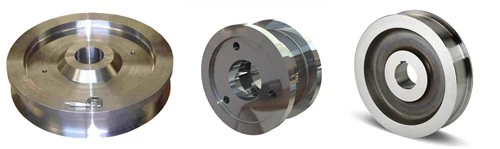
Located at both ends of the bridge, equipped with wheels for movement.
Components:
Wheels: Guide the crane along the runway rails.
Drive motors: Power the crane's travel (may include brakes).
Bumpers: Absorb shock when the crane reaches limits.

3. Hoist & Trolley
Hoist: The lifting mechanism (electric or manual).
Types: Wire rope hoist or chain hoist.
Includes: Motor, drum/chain, hook, and brake.
Trolley: Moves the hoist sideways along the bridge.
Can be hand-pushed, motorized, or geared.

4. Runway System
The track structure that supports and guides the crane.
Components:
Runway beams (mounted on columns or building structure).
Rail tracks (for smooth travel).
Brackets & supports (ensure stability).
5. Controls & Electrical System
Control methods:
Pendant control (wired handheld).
Radio remote control (wireless).
Cabin control (for large cranes).
Electrical components:
Festoon/cable reels (power supply to moving parts).
Limit switches (prevent over-travel).
Emergency stop button.

6. Safety Devices
Overload limiter (blocks excess lifting).
Anti-collision sensors (for multiple cranes).
Hook height limiter (prevents overwinding).
Warning alarms & lights.

7. Additional Accessories (Optional)
Magnetic lifter (for steel plates).
Crane scales (weigh while lifting).
Automatic positioning system (for precision).
Explosion-proof components (for hazardous areas).

Key Considerations for Components:
✔ Load capacity determines girder type and hoist selection.
✔ Span length affects bridge design (deflection limits).
✔ Duty cycle impacts motor and brake selection.
✔ Environment (corrosion-resistant coatings for humid areas).

Sketch

Main Technical Data


Advantages
Cost-Effective
Lower initial cost compared to double girder cranes.
Reduced installation and maintenance expenses.
Space-Saving Design
Uses overhead space, keeping the floor clear for operations.
Ideal for facilities with limited floor area.
High Efficiency & Productivity
Faster load handling compared to manual labor or forklifts.
Reduces material handling time in production lines.
Versatile Load Handling
Can lift loads ranging from 1 ton to 50+ tons (custom options available).
Compatible with hooks, magnets, grabs, and other attachments.
Easy to Operate & Maintain
Simple controls (pendant, remote, or cabin operation).
Minimal maintenance required for electric hoists and trolleys.
Durable & Reliable
Robust steel construction for long-term use.
Suitable for medium to heavy-duty industrial applications.
Safety Enhancements
Built-in overload protection, limit switches, and emergency stops.
Reduces workplace accidents compared to manual lifting.
Customizable
Adjustable span, lifting height, and speed.
Options for explosion-proof, high-temperature, or outdoor use.
Application
1. Manufacturing & Assembly Plants
Moving raw materials, machine parts, and finished products.
Positioning heavy components in automotive/aerospace industries.
2. Warehouses & Logistics
Loading/unloading goods from trucks and storage racks.
Handling pallets, containers, and bulky items.
3. Steel & Metal Industries
Transporting steel coils, sheets, and bars.
Used in foundries, forging, and rolling mills.
4. Construction & Heavy Equipment
Assembling large structures (precast concrete, beams).
Maintenance of heavy machinery.
5. Power Plants & Utilities
Handling turbines, generators, and transformers.
Maintenance of boilers and heavy equipment.
6. Paper & Printing Industry
Moving paper rolls and large printing machinery.
7. Automotive & Shipbuilding
Lifting engines, chassis, and ship components.
8. Mining & Cement Plants
Transporting heavy raw materials like ores and cement bags.
Types Of Cranes For Different Working Conditions

Crane Production Procedure

Workshop View
The company has installed an intelligent equipment management platform, and has installed 310 sets (sets) of handling and welding robots. After the completion of the plan, there will be more than 500 sets (sets), and the equipment networking rate will reach 95%. 32 welding lines have been put into use, 50 are planned to be installed, and the automation rate of the entire product line has reached.


Hot Tags: single overhead crane, China single overhead crane manufacturers, suppliers, factory, Single Girder Overhead Travelling Crane, Single Girder Overhead Crane
You Might Also Like


Send Inquiry