







European Type Single Girder Bridge Crane Hot Sale
Products Description
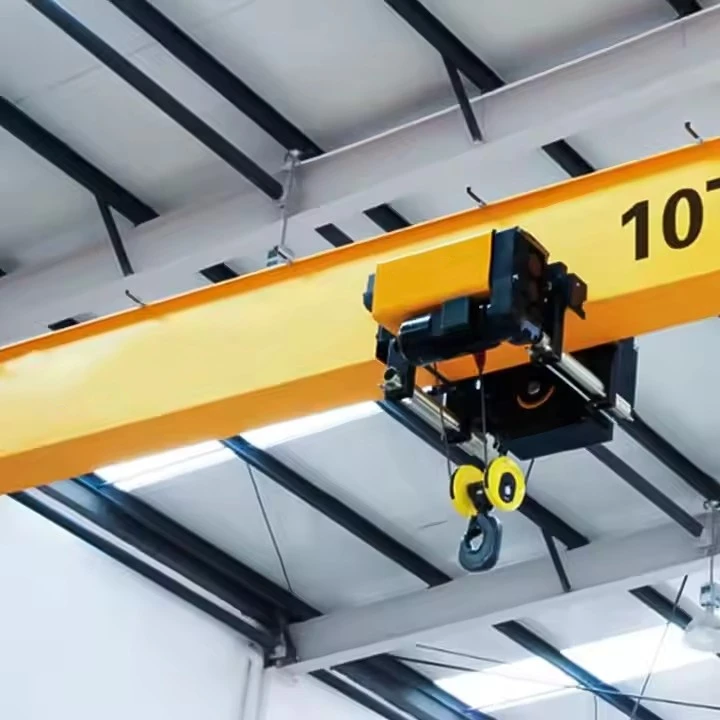
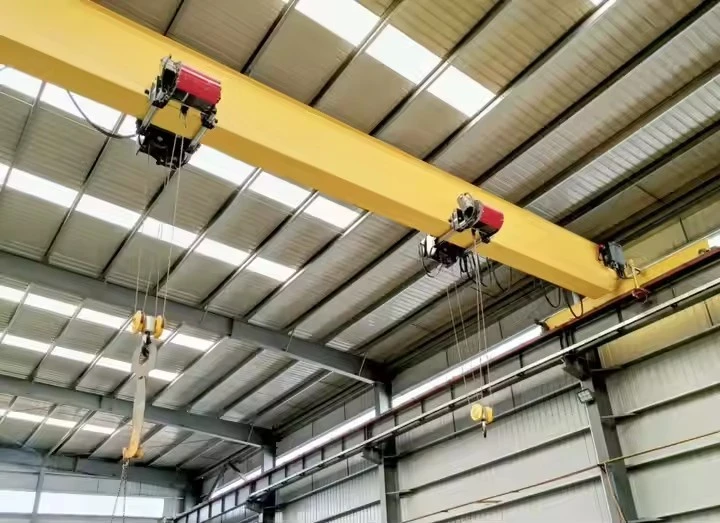
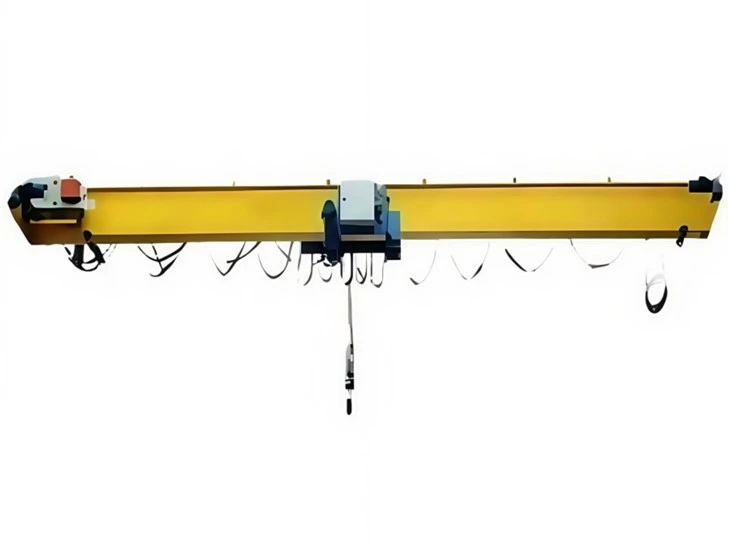
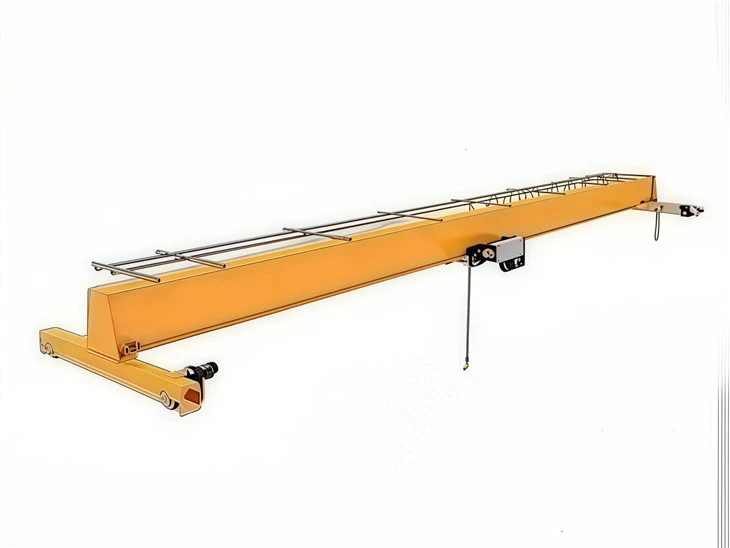
A single girder bridge crane (also known as an under-running bridge crane) is a type of overhead lifting system where the hoist and trolley run on the bottom flange of a single, primary beam (the bridge girder). This entire bridge girder is supported and moves along two runways, which are typically mounted to the building's roof structure or support columns.
Core Components: Gearbox, Motor, Gear
Place of Origin: Henan, China
Warranty: 1 Year
Weight (KG): 10000 kg
Video outgoing-inspection: Provided
Machinery Test Report: Provided
Selling Units: Single item
Single package size: 600X300X300 cm
Single gross weight: 200.000 kg
Pictures & Components
1.Main beam
This is the main skeleton of the crane, bearing all the weight. It consists of the main beam (using box girder or H-beam steel, the core load-bearing structure) and end beams (connecting the main beam and the traveling mechanism, usually made of high-strength rectangular steel pipe), fixed at both ends with high-strength bolts to ensure overall stability and operational accuracy.
2.Lifting System
Responsible for vertically lifting materials. The core is a European-style electric hoist (available in wire rope and chain types), employing a "three-in-one" design, integrating the motor, reducer, and drum into a compact structure. It is also equipped with hook assemblies and limit switches to ensure safety and reliability.
 |
 |
3.Crane travelling mechanism
Enables the movement of the crane (main trolley) and the lifting trolley (secondary trolley). Both use a "three-in-one drive device" (integrated motor, reducer, and brake) with variable frequency speed control technology, ensuring smooth start-stop without impact and precise positioning.
 |
 |
6.Motor
This is the "brain" of the entire equipment. Commands are issued via the control box and handle/remote controller to achieve independent or coordinated control of the hoist, trolley, and crane. The aviation-grade connectors provide reliable connections, and the flat cables ensure smoother movement.

.

Sketch

Main technical

Advantages
Lightweight and Energy-Efficient: Through optimized design and finite element analysis, the crane's weight is reduced by 30%-40% compared to traditional cranes, with lower wheel pressure and overall energy savings of over 35%.
Low Headroom, Large Space: The compact structure allows for a larger hook service area. It can reduce factory height by 0.5-1 meter, saving construction costs while increasing effective working area.
Stable Operation and Precise Positioning: Variable frequency stepless speed regulation technology ensures extremely smooth start-up and braking, minimizing impact on the factory building. Combined with electronic anti-sway function, high-precision positioning is achieved.
Maintenance-Free and Long Lifespan: Key components utilize hardened gear reducers and forged wheels made of highly wear-resistant materials. With a semi-grease lubrication design, most components require no maintenance during the 10-year overhaul period, and the entire machine is designed for a lifespan of up to 30 years.
Application:
Manufacturing: Machinery processing, auto parts, mold making, assembly lines, etc.
Logistics and Warehousing: Loading and unloading of goods in warehouses, freight stations, and packaging workshops.
Energy and Heavy Industry: Equipment maintenance and material handling in power plants, metallurgy, building materials, papermaking, and other industries.
Specific Fields: Railway maintenance, water conservancy projects, food processing, precision assembly, etc.
Applicable Limitations: Lifting capacity generally does not exceed 20 tons, and it is not suitable for flammable, explosive, or highly corrosive environments.
Crane production procedure
Steel Structure Manufacturing:
Main Beam: CNC cutting and pre-cambering; web plate welding using automatic submerged arc welding; welds undergo non-destructive testing.
End Beams: Rectangular tube integral forming or steel plate welding followed by single-stage boring using a CNC machining center to ensure wheel installation accuracy.
Machining and Assembly: After precision machining of each component, the main beam and end beams are pre-connected with high-strength bolts. Simultaneously, the drive unit, wheel assembly, etc., are assembled into the running mechanism and lifting mechanism (electric hoist).
Electrical System Integration: Installation of control box, sliding contact line, cables, etc., connecting motors of each mechanism to safety devices such as limit switches.
Surface Treatment: The entire machine is sprayed with epoxy zinc-rich primer and topcoat (e.g., two primer coats and eight top coats) to form a dense protective layer, providing corrosion resistance and aesthetic appeal.
Complete Machine Debugging and Testing: Power-on no-load, static load, and dynamic load tests are conducted to verify the stability and safety of each mechanism. After issuing a certificate of conformity, the machine is disassembled and transported.

Workshop view:
The company has installed an intelligent equipment management platform, and has installed 310 sets (sets) of handling and welding robots. After the completion of the plan, there will be more than 500 sets (sets), and the equipment networking rate will reach 95%. 32 welding lines have been put into use, 50 are planned to be installed, and the automation rate of the entire product line has reached 85%.


Hot Tags: european type single girder bridge crane hot sale, China european type single girder bridge crane hot sale manufacturers, suppliers, factory, Single Girder Overhead Travelling Crane, Single Girder Overhead Crane
You Might Also Like




Send Inquiry