










Single Beam Bridge Crane
Single-beam bridge crane is a kind of lifting equipment widely used in industrial production. It consists of bridge, main beam, end beam, electric hoist or lifting trolley, and electrical control system. It is mainly used for material handling and loading and unloading in factory workshops, warehouses, cargo yards and other places.
2.Single-beam bridge crane has compact structure, small space occupation, and can be installed and used at a lower building height. Single-beam bridge crane is widely used in many industries such as machinery manufacturing, steel metallurgy, logistics and transportation, automobile manufacturing, building materials, etc., and is particularly suitable for workshops or warehouses that require frequent lifting.
3.The maintenance of single-beam bridge crane is relatively simple. It only needs to regularly check the status of key components such as wire rope, hook, brake, etc. to ensure the safety and reliability of equipment operation.
This crane has become an indispensable and important equipment in modern industrial production with its high efficiency, reliability and economy.
Max. Lifting Height:10M, 15M, 6m, 20M
Weight (KG):3260 kg
Max. Lifting Load:3 ton, 5 ton, 10 ton, 16 ton, 20 ton
Span:7.5-22.5m
Lifting speed:8/0.8m/min
Working Class:A3
Lifting height:3-24m
Power Source:3 Phase 380V 50hz
Lifting Capacity:1~20t
Working Temperature:-25~40℃

Pictures & Components
1.Main girder
1.The main beam of a single-beam bridge crane is its key structural component, playing an important role in bearing and transmitting the lifting force. The main beam is usually made of high-strength steel, such as Q235B or Q345B. These materials have high yield strength and good welding performance, ensuring that the main beam does not deform or break when bearing heavy loads.
2.The main beam is the main load-bearing component of the crane, directly bearing the vertical load transmitted by the hook or electric hoist, and transmitting the load to the running track through the end beam. The design of the main beam needs to consider factors such as lifting weight, span, and frequency of use to ensure that it has sufficient strength and rigidity.
3.The quality and design of the main beam directly affect the overall performance and safety of the single-beam bridge crane, so special attention should be paid when selecting and using it.
Lifting System
1.The lifting system of a single-beam bridge crane is the core part of the entire equipment, responsible for lifting and transporting materials. The electric hoist is the main component of the lifting system of a single-beam bridge crane. It is usually suspended under the main beam and uses wire ropes or chains to lift and lower heavy objects. When operating the control system of the electric hoist, the motor drives the reducer to rotate the drum, thereby driving the winding or release of the wire rope or chain, and then realizing the rise or fall of the hook.
2.The lifting system of a single-beam bridge crane is widely used in various industrial occasions, such as manufacturing, construction, warehousing and logistics, and is an important tool for heavy object handling and loading and unloading operations. Its efficient and stable performance can greatly improve production efficiency and ensure the safety of operations.

End Beam
1.The end beam of a single-beam bridge crane is one of the important structural components of the crane. It is located at both ends of the main beam and is mainly responsible for transferring the load of the main beam to the track and enabling the entire crane to move smoothly on the track. The end beam usually adopts a box-type structure and is welded from high-strength steel plates. This design provides good rigidity and strength and can withstand large lateral and longitudinal forces. In some light cranes, the end beam may use I-beams as the foundation. This structure is lighter and suitable for smaller loads and spans.
2.The end beam connects the two ends of the main beam, supports the main beam and transfers its weight to the wheels, thereby evenly distributing the load. A drive device is usually installed on the end beam to achieve the movement of the crane on the track through the drive wheel. Guiding function: The end beam cooperates with the track to ensure that the crane runs smoothly along the predetermined track during movement and prevent derailment. A walking wheel group is installed under the end beam, usually consisting of four or more wheels, which are directly in contact with the track to support the weight of the crane.
3.The end beam moves smoothly along the track through the walking wheel group on it, driven by the motor. The drive unit provides the crane with power for horizontal movement, while the structural design of the end beam ensures that the crane remains stable during movement without tilting or deviating from the track.
4.The end beam is an indispensable part of the structure of a single-beam bridge crane. Its design and quality directly affect the operating stability and safety of the crane. Through reasonable design and maintenance, the end beam can ensure that the crane moves smoothly and accurately on the track, ensuring the efficiency and safety of the production process.


Crane travelling mechanism
1.The crane running mechanism of a single-beam bridge crane is one of the key components of the crane, responsible for realizing the lateral movement of the entire crane along the track. This mechanism ensures that the crane can move in workshops, warehouses and other places to complete the lifting operation. It is usually installed on the trolley end beam of the crane and powered by a drive motor. The driving wheel realizes the movement of the crane through the linkage of the motor and the reducer.
2.The core power source of the crane running mechanism usually adopts a three-phase asynchronous motor, which has a high starting torque and good speed regulation performance, and is suitable for the frequent start and stop operations of the crane. The trolley running mechanism usually runs on a steel track, which is laid with steel and fixed on the building structure. The width and length of the track are determined according to the span and stroke of the crane.
3.The crane running mechanism drives the walking wheel through the motor to make the crane move laterally along the track. The operator issues instructions through the control system, and the motor starts and drives the reducer to transmit power to the walking wheel. The walking wheel rolls on the track, thereby driving the crane to move. When it is necessary to stop, the electromagnetic brake acts quickly to ensure that the crane stops accurately at the specified position. The crane mechanism is a key part of the single-girder bridge crane to achieve efficient material handling. Its performance directly affects the operating efficiency and safety of the crane. Through careful design and regular maintenance, the crane mechanism can provide stable and reliable services to ensure the smooth progress of production operations.
Trolley travelling mechanism
1.The trolley travelling mechanism of a single-beam bridge crane is an important part of the entire crane, responsible for moving on the main beam to achieve horizontal handling and precise positioning of materials. This mechanism is mainly composed of a trolley frame, an electric hoist, a walking wheel, a drive device, and a rope guide device.The trolley frame is the skeleton of the entire trolley running mechanism. It is generally made of steel plate welding or a steel structure with high strength and rigidity to carry the electric hoist and its lifting load. The trolley frame contacts the track on the main beam through pulleys and bearings and can move freely on the main beam.
2.The trolley travelling mechanism moves on the track of the main beam through the drive of the motor. The electric hoist is suspended on the trolley frame, and the vertical movement of the heavy object is achieved by the lifting and lowering of the wire rope or chain. The trolley moves along the main beam, enabling the crane to carry materials in the width direction and achieve full coverage in the space. The driving force of the trolley mainly comes from the motor, usually a small-power three-phase asynchronous motor, which is responsible for driving the trolley to move on the main beam track.
3.The trolley travelling mechanism plays a vital role in single-beam bridge cranes, and its performance directly affects the overall efficiency and operating accuracy of the crane. Through effective design and maintenance, the trolley operating mechanism can ensure the safety and efficiency of material handling operations and meet the operational needs of various industrial occasions.
Crane wheel
1.The wheel of a single-girder bridge crane is an important part of the crane, responsible for transferring the weight of the crane to the ground through the track and enabling the crane to move smoothly on the track. The design and quality of the wheel directly affect the operating stability and life of the crane. The types of wheels are driving wheels and driven wheels.
2.The main part of the wheel is usually an integral steel wheel disc. According to the design requirements of the crane, the wheel can be a single-flange, double-flange or flangeless design. The flange is the raised part of the outer edge of the wheel, which is mainly used to contact the edge of the track to prevent the crane from derailing. The wheel with a single flange has a bulge only on one side, while the wheel with a double flange has bulges on both sides.
3.When the crane is running, the driving wheel starts to rotate under the drive of the motor, driving the crane to move along the track. The driven wheel passively follows the rotation of the driving wheel, and through its rolling action, ensures the smooth progress of the crane. The rim of the wheel is closely matched with the track to prevent the crane from derailing.
4.The wheel is a key component for the smooth operation of a single-girder bridge crane, and its performance directly affects the safety and operating efficiency of the crane. High-quality wheel design and regular maintenance can extend the service life of the crane, reduce the frequency of failures, and ensure that the crane can operate safely and reliably under various working conditions.
 |
 |
 |
Crane hook
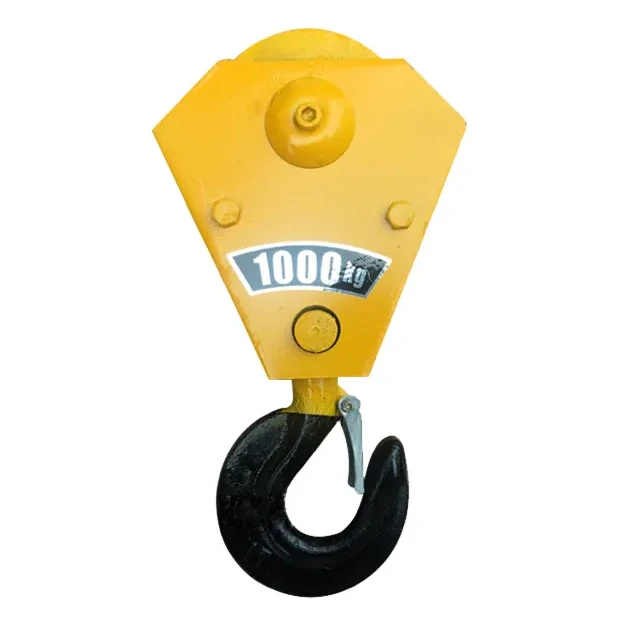
1.The hook of a single-beam bridge crane is the part of the crane that comes into direct contact with the load. It is responsible for mounting the material and safely lifting or moving it to a designated location. The design and use of the hook is essential to the safety and efficiency of the lifting operation.
2.The hook body is usually forged from high-strength alloy steel, with extremely high tensile strength and toughness, and can withstand large loads without deformation or breakage. The hook ring connects the hook body to the wire rope or chain of the crane, ensuring that the hook can rotate freely and preventing the wire rope or chain from twisting during lifting and lowering.
3.The single hook has a simple structure and is usually used for lifting small and medium-sized loads. The single hook is suitable for the lifting needs of general industrial and construction sites. The double hook is usually used for lifting heavy loads. Its structure consists of two hooks in parallel, which can share the weight of the load and reduce the stress of each hook. The hook is connected to the wire rope or chain of the crane through the hook ring. During operation, the hook hangs the material or spreader and lifts or lowers the load through the lifting mechanism. When the material needs to be moved, the crane transports the load to the designated location through the movement of the trolley and the car. The hook's rotation function can help adjust the direction of the load for precise positioning.
4.As the part of the crane that directly contacts the load, the design and use of the hook are crucial to the safety of the lifting operation. High-quality hooks can withstand huge loads and ensure the safety and efficiency of lifting operations through reasonable operation and maintenance. Whether in industrial production, construction projects, or other occasions that require material handling, the reliability of the hook is a key factor in ensuring the smooth progress of lifting operations.
 |
 |
 |
Motor
1.The motor of a single-beam bridge crane is an important power source for the crane, providing power for the crane's trolley, car and lifting mechanism. The performance of the motor directly affects the operating efficiency and operating accuracy of the crane. The types of motors include trolley running motors, trolley running motors and lifting mechanism motors.
2.When the motor is powered on, the stater generates a rotating magnetic field to drive the rotor to rotate. The rotation of the rotor is transmitted to the reducer or directly to the drive wheel through the output shaft of the motor, driving the crane's trolley or car to move, or driving the lifting mechanism to lift or lower the load. Through the variable frequency speed regulation device, the operator can control the speed of the motor to achieve smooth operation of the crane. The operation and control of the motor include variable frequency speed regulation, dual speed control and remote control.
3.The motor is the core power device for the operation of the single-beam bridge crane, and its performance directly affects the operating efficiency, safety and life of the crane. High-quality motor design and reasonable use and maintenance can ensure the stable and reliable operation of the crane under various working conditions and meet the needs of different industrial occasions.

. 

Sound and light alarm system & limit switch
1.The sound and light alarm system and limit switch of the single-beam bridge crane are important devices to ensure the safe operation of the crane. They are used to remind the operator and prevent the crane from exceeding the preset safety range during operation, thereby avoiding accidents.
2.Sound and light alarm system The sound and light alarm system emits sound and flash signals during the operation of the crane to remind the surrounding personnel to pay attention and avoid safety accidents caused by negligence or misoperation of personnel. The system can prompt different operating states of the crane, such as crane start, stop, load lifting, and lowering. Through different sound and light signals, the operator can quickly identify the current operating state of the crane.
Sound alarm: It is usually a buzzer or speaker installed in a conspicuous position of the crane. When the alarm is triggered, a high-pitched warning signal is issued to remind personnel to pay attention. Light alarm: The light alarm is generally composed of a high-brightness flash light or LED light, and is often used in conjunction with the sound alarm to emit a strong visual signal, which is particularly suitable for noisy environments.
3.Limit switches are used to limit the travel of the crane trolley and the trolley and the up and down movement range of the hook to prevent them from exceeding the predetermined safe position. For example, when the trolley reaches the end of the main beam or the hook rises to the limit position, the limit switch automatically cuts off the power supply and stops the related movement. The limit switch can prevent the mechanical parts of the crane (such as the trolley, trolley, and hook) from being damaged due to excessive movement. It plays a key role in preventing accidents such as collisions, extrusions, and derailment.
Mechanical limit switch: Structure: It is triggered mechanically and is usually equipped with a lever or roller. When the crane component touches the limit device, the lever or roller is pushed, thereby cutting off the circuit or triggering an alarm. Inductive limit switch: Structure: It uses non-contact methods such as magnetic induction, photoelectric induction, or proximity sensors to detect the position of the crane component, which has higher accuracy and reliability than traditional mechanical limit switches. Travel switch: Structure: Similar to the limit switch, the travel switch is specifically used to limit the operating distance of the crane and control its travel by sensing the position of the trolley or trolley.
4.Summary The sound and light alarm system alerts the operator to the operating status and potential risks by emitting sound and light signals to prevent accidents.
Limit switches use physical position limits to ensure that the various components of the crane do not exceed the safety range, avoiding mechanical damage and accidents.

Safety Devices
1.Safety equipment of single-girder bridge cranes is a key part of ensuring safe and efficient operation of the crane. These devices include but are not limited to various devices to prevent overload, protect personnel, and ensure stability. Overload protection device: prevents the crane from operating beyond the rated load to avoid accidents caused by overload. Limit switch: prevents the crane's trolley, car or hook from moving beyond the predetermined safe position to avoid collision or mechanical damage. Sound and light alarm system: emits sound and flash signals during the operation of the crane to alert the operator and surrounding personnel to potential dangers or special conditions. Safety brake system: ensures that the crane can brake quickly and reliably when it needs to stop to prevent the load from slipping or other dangers. Safety lock device: through mechanical or electrical locking, ensure that the crane's components will not move accidentally during maintenance. There are other safety devices.
2.These safety devices work together to ensure that the single-girder bridge crane maintains a high degree of safety and reliability during operation.
Control Mode
1.The control mode of a single-girder bridge crane determines the operation mode and control accuracy of the crane. Different control modes are suitable for different work needs and environments.
Ground control mode: The operator stands on the ground below the crane and operates the crane through a control panel or operating lever. Commonly used for lifting operations in fixed positions, such as cranes in workshops.
Remote control mode: The operator remotely operates the crane through a wireless remote control, usually standing near the crane or within the field of vision. Suitable for cranes that need to adjust their positions frequently or operate in a large area.
Cab control mode: The operator sits in the cab of the crane and operates the crane through a console. Suitable for large and medium-sized cranes or occasions where operations on the crane are required, such as large manufacturing workshops or construction sites.
Automatic control mode: The crane automatically completes the operation according to the preset program or sensor input without human intervention. Control system: Contains PLC (programmable logic controller) or DCS (distributed control system), which is used to automatically control the crane according to the set program.
3.Summary
The ground control mode is suitable for simple operation requirements.
The remote control mode provides greater operational flexibility.
The cab control mode provides a comfortable operating environment and good visibility.
The automatic control mode achieves high-precision and high-efficiency operation.
The semi-automatic control mode combines the advantages of manual operation and automatic control.
The centralized control mode is suitable for unified management of multiple cranes.
The remote control mode allows operation at a location far away from the crane.
These control modes can be selected and configured according to specific work requirements, environmental conditions and the type of crane to achieve the best operating effect and safety.

Sketch

Main technical data

Advantages
1. Simple structure and easy maintenance
Simple design: The design structure of the single-beam bridge crane is relatively simple, consisting of a main beam, an end beam, a trolley, a lifting mechanism, etc. The simplicity of the structure makes it easier to design, manufacture and install.
Easy maintenance: Due to its simple structure, maintenance and maintenance work is relatively convenient, reducing the time and cost of repair and maintenance.
2. Economical and practical
Low cost: Due to its simple structure, the material and manufacturing costs are relatively low, so the procurement and construction costs are also low.
Widely applicable: It is suitable for material handling needs in small and medium-sized factories, warehouses and other places, and has a high cost-effectiveness.
3. Small space occupation
Space saving: The main beam of the single-beam bridge crane is designed to run above and does not occupy ground space, which is particularly beneficial for environments with low space height or high space utilization requirements.
Large lifting height: The design above the main beam makes the lifting height larger, which is suitable for places that require high lifting space.
4. Flexible operation
Smooth operation: Due to the rationality of the design, the single-beam bridge crane can achieve smooth operation and operation, improving work efficiency.
Precise control: Most single-girder bridge cranes are equipped with advanced control systems that enable precise load control and positioning.
5. High lifting efficiency
High working efficiency: Within the specified working range, single-girder bridge cranes can quickly complete the lifting, movement and placement of materials, improving overall working efficiency.
Strong adaptability: Suitable for a variety of working conditions, including workshops, warehouses and other environments, and can meet different operating requirements.
6. High safety performance
Complete safety devices: Single-girder bridge cranes are usually equipped with a variety of safety devices, such as overload protection, limit switches, sound and light alarm systems, etc., to ensure safety during operation.
Good stability: Due to the support structure of its main beam, the crane has good stability during operation, reducing the risk of accidents caused by overturning or instability.
Application:
1. Manufacturing
Production workshop: In the production workshop of the manufacturing industry, single-girder bridge cranes are often used for material handling, component assembly and product hoisting. They can efficiently complete the lifting and movement of materials on the production line and improve production efficiency.
Machining: Used in the process of mechanical processing to carry heavy workpieces, tools and equipment to ensure the smoothness of the processing process.
2. Warehousing and logistics
Warehouse: In large warehouses, single-girder bridge cranes can be used for material storage, sorting and sorting. They help improve warehouse operation efficiency and reduce the workload of manual handling.
Logistics center: In the logistics center, single-girder bridge cranes can be used for loading, unloading, transshipment and distribution of goods, improving the speed and accuracy of logistics operations.
3. Construction site
Construction site: On the construction site, single-girder bridge cranes are used to hoist construction materials, equipment and components. They provide effective lifting and moving solutions in high-altitude operations.
Infrastructure: Used for heavy object handling in infrastructure projects, such as hoisting and positioning of materials such as concrete beams and steel bars.
4. Metallurgy and Steel Industry
Steel production: In steel mills, single-girder bridge cranes are used to move billets, furnace charges and other heavy materials. They operate in high temperature and heavy load environments to help achieve smooth production processes.
Metallurgy processing: Used for raw material handling, product lifting and equipment scheduling in metallurgy processing.
5. Mining
Mining: In mining, single-girder bridge cranes are used to move ore, equipment and tools. They help improve the efficiency and safety of ore processing.
Ore processing: In ore processing plants, single-girder bridge cranes can be used to handle and transport ore, equipment and heavy machinery parts.
6. Electricity and energy
Power plants: In power plants, single-girder bridge cranes are used to install and maintain power generation equipment, transformers and other heavy components. They ensure the safe installation and maintenance of equipment.
Energy facilities: Used for equipment handling, assembly and maintenance in energy facilities to support the stability of energy production and supply.
Crane production procedure
1.Material preparation
Material procurement Steel: Purchase steel for manufacturing main beams, end beams and other structural parts.
Electrical components: Purchase electrical components such as motors, controllers, limit switches, alarm systems, etc.
Accessories: Including accessories required for cranes such as wheels, hooks, chains, etc.
Material inspection Quality inspection: Perform quality inspection on the purchased materials to ensure that they meet the design requirements and standards.
2.Manufacturing process
Steel processing Cutting: Cut the steel into the required size according to the design drawings.
Welding: Perform steel welding and assemble the main beams, end beams and other structural parts.
Processing: Perform mechanical processing on the welded steel, such as drilling, milling, etc., to meet assembly requirements.
Assembly
3.Component assembly
Main beam assembly: Assemble the processed main beams and install components such as wheels and end beams.
Trolley installation: Install the manufactured trolley on the main beam and adjust it.
Lifting mechanism installation: Install the lifting mechanism on the crane and connect the motor, drum, hook and other components. Electrical system installation
Control system: Install electrical components and control system on the crane, connect cables and control panel. Test circuit: Check whether the electrical circuit is connected correctly to ensure the normal operation of the electrical system.
4.Commissioning and testing
No-load test Preliminary inspection: Perform a preliminary inspection of the crane to ensure that each component is installed correctly.
No-load operation: Perform a no-load test to check the operating status, stability and safety of the crane.
Load test Load test: Perform a test under the specified load to check the crane's carrying capacity, stability and the function of the safety protection device.
Performance adjustment: Adjust the performance of the crane according to the test results to ensure that it meets the design requirements.
5.Acceptance and delivery
Quality acceptance Inspection report: Prepare a quality acceptance report to record the test results and various parameters.
Customer acceptance: Invite the customer to conduct acceptance and confirm that the performance and quality of the crane meet the requirements.
Delivery Transportation arrangement: Arrange the transportation of the crane and deliver it to the customer's site.
On-site installation: Install and debug at the customer's site and train the operator.
After-sales service Warranty service: Provide warranty service for a certain period of time and handle after-sales problems.
Maintenance support: Provide regular maintenance and overhaul services to ensure long-term and stable operation of the crane.
GlobalMarket

Crane production procedure

Workshop view
Material Inspection
Quality Inspection: Strict quality inspection is carried out on the purchased raw materials to ensure that they meet the design requirements and national standards.
Material Storage: Qualified materials are stored according to classification to prevent corrosion or damage.
Cutting and Forming
Steel Cutting: Use plasma cutting, laser cutting or flame cutting and other technologies to cut the steel according to the size of the design drawing.
Forming Processing: Form the steel plate through bending, rolling, welding and other processes to manufacture the main beam, end beam and other structural parts.
Welding
Component Welding: The cut and formed steel parts are welded into the main structures such as the main beam, end beam and trolley. The welding process needs to be strictly controlled to ensure the structural strength and welding quality.
Weld Inspection: Use non-destructive testing technology (such as ultrasonic testing, radiographic testing) to inspect the welds to ensure that there are no cracks or other defects.
Machining
Precision Machining: Precision machining is performed on the key components of the crane, such as wheel sets, bearing seats, pulleys, etc., to ensure their dimensional accuracy and surface quality.
Assembly of the whole machine
General assembly: On the basis of pre-assembly, the overall assembly of the crane is carried out, including the final installation of the main beam, end beam, lifting mechanism, walking mechanism, etc.
Commissioning and testing
Under dynamic conditions, the operating performance of the crane is tested, including the testing of lifting, walking, steering and other functions. The overall size of the assembled bridge crane is checked to ensure that all dimensions meet the design requirements.
Spraying and anti-corrosion treatment
Surface treatment Rust removal: Rust removal on the surface of the crane, common methods include sandblasting, pickling, etc. Primer spraying: Spray anti-corrosion primer on the treated surface to prevent metal oxidation and corrosion. Topcoat spraying Color spraying: Spray topcoat according to customer requirements or industry standards to give the crane a protective and decorative effect. Marking: After spraying, mark the crane's identification information in accordance with the specifications, such as model, rated load, etc.
Factory and installation
Packaging and transportation
Packaging protection: Protectively package the key components of the crane to prevent damage during transportation. Transportation arrangement: According to the equipment size and transportation conditions, select a suitable transportation method to transport the crane to the customer's site.
Acceptance and delivery
Customer acceptance
On-site acceptance: The customer conducts on-site acceptance of the crane according to the contract requirements and technical specifications to check the performance and quality of the equipment.
Problem rectification: If any problems are found, the manufacturer needs to rectify them in time to ensure that the equipment fully meets the customer's requirements. Delivery and use Operation training: The manufacturer usually trains the customer's operators to ensure that they can operate the crane correctly and safely.


Hot Tags: single beam bridge crane, China single beam bridge crane manufacturers, suppliers, factory, Double Girder Bridge Crane with Electric Hoist, Bridge Crane
Previous
Single Girder Bridge CraneYou Might Also Like



Send Inquiry