










Double Girder Magnetic Overhead Crane
A double girder magnetic overhead crane combines a heavy-duty double-girder bridge structure with an electromagnetic lifting system, designed for handling ferrous materials (e.g., steel plates, pipes, scrap metal). Key characteristics include:
Key Features
Load Capacity: Ranges from 3–150 tons, with specialized models supporting higher loads.
Lifting Height: Up to 30 meters, suitable for high-bay warehouses or ports.
Control Systems: Options include radio remote control, cabin operation, or full automation.
Safety Features: Overload protection, anti-sway technology, and explosion-proof designs for hazardous environments.
Magnetic Lifter: Electrically powered, capable of handling irregularly shaped ferrous loads without hooks or slings.
- Capacity: 5-800/50ton
- Span length: 4-35m
- Lifting height: 3-50m
- Work duty: A4, A5, A6,A7
- Raged voltage: 220V~690V, 50-60Hz, 3ph AC
- Work environment temperature: -25℃~+50℃, relative humidity ≤85%
- Crane control mode: Floor control / Remote control / Cabin room

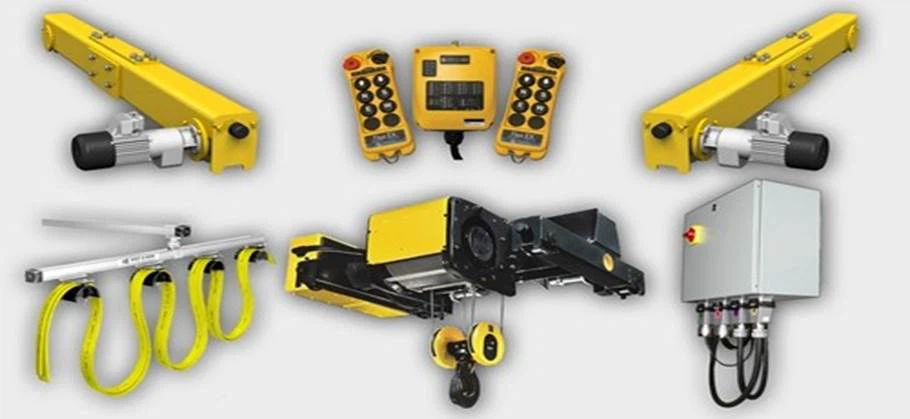
Pictures & Components
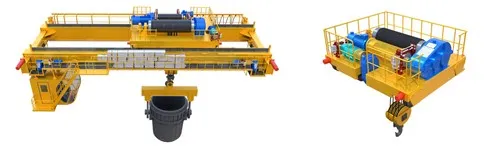
A double girder magnetic overhead crane is designed for lifting and transporting ferrous materials using an electromagnetic lifter. Here are its key components:
1. Bridge Structure
Double Girders: Two main horizontal beams that span the crane runway, providing high load capacity and stability.
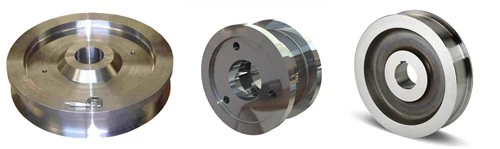
End Trucks (End Carriages): Located at each end of the girders, equipped with wheels for movement along the runway rails.
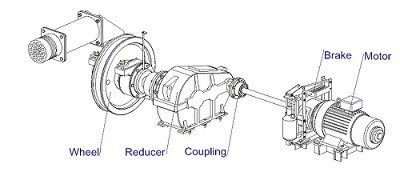
Drive Mechanism: Includes motors, gearboxes, and brakes for longitudinal travel along the runway.

2. Hoisting Mechanism
Hoist Motor: Powers the lifting and lowering of the load.
Wire Rope or Chain: Connects the hoist to the lifting attachment.
Drum or Sheave: Guides the rope/chain for smooth operation.
Brake System: Ensures safe load holding.
3. Trolley & Traverse Mechanism
Trolley Frame: Moves along the bridge girders (cross travel).
Trolley Drive: Includes motor, gearbox, and wheels for lateral movement.
Magnetic Lifter (Electromagnet): Attaches to the trolley for lifting ferrous materials.
Cable Reel (Optional): Manages power supply to the electromagnet.
4. Electromagnetic System
Lifting Magnet (Electromagnet): Generates a magnetic field to pick up steel/iron loads.
Power Supply & Control Unit: Provides electricity to the magnet and regulates its operation.
Demagnetization Control: Ensures safe release of the load.
5. Electrical & Control System
Control Panel/Pendant/Radio Remote: Operator interface for crane movement.
Festoon System/Cable Reel: Manages power and signal cables.
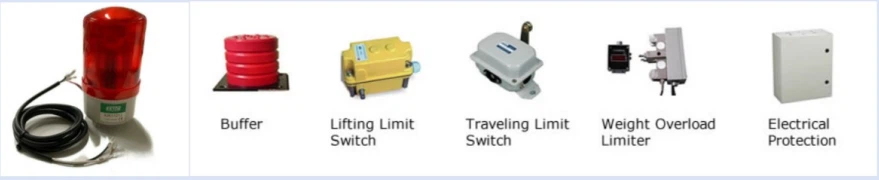
Limit Switches: Prevent over-travel of the crane, trolley, and hoist.
Variable Frequency Drives (VFDs): Enable smooth acceleration/deceleration.

6. Safety Components
Overload Protection: Prevents lifting beyond capacity.
Emergency Stop (E-Stop): Instantly halts crane operation.
Anti-Collision System (for multiple cranes).
Warning Devices (Alarms, Lights).
7. Runway System
Runway Beams: Support the crane's movement.
Rail Tracks: Guide the crane's wheels.
Buffers/End Stops: Prevent crane over-travel.

8. Additional Features (Optional)
Weighing System: Measures load weight.
Automation & Remote Monitoring.
Explosion-Proof Design (for hazardous areas).
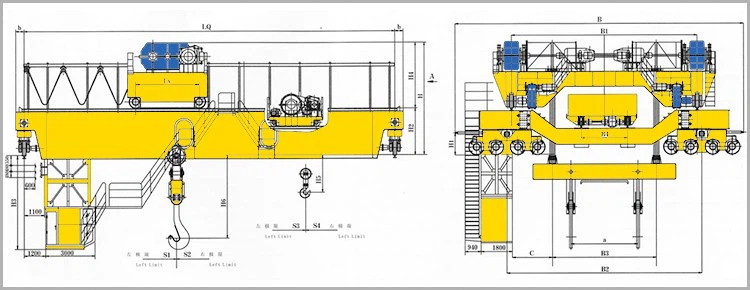
SKETCH
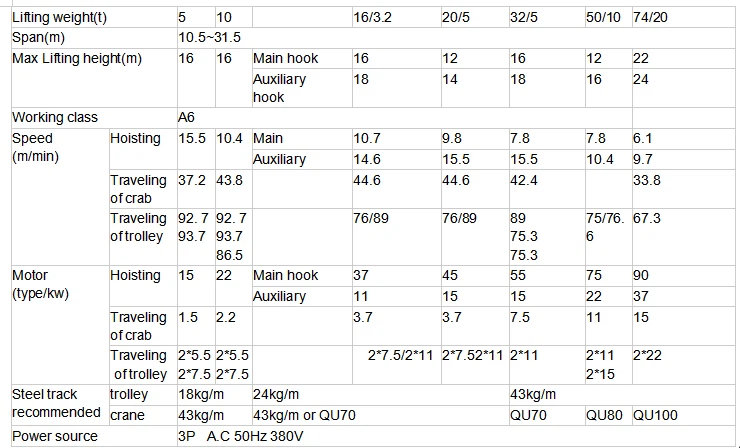
Main Technical Data
Advantages
Advantages of Double Girder Magnetic Overhead Crane
High Lifting Capacity
Double girders provide superior strength, allowing heavier loads (typically 5–550 tons) compared to single-girder cranes.
Efficient Ferrous Material Handling
The electromagnetic lifter quickly picks up and releases steel plates, scrap, coils, and other magnetic materials without needing slings or hooks.
Precise & Smooth Operation
Equipped with Variable Frequency Drives (VFDs) for controlled acceleration/deceleration, reducing load swing and improving positioning accuracy.
Durability & Long Service Life
Robust construction with high-grade steel and reinforced components ensures reliability in harsh environments (e.g., foundries, steel plants).
Space-Saving Design
The trolley and hoist operate between the girders, maximizing hook height and workspace efficiency.
Automation & Remote Control
Can be integrated with automated systems (PLC controls, remote operation) for repetitive tasks in smart factories.
Safety Features
Overload protection, emergency brakes, anti-collision systems, and fail-safe demagnetization ensure safe operations.
Reduced Manual Labor
Eliminates the need for manual rigging, speeding up material handling and reducing worker fatigue.
Application
Applications of Double Girder Magnetic Overhead Crane
Steel & Metal Industry
Handling steel plates, coils, bars, pipes, and scrap in rolling mills, forging plants, and steel warehouses.
Scrap Yards & Recycling Centers
Efficiently lifts and transports ferrous scrap for sorting, loading, and processing.
Foundries & Casting Shops
Moves molten metal containers, castings, and molds safely with precise control.
Shipbuilding & Heavy Fabrication
Lifts large steel sections, ship hulls, and structural beams with stability.
Automotive & Machinery Manufacturing
Transfers metal sheets, stamped parts, and heavy machinery components.
Railway & Construction
Handles rails, girders, and construction steel in fabrication yards.
Ports & Logistics
Loads/unloads steel cargo, containers, and bulk metal shipments.
Power Plants & Heavy Industries
Moves transformers, generators, and large metal structures.
Crane Production Procedure
1. Design & Engineering
Requirements Analysis: Determine load capacity, span, lifting height, and operating environment.
CAD Modeling: Create 3D designs and structural calculations (stress analysis, deflection, etc.).
Material Selection: Choose suitable casting materials (typically cast steel or ductile iron) for key components like girders, end carriages, and hooks.
Regulatory Compliance: Ensure designs meet standards (ISO, DIN, FEM, or ASME).
2. Pattern Making & Mold Preparation
Pattern Creation: Wood or metal patterns are made for casting molds.
Sand Mold Preparation:
Use resin-bonded sand or green sand for mold cavities.
Cores (for hollow sections) are prepared separately.
3. Casting Process
Melting & Pouring:
Metal (e.g., carbon steel, alloy steel) is melted in a furnace.
Molten metal is poured into molds under controlled conditions.
Cooling & Solidification: Allow the casting to cool slowly to avoid defects.
Shakeout & Cleaning: Remove sand molds, and clean castings (shot blasting, grinding).
4. Machining & Finishing
Rough Machining: Remove excess material (gates, risers).
Precision Machining: CNC machining for critical dimensions (bearing seats, bolt holes).
Surface Treatment: Painting, galvanizing, or anti-corrosion coatings.
5. Fabrication of Bridge Girder & End Carriages
Welding/Assembly:
Fabricate box girders or I-beams (if hybrid design).
Weld/bolt end carriages (with wheels for movement).
Stress Relief Heat Treatment (if needed) to reduce residual stresses.
6. Assembly of Crane Components
Hoist & Trolley Installation: Mount electric hoist or wire rope system.
Rail & Runway Setup: Install crane rails on supporting structure.
Electrical System Integration: Wire motors, controls, limit switches, and safety devices.
7. Testing & Quality Control
Dimensional Inspection: Verify tolerances per design specs.
Non-Destructive Testing (NDT):
Ultrasonic, magnetic particle, or dye penetrant testing for cracks.
Load Testing:
Static Load Test: 125% of rated capacity.
Dynamic Load Test: 110% of rated capacity with movements.
Functional Test: Check braking, lifting, and travel operations.
8. Painting & Corrosion Protection
Apply primer and corrosion-resistant paint.
Markings (capacity, serial number, warnings) as per standards.
9. Packaging & Delivery
Disassemble (if needed) for shipping.
Protect critical components during transit.
10. Installation & Commissioning (On-Site)
Reassemble on the customer's runway.
Final alignment and calibration.
Operator training and handover.

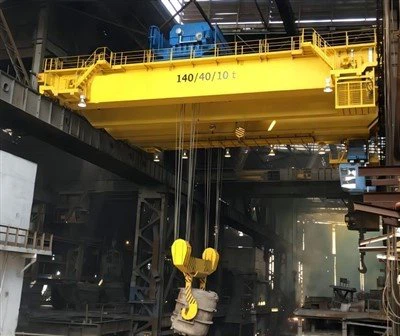
Workshop View
The company has installed an intelligent equipment management platform, and has installed 310 sets (sets) of handling and welding robots. After the completion of the plan, there will be more than 500 sets (sets), and the equipment networking rate will reach 95%. 32 welding lines have been put into use, 50 are planned to be installed, and the automation rate of the entire product line has reached 85%.


Hot Tags: double girder magnetic overhead crane, China double girder magnetic overhead crane manufacturers, suppliers, factory, Metallurgical Crane, Metallurgical Overhead Crane, Casting Overhead Ladle Crane
Previous
Two Speed Overhead CraneYou Might Also Like


Send Inquiry