










Single Girder Eot Cranes
Products Description
Single girder EOT cranes are efficient and reliable material handling solutions designed for a wide range of industrial applications. These cranes are ideal for operations that require lifting and moving heavy loads with precision, speed, and safety.
The single girder of Single girder EOT cranes configuration ensures a lightweight and space-saving structure, making it suitable for facilities with limited headroom. Single girder EOT cranes are capable of handling loads ranging from 1 ton to 20 tons, depending on customization.It is ideal for manufacturing plants, warehouses, workshops, and maintenance facilities.Single girder EOT cranes are equipped with advanced hoisting mechanisms, ensuring smooth and efficient lifting.
Single girder EOT cranes are constructed using high-quality steel and robust components for long-term performance.Our single girder EOT cranes comply with international standards (such as ISO, FEM, and DIN) to ensure safety, reliability, and performance. With advanced engineering and custom solutions, we cater to diverse industry needs.
Core Components:Engine, Bearing, Gearbox, Motor, Gear
Place of Origin:Henan, China
Warranty:1 Year
Weight (KG):3000 kg
Video outgoing-inspection:Provided
Machinery Test Report:Provided
Type:Single Girder Eot Crane
Girder Type:Singer Girder
Color:Customized Color Acceptable
Material:Q235B
MOQ:1 Set
Usage:Lifting Cargo
Speed:0.5-8m/min

Pictures & Components
1.Main beam
1) The main beam of a single girder EOT (Electric Overhead Traveling) crane is a critical component of the crane structure that supports the entire load-bearing system. It is typically designed to carry the load of the hoist and the trolley and withstand the stresses encountered during operation.
2) The main beam is usually made of I-beams, box girders, or trussed beams.It spans the length of the crane and connects the two end trucks (or rails).The beam design must accommodate the lifting capacity, span length, and operating conditions of the crane.
3) The main beam carries the load from the hoist unit, which includes the hook, trolley, and lifted materials.It also supports the crane's trolley, which moves along the beam, as the hoist mechanism raises or lowers the load.The main beam should be designed to minimize deflection under load to ensure smooth operation and safety.The beam must be designed to support the maximum load the crane will lift.The length between the two end trucks, which affects the design and strength of the beam.

Lifting System
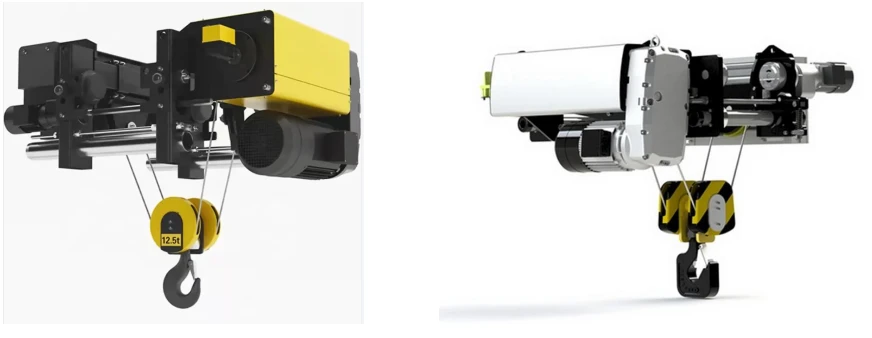
A single girder EOT (Electric Overhead Traveling) crane lifting system is designed for material handling in various industrial applications, especially in factories, warehouses, and shipping yards.
Single Girder:
The crane has a single girder structure (a single horizontal beam) that spans the width of the workspace.
The girder is supported by end trucks on both sides, which move along the rail tracks at the top of the building or facility.
Hoist:
The hoist is the lifting mechanism of the crane and typically includes:
Electric motor for power.
Wire ropes or chains for lifting the load.
Drum or chain wheels to wind the lifting medium.
Hook or other lifting attachments to carry the load.
Hoists are mounted either directly on the girder or on a trolley system that runs along the girder to position the load.
Trolley:
The trolley moves along the girder, carrying the hoist. It is driven by an electric motor, which allows for horizontal movement along the span of the crane.
The trolley ensures precise positioning of the hoist over the work area.
End Trucks:
The end trucks are mounted at both ends of the girder, allowing the entire crane structure to move along the runway rails fixed to the building's walls or columns.
The end trucks contain the wheels and the motors that power the crane's horizontal travel.
Control System:
The crane typically has a control system that can be operated by a wired pendant, wireless remote control, or a control cabin. The system allows operators to control:
Vertical movement (lifting and lowering) of the hoist.
Horizontal movement (traverse along the girder and along the runway).
The control system can be manual or automated depending on the application and needs.
Power Supply:
Electric overhead traveling cranes typically operate using electric power supplied via conductor rails, cable reels, or slip rings that transmit power to the crane as it moves along its path.
The lifting capacity and other power needs vary depending on the size and type of crane.
Safety Features:
Overload limiters, emergency stop buttons, anti-sway systems, and other safety mechanisms are often integrated into the crane to ensure the safe operation of the lifting system.
3.End carriage
The end carriage of a single girder EOT (Electric Overhead Traveling) crane refers to the structure at either end of the crane's bridge that supports the wheels and allows the crane to travel along its track. It is a critical part of the crane's overall design, ensuring stability and smooth movement during operation.
The end carriage frame is generally made of high-strength steel to ensure it can withstand the stresses and loads during crane operation.It connects the wheels to the crane bridge, providing structural support.
Typically, the end carriage has two sets of wheels, one at each end. These wheels run on rails or tracks, allowing the crane to move horizontally.The wheels are usually made of forged steel or cast iron and are designed to handle heavy loads.
In some cases, one of the end carriages may have a motorized drive system (with a gear motor), which provides the power for the crane's horizontal movement.The drive system often includes a coupling, brake, and gearbox.
The end carriages help distribute the load evenly across the crane, ensuring balanced operation.It supports the weight of the crane bridge and the load being carried, ensuring that the crane moves safely and smoothly across the runway.It facilitates the horizontal movement of the crane by allowing it to travel along the overhead rails.

4.Crane travelling mechanism
1) Operation principle
The crane traveling mechanism of a single girder EOT (Electric Overhead Traveling) crane is responsible for the horizontal movement of the entire crane along the runway beams. The operation principle involves several key components that work together to provide smooth, controlled motion.
The crane traveling mechanism of a single girder EOT crane is a crucial component that enables horizontal movement along the runway. It involves a coordinated system of motors, gears, wheels, and control systems to ensure precise and safe movement of the crane in the desired direction, while carrying and positioning the load efficiently.
2) Functional characteristics
Movement of the Crane Along the Bridge:The travelling mechanism is responsible for the horizontal movement of the crane on the runway beams or rails. It moves the crane's bridge in a longitudinal direction (from one end of the workshop or area to the other), which is essential for covering the entire area of the workspace.
Drive System:Typically, the crane is powered by electric motors connected to the wheels, which are mounted on the ends of the crane girder. The motors drive the wheels that rotate and move the crane along the track. The drive is often through a reduction gear system to control the speed and torque.
Speed Control:The travelling mechanism allows for the adjustment of crane movement speed. The crane can operate at different speeds depending on the load and operational requirements. This can be achieved through variable frequency drives (VFDs), which allow for smooth and precise control of speed and direction.
Braking Mechanism:A reliable braking system is essential for the travelling mechanism. Brakes are used to stop the crane safely when it reaches the desired position or in case of emergency. Braking is typically achieved using disc or drum brakes, with an automatic fail-safe mechanism for additional safety.
Track and Wheel Alignment:Proper alignment and maintenance of the runway rails and crane wheels are crucial for smooth movement. Misalignment can cause excessive wear, increased power consumption, and unsafe operation. The crane travelling mechanism depends on precise rail guidance to maintain stability during operation.
Load Distribution:The travelling mechanism must ensure uniform load distribution between the wheels to avoid overloading any specific wheel or motor. This helps in maintaining the structural integrity of the crane and ensuring balanced movement.
5.Trolley travelling mechanism
The trolley travelling mechanism of a single girder Electric Overhead Traveling (EOT) crane is an essential component that allows the crane's hoisting trolley to move along the length of the crane's girder.
Trolley Frame
Purpose: The trolley frame is the structure that supports the hoist and is mounted on the crane girder. It is usually designed with wheels that run along the crane's beam or track.
Materials: Typically made of steel to handle heavy loads and provide structural integrity.
Travelling Wheels
Purpose: The trolley travels along the crane girder by rolling on the rails mounted on the top of the girder. These wheels are equipped with bearings and are generally made of high-strength steel to endure wear and tear.
Design: The wheels are designed to handle both radial and axial loads while ensuring smooth motion of the trolley.
Motors
Drive Motor: The trolley is driven by an electric motor, usually with a geared reduction system to provide the required torque for moving the trolley. The motor is mounted on the trolley frame and transmits motion to the wheels through a shaft and gears.
Speed Control: The speed of the trolley is controlled using a variable frequency drive (VFD) or a similar system, allowing for smooth acceleration and deceleration.
Gearbox
Purpose: The gearbox converts the high-speed output of the electric motor into the required torque to move the trolley. It often has a reduction ratio to ensure the trolley moves at the correct speed, which is usually slow and controlled for precision handling.
Rail/Track System
Purpose: The crane girder typically has a track (rail) on which the trolley's wheels move. This track is precisely aligned to minimize any misalignment or uneven wear, ensuring smooth operation.
Design: Rails are usually installed on the top flange of the girder for the wheels to travel on.
End Carriages
Purpose: The trolley frame is supported by end carriages, which are mounted at each end of the girder. The end carriages house the wheels and the drive mechanism, and they allow the trolley to move along the girder.
Design: End carriages are designed to handle the weight of the trolley and the load being lifted.
6.Crane wheel
The crane wheel is an essential component of a single girder EOT (Electric Overhead Traveling) crane. It plays a key role in supporting and facilitating the movement of the crane along the runway.
Purpose of Crane Wheels:
Support and Mobility: Crane wheels support the entire weight of the crane, the hoist, and the load being lifted. They allow the crane to move along the runway beams (rails).
Movement on Rails: The wheels are mounted on the end carriages, which are connected to the girder. The crane moves horizontally along the rails with the help of these wheels.
Types of Crane Wheels:
Tread Profile: The profile of the wheel tread is designed to match the shape of the rail track, ensuring smooth movement and reducing wear. Common profiles include flat, tapered, or conical treads.
Material: Crane wheels are usually made of high-strength steel or alloy, often with heat-treated surfaces to resist wear and increase longevity.
Wheel Size: The size and number of wheels depend on the crane's load capacity, the width of the runway, and the operational requirements.

Crane Hook
The crane hook is a critical component of single girder EOT (Electric Overhead Traveling) cranes, responsible for lifting and holding the load securely during crane operations.
Key Features of Crane Hooks for Single Girder EOT Cranes:
Design:Typically, single girder EOT cranes use single-hook designs, suitable for moderate lifting capacities.Hooks are often forged from high-strength steel to ensure durability and reliability.
Capacity:Single girder EOT cranes are usually designed for lighter to medium loads, with crane hook capacities ranging from 1 ton to 20 tons.
Safety Features:
Equipped with safety latches to prevent accidental slipping of the load.
Adheres to international safety standards like DIN, BS, or ISO for operational safety.
Material:
Manufactured using alloy steel or carbon steel for high load-bearing capacity and resistance to wear and tear.
Heat-treated for enhanced strength and resilience.

Motor
The motor of a single girder EOT (Electric Overhead Traveling) crane is a key component in providing the mechanical power to move the crane's load. These cranes are typically used for lifting and transporting heavy materials in industries like manufacturing, warehouses, and construction sites.
Motor Type:
Squirrel-cage Induction Motor: Commonly used due to its reliability, low cost, and low maintenance requirements.
Slip Ring Induction Motor: Used when higher starting torque is needed.
Power Supply:
The motor typically operates on three-phase AC power. The voltage is typically 380-415V, 50Hz or 60Hz, depending on the region.
Control System:
VFD (Variable Frequency Drive): Allows for smooth starting and stopping, speed control, and energy efficiency.
DOL (Direct Online) or Star-Delta: Starting methods for smaller cranes, depending on the motor rating.
Load Capacities:
The motor's capacity depends on the crane's lifting capacity and operational speed. For instance, motors for single girder EOT cranes usually range from 1 to 30 kW.

.
Sound and light alarm system & limit switch
1) Sound and light alarm system
A sound and light alarm system on a single girder EOT (Electric Overhead Traveling) crane is an important safety feature used to alert personnel in the vicinity of the crane's operation. It provides auditory and visual warnings to ensure the safety of operators and workers nearby, especially in environments with high noise levels or where visibility might be compromised.
Sound Alarm (Horn/Buzzer):
Typically, a horn or buzzer is used to produce a loud, attention-grabbing sound. It can be triggered at different stages of the crane's operation, such as:
Before the crane starts moving.
When the crane is approaching a potentially dangerous area.
When it is in motion, particularly when lifting or lowering heavy loads.
If there is a malfunction or failure.
The sound alarm helps warn workers in the vicinity to stay clear of the crane's path.
Light Alarm (Flashing Light or Strobe Light):
A flashing light or strobe light is typically mounted on the crane's structure. This light produces a bright, flashing visual signal that can be seen from a distance.
It may operate in conjunction with the sound alarm or independently, depending on the application and environment.
Common colors include red for warning or danger, and yellow or amber for caution.
2) Limit switch
The limit switch on a single girder EOT (Electric Overhead Traveling) crane plays a crucial role in ensuring safety and proper functioning of the crane. It is a safety device that helps prevent the crane from traveling beyond its designated limits.
End-of-Travel Protection: Limit switches are used to prevent the crane or trolley from moving past the end of its travel range, avoiding mechanical damage or dangerous overrun.
Safety Mechanism: If the crane's trolley or hoist reaches the end of its track, the limit switch automatically sends a signal to stop the motor, preventing further motion in that direction. This helps in preventing accidents and reducing wear and tear on the crane's components.
Control for Hoist Mechanism: The limit switch ensures that the hoist doesn't raise or lower the hook beyond the safety limits, avoiding cable damage or crane overloading.
Preventing Overloading: Some limit switches also help in preventing the crane from exceeding its load capacity, thereby ensuring safe operation.

10.Safety Devices
1. Overload Limiters
Function: Prevent the crane from lifting loads that exceed its rated capacity, helping to avoid damage to the crane and reducing the risk of accidents.
Operation: If the load exceeds the set limit, the overload limiter will automatically stop the lifting mechanism.
2. Limit Switches
Function: Control the movement of the crane's trolley, hoist, and hook to ensure they do not exceed their safe operating limits.
Operation: Limit switches stop or reverse the motion of the crane at predefined points, preventing the hook from hitting the end stops and causing mechanical damage.
3. Emergency Stop Button
Function: Allows the operator to immediately stop the crane in case of an emergency.
Operation: This button cuts off power to all crane movements and is usually installed in a prominent location on the operator's panel.
4. Anti-Collision Devices
Function: Prevent cranes from colliding with other cranes or obstacles in their path.
Operation: Sensors detect potential collisions and stop or slow the crane to avoid impact.
5. Horn and Signal Lights
Function: Alert nearby personnel of crane movements, particularly when the crane is moving in restricted or busy areas.
Operation: A horn or flashing lights are activated to signal the crane's movements.
6. Motion Limiters
Function: Prevent the hoist and trolley from moving beyond safe limits, ensuring they do not travel beyond their designed range.
Operation: Sensors or mechanical stops will limit the travel of the hoist or trolley, preventing over-travel.
7. Fall Arrest Systems
Function: Protect crane operators and maintenance personnel from falling while working at heights.
Operation: Fall arrest systems may include safety harnesses, lanyards, and other protective gear that secure personnel to stable structures on the crane.
8. Braking Systems
Function: Stop the crane from moving unintentionally and safely bring it to a halt in case of power failure or emergency.
Operation: The brakes are usually activated automatically if the crane detects power loss or if the operator releases control.
9. Load Indicator Systems
Function: Provide real-time feedback to the operator about the load weight being lifted.
Operation: These systems include load cells and indicators that show the current load, helping operators avoid overloading the crane.
10. Hook Safety Latches
Function: Prevent the load from accidentally falling off the hook.
Operation: The safety latch secures the load on the hook during lifting operations and prevents unintentional release.
11. Power Failure Protection
Function: Prevents the crane from sudden or uncontrolled movement in case of power loss.
Operation: The system may include a backup power supply or a braking system to hold the load safely in place during power interruptions.
11.Control Mode
1. Pendant Control:
Description: The operator controls the crane via a pendant control station connected by a cable to the crane. The pendant has buttons or switches for movement and load handling.
Pros: Simple, inexpensive, and easy to operate.
Cons: Operator is limited by the length of the cable, and there's no flexibility for controlling the crane from different locations.
2. Radio Remote Control:
Description: This mode uses a wireless handheld device, allowing the operator to control the crane remotely, often from anywhere within the crane's operational range.
Pros: Provides more flexibility than pendant control, allowing the operator to work in different locations. It's safer for the operator, as they can stay clear of the load path.
Cons: Higher initial cost, and potential for signal interference or loss of connection.
3. Cabin Control (Operator Cabin):
Description: The crane has an operator's cabin mounted on the crane structure, where the operator can sit or stand while controlling the crane. This is common for larger cranes or those used in heavy industrial applications.
Pros: Comfortable for the operator, with full control over the crane's movements and load handling.
Cons: Requires more space and might be more costly to install. The operator is limited to the cabin's view and needs additional safety measures like cameras or mirrors.
4. Automatic Control (Pre-programmed or Automated Control):
Description: In more advanced configurations, the crane can be programmed to follow specific paths, lift and transport loads automatically based on predefined instructions.
Pros: Reduces human error and increases efficiency in repetitive tasks. It's often used in automated warehouses and material handling systems.
Cons: Expensive and requires advanced software and sensor systems.
5. Joystick Control:
Description: A joystick system can be used either with a pendant or as part of a cabin control setup. The operator controls the crane's movements using a joystick that translates hand movements into crane actions.
Pros: Provides a smooth and intuitive control mechanism, reducing fatigue and improving accuracy.
Cons: Can be costly if added to an existing system, and some operators may need training to use it efficiently.
6. Hybrid Control (Combination of Modes):
Description: This mode allows the crane to be controlled using a combination of the above methods. For example, it can be operated by pendant control in some situations, while remote control or cabin control is used in others.
Pros: Offers flexibility and allows for different operational modes depending on the task.
Cons: May require more complex control systems and operator training.

12.Sketch

Main technical

Advantages
Cost-Effective:Lower initial cost: Single girder cranes are generally less expensive than double girder cranes due to their simpler design and fewer materials.
Reduced maintenance costs: With fewer components, maintenance is typically less complex and cheaper.
Compact Design:The design of single girder cranes allows for a more compact system, which is beneficial when working in smaller spaces or when headroom is limited.
Lightweight:Single girder cranes have a lighter frame compared to double girder cranes, which can help in reducing the load on the building structure, requiring less reinforcement and offering savings in construction costs.
Energy Efficiency:Because of the lighter construction and simpler design, single girder cranes often require less power to operate, improving overall energy efficiency.
Easy Installation:Single girder cranes are easier and faster to install, which helps in reducing downtime and installation costs for new systems.
Suitable for Lighter Loads:These cranes are ideal for handling light to medium loads, typically up to 20-25 tons. For heavier loads, double girder cranes may be more appropriate, but for lighter tasks, single girder cranes are often more than sufficient.
Versatile and Customizable:Single girder cranes can be customized to meet specific requirements in terms of span, lifting height, and load capacity. They can also be equipped with various accessories, such as hoists, trolleys, and controls, for greater flexibility.
Reduced Headroom Requirement:Single girder cranes require less headroom compared to double girder cranes, making them ideal for installations in areas with limited vertical space.
Better for Low to Medium Speed Applications:Single girder cranes are well-suited for slower, less frequent movements, which makes them ideal for many warehouse, workshop, or light manufacturing applications.
Simpler Operation:Due to their less complex structure, single girder cranes are easier to operate and control, making them a popular choice for users with minimal crane operation experience.
Application
1. Warehouse and Storage Facilities
Material Handling: Single girder EOT cranes are ideal for moving heavy or bulky materials within a warehouse, such as pallets, boxes, or raw materials.
Loading and Unloading: They are used for loading and unloading goods from trucks or shipping containers in warehouses and storage yards.
2. Manufacturing and Assembly Lines
Production Line Assistance: These cranes are used to transport parts or products along assembly lines in manufacturing plants.
Heavy Equipment Handling: In industries like automotive or metalworking, these cranes help move large components such as engines, frames, and chassis.
3. Construction and Engineering
Site Preparation: Single girder EOT cranes can move construction materials such as steel beams, concrete blocks, and other heavy materials around a construction site.
Pre-fabricated Materials: They can be used to position pre-fabricated building components for assembly.
4. Steel Industry
Handling Steel Coils and Plates: In steel plants, these cranes are used for lifting and moving heavy steel coils, plates, and rods during production and processing stages.
Casting Operations: Single girder EOT cranes are used in foundries for handling molten metal, molds, and finished products.
5. Power Plants
Maintenance of Equipment: Single girder cranes are used to lift and move power plant equipment, such as turbines, generators, and transformers, during installation and maintenance operations.
Fuel Handling: These cranes are also used to transport fuel or other bulk materials within the plant.
6. Shipyards
Dockside Handling: In shipyards, these cranes are used to transport heavy components for shipbuilding, such as propellers, hull sections, and other large pieces.
Maintenance and Repair: They can assist in lifting ship components for repair or replacement.
7. Mining and Quarrying
Material Transport: Single girder EOT cranes are used to transport extracted minerals, ores, and rocks within the mining site or to stockpiles.
Load and Unload Mining Equipment: They assist in unloading heavy mining machinery or moving equipment for maintenance.
8. Agriculture and Food Processing
Handling Grain or Raw Materials: These cranes can be used in silos and warehouses to lift bags or containers of grains, seeds, or other agricultural products.
Processing Plants: In food processing plants, they move raw ingredients or finished products along various stages of production.
9. Material Handling in Chemical Plants
Transport of Chemicals: Single girder cranes are used in chemical plants to handle containers or drums filled with chemicals, facilitating safe movement across the facility.
Handling Hazardous Materials: These cranes are designed to handle hazardous or sensitive materials with appropriate safety features.
10. Public Infrastructure
Maintenance in Metro or Railway Depots: Single girder EOT cranes are used in railway depots or metro maintenance facilities for handling train components, such as wheels, axles, and other parts.
Bridge Maintenance: They are also used for maintaining and repairing bridge infrastructure, especially in transportation hubs or overpasses.
Crane production procedure
1. Design & Engineering
Requirement Analysis: Collect specifications from the customer, including load capacity, span, lift height, working duty cycle, and operating environment.
Design Process: Use CAD software to design the single girder EOT crane, considering safety standards like ISO, FEM, or CMAA.
Structural Calculations: Perform load analysis and calculate stress points, deflection limits, and structural integrity.
2. Material Procurement
Structural Components: Procure steel sections (e.g., I-beams, box girders) for the girder, end carriages, and supporting structure.
Mechanical Parts: Source hoists, trolleys, gears, bearings, and couplings.
Electrical Components: Acquire motors, control panels, limit switches, cables, and wireless controls if needed.
Fasteners & Accessories: Stock bolts, nuts, and welding materials.
3. Fabrication
Girder Construction:
Cut steel sections to size and prepare the surfaces.
Weld and assemble the girder as per the design, ensuring proper alignment and penetration.
Conduct non-destructive testing (NDT) for welds, like ultrasonic or magnetic particle testing, to ensure quality.
End Carriage Assembly:
Fabricate or source pre-manufactured end carriages and attach wheels, bearings, and motor mounts.
Machining:
Machine all mating surfaces (e.g., for rail tracks, wheel mounts) for precision.
Component Assembly:
Attach the hoist and trolley to the girder.
4. Electrical System Installation
Wiring: Install motors, limit switches, and cables as per the control diagram.
Control Panel Assembly: Wire and configure the control system, ensuring compatibility with the crane's specifications.
Testing: Verify the electrical connections for safety and performance.
5. Surface Treatment
Cleaning: Sandblast or clean the crane components to remove rust, scale, or grease.
Painting: Apply anti-corrosion primer and topcoat (often yellow or orange) suitable for the working environment.
6. Quality Assurance & Testing
Load Testing: Test the crane under 125% of the rated load to ensure safety and performance.
Deflection Testing: Measure deflection under full load to ensure it meets design specifications.
Operational Testing: Check all movements (hoist, trolley, and bridge) for smoothness, speed, and control.
Safety Checks: Inspect limit switches, emergency stop systems, and braking mechanisms.
7. Packing & Delivery
Disassembly: If necessary, disassemble the crane into sections for easier transport.
Packaging: Use wooden crates, protective wrapping, or steel frames to prevent damage during shipping.
Documentation: Provide detailed assembly and maintenance manuals, test certificates, and warranty documents.
8. Installation & Commissioning
On-Site Assembly: Install the crane at the customer's facility, assembling and securing all components.
Alignment & Calibration: Ensure proper alignment of the girder, end carriages, and rail tracks.
Final Testing: Perform a full operational test at the site to confirm functionality and compliance.
9. After-Sales Support
Provide training for operators on crane usage and safety.
Offer a maintenance schedule and spare parts supply.

Workshop view:
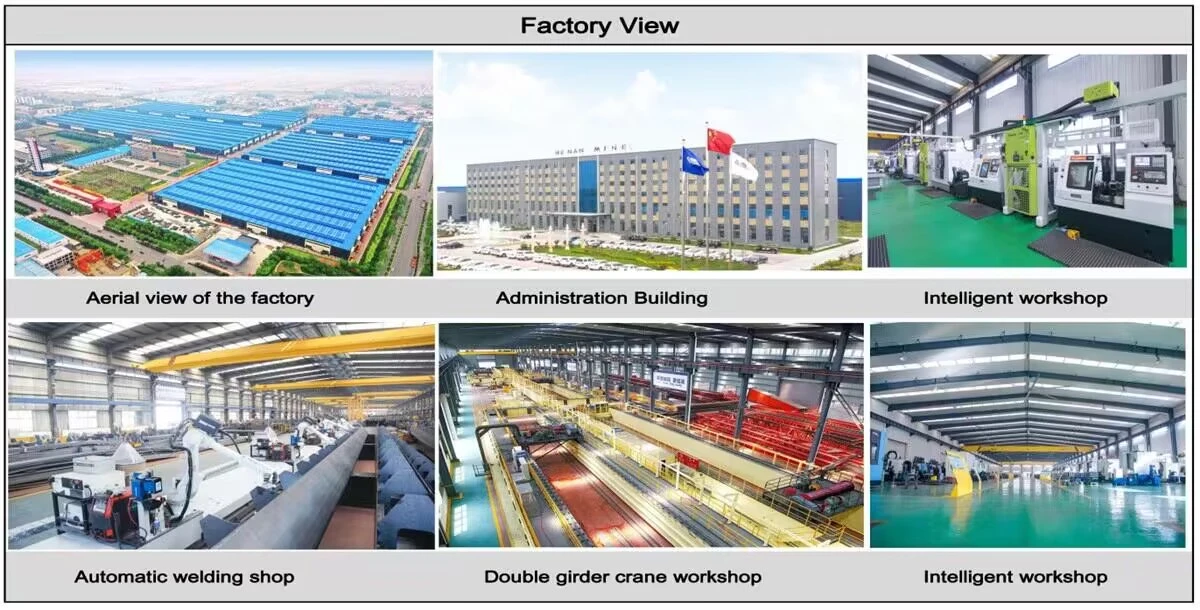
The company has installed an intelligent equipment management platform, and has installed 310 sets (sets) of handling and welding robots. After the completion of the plan, there will be more than 500 sets (sets), and the equipment networking rate will reach 95%. 32 welding lines have been put into use, 50 are planned to be installed, and the automation rate of the entire product line has reached 85%.


Hot Tags: single girder eot cranes, China single girder eot cranes manufacturers, suppliers, factory, Eot Crane, Double Girder Overhead Cranes, Single Girder Overhead Crane Company
Previous
Underslung Eot CraneNext
Eot Crane GirderYou Might Also Like


Send Inquiry