










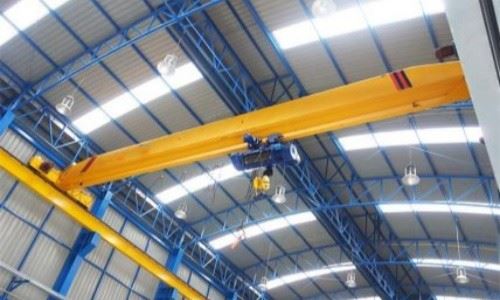
Free Standing Bridge Crane System
Products Description
1)A single girder bridge crane is a type of overhead crane widely used in various industries for material handling and lifting operations. It is designed for light to medium-duty applications and is characterized by a simple yet efficient structure.
2)Key Components
Bridge Girder
A single horizontal beam (girder) supported by end trucks, forming the main load-carrying structure.
Typically made of steel for high strength and durability.
Can be designed with a box girder or I-beam profile.
End Trucks
Located at both ends of the girder, they house wheels that run along the crane runway.
Hoist
A trolley-mounted hoist moves along the girder for precise lifting and positioning.
Options include electric wire rope hoists or chain hoists.
Runway System
Tracks or rails installed at a height to support the movement of the end trucks.
Control System
Manual controls, pendant control, or wireless remote controls for operation.
Some advanced models feature automated or semi-automated systems.
Core Components:PLC, Engine, Bearing, Gearbox, Motor, Gear
Place of Origin:Henan, China
Warranty:2 years
Weight (KG):500 kg
Video outgoing-inspection:Provided
Machinery Test Report:Provided
Material:Q235/Q345 Steel Plate
Crane feature:Easy Operated Bridge Crane
Capacity:1ton~20t
Power supply:110V/220V/230V/380V/440V
Control Method:Ground Control+Remote Control
MOQ:1 Set
Lifting mechanism:European Electric Hoist
Work Duty:A5

Pictures & Components
1.Main beam
Design and Structure
1)Material:
Typically constructed from high-quality steel to provide the necessary strength and rigidity to handle heavy loads.
2)Shape:
The main beam is commonly designed as either:
I-Beam (Rolled Steel Section): A lightweight and cost-effective option for light to moderate loads.
Box Girder: A rectangular, closed structure that offers enhanced strength for heavier applications.
3)Fabrication:
Advanced welding and machining processes ensure precision and durability.

Lifting System
Key Features of the Lifting System
1)Capacity Range: Typically designed to lift loads between 1 ton and 20 tons, with customization available for heavier applications.
2)Lifting Height: Standard ranges from 3 to 20 meters, adjustable based on specific needs.
3)Speed Options: Variable speeds, usually ranging from 0.8 to 8 meters per minute, for precise load handling.
4)Safety Features: Overload protection, anti-sway mechanisms, and emergency stop buttons enhance safety.
 |
 |
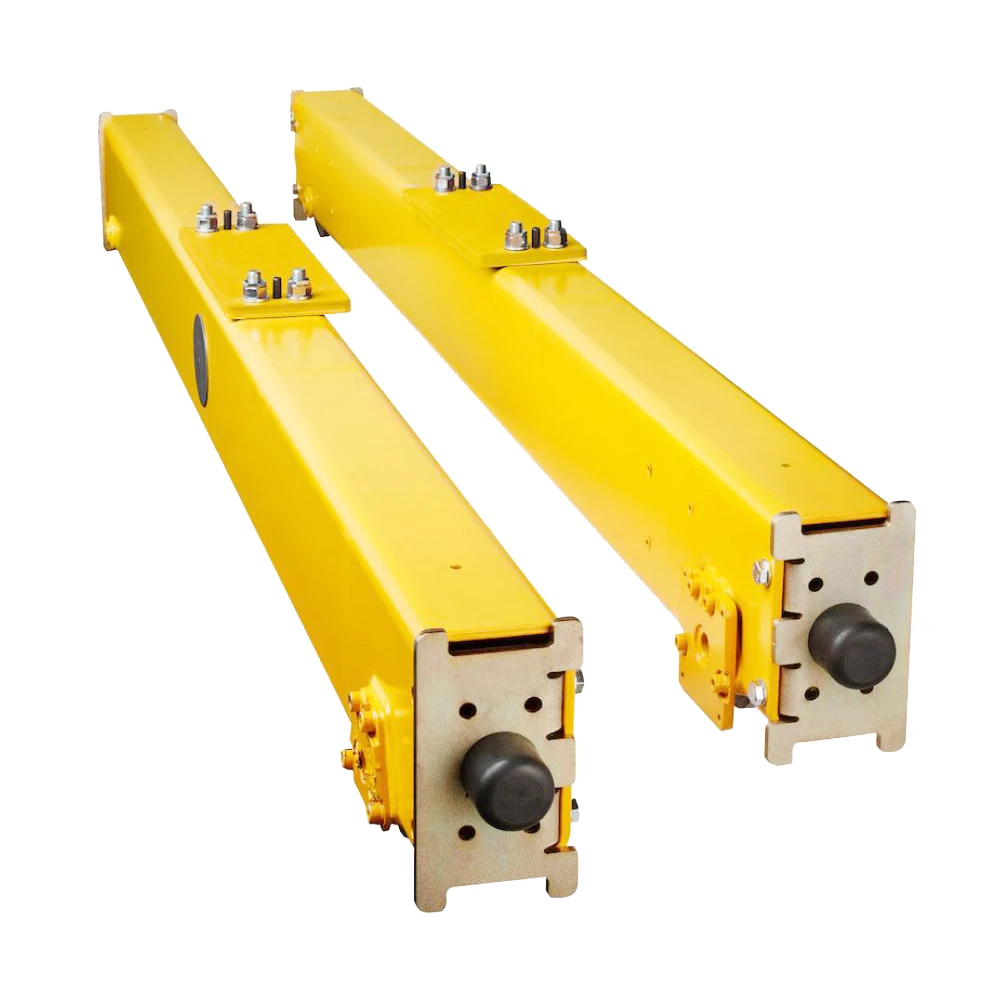
3.End carriage
1)Structure
Made of high-strength steel to support the crane's load while maintaining lightweight properties for easy maneuverability.
Designed as a box-type or open-frame structure for robustness and durability.
2)Wheels and Axles
Equipped with forged steel wheels for durability and precision movement.
Wheels are mounted on high-grade bearings for reduced friction and longer service life.
Options:
Flanged wheels: Prevent derailment by securely guiding the crane along the runway.
Anti-friction materials: Enhance smooth movement and reduce noise.
 |
 |
4.Crane travelling mechanism
1)Specifications
Travel Speed: Typically ranges from 20 to 40 meters per minute; can be customized for specific requirements.
Load Capacity: Matches the crane's overall capacity, ranging from 1 ton to 20 tons or more.
Span Length: Designed to operate across spans of 5 to 30 meters or greater, based on the application.
2)Features
Smooth Operation: Precision-engineered components ensure vibration-free and quiet travel.
Energy Efficiency: Modern motors and drives minimize energy consumption.
Adaptability: Can operate on straight or curved tracks, depending on the facility layout.
Reliability: Built for continuous use in demanding industrial environments.
5.Trolley travelling mechanism
1)Trolley Frame
Made from high-strength steel, the trolley frame supports the hoist and other components.
Designed to be lightweight yet robust to reduce stress on the crane's main girder.
2)Traveling Wheels
Material: Typically forged or cast steel for durability.
Design: Flanged wheels to maintain alignment on the girder's flange.
Mounted on precision bearings for smooth movement and minimal friction.
3)Travel Motor
Powers the trolley's movement along the main girder.
Equipped with a variable frequency drive (VFD) for smooth acceleration, deceleration, and speed control.
Provides consistent torque for steady travel even under load.
4)Gear Reducer
Connects the motor to the wheels, reducing motor speed and increasing torque.
Ensures smooth and precise motion.
6.Crane wheel
1)Material
Made of forged steel or cast steel to ensure durability, strength, and resistance to wear.
Heat-treated for enhanced toughness and surface hardness.
2)Design
Flanged Wheels: The flange on one or both sides prevents derailment and ensures proper alignment with the runway rails.
Flat Wheels: Sometimes used in specific applications with guiding mechanisms.
3)Mounting
Fixed to the end carriages of the crane.
Connected via high-precision bearings to reduce friction and allow smooth rotation.

7.Crane Hook
1)Design:
Typically, it is a C-shaped hook made of high-strength steel.
Equipped with a safety latch to prevent accidental load detachment.
2)Load Capacity:
The hook's size and material depend on the rated capacity of the single girder crane (e.g., 1 ton, 5 tons, etc.).
3)Rotation:
Some hooks are fixed, while others can rotate 360° for better positioning of the load.
4)Attachment:
Connected to the crane's hoist via a hook block or directly integrated into the wire rope system.

Motor
Key Functions:
1)Hoist Motor:
Powers the hoist mechanism to lift or lower the load.
Designed for precise control, smooth operation, and high torque for heavy loads.
2)Trolley Motor:
Moves the hoist along the girder for positioning the load.
Often equipped with speed control for smooth starts and stops.
3)Bridge Travel Motor:
Drives the entire crane along the runway beams.
Includes braking systems to ensure accurate positioning and safety.

.
Sound and light alarm system & limit switch
1)Sound and Light Alarm System:
The sound and light alarm system in a single girder bridge crane enhances safety by providing audible and visual alerts during crane operation. Here's how it works and its components:
Purpose:
Warning of Crane Movement:
Alerts workers in the vicinity about the movement of the crane, trolley, or hoist.
Load Safety:
Signals unsafe load conditions, such as overload or near-limit operation.
Emergency Situations:
Activates during malfunctions or emergency stops.
2)Limit Switch:
A limit switch in a single girder bridge crane is a critical safety device used to restrict the crane's motion and prevent over-travel or collisions.
Purpose:
Motion Limitation:
Stops the hoist, trolley, or bridge from moving beyond a predetermined safe range.
Load Safety:
Prevents the hoist from lifting beyond safe limits, protecting the load, crane, and workers.
Structural Protection:
Prevents the crane from damaging itself or other equipment by overextending.

10.Safety Devices
1. Limit Switches: Prevent over-travel of the hoist, trolley, or bridge.
2. Overload Protection Device: Protects the crane from lifting loads beyond its rated capacity.
3. Emergency Stop System: Enables immediate cessation of crane operations during emergencies.
4. Braking System: Ensures controlled stopping of the hoist, trolley, or bridge motion.
5. Anti-Collision Devices: Prevents collisions between cranes or with end stops on the runway.
6. Buffer and End Stops
Buffers:
Absorb the kinetic energy of the crane or trolley at the end of its travel path.
Made of rubber, hydraulic, or spring materials.
End Stops:
Fixed barriers at the ends of the runway or girder to physically stop the motion.
7. Sound and Light Alarm System: Alerts workers in the vicinity during crane operation.
8. Wire Rope and Hook Safety Devices
Wire Rope Safety:
Rope guides prevent improper spooling and twisting of the wire rope.
Rope end anchors ensure the wire rope does not slip out of its drum or fitting.
Hook Safety:
Equipped with a safety latch to prevent accidental load detachment.
Designed to rotate freely to reduce rope twisting during load lifting.
11.Control Mode
4. Semi-Automatic Control
Description: Combines manual and automated controls to perform repetitive tasks.Operators handle some movements, while others are automated (e.g., load positioning).
5. Fully Automatic Control
Description: The crane operates autonomously based on pre-programmed instructions.Uses sensors, cameras, and automation software for load handling.Requires minimal operator intervention.
Sketch

Main technical

Advantages
1. Cost-Effective Solution
Lower Initial Cost: Requires less material and simpler design compared to double girder cranes.
Reduced Maintenance: Fewer components lead to lower upkeep and repair expenses.
2. Lightweight Design
Less Structural Load: Its lightweight design places less stress on the building's runway or support structure, potentially reducing infrastructure costs.
3. Space Efficiency
Low Headroom Design: Requires minimal vertical space, making it ideal for facilities with height restrictions.
Compact Layout: Provides efficient use of space in smaller work areas.
4. Versatility
Wide Range of Capacities: Typically supports lifting capacities up to 20 tons, suitable for light to moderate lifting tasks.
Diverse Applications: Commonly used in industries like manufacturing, warehousing, automotive, and assembly lines.
5. Simple Operation
User-Friendly Control Modes: Compatible with various control methods such as pendant, remote, and semi-automatic systems.
Application
1. Manufacturing and Assembly
Material Handling: Used to move raw materials, parts, and finished products within manufacturing plants or assembly lines.
Assembly Operations: Helps in lifting components and sub-assemblies during the production of machinery, vehicles, or electronics.
2. Warehousing and Distribution
Product Loading/Unloading: Used in warehouses for loading or unloading goods onto trucks or conveyors.
Storage Systems: Assists in placing items on high shelves or racks, optimizing space in large storage areas.
3. Automotive Industry
Vehicle Assembly: Commonly used in car manufacturing plants to handle parts like car bodies, frames, engines, and other components during assembly.
4. Construction
Building Material Handling: Moves building materials like beams, concrete blocks, and steel structures during construction projects.
Pre-Cast Concrete Handling: Used for lifting and placing pre-cast concrete components such as walls, panels, and columns.
5. Steel Industry
Handling Steel Plates and Coils: Common in steel mills or fabrication shops to handle heavy steel plates, coils, and sections.
Cutting and Shaping: Helps move raw metal materials to processing stations like cutting, bending, or shaping machines.
6. Power Plants
Fuel Handling: Used for lifting and moving fuel sources, such as coal, to the combustion area.
7. Shipbuilding
Component Handling: Used to move heavy parts such as ship hull sections, engines, and other components within shipyards.
Crane production procedure
1. Design stage: Determine the parameters of the crane, such as rated load, span and lifting height, according to the customer's needs and working environment. Carry out detailed structural design, including main beam, end beam, crane, lifting mechanism, etc., to ensure that the design meets safety standards and usage requirements. Select appropriate materials according to the design, usually high-strength steel to ensure the stability and durability of the structure.
2. Manufacturing stage: Prepare the required raw materials and parts according to the design drawings. Cut, bend and shape the steel to prepare structural components such as main beams and end beams. Weld the various components and assemble them into an overall structure. This step requires guaranteed welding quality to ensure strength and stability.
3. Machining: Machining key components such as motors, gears, bearings, etc. to ensure that their size and accuracy meet the requirements. Anti-corrosion treatment of components, such as painting and galvanizing, increases the durability and aesthetics of the equipment.
4. Electrical system installation: Install electrical components such as motors, controllers, switches, sensors and alarm systems. Connect and wire cables to ensure the normal operation of the electrical system.
5. Assembly phase: Assemble all components and systems as a whole, connect the lifting mechanism, trolley running mechanism and control system. Perform a comprehensive inspection of the assembled crane to ensure that all components and systems are working properly, and perform preliminary debugging.
6. Testing phase: Perform static load test on the crane to check the structural strength and stability. Perform dynamic test on the crane, including tests on lifting, moving, braking and other functions, to ensure that its performance meets the design requirements. Check the functions of safety devices, such as limit switches, overload protection, etc., to ensure the safety of the equipment during operation.
7. Quality control: Perform quality control on each link in the production process to ensure compliance with industry standards and customer requirements. Record various data and inspection results in the production process for subsequent traceability and analysis.
8. Delivery and installation: Pack and prepare the completed crane for transportation to ensure that it is not damaged during transportation. Deliver the crane to the customer's site for installation, and perform on-site debugging and acceptance. Provide operation training to customers to ensure that they are proficient in the use and maintenance of the crane.

Workshop view:
The company has installed an intelligent equipment management platform, and has installed 310 sets (sets) of handling and welding robots. After the completion of the plan, there will be more than 500 sets (sets), and the equipment networking rate will reach 95%. 32 welding lines have been put into use, 50 are planned to be installed, and the automation rate of the entire product line has reached 85%.


Hot Tags: free standing bridge crane system, China free standing bridge crane system manufacturers, suppliers, factory, Bridge Crane, Double Girder Bridge Crane with Electric Hoist
Previous
Double Beam Bridge CraneYou Might Also Like


Send Inquiry