










Automatic Overhead Grab Crane
Products Description
Automatic overhead grab cranes are essential in bulk material handling, offering speed, safety, and automation across industries like ports, power plants, steel mills, and waste management. Their ability to reduce labor costs, improve efficiency, and operate in harsh conditions makes them a valuable asset.
Key Features of Automatic Overhead Grab Cranes:
Automated Operation
Can be controlled via PLC (Programmable Logic Controller) or radio remote control.
Some models integrate with AI and IoT for smart warehouse automation.
Pre-programmed movements for repetitive tasks (e.g., loading/unloading).
Grab Bucket Mechanism
Clamshell Grab – For free-flowing materials (sand, grain).
Orange-Peel Grab – For scrap metal, rocks, or irregular materials.
Electro-Hydraulic or Rope-Operated – Depending on precision and load requirements.
Types of Overhead Grab Cranes
Single Girder Grab Crane – Light to medium-duty applications (up to 20 tons).
Double Girder Grab Crane – Heavy-duty operations (up to 100+ tons).
Gantry Grab Crane – Used in outdoor yards or shipping ports.
Safety & Efficiency Features
Anti-Sway Control – Prevents load swinging.
Load Limiter – Prevents overloading.
Automated Positioning – Ensures precise material placement.
Collision Avoidance – Uses sensors to prevent accidents.
Considerations When Choosing One
Material Type (determines grab design).
Working Environment (indoor/outdoor, explosion-proof if needed).
Automation Level (semi-auto vs. fully automated).
Load Capacity & Span (depends on application).
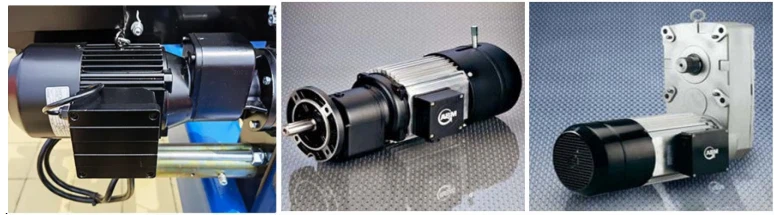
Core Components:Bearing, Gearbox, Motor, Pump
Place of Origin:Henan, China
Warranty:1 Year
Weight (KG):2000 kg
Video outgoing-inspection:Provided
Machinery Test Report:Provided
Design:Double beam
Effectiveness:high efficiency
Operating speed:High speed operation
Stability:Anti-swing function
Color:Optional
Power Source:110V/220V/230V/380V/440V,customized
Span:7.5-31.5m

Pictures & Components
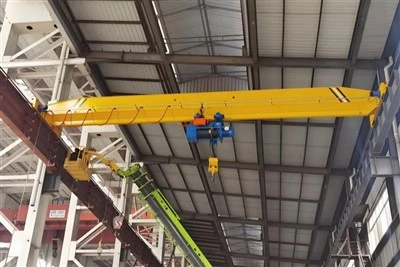
An automatic overhead grab crane consists of several key components that work together to enable efficient and automated handling of bulk materials. Below is a detailed breakdown of its main components:
1. Bridge (Main Girder)
The primary horizontal beam that spans the working area.
Single Girder (lighter loads, cost-effective) or Double Girder (heavy-duty, higher lifting heights).
Supports the hoist, trolley, and grab mechanism.

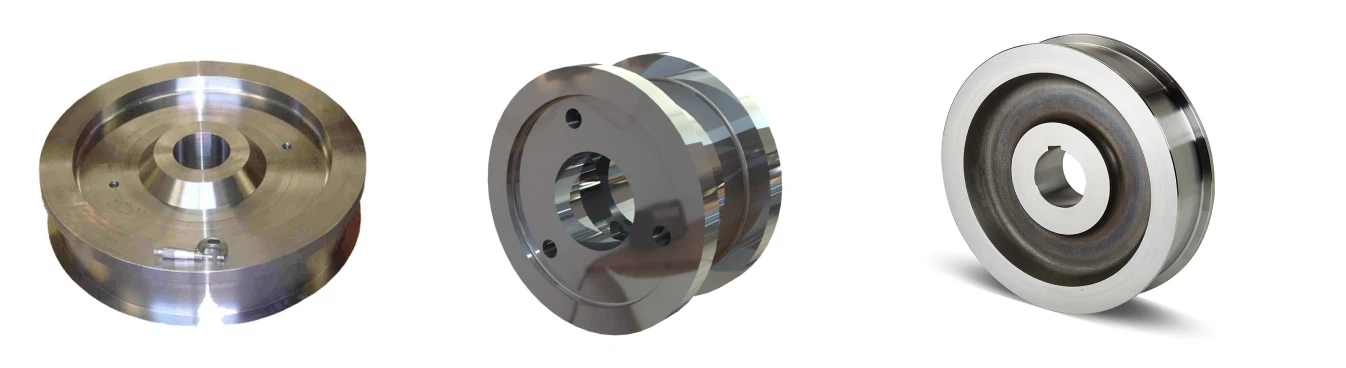
2. End Trucks (End Carriages)
Located at both ends of the bridge, equipped with wheels.
Facilitates crane movement along the runway rails (installed on building columns or support structures).
Includes drive motors, brakes, and buffers for smooth travel.
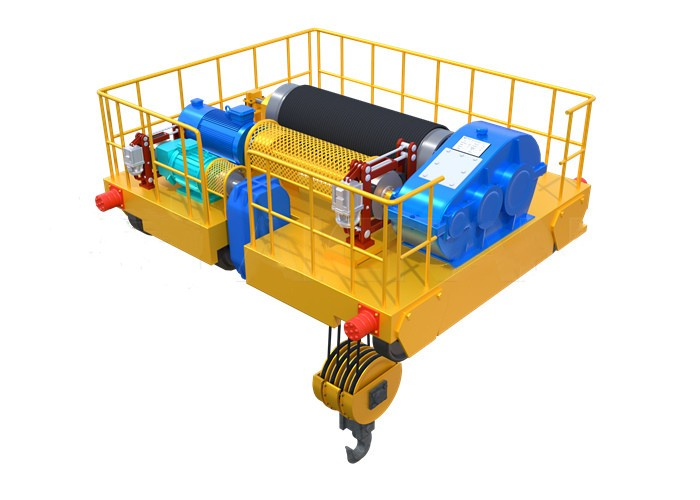
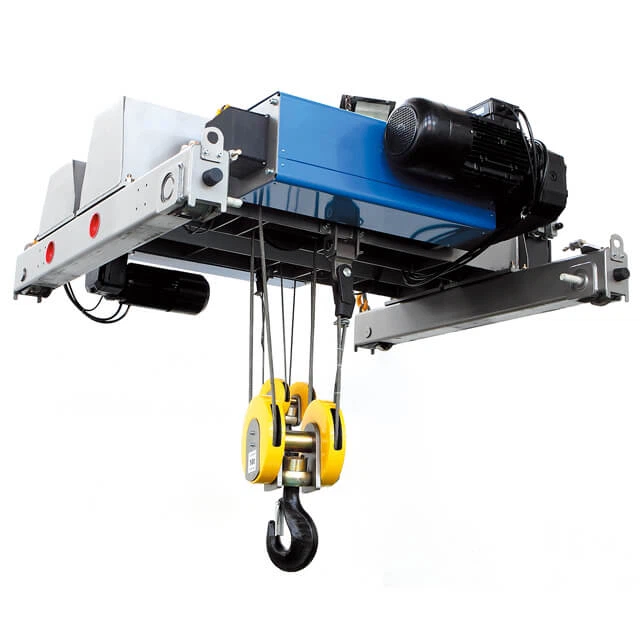
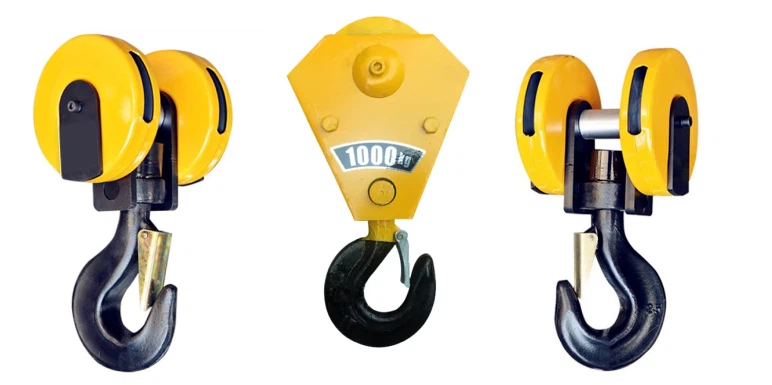
3. Hoist Unit
The lifting mechanism that raises and lowers the grab bucket.
Consists of:
Electric motor (AC/DC or variable frequency drive for precise control).
Wire rope or chain (for lifting).
Drum or pulley system (for rope winding).
Brakes (electromagnetic or hydraulic for safety).
 |
 |
4. Grab Bucket (Clamshell or Orange-Peel)
The attachment for handling bulk materials.
Types:
Clamshell Grab (two hinged shells for sand, grain, coal).
Orange-Peel Grab (multiple jaws for scrap metal, rocks).
Operation:
Rope-Operated Grab (uses separate hoisting and closing ropes).
Electro-Hydraulic Grab (powered by hydraulic cylinders for better control).
 |
 |
5. Trolley
Moves horizontally along the bridge girder to position the grab.
Contains:
Trolley frame (supports the hoist and grab).
Drive motor & wheels (for transverse movement).
Anti-sway system (for load stability).
6. Runway System
The rails on which the crane travels.
Includes:
Runway beams (steel structures mounted on columns or walls).
Rail tracks (for smooth crane movement).
End stops & bumpers (to prevent over-travel).
7. Control System
The brain of the automatic crane, ensuring precise operation.
Components:
Programmable Logic Controller (PLC) – Automates movements (lifting, traversing, grabbing).
Frequency Inverter Drives – Allows smooth acceleration/deceleration.
Radio Remote Control / Cabin Control – For manual override if needed.
Sensors & Encoders – For position feedback and load monitoring.
Human-Machine Interface (HMI) – Displays operational data.

8. Power Supply System
Provides electricity to the crane.
Options:
Festoon / Cable Reel System (for power and signal transmission).
Conductor Bars (Bus Bars) – For heavy-duty applications.
Battery (for wireless or hybrid cranes).
.
9. Safety Devices
Ensures safe and reliable operation:
Overload Limiter – Prevents lifting beyond capacity.
Limit Switches – Stops crane at preset positions.
Anti-Collision System – Uses lasers or sensors to avoid crashes.
Emergency Stop (E-Stop) – Instantly halts operations.
Anemometer (for outdoor cranes) – Detects high wind speeds.

10. Auxiliary Components
Lubrication System – For smooth movement of gears and wheels.
Lighting & Alarms – For operator visibility and warning signals.
Dust & Heat Protection – For harsh environments (e.g., steel plants).
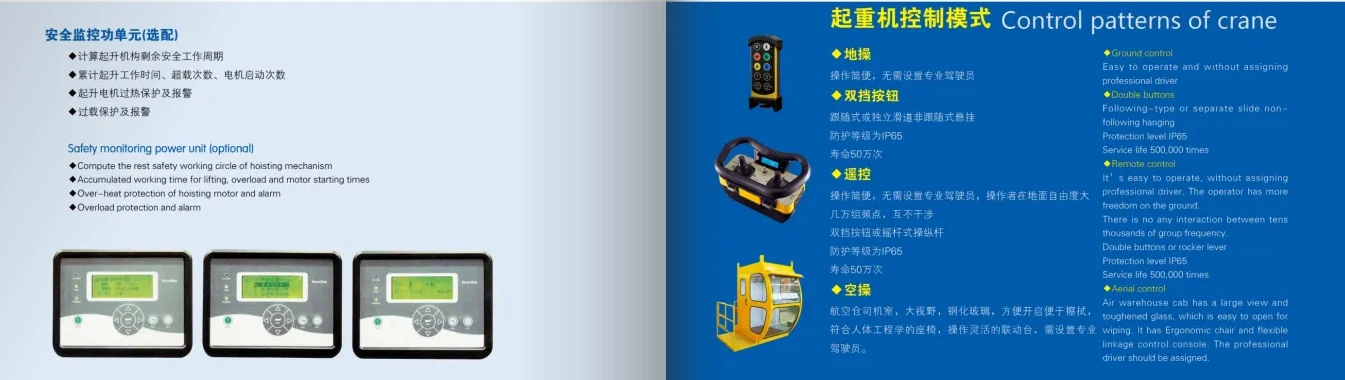
SKETCH

Main technical

Advantages:
1. Increased Efficiency & Productivity
24/7 Automated Operation – Can work continuously without fatigue, reducing downtime.
Faster Cycle Times – Optimized movements (lifting, traversing, grabbing) improve material handling speed.
Precision Handling – Programmed paths minimize errors in load placement.
2. Labor & Cost Savings
Reduces Manual Labor – Eliminates the need for multiple operators, lowering labor costs.
Lower Operational Costs – Energy-efficient motors and smart controls reduce power consumption.
Minimizes Spillage & Waste – Ensures accurate grabbing and dumping, reducing material loss.
3. Enhanced Safety
Reduces Human Risk – Operators can control the crane remotely, avoiding hazardous environments (e.g., dust, extreme heat).
Advanced Safety Features – Overload protection, anti-sway, collision avoidance, and emergency stop systems prevent accidents.
Consistent Performance – Eliminates human errors caused by fatigue or misjudgment.
4. Versatility in Material Handling
Wide Range of Materials – Can handle coal, grain, sand, scrap metal, cement, and more.
Adaptable Grab Designs – Clamshell, orange-peel, or electro-hydraulic grabs for different materials.
Suitable for Harsh Environments – Works in extreme conditions (high temperatures, dust, moisture).
5. Smart Automation & Integration
PLC & IoT Connectivity – Can be integrated with warehouse management systems (WMS) for real-time tracking.
Data Logging & Analytics – Monitors performance, predicts maintenance needs, and optimizes workflows.
Seamless Conveyor/Batching Integration – Synchronizes with other automated systems for smooth material flow.
6. High Load Capacity & Durability
Handles Heavy Loads – Double-girder models can lift 100+ tons.
Robust Construction – Designed for long-term use in demanding industries (ports, steel plants, mining).
Low Maintenance – Automated lubrication and wear-resistant parts extend lifespan.
7. Environmental Benefits
Energy-Efficient Motors – Reduce carbon footprint.
Less Material Waste – Precise grabbing minimizes spillage.
Noise Reduction – Smooth automated operations are quieter than manual cranes.
8. Improved Inventory & Space Management
Optimized Storage – Can stack materials precisely in confined spaces.
Automated Stockpile Management – Useful in coal yards, grain silos, and recycling plants.
Application:
1. Ports & Shipping Terminals
Loading/Unloading Ships – Efficiently transfers bulk cargo like coal, grain, iron ore, and fertilizers between ships and storage yards.
Stockpile Management – Automates stacking and reclaiming materials in storage yards.
Container Handling – Some models handle bulk materials inside containers.
Key Benefits:
✔ Faster ship turnaround time (reduces port congestion).
✔ Minimizes spillage and dust pollution with enclosed grabs.
2. Power Plants & Energy Sector
Coal Handling – Transports coal from stockyards to crushers or boilers.
Biomass & Waste-to-Energy Plants – Moves wood chips, agricultural waste, and refuse-derived fuel (RDF).
Ash Handling – Removes fly ash from boilers for disposal or recycling.
Key Benefits:
✔ Continuous fuel supply for uninterrupted power generation.
✔ Reduces manual labor in dusty, high-temperature environments.
3. Steel & Metal Industries
Scrap Metal Handling – Loads/unloads shredded scrap for recycling in electric arc furnaces (EAF).
Raw Material Handling – Moves iron ore, coke, and limestone in steel mills.
Slag Removal – Transfers molten slag from furnaces to disposal areas.
Key Benefits:
✔ High durability in extreme heat and abrasive conditions.
✔ Precision placement reduces material waste.
4. Mining & Mineral Processing
Ore Handling – Transports mined materials (coal, bauxite, phosphate) to processing plants.
Stockpiling & Reclaiming – Manages large heaps of minerals before shipment.
Waste Rock Removal – Clears debris from mining sites.
Key Benefits:
✔ Handles heavy, abrasive materials with minimal wear.
✔ Automated operation reduces downtime.
5. Agriculture & Grain Storage
Grain Silos & Warehouses – Loads/unloads wheat, rice, corn, and soybeans.
Feed Mills – Moves raw ingredients for animal feed production.
Fertilizer Handling – Transports bulk fertilizers in storage facilities.
Key Benefits:
✔ Gentle handling prevents grain damage.
✔ Reduces contamination risk vs. manual methods.
6. Cement & Construction Materials
Clinker & Raw Material Handling – Moves limestone, gypsum, and additives in cement plants.
Sand & Gravel Processing – Loads trucks or conveyors at quarries.
Precast Concrete Factories – Positions heavy molds and materials.
Key Benefits:
✔ Dust-proof operation improves air quality.
✔ High lifting capacity for heavy loads.
7. Waste Management & Recycling
Scrap Yards – Sorts and loads metal, plastic, and paper waste.
Waste-to-Energy Plants – Handles municipal solid waste (MSW) for incineration.
Landfill Operations – Moves and compacts waste.
Key Benefits:
✔ Improves sorting efficiency with automated grabs.
✔ Reduces manual exposure to hazardous waste.
8. Chemical & Fertilizer Industry
Bulk Powder Handling – Transports chemicals like urea, potash, and sulfur.
Bagging Plants – Feeds raw materials into packaging lines.
Key Benefits:
✔ Corrosion-resistant options for harsh chemicals.
✔ Prevents cross-contamination with enclosed grabs.
Crane production procedure
1. Design & Engineering
Customer Requirements Analysis
Load capacity, span, lift height, working class, environment, etc.
Mechanical & Electrical Design
3D modeling with CAD/CAE software
Structural analysis, FEM calculation, and layout optimization
Component Selection
Motors, gearbox, hoisting units, brakes, electrical parts from trusted brands
2. Raw Material Procurement
High-quality materials such as Q235B / Q345B steel for main girder fabrication
Certified and traceable materials for safety-critical components
Inspection and testing of incoming materials (chemical & mechanical properties)
3. Steel Structure Fabrication
Cutting: CNC flame/plasma cutting machines for high precision
Beveling & Drilling: Edge preparation and joint drilling
Welding: CO₂/MIG/MAG welding for main beams, end carriages, trolleys
Welds are tested by ultrasonic or magnetic particle inspection
Straightening: Hydraulic press for removing deformation
Assembly: Girder assembly with strict geometric dimension control
4. Surface Treatment
Shot blasting to Sa2.5 standard for rust removal
Epoxy or polyurethane painting
Primer + intermediate + finish coats (typically 80–120μm total thickness)
Optional: Zinc-rich or corrosion-resistant coatings for marine or outdoor use
5. Machining & Assembly
Machining of wheels, shafts, drums, and pulley groups for tight tolerances
Assembly of:
Crane wheels, end carriages, and coupling systems
Trolley frame with hoisting mechanism
Motor, gearbox, drum, hook, and rope guide
6. Electrical System Installation
Electrical cabinet assembly with Siemens/Schneider/ABB components
Installation of:
Limit switches, overload protectors, anti-collision sensors
Cables, festoon systems, and wireless remote systems
Motors with VFDs for smooth speed control (optional)
7. Inspection & Testing
Dimensional Inspection: Ensuring assembly accuracy
No-load Testing: Trolley travel, crane travel, hoisting function
Load Testing (usually 1.1–1.25× rated capacity):
Static & dynamic tests per national or CE standards
Electrical Testing: Insulation resistance, control logic, emergency stop
Safety Device Test: Limit switches, alarms, brakes, and interlocks
8. Packaging & Delivery
Disassembly of main components for shipping (as required)
Waterproof wrapping, anti-corrosion protection, and steel frame packaging
Custom packing for overseas shipment (container or bulk cargo)
9. Documentation & Handover
Includes:
User Manual
Quality Certificate
Load Test Report
Electrical Wiring Diagram
Maintenance Schedule
Optional: On-site installation supervision, commissioning & operator training
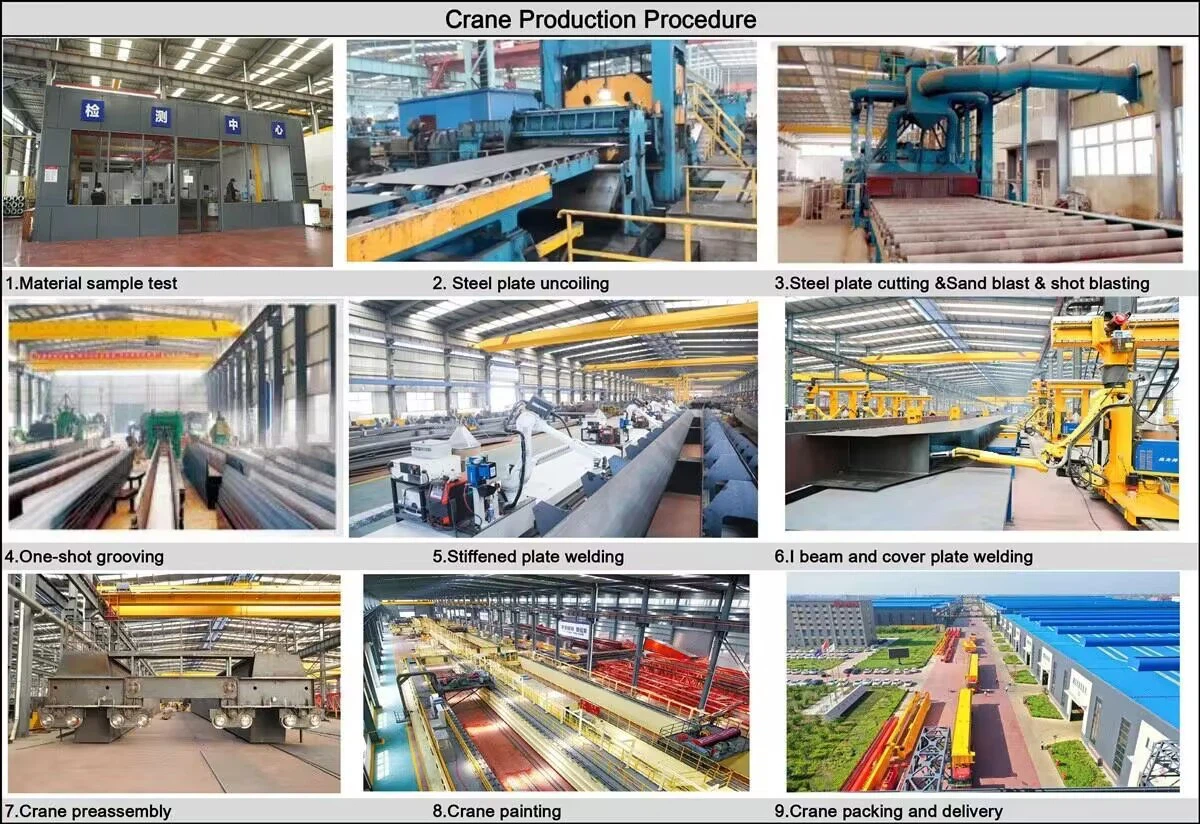
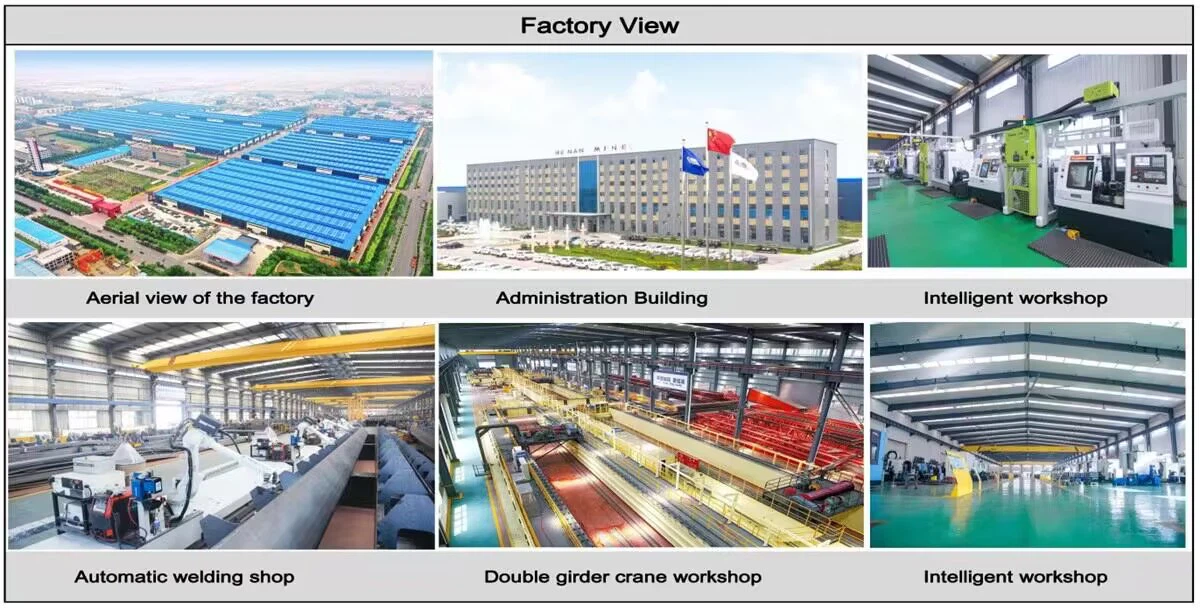
Workshop view:
The company has installed an intelligent equipment management platform, and has installed 310 sets (sets) of handling and welding robots. After the completion of the plan, there will be more than 500 sets (sets), and the equipment networking rate will reach 95%. 32 welding lines have been put into use, 50 are planned to be installed, and the automation rate of the entire product line has reached 85%.


Hot Tags: automatic overhead grab crane, China automatic overhead grab crane manufacturers, suppliers, factory
You Might Also Like


Send Inquiry