











Steel Structure
Prefabricated steel structures, also known as pre-engineered or prefab steel buildings, are versatile construction solutions made from steel components that are manufactured in a factory and then assembled on-site. These structures offer numerous advantages, making them popular for various applications, including commercial, industrial, agricultural, and residential purposes.
Key Features
- Strength and Durability: Steel is known for its exceptional strength and durability. Prefabricated steel structures can withstand extreme weather conditions, seismic activity, and heavy loads, making them long-lasting and reliable.
- Cost-Efficiency: Prefabricated steel structures are often more cost-effective than traditional construction methods. The efficiency of the manufacturing process, reduced labor costs, and minimal maintenance expenses contribute to their cost-effectiveness.
- Customization: These structures can be customized to meet specific project requirements. You can choose from a variety of sizes, shapes, and designs, allowing for flexibility in accommodating different uses and aesthetics.
- Quick Construction: The components of prefabricated steel structures are manufactured in a factory-controlled environment, which speeds up the construction process. Once on-site, assembly is generally faster than traditional construction, reducing project timelines.
- Energy Efficiency: Steel buildings can be designed with energy-efficient features, such as insulated roof and wall panels, cool roofing materials, and energy-efficient windows and doors. This can lead to reduced energy consumption and operational costs.
- Sustainability: Steel is highly recyclable, making it an eco-friendly choice. Additionally, the reduced construction waste and energy-efficient designs contribute to the sustainability of prefabricated steel structures.
- Low Maintenance: Prefabricated steel structures require minimal maintenance over their lifespan. This translates to long-term cost savings and less hassle for building owners.
- Versatility: Steel structures can be used for a wide range of applications, from warehouses and factories to commercial buildings, agricultural facilities, aircraft hangars, and even residential homes.

Parts & Components
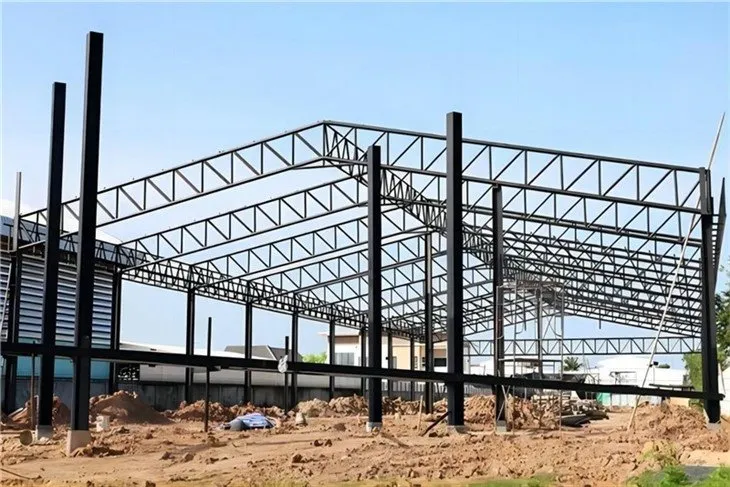
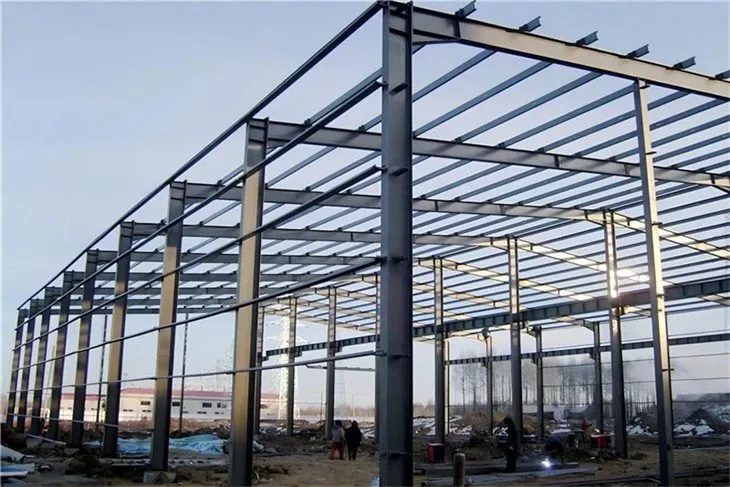
Prefabricated steel structures consist of several key parts and components, each serving a specific function in the overall structure
● Primary Framing: The primary framing of a prefabricated steel structure forms the skeletal framework and provides structural support. It typically includes:
■ Columns: Vertical steel members that support the weight of the structure and transfer it to the foundation.
■ Beams: Horizontal steel members that connect columns and provide support for the roof and walls. Beams distribute loads from the roof and other structural elements.
● Secondary Framing: Secondary framing components are used to support and connect various building elements. They include:
■ Purlins: Horizontal structural members that run perpendicular to the main beams and support roof panels.
■ Girts: Horizontal structural members that run parallel to the main columns and support wall panels.
■ Bracing: Diagonal or cross-bracing elements that provide stability and resist lateral loads, such as wind or seismic forces.
● Roof and Wall Panels: Roof and wall panels are typically made of steel and serve as the outermost layer of the building envelope. They protect the interior from the elements and provide insulation. Common types include:
■ Roof Panels: Cover the roof structure and may be corrugated or have various profiles.
■ Wall Panels: Cover the exterior walls and come in different profiles and finishes, including insulated panels for energy efficiency.
● Insulation: Insulation materials can be added to prefabricated steel structures to regulate temperature, reduce energy costs, and provide sound insulation. Common insulation types include fiberglass, foam, or reflective foil, which is installed between the steel panels.
● Doors and Windows: These openings are essential for access, ventilation, and natural light. Doors can be overhead roll-up doors, pedestrian doors, or sectional doors. Windows can be added for aesthetics and functionality.
● Trim and Accessories: Trim components provide finishing touches and weatherproofing to the structure. Accessories may include ridge caps, eave struts, gutters, downspouts, and various fasteners and connectors.
● Foundation System: The foundation supports the entire prefabricated steel structure. It includes footings, piers, and anchor bolts that secure the columns to the ground. The type of foundation used depends on site conditions and building requirements.
● Crane Systems: In industrial applications, crane systems may be integrated into the structure to facilitate material handling and manufacturing processes.
● Ventilation and HVAC Systems: Ventilation systems, such as roof vents, louvers, or ridge vents, can be added to improve air circulation and temperature control. HVAC (Heating, Ventilation, and Air Conditioning) systems may also be integrated for climate control.

Sketch

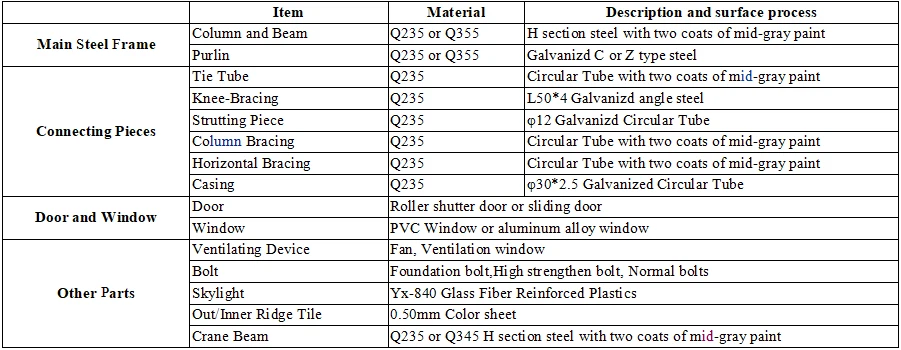
Technical Parameter
Advantages
Prefabricated steel structures offer a wide range of advantages, making them a popular choice for various construction projects. Here are some of the key advantages of prefabricated steel structures:
- Speed of Construction: Prefabricated steel structures are manufactured off-site in a controlled environment, which significantly reduces construction time. Once the components arrive at the construction site, assembly is typically quicker than traditional construction methods, allowing for faster project completion.
- Cost-Effective: These structures are often more cost-effective than conventional construction. Reduced labor costs due to faster assembly, minimal maintenance expenses, and potential energy savings contribute to cost efficiency.
- Design Flexibility: Prefabricated steel structures can be customized to meet specific project requirements. Architects and engineers can explore innovative designs, open floor plans, and large clear spans, offering flexibility in accommodating various uses and aesthetic preferences.
- Strength and Durability: Steel is known for its exceptional strength and durability. Prefabricated steel structures can withstand extreme weather conditions, seismic activity, and heavy loads, resulting in a long-lasting and reliable building.
- Energy Efficiency: These structures can be designed with energy-efficient features, such as insulated roof and wall panels, cool roofing materials, and energy-efficient windows and doors. This can lead to reduced energy consumption and lower operational costs.
- Low Maintenance: Prefabricated steel structures require minimal maintenance over their lifespan. The inherent durability of steel minimizes issues such as rot, pests, and corrosion, reducing maintenance expenses.
- Sustainability: Steel is highly recyclable, making it an environmentally friendly choice. Additionally, the efficiency of the manufacturing process, reduced construction waste, and energy-efficient designs contribute to sustainability.
- Versatility: Prefabricated steel structures can be used for a wide range of applications, including warehouses, factories, commercial buildings, agricultural facilities, aircraft hangars, and residential homes.
- Expansion and Modification: These buildings can easily accommodate future expansion or modification. Adding new sections, altering the layout, or installing new features is relatively straightforward.

Application
Prefabricated steel structures find applications in a wide range of industries and purposes due to their versatility, durability, and cost-effectiveness.
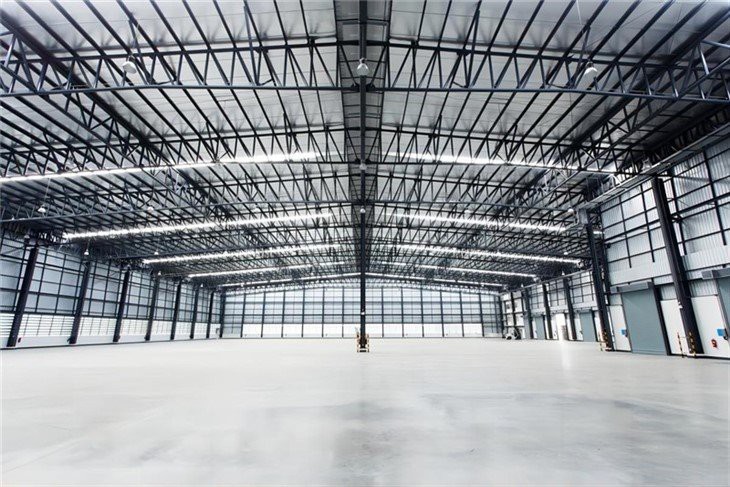
- Warehouses and Distribution Centers: Prefabricated steel buildings are widely used for storage and distribution facilities. Their large clear spans and customizable layouts make them ideal for accommodating various storage needs.
- Industrial Facilities: Manufacturing plants, factories, and industrial complexes often utilize prefabricated steel structures. These buildings provide ample space for production lines, equipment, and storage.
- Agricultural Buildings: Farmers and agricultural businesses use steel structures for barns, hay storage, equipment sheds, livestock shelters, and grain storage. Steel's durability and resistance to pests make it well-suited for agricultural applications.
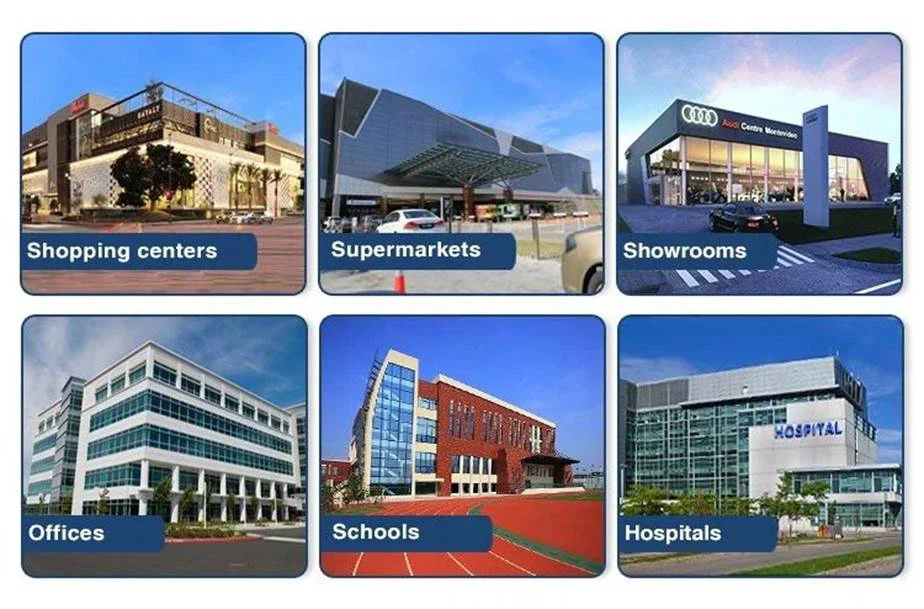
- Commercial Buildings: Prefabricated steel structures are used for retail stores, offices, showrooms, and shopping centers. They offer design flexibility, allowing for aesthetically pleasing exteriors and adaptable interior spaces.
- Aircraft Hangars: Steel buildings are ideal for aircraft hangars due to their ability to accommodate large clear spans and provide protection for airplanes and equipment.
- Sports and Recreation Facilities: Gymnasiums, indoor sports arenas, community centers, and recreational facilities often feature prefabricated steel structures. The structures provide open spaces and can house courts, swimming pools, and other amenities.
- Auto Dealerships and Service Centers: Car dealerships and automotive service centers benefit from the versatility of steel buildings. They provide showroom space, service bays, and storage areas.
- Healthcare Facilities: Prefabricated steel structures are used for medical offices, clinics, and healthcare centers. They offer a quick and efficient solution for expanding healthcare services.
- Cold Storage and Refrigerated Warehouses: Steel structures with insulated panels are suitable for cold storage facilities, including refrigerated warehouses, food processing plants, and cold storage distribution centers.
- Residential Homes: Some homeowners opt for prefabricated steel structures for residential use. These structures can be designed as modern, energy-efficient homes with steel frames, roofs, and walls.
- Mining and Oilfield Structures: In remote and rugged environments, prefabricated steel structures are used for mining offices, drilling shelters, and equipment storage.
Production Procedure
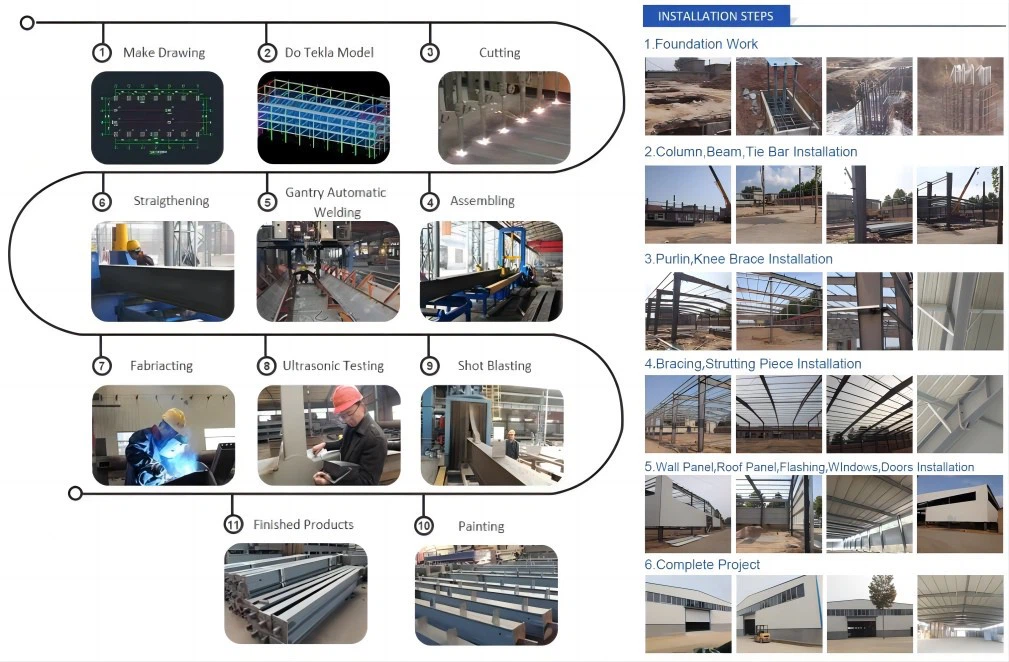
● Project Planning and Design:
■ Determine the project's requirements, including size, purpose, and specific design needs.
■ Collaborate with architects and engineers to create detailed drawings and plans.
■ Consider local building codes, regulations, and environmental factors.
● Material Procurement:
■ Source high-quality steel and other materials required for the project, such as insulation, roofing, and cladding materials.
■ Ensure that all materials meet the necessary standards and specifications.
● Fabrication in the Factory:
■ Cut and shape steel components according to the design specifications using computer-aided design (CAD) and computer-aided manufacturing (CAM) systems.
■ Weld, assemble, and connect steel columns, beams, purlins, girts, and other primary and secondary framing members.
■ Fabricate roof and wall panels, applying insulation if necessary.
■ Ensure quality control measures are in place throughout the fabrication process to maintain precision and consistency.
● Surface Treatment:
■ Apply surface treatments to protect the steel from corrosion. This may include primers, coatings, or galvanization.
● Transportation to the Construction Site:
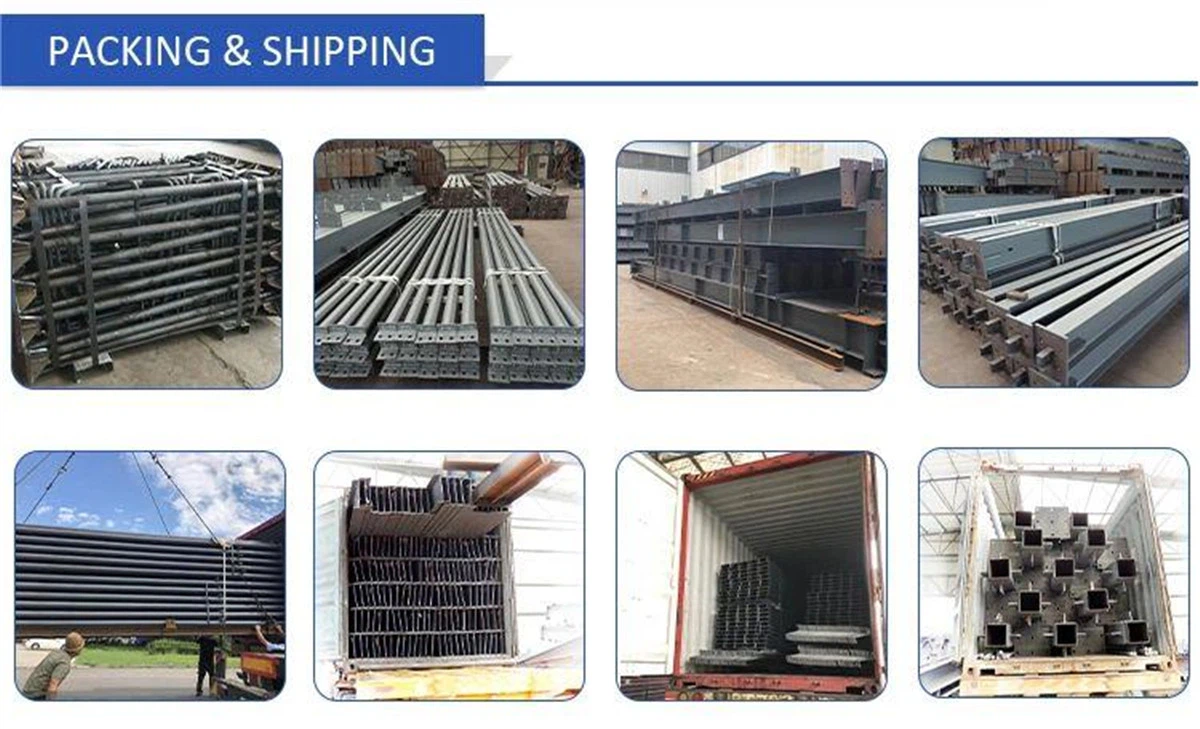
■ Load the fabricated steel components onto transport vehicles for delivery to the construction site. Components are often pre-marked or coded for ease of assembly.
● Foundation Preparation:
■ Prepare the foundation, which may involve pouring concrete footings, installing anchor bolts, and leveling the foundation to ensure it meets the specified tolerances.
● On-Site Assembly:
■ Assemble the prefabricated steel components on-site using cranes and other lifting equipment.
■ Connect columns, beams, and secondary framing elements according to the construction drawings.
■ Secure the components in place, ensuring they are plumb, level, and properly aligned.
■ Attach roof and wall panels, including insulation, to complete the building envelope.
● Interior and Exterior Finishing:
■ Install doors, windows, and any other necessary accessories or finishing elements.
■ Complete interior finishes, including electrical, plumbing, HVAC systems, and interior walls, if required.
● Quality Control and Inspection:
■ Conduct thorough inspections to ensure that the construction adheres to design specifications, safety standards, and quality control measures.
● Testing and Commissioning:
■ Test and commission systems such as electrical, plumbing, and HVAC to ensure they are functioning correctly.
Workshop View


Hot Tags: steel structure, China steel structure manufacturers, suppliers, factory
Previous
Steel WarehouseNext
No InformationYou Might Also Like


Send Inquiry