










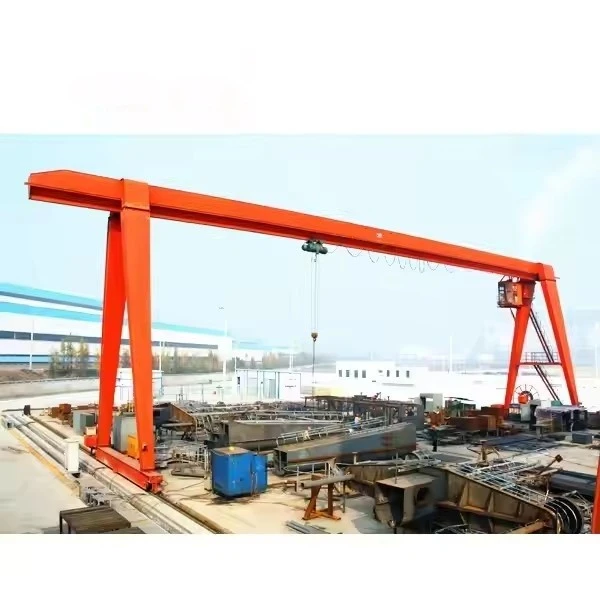

Stone Gantry Crane
Products Description
A stone gantry crane is a heavy-duty lifting system optimized for the stone industry, capable of handling:
Granite/Marble Slabs (for cutting/polishing)
Large Stone Blocks (quarry extraction & transport)
Monumental Stone Pieces (sculptures, columns)
Construction Stone Elements (precast, cladding)
These cranes are built to withstand abrasive environments and extreme loads (often 20–200+ tons).
Types of Stone Gantry Cranes
1. Fixed/Rail-Mounted Stone Gantry Cranes
Used in stone processing plants and warehouses.
Run on rails for precise positioning.
Ideal for slab loading/unloading from cutting machines.
2. Mobile Rubber-Tired Gantry Cranes (RTGs)
Equipped with heavy-duty wheels for outdoor use.
Common in quarries for moving raw stone blocks.
Can be diesel-powered or electric.
3. Semi-Gantry Cranes (One Leg Supported)
One side runs on a wall-mounted rail, the other on ground rails.
Saves space in stone workshops.
4. Overhead Bridge Cranes (for Indoor Stone Work)
Used in stone fabrication factories.
Features vacuum lifters or stone clamps for safe handling.
Comparison: Stone Gantry vs. Standard Gantry Crane
| Feature | Stone Gantry Crane | Standard Gantry Crane |
|---|---|---|
| Load Capacity | 20–200+ tons | 1–50 tons (typically) |
| Attachments | Vacuum lifters, stone clamps | Hooks, spreader bars |
| Environment | Dust/abrasion-resistant | General industrial use |
| Movement | Rail/Rubber-tired | Rail/Fixed |
| Precision | High (for fragile stone) | Standard |
Place of Origin:Henan, China
Warranty:2 years
Weight (KG):60000 kg
Video outgoing-inspection:Provided
Machinery Test Report:Provided
Application:warehouses,factory and other place
Crane type:box type gantry crane
Travelling speed:20m/min
Lifting mechanism:Electric Hoist
Control method:Ground Control+ Remote Control (customized)
Working duty:A5
Working Temperature:-20~+40℃
Industrial voltage:380V50HZ3Phanse or other
Color:Customised
Customization:Accepted

Pictures & Components
Rail-mounted stone gantry cranes are heavy-duty lifting systems designed specifically for handling stone materials in quarries, processing plants, and construction sites. Here's a comprehensive look at their key components:
1. Main Structural Components
Bridge Girder
Heavy-duty box-type or truss construction
Typically spans 10-30 meters for stone applications
Reinforced steel construction (Q235B/Q345B steel common)
Often includes walkways for maintenance access
Support Legs
Rigid or flexible leg designs based on span requirements
Height typically 6-15 meters for stone handling
Equipped with anti-collision buffers at base
May include height adjustment mechanisms
End Carriages
Heavy-duty wheel assemblies (usually 4-8 wheels per leg)
Wheel diameters of 400-800mm common
Include flange guards for rail alignment
Load-bearing capacity per wheel typically 10-30 tons


2. Rail System Components
Running Rails
QU70/QU80/QU100/QU120 steel rails (numbers indicate kg/m weight)
Usually P43 or P50 rail profiles for heavy loads
Rail span typically matches crane span plus 0.5-1m buffer
Rail Fastening System
Fishplates with high-strength bolts (8.8 grade or higher)
Rail clips or elastic fasteners for vibration damping
Rail pads for load distribution
Rail Foundations
Concrete sleepers or continuous concrete foundation
Often includes embedded rail clips or bolt channels
Grade C30 or higher concrete typically used


3. Lifting Mechanism
Main Hoist
Wire rope hoist (10-200 ton capacity common)
Low-speed design (typically 0.5-5 m/min lifting speed)
Double braking system (mechanical + electromagnetic)
May include auxiliary hoist for lighter loads
Trolley System
Cross travel speed typically 10-30 m/min
Heavy-duty wheel assemblies (4-8 wheels)
Anti-derailment devices
May include maintenance platform

4. Specialized Stone Handling Attachments
Vacuum Lifters
Multiple-pad design (4-16 suction pads)
0.8-1.2 bar vacuum pressure typically
Automatic pressure monitoring system
Emergency backup power for vacuum pumps
Mechanical Clamps
Hydraulic or mechanical operation
Serrated contact surfaces for grip
Load capacity indicators
Quick-change systems for different stone types

5. Drive and Control Systems
Travel Drive
AC frequency-controlled motors (7.5-45kW typical)
Planetary gear reducers (1:30 to 1:50 ratio)
Anti-skid systems for wet conditions
May include rail cleaning brushes
Control System
Pendant control (IP65 rated)
Radio remote control (2.4GHz frequency hopping)
Cabin control option with air conditioning
PLC-based automation available

6. Electrical Systems
Power Supply
Sliding contact line (CMC-3A or similar)
Or cable reel with 10-35mm² cables
380V/50Hz or 440V/60Hz systems common
Emergency power-off systems
Safety Devices
Load moment limiter (95%/100%/110% settings)
Rail end limit switches (both mechanical and proximity)
Anti-collision system for multiple cranes
Windproof anchoring devices (for outdoor use)
.
7. Additional Features for Stone Applications
Dust Protection
IP55 or higher protection for electrical components
Sealed bearing housings
Automatic lubrication systems
Weighing System
Load cell integration (1% accuracy typical)
Digital display in control cabin
Data logging capability

8. Optional Components
Laser Positioning System
±5mm positioning accuracy
Automatic slab alignment
Slab Rotator
90°/180° rotation capability
Hydraulic or electric drive
Automated Storage System
RFID tagging for slab identification
Coordinate-based storage management

Sketch

Main technical

Advantages
1. Heavy Load Capacity
Designed for 20-200+ ton loads, capable of handling massive stone blocks/slabs
Reinforced steel construction withstands impact loads during stone handling
2. Specialized Material Handling
Vacuum lifters prevent surface damage to polished stone
Rotating attachments allow precise positioning (90°/180° rotation)
Spreader beams distribute weight evenly for fragile materials
3. Precision Movement
Low-speed hoisting (0.5-5 m/min) for careful placement
Laser guidance systems (±5mm accuracy) for slab alignment
Anti-sway technology stabilizes loads during movement
4. Durability in Harsh Conditions
Dust-proof electrical components (IP55+ rating)
Abrasion-resistant wheels with sealed bearings
Corrosion protection for outdoor quarry use
5. Space Efficiency
Rail-mounted design maximizes workspace
L-shaped variants available for constrained areas
High vertical clearance (6-15m) for stacked materials
6. Safety Features
Dual braking systems (mechanical + electromagnetic)
Overload protection with audible/visual alarms
Emergency stop with backup power for vacuum lifts
7. Operational Flexibility
Multiple control options: pendant, radio remote, or cabin
Automation-ready with PLC integration
Quick-change attachments for different stone types
Application:
1. Quarry Operations
Block extraction: Lifting raw stone blocks (granite/marble) from pits
Truck loading: Positioning blocks on transport vehicles
Primary cutting: Moving blocks to sawing stations
2. Stone Processing Plants
Slab handling: Transferring cut slabs between machines
Polishing lines: Precise placement on processing equipment
Quality inspection: Rotating slabs for surface examination
3. Monument Workshops
Sculpture positioning: Adjusting heavy stone artworks
Engraving stations: Precise vertical/horizontal alignment
Monument assembly: Joining large stone components
4. Construction Sites
Cladding installation: Placing facade stone panels
Paving stone placement: Positioning heavy flooring elements
Structural stone: Installing load-bearing stone components
5. Ports and Storage Yards
Container loading: Stacking stone for shipping
Open-yard storage: Organizing blocks in storage areas
Temporary fabrication: On-site stone preparation
Crane production procedure
The production procedure for a single beam traveling gantry crane involves several key stages, from design and material procurement to assembly, testing, and final delivery. Below is a step-by-step outline of the typical manufacturing process:
1. Design & Engineering
Customer Requirements Analysis: Determine lifting capacity, span, lifting height, duty cycle, and operating environment.
Structural Design:
Design the main girder (single box or I-beam structure).
Design end carriages (legs/wheels) and runway beams.
Select hoist/trolley type (electric or manual).
Load & Stress Calculations: Ensure compliance with standards (ISO, FEM, DIN, or ASME).
Electrical & Control System Design: Choose motors, brakes, limit switches, and control panels.
2. Material Procurement
Steel Plates & Profiles: High-quality Q235B/Q345B steel for main girders and supports.
Mechanical Components: Wheels, axles, bearings, gears, and couplings.
Electrical Components: Motors, cables, control panels, and safety devices.
3. Fabrication of Main Components
A. Main Girder Fabrication
Cutting: CNC plasma/oxy-fuel cutting for precision.
Welding: Automated submerged arc welding (SAW) for strong seams.
Straightening & Inspection: Ensure proper camber (pre-bend) and check for defects (UT/RT testing).
B. End Carriages & Legs
Frame Assembly: Welded steel construction with reinforced bracing.
Wheel & Bearing Installation: Machined wheels for smooth travel.
C. Hoist & Trolley
Pre-assembled Hoist: Electric chain hoist or wire rope hoist.
Trolley Frame: Fabricated to accommodate hoist movement.
4. Surface Treatment & Painting
Shot Blasting: Removes rust and improves paint adhesion.
Primer & Paint: Anti-corrosion coatings (epoxy + polyurethane).
5. Assembly
Girder & End Carriage Joining: Bolt or weld the main beam to legs.
Hoist/Trolley Installation: Mounted on the girder.
Electrical Wiring: Connect motors, controls, and safety devices.
6. Testing & Quality Control
Dimensional Inspection: Verify span, height, and alignment.
Load Testing:
Static Load Test: 125% of SWL (Safe Working Load).
Dynamic Load Test: 110% of SWL with operational checks.
Functional Tests: Travel, lifting, braking, and limit switch verification.
7. Disassembly & Packaging
For Shipment: Crane may be disassembled into modules (girder, legs, hoist).
Protective Packaging: Waterproof wrapping for sea transport.
8. Installation & Commissioning (On-Site)
Runway Preparation: Ensure level rails or ground support.
Reassembly: Bolt components together.
Final Testing: Operational checks under load.
9. Documentation & Delivery
Manual & Certificates: Include load test reports, CE/ISO certifications.
Training: Operator and maintenance guidance.

Workshop view:
The company has installed an intelligent equipment management platform, and has installed 310 sets (sets) of handling and welding robots. After the completion of the plan, there will be more than 500 sets (sets), and the equipment networking rate will reach 95%. 32 welding lines have been put into use, 50 are planned to be installed, and the automation rate of the entire product line has reached 85%.


Hot Tags: stone gantry crane, China stone gantry crane manufacturers, suppliers, factory, Electric Hoist Single Girder Gantry Crane, Single Girder Gantry Crane, Gantry Crane
Previous
Electric Hoist Gantry CraneYou Might Also Like


Send Inquiry