







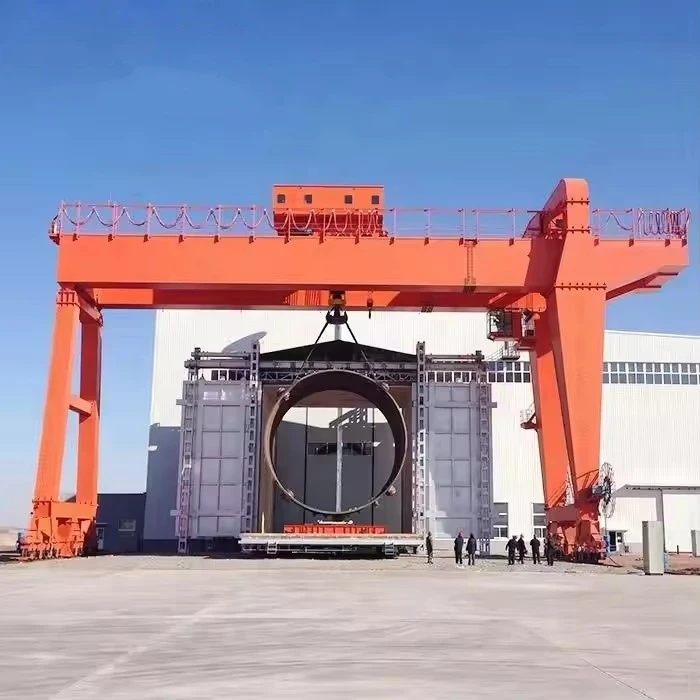

Marble Lifting Gantry Crane
Products Description
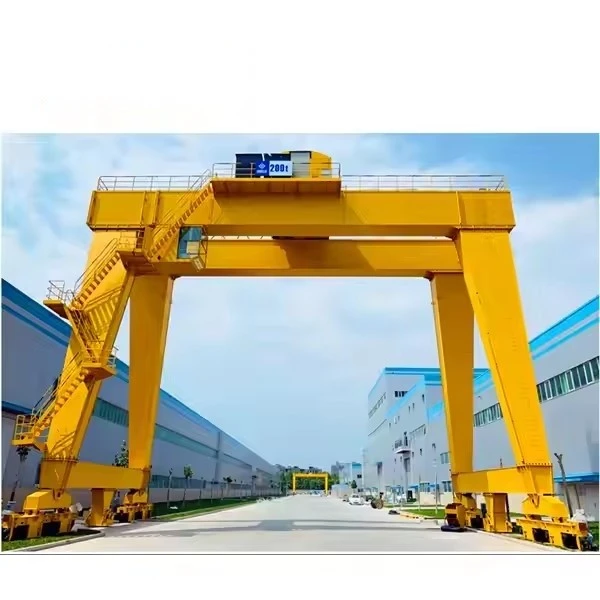
Marble lifting gantry crane are available in a variety of sizes and configurations to meet different lifting requirements. They can be designed with adjustable height levels, rubber or steel wheels for mobility, and different types of power sources, such as diesel, electricity, or manual power.
Types of Gantry Cranes for Marble Handling
Portable Gantry Cranes: Rubber-tired or on casters for workshop mobility.
Workstation Gantry Cranes: Smaller, enclosed-track or I-beam designs for factory use.
Rail-Mounted Gantry Cranes: Heavy-duty models for large marble slabs in industrial settings.
Major Benefits
✅ Safe Marble Handling – Prevents cracks, chips, or breakage during lifting.
✅ Increased Efficiency – Faster loading/unloading compared to manual labor.
✅ Workspace Adaptability – Can be used in quarries, factories, or workshops.
✅ Reduced Labor Costs – Minimizes physical strain on workers.
✅ Long Lifespan – Built with corrosion-resistant materials for harsh environments.
Place of Origin:Henan, China
Warranty:2 years
Weight (KG):80000 kg
Video outgoing-inspection:Provided
Machinery Test Report:Provided
Application:warehouses,factory and other place
Crane type:box type gantry crane
Travelling speed:20m/min
Lifting mechanism:Electric Hoist
Control method:Ground Control+ Remote Control (customized)
Working duty:A5
Working Temperature:-20~+40℃
Industrial voltage:380V50HZ3Phanse or other
Packing:According to client request
Control method: Ground Control, Remote Control (customized)
Power supply: 3 Phase 380V 50hz/Custmized

Pictures & Components
1.Main beam
1. The main beam is usuallymade of steel or welded boxsections.
2. The main beam carries thetrolley and hoisting system,which moves along its length.
3. The main beam is designed tolimit deflection to a safe range toensure smooth operation of thecrane.
Electric Motor Driven:
The crane's movement is powered by an electric motor, which provides smooth and efficient operation.
The electric motor typically drives the trolley and hoist, allowing the crane to lift, lower, and move loads along the beam.

2.Lifting System
These components are responsible for lifting, moving, and positioning containers.
Trolley:
Moves the hoist horizontally along the girder for precise positioning.
Manual or motorized (depending on crane type).
Hoist Mechanism:
Includes the winch, wire ropes, and drums for lifting and lowering containers.
Designed for precise control and smooth operation.
Spreader:
A specialized lifting device that attaches to the top of a container.
Can handle different container sizes (20ft, 40ft, 45ft, etc.).
May include twist locks to securely grip the container.
Ropes and Pulleys:
High-strength steel wires and pulleys are used to lift and lower loads.
Regularly inspected for wear and tear.


3.Mobility Components
These enable the crane to move within the terminal or yard.
Wheels (for RTG Cranes):
Rubber-tired wheels allow the crane to move freely in the container yard.
Equipped with steering mechanisms for maneuverability.
Rail System (for RMG Cranes):
Fixed rails guide the crane's movement.
Provides stability and precision for high-volume operations.
Drive Motors:
Electric or hydraulic motors power the movement of the crane.
Equipped with brakes for safe stopping.


4.Control & Safety Systems
Control Panel
Pendant control (wired remote) – Manual operation.
Radio remote control – Wireless for safer long-distance handling.
Variable speed control – Smooth lifting/lowering of delicate marble.
Safety Features
Overload limiter – Prevents crane operation beyond capacity.
Emergency stop button – Instant shutdown in case of malfunction.
Limit switches – Prevents hoist/trolley from over-traveling.
Anti-collision sensors (in advanced models).
5.Safety Components
These ensure safe operation and protect both the equipment and personnel.
Anti-Collision Systems:
Sensors and software to prevent collisions with other cranes, containers, or obstacles.
Overload Protection:
Prevents the crane from lifting loads beyond its rated capacity.
Limit Switches:
Automatically stops the crane at the end of its travel range.
Emergency Stop Buttons:
Installed at key locations for immediate shutdown in case of an emergency.
Wind Sensors:
Monitor wind speed and alert operators or shut down the crane in high winds.
Lighting and Alarms:
Warning lights and alarms to alert personnel during crane operation.
6.Crane wheel
1. The wheels are usuallymade of high-strength steelor other durable alloys.
2. The flanges are designedto keep the wheels on thetrack and preventderailment.3. The wheels have rollerbearings or radial bearings.

7.Crane Hook
1. The hook is usually made ofhigh-strength steel or alloymaterial
2. The hook is designed in acurved or C-shaped shape tofix the sling, chain or loadlifting attachment.
3. The hook is connected to thehoist drum or wire ropethrough a hook pulley or fixedsuspension device.

8.Motor
1. The motor must be sized tohandle the maximum load thatthe crane will lif.
2. The motor may be equippedwith forced ventilation ornatural cooling to preventoverheating during longperiods of operation.
3. The motor has different ratedvoltage levels depending onthe design requirements

.
Sound and light alarm system & limit switch
1)Sound and Light Alarm System
The sound and light alarm system is designed to alert operators and personnel to various crane operating conditions, such as the crane moving, the load being lifted or lowered, or an emergency situation. It can be integrated into the crane control system for real-time feedback.
2)Limit Switch System
A limit switch is an essential safety feature in a gantry crane. It prevents the crane from exceeding its designated operational limits, helping to protect the crane structure, motor, and load. Limit switches automatically stop or reverse the crane's movements once it reaches predefined limits.

10.Safety Devices
1)Overload Protection System
The overload protection system is one of the most critical safety devices for a gantry crane. It ensures that the crane does not lift loads exceeding its designed capacity, preventing potential damage to the crane and ensuring safe lifting operations.
2)Anti-Collision System
The anti-collision system prevents the gantry crane from colliding with other cranes, structures, or equipment. This is particularly important in areas with multiple cranes or dense operation spaces.
3)Emergency Stop System
The emergency stop system is essential for immediately halting the crane's operation in case of an emergency. This system helps prevent accidents or damage by quickly stopping the crane when necessary.
4)Limit Switches
Limit switches are crucial for preventing the crane from exceeding its safe operational limits. They stop the crane from moving beyond a specific range, thus avoiding damage to the crane, equipment, or structure.
5)Safety Locking Mechanism
A safety locking mechanism is used to prevent accidental movement of the crane or its components, especially during maintenance or when the crane is idle.
11.Control Mode
1)Manual Control Mode
This is the most basic and widely used control mode for gantry cranes, where the operator has full control over all crane movements using control buttons, joysticks, or levers.
2)Wireless Remote Control Mode
This mode enables the operator to control the crane from a distance, improving safety by allowing the operator to avoid hazardous areas or work in more convenient locations.
3)Cab Control Mode
In this mode, the operator controls the crane from a fixed cabin located on the crane itself. This mode is common for large gantry cranes operating in harsh environments, such as ports or shipyards.
4)Automated or Semi-Automated Control Mode
This control mode involves the automation of certain crane functions, reducing the need for manual intervention. The level of automation can range from semi-automatic (operator intervention is still required) to fully automatic (no human involvement in routine operations).
5)Dual Control Mode (Manual + Automatic)
In this hybrid mode, the crane can be operated manually or automatically depending on the situation, giving operators the flexibility to switch between control methods.

Sketch

Main technical

Advantages
Features of Marble lifting gantry crane
Heavy-Duty Load Capacity
Designed to lift 1–50+ tons (depending on model), suitable for large marble blocks or slabs.
Reinforced steel construction for durability.
Precision Handling
Adjustable hoist speed for smooth lifting and lowering.
Trolley movement along the girder for accurate slab positioning.
Specialized Lifting Attachments
Vacuum lifters (for fragile marble slabs) prevent cracks or damage.
Wire rope/chain hoists for heavy-duty lifting.
Mobility & Flexibility
Rubber-tired or rail-mounted options for indoor/outdoor use.
Some models are portable (adjustable height/width).
Safety Mechanisms
Overload protection to prevent crane failure.
Emergency brakes & limit switches for secure operation.
Anti-sway technology (in advanced models) for stability.
Customizable Designs
Adjustable span & height to fit different workspaces.
Electric or manual control options (pendant/remote).
Application:
Applications of Marble Lifting Gantry Cranes
Marble lifting gantry cranes are essential in industries that handle heavy, fragile marble slabs. Their robust design and specialized lifting mechanisms make them ideal for various applications:
1. Marble Quarries & Mining
Transporting raw marble blocks from extraction sites to processing areas.
Loading/unloading onto trucks or storage yards with minimal risk of damage.
2. Stone Processing & Fabrication Plants
Moving marble slabs between cutting, polishing, and finishing stations.
Precision positioning for CNC machines and other processing equipment.
3. Construction & Installation Sites
Lifting and placing large marble panels in building facades, flooring, and monuments.
Handling oversized marble pieces in high-rise construction projects.
4. Warehousing & Logistics
Stacking and organizing marble slabs in storage facilities.
Loading/unloading from shipping containers or flatbed trucks.
5. Workshops & Showrooms
Assisting in custom marble sculpting and artistic installations.
Displaying heavy marble pieces in showrooms without manual handling risks.
Crane production procedure
1. Requirement Analysis & Technical Design
Client Consultation: Understand the customer's specific needs (load capacity, span, lifting height, working environment, control system, safety features).
Site Assessment: Evaluate the installation site, environmental conditions, and any special constraints.
Engineering Design:
Develop detailed 3D CAD drawings and structural calculations for the girder, end carriages, trolley, hoist, and electric systems.
Customize components such as motors, brakes, control panels, and safety devices based on project specifications.
Ensure compliance with international standards (ISO, FEM, CMAA, etc.).
2. Material Procurement
Steel Structure Materials: Source high-quality steel plates, beams, and profiles (Q235B/Q355B or equivalent) for the girder and frame.
Electrical & Mechanical Components: Purchase motors, gearboxes, brakes, hoists, control panels, limit switches, cables, and other electrical components from approved suppliers.
Specialty Items: Order additional customized parts (e.g., explosion-proof motors, stainless steel components, or corrosion-resistant finishes if needed).
3. Steel Structure Fabrication
Cutting: Use CNC cutting machines or laser cutters to process steel plates and profiles according to design specifications.
Beveling: Perform edge preparation for welding using beveling machines.
Welding:
Weld the main girder, end carriages, and other structural components according to certified welding procedures.
Conduct weld inspections (visual inspection, ultrasonic or X-ray testing if required).
Straightening: Use hydraulic presses to ensure the girder and frame are straight and dimensionally accurate.
Machining: Machine key connection points (e.g., wheel bases, trolley rails) for precise assembly.
4. Surface Treatment
Sandblasting/Shot Blasting: Remove rust, scale, and surface impurities from the steel structure to achieve SA2.5 or better surface grade.
Painting/Coating:
Apply primer and finishing coats based on the environmental working conditions (e.g., marine-grade paint for outdoor cranes).
Optional: Apply anti-corrosion, anti-static, or explosion-proof coatings depending on the client's requirements.
5. Component Assembly
Hoist & Trolley Assembly:
Assemble the electric hoist and trolley system, including motors, gear reducers, wire ropes or chains, and hook blocks.
Pre-install limit switches, brakes, and cable reels.
End Carriage Assembly:
Install traveling wheels, bearings, buffers, and drives onto the end carriages.
Electrical Wiring:
Pre-wire key components (e.g., hoist motor, trolley motor) in accordance with the electrical layout.
Install control systems, power supply cables, festoon systems, or cable carriers.
6. Pre-Assembly & Trial Fitting
Pre-assemble the girder, end carriages, hoist, trolley, and electrical system at the factory to ensure proper fit and alignment.
Conduct tolerance checks on critical dimensions (e.g., span, wheelbase, and diagonal measurements).
7. Factory Testing (Pre-Delivery Inspection)
Mechanical Testing: Perform no-load and partial-load tests on hoisting, trolley travel, and crane travel systems to verify smooth and reliable operation.
Electrical Testing: Verify proper functioning of motors, control panels, limit switches, alarms, and safety devices.
Safety Inspection:
Overload protection testing.
Emergency stop and brake system verification.
Check for proper function of sound and light alarms.
Note: A third-party inspection can be arranged if required by the client.
8. Disassembly & Packaging
Disassemble major components (girder, trolley, hoist, end carriages) for transport.
Protect all surfaces with anti-corrosion oil or protective wraps.
Use reinforced wooden crates or steel frames for sensitive components like motors, control systems, and electrical parts.
9. Delivery & Logistics
Organize transportation (by truck, rail, or sea) to the customer's site.
Provide detailed installation manuals, electrical diagrams, and operation guides along with the shipment.

Workshop view:
The company has installed an intelligent equipment management platform, and has installed 310 sets (sets) of handling and welding robots. After the completion of the plan, there will be more than 500 sets (sets), and the equipment networking rate will reach 95%. 32 welding lines have been put into use, 50 are planned to be installed, and the automation rate of the entire product line has reached 85%.


Hot Tags: marble lifting gantry crane, China marble lifting gantry crane manufacturers, suppliers, factory, Gantry Crane, Electric Hoist Single Girder Gantry Crane, Single Girder Gantry Crane
You Might Also Like


Send Inquiry