







Electric Crane
Products Description
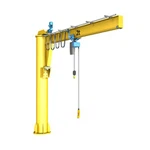
A Electric Crane is a type of overhead crane that consists of a single beam or girder that spans between two towers or supports. The crane is equipped with a lifting mechanism, such as a hoist or chain, that can lift and move heavy objects within its working area. Electric Cranes are commonly used in industrial, warehouse, and construction settings for lifting and transporting materials, equipment, and products. They are known for their versatility, stability, and ability to handle heavy loads.

Warranty:1 Year
Weight (KG):500 kg
Lifting mechanism:Eliectric Hoist
Color:Customized
Control Method:Ground Control+ Remote Control (customized)
Pictures & Components
Girder: The horizontal beam that spans between the two legs or towers of the crane. This is the primary structural element that provides support for the hoist and carries the load.

Hoist: A mechanical device attached to the girder that raises and lowers objects using a rope, wire cable, or chain. It can be manually operated or powered by an electric motor.

Hook : The component at the end of the hoisting mechanism to which the lifting slings, cables, or hooks are attache

Control System: Operated by a human operator or programmed for automated functions, the control system directs the movements of the crane, including lifting and traveling actions.

Electrical System: Comprises the wiring, electrical components, and controls that manage power to the hoist and travel mechanisms.

Sketch:


Main technical data


Advantages

Versatility: Electric Cranes can be used in a variety of environments, including industrial, warehouse and construction sites. They are suitable for lifting and transporting materials, equipment, products of different sizes and weights.
Stability: Single-girder construction provides stability and strength, so it can easily withstand heavy loads.
Cost-effective: Single-girder gantry cranes are generally less expensive than double-girder cranes, making them a cost-effective solution for companies with limited budgets.
Ease of Operation: These cranes are designed to be easy to operate with simple controls that can be operated by operators with minimal training.
Space saving: Electric Cranes have a compact design that takes up less space than other types of cranes, making them ideal for use in areas with limited space.
High Lifting Capacity: Despite its simple design, Electric Cranes can lift large loads so they can be used in a variety of ways.
Low maintenance: These cranes require minimal maintenance, reducing operating costs and downtime.
Application:

Warehouses and distribution centers: Electric Cranes are widely used in warehouses and distribution centers for loading and unloading goods, moving materials around the facility, and storing products at different heights.
Manufacturing facilities: These cranes are commonly used in manufacturing facilities to lift heavy materials, equipment, and products during the production process.
Construction sites: Electric Cranes are used on construction sites to lift and transport heavy materials such as steel beams, concrete blocks, and precast components.
Shipyards: In shipyards, these cranes are used to lift heavy equipment and materials onto ships or barges.
Maintenance and repair facilities: Electric Cranes are used in maintenance and repair facilities to lift engines, machinery, and other heavy equipment for inspection and repair.
Mills and foundries: These cranes are used in mills and foundries to lift heavy metal plates, ingots, and other materials.
Airports: At airports, Electric Cranes are used to load and unload cargo from aircraft.
Global market

Crane production procedure

Workshop view
Material Inspection
Quality Inspection: Strict quality inspection is carried out on the purchased raw materials to ensure that they meet the design requirements and national standards.
Material Storage: Qualified materials are stored according to classification to prevent corrosion or damage.
Cutting and Forming
Steel Cutting: Use plasma cutting, laser cutting or flame cutting and other technologies to cut the steel according to the size of the design drawing.
Forming Processing: Form the steel plate through bending, rolling, welding and other processes to manufacture the main beam, end beam and other structural parts.
Welding
Component Welding: The cut and formed steel parts are welded into the main structures such as the main beam, end beam and trolley. The welding process needs to be strictly controlled to ensure the structural strength and welding quality.
Weld Inspection: Use non-destructive testing technology (such as ultrasonic testing, radiographic testing) to inspect the welds to ensure that there are no cracks or other defects.
Machining
Precision Machining: Precision machining is performed on the key components of the crane, such as wheel sets, bearing seats, pulleys, etc., to ensure their dimensional accuracy and surface quality.
Assembly of the whole machine
General assembly: On the basis of pre-assembly, the overall assembly of the crane is carried out, including the final installation of the main beam, end beam, lifting mechanism, walking mechanism, etc.
Commissioning and testing
Under dynamic conditions, the operating performance of the crane is tested, including the testing of lifting, walking, steering and other functions. The overall size of the assembled bridge crane is checked to ensure that all dimensions meet the design requirements.
Spraying and anti-corrosion treatment
Surface treatment Rust removal: Rust removal on the surface of the crane, common methods include sandblasting, pickling, etc. Primer spraying: Spray anti-corrosion primer on the treated surface to prevent metal oxidation and corrosion. Topcoat spraying Color spraying: Spray topcoat according to customer requirements or industry standards to give the crane a protective and decorative effect. Marking: After spraying, mark the crane's identification information in accordance with the specifications, such as model, rated load, etc.
Factory and installation
Packaging and transportation
Packaging protection: Protectively package the key components of the crane to prevent damage during transportation. Transportation arrangement: According to the equipment size and transportation conditions, select a suitable transportation method to transport the crane to the customer's site.
Acceptance and delivery
Customer acceptance
On-site acceptance: The customer conducts on-site acceptance of the crane according to the contract requirements and technical specifications to check the performance and quality of the equipment.
Problem rectification: If any problems are found, the manufacturer needs to rectify them in time to ensure that the equipment fully meets the customer's requirements. Delivery and use Operation training: The manufacturer usually trains the customer's operators to ensure that they can operate the crane correctly and safely.


Hot Tags: electric crane, China electric crane manufacturers, suppliers, factory, Single Girder Gantry Crane, Electric Hoist Single Girder Gantry Crane, Gantry Crane
Previous
Single Girder CraneYou Might Also Like


Send Inquiry