





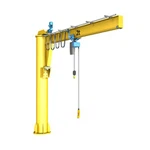


Portable Mobile Adjustable Gantry Crane
Products Description
The Portable Mobile Adjustable Gantry Crane is a versatile and efficient lifting solution designed for industries requiring flexible material handling. Built with a lightweight, high-strength aluminum frame, this crane combines portability with significant load capacity, making it an ideal choice for various on-site and indoor lifting needs.Equipped with durable, locking casters, the crane is easy to move and position exactly where needed, enhancing efficiency in dynamic work environments.Telescoping legs and adjustable span enable customized setup for different lifting heights and workspace constraints, allowing the crane to accommodate multiple tasks.Made of high-grade aluminum, this crane is both lightweight and strong. Its corrosion resistance makes it well-suited for indoor and outdoor use, especially in damp or marine environments. Designed for easy setup without heavy tools, this gantry crane can be assembled and disassembled quickly, making it perfect for temporary or frequently changing job sites.Includes secure locking mechanisms and sturdy construction to ensure stability and safety while lifting, giving operators peace of mind during operation.
Core Components:Engine, Motor
Place of Origin:China
Warranty:1 Year
Weight (KG):1000 kg
Machinery Test Report:Provided
Power supply:220-460V
Control method:Remote Control / manual
Capacity:0.5t-10t
Span length:1-6m
Crane feature;Small gantry crane
Lifting mechanism:Eliectric Hoist
Operation Methods:Cabin Operation + Pendant +Remote(Customized)
Lifting height:3 ~ 30m

Pictures & Components
1. Aluminum Frame
Main Beam: The primary horizontal beam, typically made of high-strength aluminum, which bears the load and connects the two end frames. This beam is designed to withstand high loads while remaining lightweight.
Legs or Uprights: Vertical supports on either side that connect to the main beam, often adjustable in height for versatility. These legs may telescope or have locking pins to secure the desired height.
2. Adjustable Mechanisms
Telescoping Legs: The legs are often designed to be height-adjustable using a telescoping mechanism. This feature allows operators to modify the height according to task requirements, making the crane adaptable for different lifting scenarios.
Span Adjustment Mechanism: Some models offer adjustable span width between the legs, allowing the crane to fit through tight spaces or doorways and providing flexibility in different settings.
3. Casters/Wheels
Heavy-Duty Casters: Attached to the base of each leg, the casters allow for easy movement and positioning of the crane. Many casters are designed to swivel, enhancing maneuverability.
Locking Mechanisms: Casters typically have brakes or locking mechanisms to keep the crane stable during lifting operations, ensuring safety.
4. Load Trolley
I-Beam Trolley: A trolley runs along the main beam, allowing loads to slide horizontally. The trolley is essential for positioning the load precisely across the beam.
Load Hook or Hoist Attachment: Attached to the trolley, a hook or a hoist (manual or electric) is used to lift and lower the load. The type of hoist depends on the crane model and its intended application.
5. Locking Pins and Safety Mechanisms
Height Adjustment Pins: Locking pins or bolts secure the telescoping legs at the desired height, providing stability during lifting. These pins are essential to prevent accidental height changes.
Safety Brakes: In addition to caster locks, some cranes have additional brakes on the trolley or hoist to prevent accidental movement while lifting.
6. End Frames
Base Frame: The horizontal frame at the bottom of each leg, which helps distribute weight and improve stability.
Support Braces: Diagonal braces or additional support bars are often added to the frame to enhance structural rigidity, preventing swaying or tilting.
7. Anti-Corrosion Coating
Surface Treatment: Many aluminum cranes are anodized or coated to prevent corrosion, especially for outdoor or marine use. This extends the crane's life and durability, even in harsh environments.
Optional Components:
Manual or Electric Hoist: Depending on load requirements, a hoist (manual chain hoist, lever hoist, or electric hoist) may be added for lifting heavy items.
Outriggers: Some models may come with additional extendable supports, or outriggers, for enhanced stability during use on uneven ground.
 |
|
 |
 |

8.Sketch

Main technical

Advantages
1. Portability and Mobility
Easy Transport: Lightweight materials, especially aluminum, make it easy to move the crane without heavy equipment.
Flexible Positioning: Equipped with wheels or casters, it can be quickly moved and positioned wherever lifting is required, which is particularly useful for dynamic work environments.
2. Adjustability
Height and Span Flexibility: Adjustable height and span enable users to modify the crane to suit specific tasks, working areas, and ceiling heights.
Adaptable to Confined Spaces: Adjustable components allow the crane to fit in tight or confined areas, making it suitable for a wide range of workspaces.
3. Lightweight Yet Durable
High-Strength Aluminum: The aluminum frame offers an excellent strength-to-weight ratio, meaning it can lift substantial loads without adding bulk.
Corrosion Resistance: Aluminum resists rust and corrosion, making it ideal for outdoor and wet environments, such as marine or industrial settings.
4. Quick Assembly and Disassembly
Convenient Setup: Portable gantry cranes are designed for fast and easy assembly, making them suitable for temporary or frequently changing job sites.
Minimal Tools Required: Often requires minimal tools for assembly, saving time and reducing the complexity of installation.
5. Cost-Effectiveness
Affordable Alternative: Provides a cost-effective solution compared to permanent overhead cranes, especially for smaller or short-term projects.
Reduced Installation Costs: No need for permanent installation, which can save on installation and setup costs, particularly in rented spaces.
6. Enhanced Safety
Secure Locking Mechanisms: Many models include secure locking pins for height adjustment, and locking casters for stability, reducing the risk of accidental movement during lifting.
Controlled Lifting: Integrated trolleys and optional hoists provide precise control over load positioning, enhancing operator safety and accuracy.
7. Versatility Across Applications
Multi-Industry Use: Suitable for a range of industries, including construction, manufacturing, warehousing, and repair work.
Indoor and Outdoor Use: Its corrosion-resistant aluminum frame makes it versatile for indoor and outdoor environments, from factories to docks.
Application:
1. Construction Sites
Material Handling: Used to lift and position heavy materials, such as beams, pipes, and trusses, in areas where larger cranes cannot operate.
Temporary Structures: Ideal for moving equipment and materials in and around scaffolding or temporary structures.
2. Manufacturing and Assembly
Production Lines: Facilitates the movement of parts and components along assembly lines, enhancing workflow efficiency.
Equipment Installation: Assists in the installation and maintenance of heavy machinery or production equipment.
3. Warehousing and Distribution
Loading and Unloading: Helps in loading and unloading goods from trucks, containers, or storage racks, making it easier to handle heavy items.
Inventory Management: Useful for relocating inventory and equipment within a warehouse, especially in tight spaces.
4. Maintenance and Repair Shops
Vehicle Repairs: Commonly used in automotive repair shops to lift engines, transmissions, or other heavy components during service or replacement.
Equipment Maintenance: Facilitates the maintenance and repair of machinery by allowing technicians to lift and position parts easily.
5. Aerospace Industry
Handling Aircraft Components: Used to lift and position large aircraft parts, such as engines and fuselage sections, during assembly or maintenance.
Precision Lifting: Essential for delicate operations where precision and control are critical.
6. Marine and Shipbuilding
Dockside Lifting: Useful for moving heavy equipment or materials on docks and shipyards, as it can be easily maneuvered in tight spaces.
Boat Maintenance: Assists in lifting boats or large components for repair and maintenance tasks.
7. HVAC and Electrical Installation
Unit Installation: Used to lift and install HVAC units, ductwork, and other heavy equipment in hard-to-reach areas, such as rooftops or high ceilings.
Heavy Equipment Positioning: Facilitates the positioning of electrical transformers, generators, or other large devices.
Crane production procedure
1. Design and Engineering
Engineers and designers define the crane's specifications, including load capacity, height range, span width, and materials.Create detailed 3D models using Computer-Aided Design (CAD) software. This allows for simulation of structural integrity and design optimization. A prototype may be built to test the design's functionality and safety before mass production.
2. Material Selection
High-strength aluminum alloy is selected for the frame and components, ensuring lightweight and durable construction.Materials for wheels, casters, locking mechanisms, and hoisting systems are sourced, often from suppliers specializing in industrial components.
3. Cutting and Machining
Large aluminum sheets or beams are cut to specified lengths and widths using saws or laser cutting machines. CNC machines are used to shape parts, create holes for bolts, and produce precise components, such as the trolley and leg fittings.
4. Welding and Assembly
The main beam and legs are welded together to form the crane's structure. This process is crucial for ensuring strength and stability.Heavy-duty wheels or casters are attached to the base of each leg, allowing for mobility and maneuverability.
5. Quality Control
Each crane is subjected to load testing to ensure it meets its rated capacity. Safety checks are performed to confirm that all adjustments and locking mechanisms function correctly.Components are inspected for defects, ensuring that all parts adhere to safety and performance standards.
6. Surface Treatment
The aluminum parts may undergo anodizing or coating processes to enhance corrosion resistance and durability. This is especially important for cranes intended for outdoor or humid environments.
7. Final Assembly
The trolley is mounted on the main beam, and a hoist (manual or electric) is installed to facilitate lifting operations. Any final adjustments or calibrations are made to ensure smooth operation and ease of use.

Workshop view:
The company has installed an intelligent equipment management platform, and has installed 310 sets (sets) of handling and welding robots. After the completion of the plan, there will be more than 500 sets (sets), and the equipment networking rate will reach 95%. 32 welding lines have been put into use, 50 are planned to be installed, and the automation rate of the entire product line has reached 85%.

Hot Tags: portable mobile adjustable gantry crane, China portable mobile adjustable gantry crane manufacturers, suppliers, factory
You Might Also Like




Send Inquiry