










Port Container Crane
Products Description
Key Characteristics & Capabilities
Massive Scale: Can be over 100 meters (~400 ft) tall, with a boom long enough to reach the farthest container on the world's largest container ships (24+ containers wide).
Immense Strength: Designed to lift ultra-heavy loads, often up to 65 tons under the spreader, and more for tandem lifts.
High Speed: Engineered for speed to minimize ship turn-around time (a key port metric). Hoisting, trolley, and gantry travel speeds are all very high.
Precision Control: Sophisticated drives and automation allow operators to place containers within inches into a ship's tight cell guides.
Durability: Built to withstand harsh, corrosive saltwater environments and operate near continuously with minimal downtime.
Increasing Automation: The latest generation of STS cranes are fully automated, operated remotely, and integrated with terminal operating systems (TOS) for optimized movement.
Types of Port Container Cranes
While the STS crane is the most iconic, a modern port uses a family of specialized cranes:
| Crane Type | Acronym | Primary Function | Key Characteristics |
|---|---|---|---|
| Ship-to-Shore | STS | Transfer containers between ship and shore. | Largest. Rail-mounted on the quay. Very high lifting capacity (up to ~100 tons), long boom. |
| Rubber-Tired Gantry | RTG | Stack containers in the yard and load/unload trucks. | Mobile. Runs on rubber tires. Spans 6-8 container rows + truck lane. Stacks 4-5 high. |
| Rail-Mounted Gantry | RMG | Stack containers in the yard. | Fixed path. Runs on fixed rails. More energy-efficient (often electric) and precise than RTGs. |
| Straddle Carrier | - | Move and stack containers in the yard. | Highly mobile. Can pick up a container and drive away with it. Very maneuverable. |
| Mobile Harbor Crane | MHC | Versatile; handles containers and breakbulk. | Flexible. Rotates, sits on tires/rails. Slower throughput but useful for multi-purpose terminals. |
Lifting Capacity 320 tons
Span (Width) 3 - 12 meters (adjustable)
Lifting Height 3 - 10 meters
Working Class A3-A5 (light to medium duty)
Hoisting Speed 0.5 - 8 m/min (variable)
Main Beam Type Single/double girder (box-type)
Power Supply 220V/380V 3-phase or manual
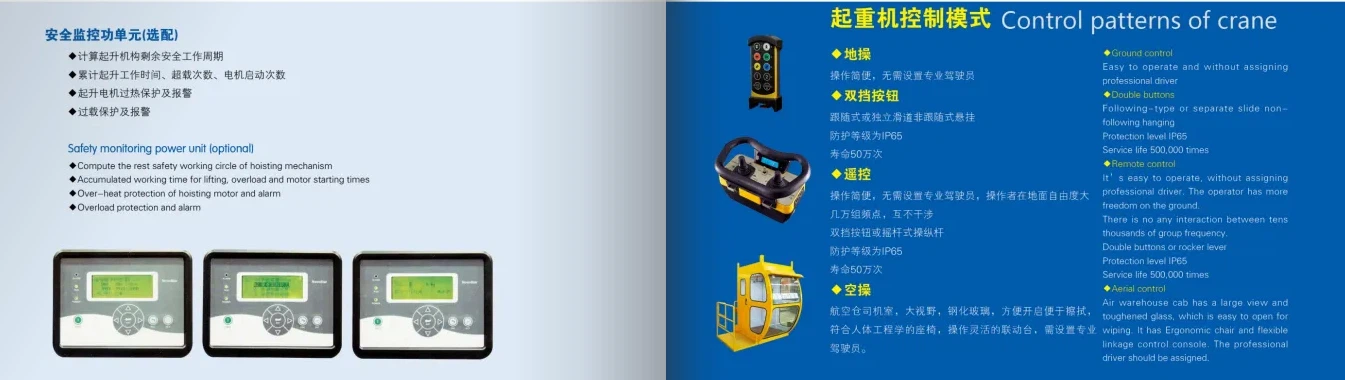
Control Mode Pendant control/wireless remote
Hoist Type Electric chain hoist/wire rope hoist
Travel Drive Manual push or motorized
Corrosion Protection Hot-dip galvanized or marine-grade paint
Wind Resistance Up to Beaufort scale 6 (for outdoor use)
Operating Temp -20°C to +50°C

Pictures & Componen
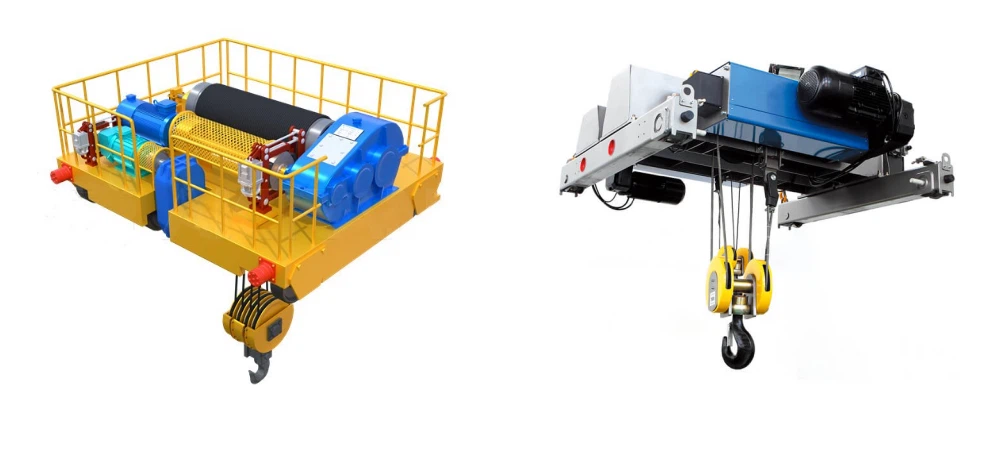
Here is a detailed breakdown of the components of a Port Container Crane (Ship-to-Shore STS Crane), the giant of maritime logistics.
Understanding these components reveals the engineering marvel behind these machines. We can categorize them into several systems:
1. Structural System (The Frame & Support)
This is the massive skeleton that supports all other components and withstands immense forces.
Portal Frame: The entire main structure that straddles the quay. It includes:
Sea Leg (Outboard Leg): The leg on the water side that extends down to the rail on the edge of the quay.
Land Leg (Inboard Leg): The leg on the land side. The space between the two legs allows trucks, rail cars, and other equipment to pass underneath.
Cross Beams: Horizontal members connecting the legs at the top and bottom, providing critical rigidity.

Boom (Outreach Arm): The long, horizontal girder that extends over the water to reach across the container ship. It is often hinged and can be raised to a parked position to allow ships to maneuver and to avoid obstructions.
A-Frame / Boom Hoist Tower: The tall, A-shaped structure atop the portal frame. It houses the machinery and ropes used to raise and lower the boom.
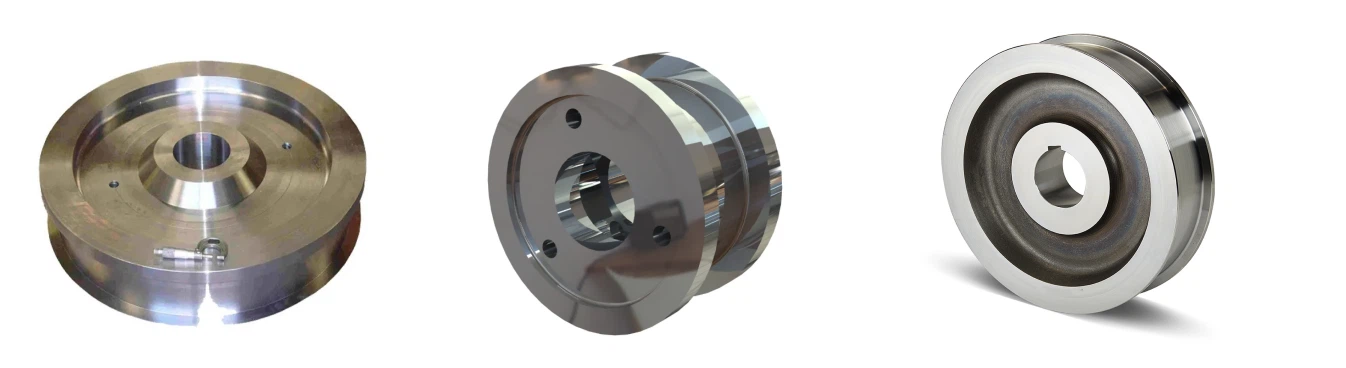
Gantry (Crane) Travel System: The assembly that allows the entire crane to move along the quay.
Travel Bogies: Massive wheel assemblies housed at the base of each leg.
Rail Wheels: The heavy-duty steel wheels that run on the dedicated rails embedded in the quay.
Rail Clamps: Powerful hydraulic clamps that lock the crane to the rails during high winds or when not in use, preventing accidental movement.

2. Hoisting & Trolley System (The Muscle & Movement)
This system handles the actual lifting and horizontal movement of the container.
Trolley Frame: The structure that carries the hoisting machinery and runs along rails on the boom and the land-side arm.
Trolley Drive Motors: Electric motors that power the wheels to move the trolley back and forth along the crane's girders.
Hoisting Machinery:
Hoist Motors: Very powerful electric motors that provide the torque to lift and lower loaded containers.
Hoist Drums: Large steel drums around which the hoist ropes are wound.
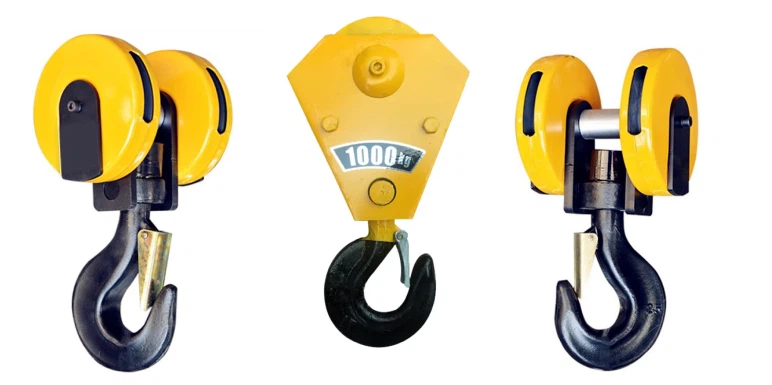
Sheaves: Large pulleys that guide the hoist ropes from the drums to the spreader.
Spreader (Spread Beam): The intelligent lifting attachment that is the "hand" of the crane. It is a steel frame that:
Twistlocks: Hydraulically or electrically operated pins that engage into the corner castings of a shipping container to securely lock onto it.
Size Adjustment: Can telescopically adjust its length to handle different container sizes (20ft, 40ft, 45ft).
Sensors: Equipped with sensors to detect container presence, weight, and whether the twistlocks are properly locked.
Guidance Arms: Funnels that help guide the spreader onto the container even in windy conditions or with slight misalignment.
3. Power & Control System (The Nerves & Brain)
This system provides energy and commands the crane's functions.
Power Input / Cable Reel System: STS cranes are typically powered by a high-voltage cable from the shore.
Cable Reel: A large motorized drum that pays out and retracts the heavy power cable as the crane travels along the quay, keeping it tidy and preventing damage.
Operator's Cabin: Mounted on the trolley, it gives the operator a perfect bird's-eye view down into the ship's hold. It is equipped with:
Ergonomic Control Chairs with joysticks and control panels for precise manipulation.
Air Conditioning and suspension to isolate the operator from noise and movement.
Cameras & Monitors providing views of the spreader, container cell, and blind spots.


Control Drives & Panels: Sophisticated electronics, including:
Variable Frequency Drives (VFDs): For smooth acceleration, deceleration, and precise speed control of all motions (hoist, trolley, gantry).
Programmable Logic Controller (PLC): The "brain" that runs the crane's control logic and automation sequences.
Remote Control Station (Modern Option): In newer cranes, the operator may control it from an air-conditioned room on the terminal with multiple video feeds, reducing fatigue and improving safety.

4. Safety & Auxiliary Systems (The Protection)
Critical systems that ensure safe and reliable operation 24/7.
Anti-Sway System: Uses the PLC and drive software to automatically calculate and dampen the pendulum motion of the suspended container, allowing for faster and safer positioning.
Collision Avoidance Systems: Sensors and software to prevent the trolley or spreader from colliding with obstacles on the ship or the crane itself.
Anemometer & Weather Station: Measures wind speed. The crane's control system will automatically slow down or shut down operations if wind speeds exceed safe limits.
Container Weighing System: Often integrated into the hoist system to measure the weight of each container as it is lifted.
Lighting: Powerful floodlights for operating at night.
Fire Suppression System: Especially in the operator's cabin and electrical rooms.
SKETCH
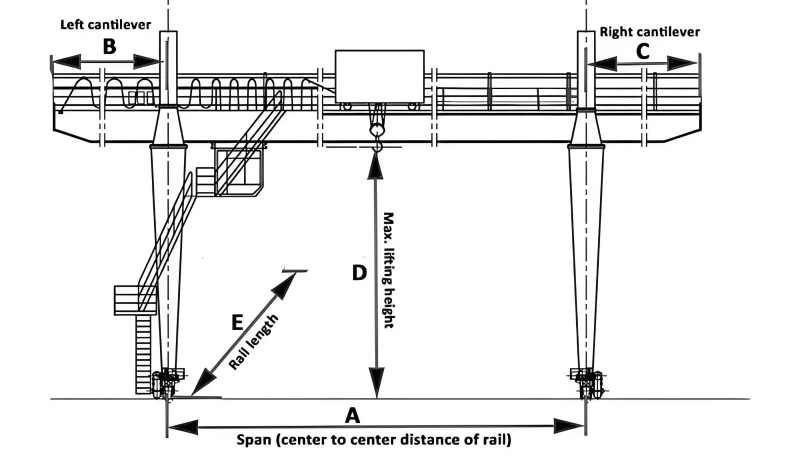
Main technical
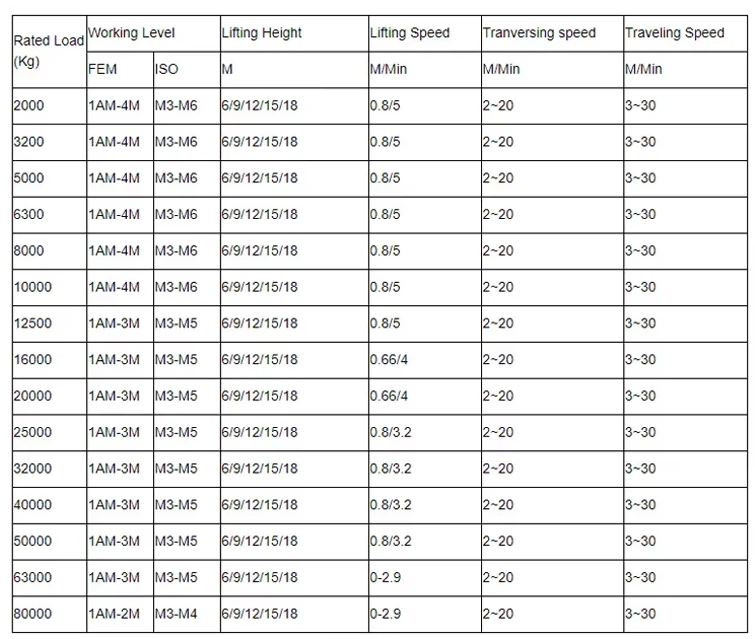
Advantages
These advantages are why STS cranes are the undisputed backbone of global containerized trade, offering unmatched efficiency and scale.
1. Unmatched Productivity and Speed
High Throughput: Designed for ultra-high-cycle operations, capable of moving a container every 2-3 minutes. This speed is critical for minimizing vessel turn-around time in port, which is a key cost factor for shipping lines.
Simultaneous Operations: Their large size allows them to work across multiple rows of a massive container ship at once, significantly speeding up the loading and unloading process compared to any other method.
2. Massive Scale and Reach
Ability to Serve Megaships: Modern STS cranes are the only equipment capable of handling the world's largest container vessels (24,000+ TEU). They have booms long enough to reach across ships that are 24 containers wide.
High Lifting Capability: Engineered to lift extremely heavy containers (often up to 65 tons under the spreader) and even perform "tandem lifts" with two containers at once in some configurations.
3. Precision and Control
Advanced Drives: Sophisticated control systems (like regenerative AC drives) allow for incredibly smooth and precise movement, enabling operators to place containers within inches into a ship's tight cell guides.
Anti-Sway Technology: Automated systems dampen the pendulum swing of the container, allowing for faster moving and positioning without risky swinging.
4. Durability and Reliability
Built for 24/7 Operation: Constructed from high-tensile steel to withstand constant use in the harsh, corrosive saltwater environment of a port. They are designed for minimal downtime.
Weather Resistance: Engineered to operate safely in high winds and adverse weather conditions, with anemometers automatically slowing or stopping operations if limits are exceeded.
5. Increasing Automation and Integration
Remote Operation: Newer cranes can be operated from a control room on the terminal, improving operator comfort and safety.
Data Integration: Fully integrated with the Terminal Operating System (TOS), optimizing the placement of every container on the ship and in the yard for efficient stowage and subsequent unloading.
Automated Sequencing: The crane's system can receive and execute a pre-planned sequence of moves, drastically reducing decision time and improving efficiency.
6. Safety
Collision Avoidance: Sensors and software prevent the spreader from colliding with the ship's structure or other containers.
Container Weighing: Integrated scales verify container weight during lifting, ensuring it is within safe limits and providing critical data for ship stability.
Isolated Operator Environment: The cabin is designed to protect the operator from the elements and noise, reducing fatigue.
Application
The primary application is the loading and unloading of container ships. However, this simple statement encompasses a complex, orchestrated process within a maritime terminal.
1. The Primary Cycle: Ship Handling
Unloading (Discharging): The most visible application. The STS crane picks import containers from the cell guides in the ship's hold and places them onto waiting transport vehicles on the quay (terminal trucks or Automated Guided Vehicles - AGVs).
Loading (Loading): The reverse process. The crane picks export containers from the transport vehicles and places them into precise locations in the ship's hold according to the stowage plan.
2. Intermodal Operations
Direct Transfer to Rail: In some advanced port layouts, the STS crane can place containers directly onto waiting rail cars on tracks that run under the crane's portal, streamlining the transfer to land-based transportation.
3. Beyond the Quay: Specialized Applications
While the primary role is ship-to-shore, the same core technology is applied in different configurations:
Portainer® Cranes: A specific brand and type of STS crane that has become a generic name for them.
Post-Panamax and Super Post-Panamax Cranes: Terms denoting the size of ship the crane can handle (wider than the old Panama Canal locks).
Rail-Mounted Quay Cranes (RMQC): Another technical name for STS cranes, emphasizing their rail-mounted nature.
Crane production process
The production process of a 200-ton mobile boat/marine lift crane involves several stages, from design and engineering to fabrication, assembly, and testing. Below is a detailed breakdown of the typical production process:
1. Design & Engineering
Conceptual Design: Engineers create initial sketches and 3D models based on load capacity (200 tons), reach, mobility, and environmental conditions (marine use).
Structural Analysis: Finite Element Analysis (FEA) ensures the crane can handle dynamic loads, wind, and wave forces.
Hydraulic & Electrical Systems: Design of hydraulic cylinders, winches, and control systems for smooth lifting operations.
Material Selection: High-strength steel (e.g., ASTM A514) for corrosion resistance in marine environments.
Regulatory Compliance: Meets standards like DNV-GL, ABS, or Lloyd's Register for marine cranes.
2. Material Procurement
Steel Plates & Beams: Sourced for the boom, chassis, and structural framework.
Hydraulic Components: Pumps, cylinders, hoses, and valves from certified suppliers.
Electrical Systems: Motors, sensors, and control panels (often waterproof for marine use).
Wire Ropes & Sheaves: High-grade steel cables for lifting.
3. Fabrication
A. Structural Fabrication
Cutting & Shaping: CNC plasma/laser cutting for precision parts.
Welding: Automated and manual welding (Submerged Arc Welding for thick sections).
Boom Construction: Lattice or telescopic design for strength and mobility.
Chassis & Outriggers: Reinforced for stability during lifts.
B. Hydraulic & Mechanical Assembly
Hydraulic System: Installation of pumps, cylinders, and hoses.
Winches & Drums: Mounted for lifting and lowering operations.
Slewing Mechanism: Allows 360° rotation (if applicable).
C. Electrical & Control Systems
Control Cabin: Waterproof operator station with joysticks/sensors.
Load Monitoring: Load cells and limit switches for safety.
Power Supply: Diesel engine or electric motor (marine-grade).
4. Assembly & Integration
Boom Installation: Mounted onto the chassis with pivot points.
Counterweights: Added for balance (if required).
Final Wiring & Plumbing: Connecting hydraulic and electrical systems.
Painting & Coating: Anti-corrosion paint (epoxy or zinc coatings).
5. Testing & Quality Control
Load Testing: Lifting 200 tons (+25% overload test, per standards).
Functional Tests: Checking hydraulic movements, rotation, and stability.
Environmental Tests: Salt spray tests for marine durability.
Safety Checks: Emergency stop systems, overload alarms.
6. Delivery & Commissioning
Transport: Disassembled for shipping or delivered as a mobile unit.
On-Site Assembly: Reassembled at the dock or shipyard.
Operator Training: Handling and safety protocols.

Workshop view:
The company has installed an intelligent equipment management platform, and has installed 310 sets (sets) of handling and welding robots. After the completion of the plan, there will be more than 500 sets (sets), and the equipment networking rate will reach 95%. 32 welding lines have been put into use, 50 are planned to be installed, and the automation rate of the entire product line has reached 85%.



Hot Tags: port container crane, China port container crane manufacturers, suppliers, factory
You Might Also Like


Send Inquiry