










Mobile Rubber-Tired Gantry Cranes (RTGs)
Product Introduction
Advantages:
✔ No fixed infrastructure needed (unlike RMGs).
✔ Highly mobile for flexible yard layouts.
✔ Cost-effective for medium-sized operations.
Disadvantages:
❌ Higher maintenance (tires, engines) compared to rail-mounted cranes.
❌ Less stable in high winds due to mobility.
❌ Higher fuel/electricity costs than fixed systems for large-scale operations.
Comparison with Other Gantry Cranes:
| Feature | MRTG (Rubber-Tired) | RMG (Rail-Mounted) | STS (Ship-to-Shore) |
|---|---|---|---|
| Mobility | High (rubber tires) | Limited (on rails) | Fixed (on rails) |
| Infrastructure | Minimal (paved yard) | Requires tracks | Needs rail system |
| Lifting Height | Medium (1-over-5) | Medium-High | Very High (ship cranes) |
| Automation | Possible | Common | Advanced |
Total Weight 80-200 tons
Wheel Load 15-30 tons per wheel
Overall Height 25-35m(max boom extension)
Lifting Capacity 30–50 tons (standard)
Span Width 6–10 container rows (25–35m)
Lifting Height 1-over-5 (18–22m)
Wheel Configuration 4–16 wheels (tandem or multi-axle)
Tire Type Solid rubber or pneumatic tires
Propulsion Diesel-electric, electric (cable reel), or hybrid
Travel Speed 50-120 m/min (loaded)100-180 m/min (empty)
Steering Mode 90°/180°/360°steeringCrab steering (all wheels turn)
Gradeability 1-3% slope (depending on load)
Hoisting Speed 15-30 m/min (full load)30-60 m/min (empty)
Trolley Speed 30-60 m/min
Gantry Speed 50-120 m/min
Control System Cabin,remote control, or automated

Pictures & Components
Mobile Rubber-Tired Gantry Cranes (MRTGs or RTGs) consist of several major structural, mechanical, and electrical components that work together to lift, move, and stack containers efficiently. Below is a breakdown of the main components and their functions:
1. Structural Components
These form the crane's framework and support the load.
A. Gantry Frame (Main Girder & Legs)
Function: Provides structural support for the entire crane.
Design: Typically a box-girder or truss structure for strength and rigidity.
Legs: Vertical supports with telescopic or fixed height depending on the model.
 |
 |
B. Boom (Lifting Arm)
Function: Extends the crane's reach for stacking containers.
Types:
Fixed Boom – Standard for most RTGs.
Telescopic Boom – Adjustable for varying stacking heights.
C. End Carriages (Wheel Assemblies)
Function: Supports the crane's movement on rubber tires.
Components:
Wheels & Tires (8–16 wheels, solid rubber or pneumatic).
Steering Mechanism (crab, 90°, or 360° steering).
Suspension System (absorbs ground shocks).


2. Mechanical & Lifting Components
These enable the crane to lift and move containers.
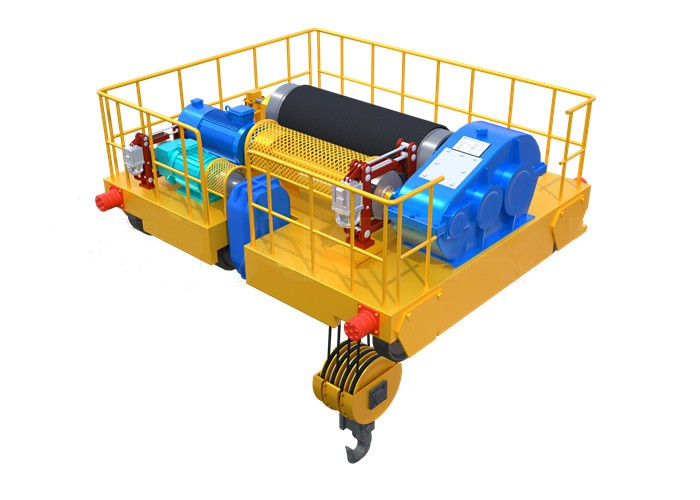
A. Hoisting Mechanism
Function: Raises and lowers containers.
Components:
Hoist Motor (electric or hydraulic).
Wire Rope & Sheaves (for lifting).
Drum or Winch System (controls rope movement).
 |
 |
 |
B. Trolley & Spreader
Function: Moves the container horizontally along the boom.
Components:
Trolley Frame (runs on rails along the girder).
Spreader (attaches to containers, twist-lock mechanism).
Fixed Spreader (for 20'/40' containers).
Adjustable Spreader (handles multiple sizes).
C. Drive System (Travel Mechanism)
Function: Moves the entire crane forward/backward.
Components:
Wheel Motors (electric or hydraulic).
Braking System (disc or dynamic brakes).
Steering Control (joystick or automated).
 |
 |
 |
3. Power & Control Systems
These provide energy and operational control.
A. Power Source
Diesel Engine (for diesel-electric RTGs).
Electric Motor (via cable reel or conductor bar).
Hybrid Systems (battery + diesel for energy savings).

.
B. Control Cabin & Operator Interface
Function: Allows manual or semi-automated operation.
Components:
Joysticks & Control Panels.
Cameras & Sensors (for visibility).
Remote Control Option (wireless operation).
C. Automation & Safety Systems
Anti-Sway System (reduces container swing).
Collision Avoidance (LiDAR/sensors).
Overload Protection (prevents exceeding capacity).
Wind Speed Monitor (locks crane in high winds).

4. Additional Support Systems
A. Hydraulic System
Used for steering, suspension, and boom adjustments.
B. Electrical System
Distribution panels, cables, and circuit breakers.
Backup power (for critical functions).
C. Chassis & Outriggers (Optional)
Stabilizers for extra support during lifting.

SKETCH

Main technical

Advantages
✅ 1. High Mobility & Flexibility
Rubber tires allow free movement without fixed rails, unlike Rail-Mounted Gantry Cranes (RMGs).
Can be relocated easily to different yard areas as needed.
Ideal for temporary work sites or changing storage layouts.
✅ 2. Lower Infrastructure Costs
No need for rails or fixed tracks, reducing installation expenses.
Requires only a paved surface, making it cost-effective for medium-sized terminals.
✅ 3. Versatile Container Handling
Can stack containers 1-over-5 or 1-over-6 (depending on model).
Handles 20', 40', 45', and even refrigerated (reefer) containers.
Some models support heavy loads beyond standard containers (e.g., steel coils, machinery).
✅ 4. Improved Operational Efficiency
Faster setup compared to fixed cranes.
Semi-automated & remote-controlled options reduce labor costs.
Can work in narrow spaces where larger Ship-to-Shore (STS) cranes cannot operate.
✅ 5. Adaptable Power Options
Diesel-electric (for remote areas).
Electric (cable reel or conductor bar) for eco-friendly operations.
Hybrid (battery + diesel) for energy savings.
✅ 6. Easy Maintenance (Compared to STS Cranes)
Fewer complex parts than Ship-to-Shore cranes.
Tire replacement is simpler than rail maintenance.
Application:
🚢 1. Port Container Terminals
Stacking containers in storage yards.
Transferring containers between trucks, trains, and storage blocks.
Feeding containers to Ship-to-Shore (STS) cranes.
🚂 2. Intermodal Rail Yards
Loading/unloading containers from trains to trucks.
Rearranging container stacks for efficient rail operations.
🏭 3. Industrial & Logistics Hubs
Handling heavy machinery, steel coils, and oversized cargo.
Used in manufacturing plants, warehouses, and distribution centers.
📦 4. Temporary & Project-Based Operations
Deployed in construction sites, military logistics, and disaster relief.
Useful where fixed cranes are impractical.
🔄 5. Automated & Smart Ports
Automated Rubber-Tired Gantry Cranes (A-RTGs) are used in modern ports with AI-guided navigation.
Integrated with terminal operating systems (TOS) for optimized workflows.
Crane production procedure
The production procedure for a 100-ton Double Girder Gantry Crane involves several key stages, from design and material procurement to fabrication, assembly, testing, and delivery. Below is a detailed step-by-step breakdown of the production process:
1. Design & Engineering
Customer Requirements Analysis: Determine span, lifting height, working class (FEM/ISO), power supply, and environmental conditions.
Structural Design: CAD/CAE software is used to design the girders, end carriages, legs, and trolley for optimal strength and deflection limits.
Mechanical & Electrical Design:
Hoisting mechanism (wire rope, hook, drum, motor, gearbox, brakes).
Trolley travel system (wheels, motors, reducers).
Gantry travel system (rails, wheels, drives).
Electrical systems (control panel, pendant/radio remote, limit switches, sensors).
Load Testing Simulation: Finite Element Analysis (FEA) ensures structural integrity under full load (100 tons + 25% overload test).
2. Material Procurement
Main Beams: High-quality steel plates (Q235B/Q345B or equivalent) for box girders.
End Carriages & Legs: Fabricated from rolled steel sections or welded plates.
Mechanical Components:
Motors, gearboxes, brakes (reputable brands like Siemens, ABB, or SEW).
Wire ropes, hooks, and pulleys (certified for 100-ton capacity).
Electrical Components: Variable Frequency Drives (VFDs), PLCs, limit switches, and cables.
3. Fabrication Process
A. Girder Fabrication
Cutting: CNC plasma/oxy-fuel cutting of steel plates.
Welding:
Submerged arc welding (SAW) for main girder seams.
Strict pre-heat and post-weld heat treatment (PWHT) to prevent distortion.
Machining: Drilling holes for connections and machining rail mounting surfaces.
NDT Testing: Ultrasonic or X-ray inspection of critical welds.
B. End Carriage & Legs
Fabricated with stiffeners for stability.
Wheel mounting surfaces machined for alignment.
C. Trolley Assembly
Frame welding and machining.
Installation of hoisting mechanism (drum, motor, gearbox, brakes).
Wire rope reeving and hook block assembly.
D. Electrical System
Control panel wiring with overload protection.
Installation of pendant/remote control system.
Limit switches and anti-collision devices (if required).
4. Assembly & Erection
Girder Assembly: Two double girders are joined (bolted or welded) on supports.
Trolley Installation: Mounted on girder rails with drive mechanisms.
End Carriage & Legs: Attached to girders with high-strength bolts.
Travel Wheels & Drives: Installed on legs for gantry movement.
Electrical Wiring: Connection of motors, sensors, and control systems.
5. Testing & Quality Control
Factory Acceptance Tests (FAT)
No-Load Test: Check all motions (hoist, trolley, gantry travel).
Load Test:
Static Load Test: 125% of SWL (125 tons) to verify structural strength.
Dynamic Load Test: 110% of SWL (110 tons) to test functionality.
Safety Checks:
Emergency stop function.
Overload limiter calibration.
Limit switch operation.
Certification
Third-party inspection (e.g., TUV, CE, GOST, or ASME) if required.
6. Painting & Surface Treatment
Blasting: Shot blasting to SA2.5 standard.
Priming & Painting: Epoxy primer + polyurethane topcoat (corrosion-resistant).
Markings: SWL, serial number, and safety labels.
7. Dismantling & Packing
Crane is disassembled for shipping (unless full assembly is transported).
Components packed in seaworthy wooden crates/containers.
8. Installation & Commissioning On-Site
Foundation preparation (rails/runway for gantry movement).
Reassembly by trained technicians.
Final load test and client approval.
9. Documentation & Handover
Delivery Documents:
Assembly drawings, electrical diagrams.
Material certificates, weld reports, test records.
Operation & maintenance manuals.
Training: Operator and maintenance training.

Workshop view
Material Inspection
Quality Inspection: Strict quality inspection is carried out on the purchased raw materials to ensure that they meet the design requirements and national standards.
Material Storage: Qualified materials are stored according to classification to prevent corrosion or damage.
Cutting and Forming
Steel Cutting: Use plasma cutting, laser cutting or flame cutting and other technologies to cut the steel according to the size of the design drawing.
Forming Processing: Form the steel plate through bending, rolling, welding and other processes to manufacture the main beam, end beam and other structural parts.
Welding
Component Welding: The cut and formed steel parts are welded into the main structures such as the main beam, end beam and trolley. The welding process needs to be strictly controlled to ensure the structural strength and welding quality.
Weld Inspection: Use non-destructive testing technology (such as ultrasonic testing, radiographic testing) to inspect the welds to ensure that there are no cracks or other defects.
Machining
Precision Machining: Precision machining is performed on the key components of the crane, such as wheel sets, bearing seats, pulleys, etc., to ensure their dimensional accuracy and surface quality.
Assembly of the whole machine
General assembly: On the basis of pre-assembly, the overall assembly of the crane is carried out, including the final installation of the main beam, end beam, lifting mechanism, walking mechanism, etc.
Commissioning and testing
Under dynamic conditions, the operating performance of the crane is tested, including the testing of lifting, walking, steering and other functions. The overall size of the assembled bridge crane is checked to ensure that all dimensions meet the design requirements.
Spraying and anti-corrosion treatment
Surface treatment Rust removal: Rust removal on the surface of the crane, common methods include sandblasting, pickling, etc. Primer spraying: Spray anti-corrosion primer on the treated surface to prevent metal oxidation and corrosion. Topcoat spraying Color spraying: Spray topcoat according to customer requirements or industry standards to give the crane a protective and decorative effect. Marking: After spraying, mark the crane's identification information in accordance with the specifications, such as model, rated load, etc.
Factory and installation
Packaging and transportation
Packaging protection: Protectively package the key components of the crane to prevent damage during transportation. Transportation arrangement: According to the equipment size and transportation conditions, select a suitable transportation method to transport the crane to the customer's site.
Acceptance and delivery
Customer acceptance
On-site acceptance: The customer conducts on-site acceptance of the crane according to the contract requirements and technical specifications to check the performance and quality of the equipment.
Problem rectification: If any problems are found, the manufacturer needs to rectify them in time to ensure that the equipment fully meets the customer's requirements. Delivery and use Operation training: The manufacturer usually trains the customer's operators to ensure that they can operate the crane correctly and safely.


Hot Tags: mobile rubber-tired gantry cranes (rtgs), China mobile rubber-tired gantry cranes (rtgs) manufacturers, suppliers, factory
Previous
Double Gantry CraneNext
Rmg Gantry CraneYou Might Also Like


Send Inquiry