







50 Ton Gantry Crane
Products Description
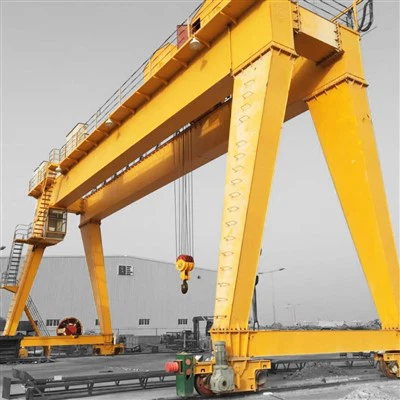
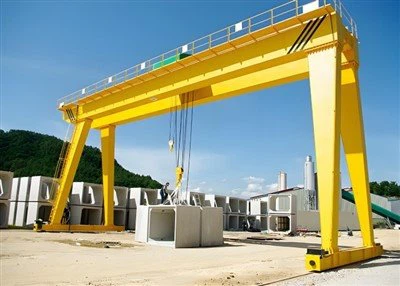
The 50 ton double girder gantry crane is a heavy-duty lifting machine designed for moving extremely large and heavy loads efficiently across open yards, workshops, ports, shipyards, and industrial plants. Unlike overhead cranes, gantry cranes do not require building support columns - instead, they move on rails laid on the ground, offering a flexible and cost-effective material handling solution.
This crane features a double-girder structure, which provides exceptional strength, rigidity, and stability, allowing it to handle high-capacity loads with precision and safety. Equipped with a winch-type hoist trolley or double-reeved wire rope hoist, the crane ensures powerful lifting performance and reliable operation even under continuous or harsh working conditions.
With customizable spans, lifting heights, and traveling speeds, the 50-ton gantry crane can be tailored to meet specific project needs. It comes equipped with advanced electrical systems, safety devices, and control modes (cabinet control, pendant control, or wireless remote control) to enhance both productivity and operator safety.
Thanks to its robust construction, weather resistance, and high operational efficiency, the 50 ton double girder gantry crane is widely used in industries requiring the movement of oversized, heavy materials - offering outstanding performance, lower maintenance costs, and a longer service life.
Core Components:Engine, Bearing, Gearbox, Motor, Gear
Place of Origin:Henan, China
Warranty:2 years
Weight (KG):50000 kg
Video outgoing-inspection:Provided
Machinery Test Report:Provided
Application:Outdoor
Keywords:Gantry Crane
Rated Loading Capacity:50Ton
Cross travelling speed:44.6m/min
Long travelling speed:47.1m/min
Control way:cabin
Power supply:Cable reel
Steel track:QU80
Power:3-phase AC 50HZ 380V

Pictures & Components
1.Main beam
1)Double Box Girder Structure: The main beam adopts a box-type welded construction, using high-strength structural steel plates. This design provides excellent load distribution, high rigidity, and minimizes deformation under heavy loads.
2)Precision Welding: Automated welding machines ensure continuous, high-quality welds to improve structural integrity and prevent fatigue cracks over long-term operation.
3)Camber Design: The main beams are manufactured with a calculated camber (slight arch) to compensate for deflection under load, ensuring stability and optimal load-bearing during lifting operations.
2.Lifting System
Main Components
1)Winch Trolley:
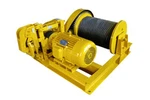
For 50-ton lifting capacity, the crane typically uses a winch-type trolley instead of a standard electric wire rope hoist.
Built with a large drum, motor, gearbox, and wire rope system.
Designed for high strength, durability, and smooth lifting operation.
2)Hoisting Motor:
Heavy-duty squirrel cage or wound-rotor motor with high starting torque.
IP54–IP55 protection class and F-class insulation to withstand harsh conditions.
3)Wire Rope:
High-quality, anti-rotation steel wire ropes ensure secure and reliable lifting.
Equipped with a rope guide and rope drum to prevent overlapping and tangling.
4)Hook Assembly:
Heavy-duty forged steel hook with a safety latch.
Equipped with a thrust bearing allowing the hook to rotate 360° freely under load.
5)Gearbox:
Hardened and precision-machined gears for high efficiency, low noise, and long service life.
Oil-lubricated for consistent performance.
6)Brake System:
Electromagnetic or hydraulic disk brakes ensure fast, reliable stopping.
Brakes automatically engage in the event of power failure for added safety.
7)Trolley Frame:
Rigid steel structure housing all lifting components, running on wheels along the main beams.
 |
 |
3.End carriage
1)Heavy-Duty Steel Frame:
The end carriages are fabricated from high-strength structural steel, welded into a box-type or truss-type structure for superior rigidity, reduced stress, and long service life.
2)Precision Machining:
After welding, the entire carriage frame is precision-machined to ensure perfect alignment and parallelism, guaranteeing smooth crane traveling.
3)Connection to Main Beam:
End carriages are bolted or welded to the main girders, forming a rigid and stable crane frame structure.
  |
4.Crane travelling mechanism
1)Travel Motors:
High-torque, heavy-duty motors are used to power the traveling wheels.
Typically three-phase AC motors with insulation Class F and protection Class IP54–IP55.
Equipped with electromagnetic or hydraulic brakes to ensure safe and precise stopping.
2)Gearbox (Reducer):
Hard-tooth surface gearboxes provide smooth transmission with high efficiency and low noise.
Gearboxes are compact and oil-lubricated for minimal maintenance.
3)Wheels and Axles:
Forged steel wheels with proper heat treatment to resist wear and deformation.
Wheels are directly driven by the motor-gearbox assembly or through a flexible coupling.
4)Drive Type:
Usually independent drive: each side of the crane has its own drive motor and gearbox for better traction and balance.
Synchronized control ensures coordinated movement to prevent skewing.
5)Rail Sweeps and Buffers:
Rail sweeps in front of wheels to remove obstacles from tracks.
Buffers installed at the ends to absorb impact energy and protect the crane structure.
6)Anti-Skewing Devices (Optional):
Electronic control systems detect and correct misalignment, ensuring the crane moves straight even under unbalanced loads.
5.Trolley travelling mechanism
1)Smooth Operation:
Equipped with VFD (Variable Frequency Drive) for stepless speed control, ensuring smooth starting, running, and stopping to reduce load swinging.
2)High Precision Positioning:
Slow speeds can be achieved for precise load placement, essential for handling large or delicate items.
3)Traveling Speed:
Typically ranges from 5–20 m/min depending on working conditions and customization.
4)Synchronization:
Dual-motor drive systems (if used) are electronically synchronized to prevent twisting or misalignment during trolley travel.
5)Safety Devices:
Travel limit switches to prevent over-travel at beam ends.
Emergency stop buttons on pendant control or remote control.
Optional anti-sway control systems for high-precision projects.
6)Optional Upgrades
Anti-sway Control System:
Actively reduces the load swing during trolley traveling.
Load Weighing Device:
Real-time monitoring of lifted loads to ensure safety limits are not exceeded.
6.Crane wheel
1)Forged Steel Core
Ensures high load-bearing capacity and impact resistance under dynamic loads.
2)Heat Treatment
Increases surface hardness while maintaining core ductility-ideal for long-term rail use.
3)Precision Machining
The tread and flange are machined for true running and minimal vibration.
4)Self-lubricating Bearings (Optional)
Used in modern designs to reduce maintenance and wear.

7.Crane Hook
Structural Details
1)Shank & Nut Design
The hook is fixed to the hook block via a threaded shank, nut, or bearing-mounted swivel system.
2)Thrust Bearing Assembly
Allows the hook to rotate under load without twisting the wire rope.
3)Latch Mechanism
Equipped with a spring-loaded safety latch to prevent accidental load release.
4)Hook Block (Pulley Group)
The hook is part of the hook block, which includes sheaves, bearings, and rope guide rollers.

8.Motor
1)Motor Types Used
Hoisting Motor:
Powers the lifting mechanism to raise and lower the load.
Trolley Traveling Motor:
Powers the trolley's horizontal movement across the main beams.
Crane Traveling Motor:
Drives the crane structure itself along the runway rails.
2)Specifications
Type:
phase AC motors are commonly used.
For hoisting, squirrel cage motors or wound rotor motors are typical.
Protection Grade:
IP54 or IP55 for dust and water resistance.
Insulation Class:
Class F or higher, ensuring the motor can withstand high operating temperatures.
Cooling Method:
Fan-cooled or self-ventilated designs to prevent overheating.
Voltage and Frequency:
Usually customized:
380V/50Hz (standard for many countries)
460V/60Hz, 415V/50Hz, or other based on client requirements.
Duty Cycle:
Motors are designed for S3–S4 duty class, meaning they can handle heavy intermittent loads and frequent starts/stops.
Speed Control:
Equipped with Variable Frequency Drive (VFD) for stepless speed control in many cranes.
Smooth acceleration, deceleration, and precise speed regulation.

.
9.Sound and light alarm system & limit switch
1)Sound and Light Alarm System
The crane is equipped with a combined audible and visual warning system designed to enhance workplace safety.
Components:
Sound Alarm (Buzzer or Siren):
Emits a loud, continuous or intermittent sound when the crane is operating, moving, or if a fault is detected.
Light Alarm (Flashing Light/Beacon):
A highly visible flashing LED or xenon strobe light to alert nearby workers during crane movements or critical operations.
2)Limit Switch
Limit switches act as safety stop devices, preventing the crane or trolley from over-traveling beyond safe mechanical limits.
Types of Limit Switches:
Lifting Limit Switch:
Stops the hoisting mechanism when the hook reaches its highest or lowest safe point, preventing wire rope over-winding or unwinding.
Trolley Travel Limit Switch:
Prevents the trolley from colliding into end stops at both sides of the main beam.
Crane Travel Limit Switch:
Prevents the entire crane from traveling beyond the designated track boundaries.
Overload Limit Switch (optional):
Detects overload situations and cuts power to the hoist to protect against structural damage.

10.Safety Devices
1)Overload Protection Device
Detects if the load exceeds the crane's rated capacity.
Automatically stops lifting operations or sounds an alarm to prevent damage to the structure and reduce accident risks.
2)Lifting Limit Switch
Prevents the hook from rising too high or lowering too far.
Stops the hoisting mechanism at safe upper and lower limits to avoid wire rope damage or mechanical failure.
3)Travel Limit Switch (Trolley & Crane)
Limits the trolley's movement along the main beam and the crane's movement along the rails.
Prevents collisions with end stops and protects the mechanical structure.
4)Emergency Stop Button
Located on the control pendant, remote control, and/or crane cab.
Instantly cuts power and halts all crane movements in case of emergency.
5)Buffer and End Stops
Shock-absorbing buffers (rubber, polyurethane, or hydraulic) installed at the ends of crane travel and trolley travel paths.
Absorb kinetic energy to reduce impact force during emergency stopping.
6)Rail Clamps / Wheel Brakes
Mechanical clamps or brakes that lock the crane on the rails when parked or in high winds, preventing unintentional movement.
7)Wind Speed Alarm System (for outdoor cranes)
Monitors real-time wind speed.
Sounds an alarm and/or automatically locks the crane when wind speeds exceed safe operating levels.
11.Control Mode
1)Pendant Control (Wired Control)
Description:
A wired handheld controller connected to the crane via a durable cable.
2)Wireless Remote Control
Description:
Radio frequency (RF) based controller with no physical connection to the crane.
3)Cabin Control (Driver's Cabin)
Description:
An enclosed operator's cabin mounted on the crane.

12.Sketch

Main technical

Advantages
1. High Lifting Capacity
Designed to lift and move very heavy loads (up to 50 tons or more) safely and efficiently.
Suitable for handling large machinery, steel structures, concrete beams, containers, etc.
2. Excellent Structural Stability
The double girder design provides a stronger and more rigid structure.
Can support higher loads across longer spans without excessive deflection or vibration.
3. Wide Working Range
Large lifting height and wide span options allow coverage of very large work areas.
Ideal for open yards, ports, shipyards, and large construction sites.
4. Flexible Installation
Rails are installed directly on the ground, requiring no complex building structures.
Suitable for outdoor or indoor use depending on the project.
5. Strong Durability
Heavy-duty steel materials, anti-corrosion coatings, and weather-resistant designs ensure a long service life even in harsh environments.
6. Customizable Configurations
Span, lifting height, speed, control method, and safety devices can all be customized based on customer needs.
Options for adding maintenance walkways, lighting systems, and cabins.
7. Efficient and Precise Control
Equipped with Variable Frequency Drive (VFD) for smooth, stepless speed control.
Reduces load swing and improves positioning accuracy.
Application
1. Ports and Shipyards
Load/Unload Cargo:
Ideal for handling heavy containers, ships, and large marine equipment at docks and shipyards.
Crane Usage:
Often used for container handling, unloading ships, and moving heavy ship parts.
Example:
Loading and unloading heavy goods, steel beams, or machinery from ships.
2. Steel Mills and Foundries
Handling Steel Products:
Moves large steel beams, billets, and coils within the mill or between production lines.
Crane Usage:
Designed to handle high temperatures and heavy loads in steel production environments.
Example:
Lifting hot steel plates or heavy metal rolls for further processing.
3. Construction Sites
Heavy Lifting:
Lifting large construction materials such as concrete beams, steel structures, or pre-cast elements.
Crane Usage:
Supports the construction of bridges, skyscrapers, and other large structures.
Example:
Moving heavy precast concrete slabs into position during a building project.
4. Warehouses and Distribution Centers
Material Handling:
Efficiently lifts and transports large, heavy items across expansive warehouses or storage areas.
Crane Usage:
Organizes and moves bulky goods such as machinery, large tools, or equipment.
Example:
Moving industrial parts or large pallets of raw materials in storage areas.
5. Manufacturing Plants
Assembly Line Support:
Lifts heavy parts and machinery into place for assembly or maintenance.
Crane Usage:
Used in industries such as automotive, heavy machinery, and aerospace for manufacturing.
Example:
Lifting large engine components for assembly or adjusting heavy molds in a manufacturing plant.
Crane production procedure
1. Design and Engineering
Custom Design:
The crane design is created based on the customer's specific requirements, including lifting capacity (50 tons), span, lifting height, and environment (e.g., outdoor, indoor, harsh environments).
Detailed 3D modeling and structural analysis are performed using design software to optimize performance and safety.
Engineering Specifications:
Calculation of load-bearing capacity, structural stability, power requirements, and material specifications.
Ensuring compliance with international ISO, DIN, and ANSI standards.
2. Material Selection
High-Quality Steel:
Steel plates, beams, and structural components are selected for their strength, durability, and corrosion resistance.
For critical parts like the main girder and end carriage, high-strength steel is chosen to handle the heavy loads and high stresses involved.
Component Sourcing:
Electric motors, gearboxes, wire ropes, wheels, and other mechanical parts are sourced from trusted suppliers that meet the crane's requirements for reliability and long service life.
3. Fabrication and Assembly
a) Main Girder Manufacturing
Cutting and Welding:
Steel plates and sections are cut to size, and the main girder components are welded together in strict alignment to maintain dimensional accuracy and load distribution.
Inspection:
Each component is thoroughly inspected for welding integrity, alignment, and material strength.
b) End Carriage and Supporting Structures
Fabrication:
The end carriages are fabricated using similar techniques, ensuring they are capable of supporting the full weight of the crane and load.
Wheel Assembly:
Wheels are installed on the end carriages, with precise alignment to ensure smooth crane travel along the rails.
c) Assembly of Lifting Mechanism
Hoisting System:
The electric hoist is assembled, which includes the motor, gearbox, drum, and wire rope.
The trolley and hoist are mounted onto the main girder, with all components tested for proper alignment and smooth operation.
4. Electrical and Control Systems
Wiring and Control Panel:
Electrical components such as motors, limit switches, control panels, and safety alarms are wired and connected.
Installation of Variable Frequency Drive (VFD) for smooth speed control and remote control systems for operation.
Control System Testing:
The control panel is tested to ensure responsive operation, including all buttons, switches, and safety features.
5. Testing and Quality Control
Static Testing:
The crane structure undergoes static load testing to ensure it can safely support its rated lifting capacity of 50 tons.
Dynamic Testing:
Dynamic load testing is performed to verify the crane's operational capabilities under real working conditions, including lifting and moving a full load.
Safety and Functionality Testing:
Each safety device (overload protection, limit switches, anti-sway systems) is tested for proper functionality.
The crane's motion system (lifting, traveling, and trolley) is thoroughly tested for smooth operation, accuracy, and stability.
6. Final Inspection and Painting
Visual Inspection:
A final visual inspection is performed to ensure quality, fit, and finish. Any adjustments are made to the assembly if needed.
Painting and Anti-Corrosion Treatment:
The crane is coated with a corrosion-resistant paint (usually a primer, base coat, and top coat) to protect the structure from wear and harsh environmental conditions.
7. Packaging and Delivery
Disassembly for Shipment:
The crane is often partially disassembled (e.g., hoist, trolley) for easier shipment.
Packing and Transport:
Components are carefully packed to prevent damage during transport.
The crane is delivered to the customer's site, along with all necessary documentation (manuals, certificates, and safety data).
8. Installation and Commissioning
On-Site Assembly:
Once delivered, the crane is reassembled at the installation site, ensuring proper alignment with rails and structural components.
Final Testing and Calibration:
After assembly, final testing is conducted to ensure the crane operates as expected under the specified conditions.
Operator Training:
The customer's operators are trained on crane operation, maintenance, and safety procedures.

Workshop view:
The company has installed an intelligent equipment management platform, and has installed 310 sets (sets) of handling and welding robots. After the completion of the plan, there will be more than 500 sets (sets), and the equipment networking rate will reach 95%. 32 welding lines have been put into use, 50 are planned to be installed, and the automation rate of the entire product line has reached 85%.


Hot Tags: 50 ton gantry crane, China 50 ton gantry crane manufacturers, suppliers, factory
You Might Also Like




Send Inquiry