







Gantry Cranes On Rail 5t
Products Description
Comparison: Rail-Mounted vs. Wheeled Gantry Crane
| Feature | Rail-Mounted Gantry | Wheeled Gantry |
|---|---|---|
| Stability | ✅ Excellent (fixed path) | ⚠️ Moderate (floor-dependent) |
| Precision | ✅ High (guided rails) | ⚠️ Depends on operator |
| Mobility | ❌ Fixed path only | ✅ Can be relocated |
| Load Capacity | ✅ Up to 500T+ | ⚠️ Usually ≤50T |
| Cost | Higher (rail installation) | Lower (no rails) |
Recommended Options for a 5T Rail Gantry Crane
Single Girder (5-15m span) – Cost-effective for lighter use.
Double Girder (15-30m span) – Better for heavy-duty, frequent lifts.
Explosion-Proof (for hazardous areas) – Oil/gas/chemical industries.
Lifting Capacity: 5 metric tons
Span (Width): Typically 5m to 30m (customizable)
Lifting Height: 6m to 20m (adjustable)
Travel Speed: 10–30 m/min (adjustable)
Power Supply: 380V/50Hz (3-phase) or customized
Control: Pendant, remote, or cabin-operated

Pictures & Components
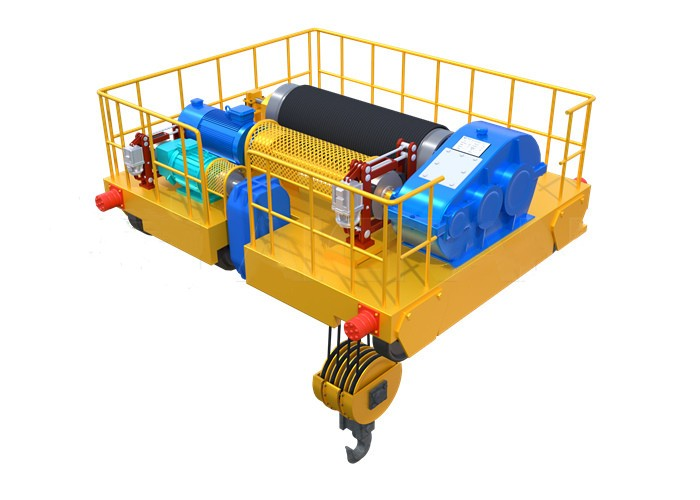
Here's a detailed breakdown of the components of a 5-ton rail-mounted gantry crane (RMG), along with their functions and specifications:
1. Main Structural Components
A. Gantry Frame
Legs (Upright Columns)
Made of high-strength steel (Q235B/Q345B).
Provide vertical support and stability.
May include bolted or welded connections for adjustability.
Main Girder (Single or Double Girder)
Single Girder: Lighter, cost-effective (common for 5T capacity).
Double Girder: Higher rigidity for heavy-duty or long spans.
Box-type or truss design for load distribution.
End Carriages
House the wheels and drive mechanisms.
Include buffer systems to absorb impacts.
 |
 |
B. Rail System
Crane Rails (QU70/QU80/QU100)
Made of hardened steel for durability.
Secured to the ground via rail clips, bolts, or embedded tracks.
Rail Pads & Fishplates
Reduce vibration and noise.
Ensure smooth alignment of rail joints.
 |
 |
2. Mobility & Drive System
A. Wheels & Bogies
Wheels (Forged Steel, 300-500mm diameter)
Heat-treated for wear resistance.
May include flanges to prevent derailment.
Bogie Assemblies
Wheel clusters that distribute load evenly.
Include anti-skid mechanisms for slippery conditions.
B. Drive Units
Travel Motors (3-phase AC, 1.5-5.5 kW)
Power the crane's movement along rails.
Equipped with brakes for emergency stops.
Reducer (Gearbox)
Converts motor speed into torque for smooth travel.
Frequency Inverter (Optional)
Allows adjustable speed control for precision positioning.

3. Lifting Mechanism
A. Hoist Unit (5T Capacity)
Electric Wire Rope Hoist (Common for 5T)
Motor: 7.5-10 kW (depends on lifting speed).
Drum & Rope: Steel wire rope (Ø8-12mm) wound on a grooved drum.
Hook Block: Swivel hook with safety latch.
Chain Hoist (Alternative for Light Duty)
Manual or electric (lower speed, cheaper).
B. Trolley System
Trolley Frame
Carries the hoist along the girder.
Trolley Wheels & Drive
Motorized trolleys use geared motors (0.5-2.2 kW).
Manual trolleys use push/pull operation.

4. Electrical & Control System
A. Power Supply
Festoon System or Cable Reel
Manages power cables along the crane's travel path.
Main Control Panel
Houses contactors, overload protectors, and PLC (if automated).
B. Operator Controls
Pendant Control (Hanging Button Station)
Up/down, left/right, forward/backward commands.
Radio Remote Control (Optional)
Wireless operation up to 100m range.
Cabin Control (For Large Cranes)
Operator sits in an ergonomic cabin with joysticks.

.
5. Safety Components
Overload Limiter
Cuts power if load exceeds 105% of capacity.
Limit Switches
Prevents hoist/trolley from over-traveling.
Anti-Collision System (Multi-Crane Areas)
Laser or ultrasonic sensors to avoid crashes.
Emergency Stop (E-Stop)
Instantly halts all crane functions.
Anemometer (Outdoor Cranes)
Detects high winds and triggers alarms.

6. Optional Accessories
Magnetic Lifter or Grab Bucket
For handling scrap metal or bulk materials.
Weighing System
Displays real-time load weight.
LED Work Lights
Illuminates the lifting area.
Lubrication System
Automatic greasing for wheels and gears.

SKETCH

Main technical

Advantages
1. Superior Stability & Safety
Rails ensure smooth, wobble-free movement, reducing load swing.
Anti-derailment features (flanged wheels, rail clamps) prevent accidents.
Overload protection & limit switches enhance operational safety.
2. High Precision & Control
Guided rail movement allows exact positioning (critical in assembly lines).
Variable speed control (via frequency inverter) for delicate lifts.
Remote/pendant control enables operator flexibility.
3. Heavy-Duty Performance
Handles 5-ton loads consistently without deflection.
Double-girder options available for higher rigidity (long spans).
Durable construction (steel girders, hardened rails) for long-term use.
4. Customizable & Adaptable
Adjustable span (5m–30m) and lifting height (6m–20m).
Can be outdoor-rated (weatherproof coatings, anemometers for wind detection).
Optional attachments (magnets, grabs, weighing systems).
5. Cost-Effective for Fixed Paths
Lower long-term maintenance than mobile cranes (no tire wear).
Higher efficiency than forklifts for repetitive heavy lifting.
6. Energy Efficient
Regenerative braking (in advanced models) saves power.
3-phase electric motors reduce energy consumption vs. diesel alternatives.
Application:
1. Manufacturing & Fabrication
Moving heavy machinery, presses, molds, and dies.
Assembly line support (automotive, aerospace).
2. Steel & Metal Processing
Handling steel coils, plates, beams, and pipes.
Loading/unloading CNC machines and rolling mills.
3. Warehousing & Logistics
Container handling (shipping yards, freight stations).
Stacking heavy pallets (5T+) in high-bay warehouses.
4. Construction & Precast Concrete
Lifting prefabricated concrete panels, bridge segments.
Positioning heavy construction materials (I-beams, columns).
5. Shipbuilding & Repair
Moving ship engines, propellers, and hull sections.
Dry dock applications for vessel maintenance.
6. Power Plants & Heavy Industry
Installing turbines, generators, transformers.
Handling boilers and pressure vessels.
7. Railway & Infrastructure
Lifting rail tracks, locomotives, and bogies.
Bridge construction and maintenance.
Crane production procedure
1. Design and Planning
Demand Analysis: According to customer needs and usage scenarios, a detailed demand analysis is carried out to determine the specifications, load, span, lifting height, etc. of the crane.
Engineering Design: Engineers use CAD and other design software to carry out detailed design, including structural, mechanical, electrical and other aspects to ensure that the design meets relevant standards and specifications.
2. Material Procurement
Material Selection: Select appropriate steel, motors, control systems and other components according to design requirements.
Supplier Screening: Screen suppliers of materials and components to ensure the quality and reliability of materials.
3. Processing and Manufacturing
Cutting and Forming: Cut, weld, bend and other processes on steel to form main beams, end beams and other structural components.
Machining: Precision machining of key components, such as turning, milling, drilling, etc., to ensure that the size and accuracy meet the design requirements.
Surface Treatment: Spray, galvanize or rust-proof metal parts to enhance corrosion resistance and aesthetics.
4. Assembly
Component Assembly: Assemble the main beam, end beam, trolley, lifting mechanism and other components to form a complete crane structure.
Installation of electrical system: Install electrical equipment such as motors, control cabinets, sensors, limit switches, etc. to ensure the normal operation of the electrical system.
5. Debugging and testing
Preliminary debugging: Carry out preliminary debugging of the crane to check the coordination and operation of each component.
Load test: Carry out load test to ensure the safety and stability of the crane under rated load, and test the functions of safety devices such as overload protection and limit switches.
Performance test: Test the performance indicators of the crane such as lifting speed, running speed, braking effect, etc. to ensure that they meet the design requirements.
6. Quality inspection
Quality inspection: Carry out a comprehensive quality inspection of the crane, including appearance, size, performance, etc., to ensure compliance with relevant standards.
Safety assessment: Carry out safety assessment to ensure the normal operation of all safety devices and systems.
7. Delivery and installation
Packaging and transportation: Pack qualified cranes and prepare them for transportation to the customer site.
On-site installation: Carry out on-site installation according to customer requirements, including basic production and equipment debugging.
Training and handover: Train operators to ensure that they master the operation methods and safety precautions of the equipment and complete the handover work.


Workshop view
Material Inspection
Quality Inspection: Strict quality inspection is carried out on the purchased raw materials to ensure that they meet the design requirements and national standards.
Material Storage: Qualified materials are stored according to classification to prevent corrosion or damage.
Cutting and Forming
Steel Cutting: Use plasma cutting, laser cutting or flame cutting and other technologies to cut the steel according to the size of the design drawing.
Forming Processing: Form the steel plate through bending, rolling, welding and other processes to manufacture the main beam, end beam and other structural parts.
Welding
Component Welding: The cut and formed steel parts are welded into the main structures such as the main beam, end beam and trolley. The welding process needs to be strictly controlled to ensure the structural strength and welding quality.
Weld Inspection: Use non-destructive testing technology (such as ultrasonic testing, radiographic testing) to inspect the welds to ensure that there are no cracks or other defects.
Machining
Precision Machining: Precision machining is performed on the key components of the crane, such as wheel sets, bearing seats, pulleys, etc., to ensure their dimensional accuracy and surface quality.
Assembly of the whole machine
General assembly: On the basis of pre-assembly, the overall assembly of the crane is carried out, including the final installation of the main beam, end beam, lifting mechanism, walking mechanism, etc.
Commissioning and testing
Under dynamic conditions, the operating performance of the crane is tested, including the testing of lifting, walking, steering and other functions. The overall size of the assembled bridge crane is checked to ensure that all dimensions meet the design requirements.
Spraying and anti-corrosion treatment
Surface treatment Rust removal: Rust removal on the surface of the crane, common methods include sandblasting, pickling, etc. Primer spraying: Spray anti-corrosion primer on the treated surface to prevent metal oxidation and corrosion. Topcoat spraying Color spraying: Spray topcoat according to customer requirements or industry standards to give the crane a protective and decorative effect. Marking: After spraying, mark the crane's identification information in accordance with the specifications, such as model, rated load, etc.
Factory and installation
Packaging and transportation
Packaging protection: Protectively package the key components of the crane to prevent damage during transportation. Transportation arrangement: According to the equipment size and transportation conditions, select a suitable transportation method to transport the crane to the customer's site.
Acceptance and delivery
Customer acceptance
On-site acceptance: The customer conducts on-site acceptance of the crane according to the contract requirements and technical specifications to check the performance and quality of the equipment.
Problem rectification: If any problems are found, the manufacturer needs to rectify them in time to ensure that the equipment fully meets the customer's requirements. Delivery and use Operation training: The manufacturer usually trains the customer's operators to ensure that they can operate the crane correctly and safely.


Hot Tags: gantry cranes on rail 5t, China gantry cranes on rail 5t manufacturers, suppliers, factory
Previous
Outdoor Double Gantry CraneYou Might Also Like


Send Inquiry