








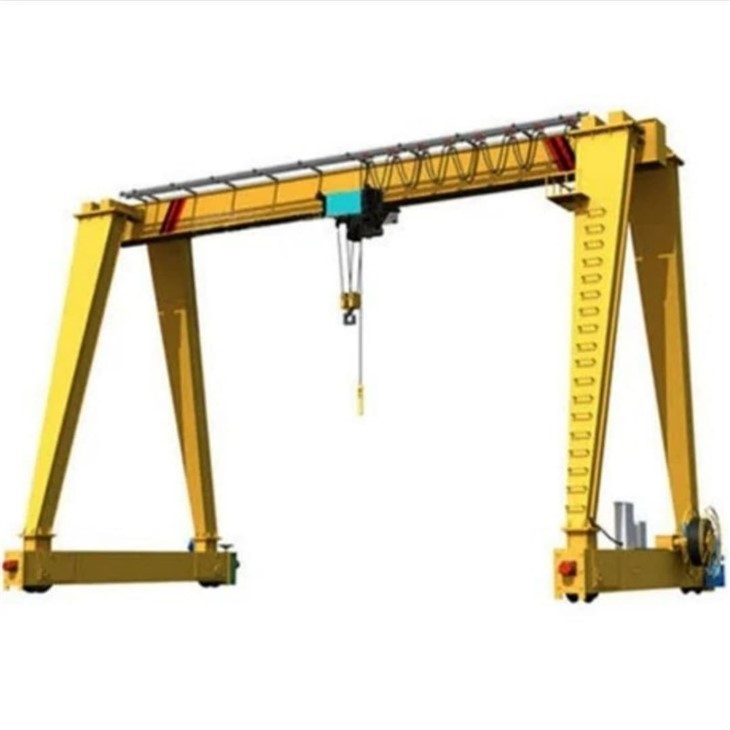

Electric Double Beam Trolley Gantry Crane
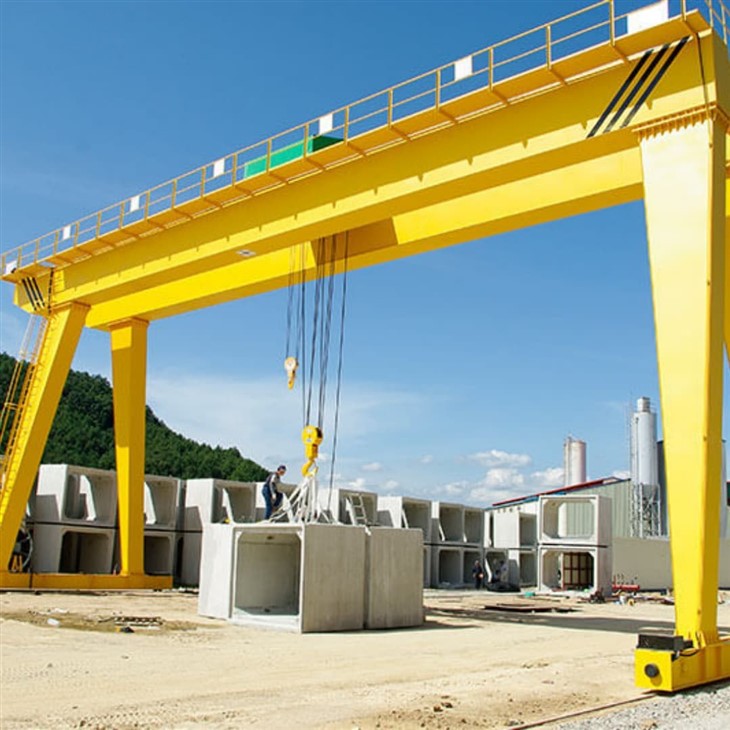
Electric Double Beam Trolley Gantry Crane suppliers
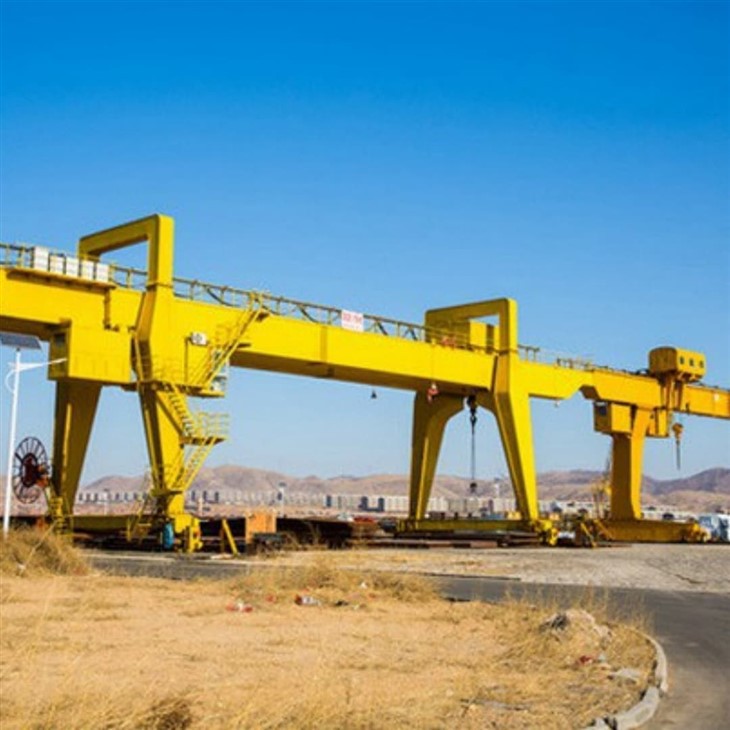
Electric Double Beam Trolley Gantry Crane factory

Electric Double Beam Trolley Gantry Crane best
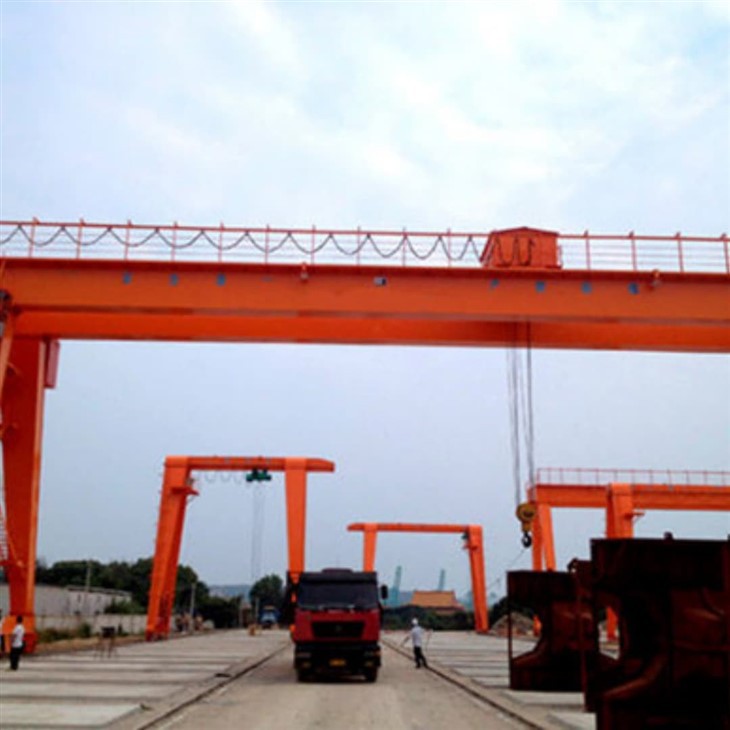
Electric Double Beam Trolley Gantry Crane high quality

Electric Double Beam Trolley Gantry Crane price

Electric Double Beam Trolley Gantry Crane manufacturers
Electric Double Beam Trolley Gantry Crane
Products Description
An electric double-beam trolley gantry crane is a heavy-duty lifting system that uses electric power to handle large and heavy loads with high precision. It's essentially an upgraded, more automated version of a standard double-beam gantry crane, widely used in modern industry.
⚡ What it is
An electric double-beam trolley gantry crane features:
Two main girders (double beams) for strength and stability
A trolley-mounted electric hoist or winch
Electric motors for all movements (lifting, trolley travel, and sometimes gantry travel)
It is designed for efficient, high-capacity material handling in fixed or semi-fixed working areas.
🏗️ Main Components
The system includes all standard gantry crane parts, plus electrically driven systems:
Double main girders – strong structural beams for heavy loads
Electric trolley – moves along the beams using motors
Electric hoist/winch – lifts and lowers loads via motor-driven drum
Support legs – transfer load to ground or rails
End carriages & wheels – allow movement if rail-mounted
Electrical system – power supply, control panels, wiring
Control system – remote, pendant, or cabin operation
⚙️ Key Features
Fully electric operation → less manual effort, higher efficiency
High lifting capacity → typically 10 tons to 500+ tons
Smooth and precise movement with variable speed control
Wide span capability for large work areas
Automation-ready (can integrate PLCs, sensors, smart controls)
📦 Applications
Shipyards and ports
Steel and heavy manufacturing plants
Container yards
Power plants
Construction and infrastructure projects
✅ Advantages
High efficiency and productivity
Reduced labor requirements
Accurate load positioning
Reliable for continuous operation
Can operate in harsh outdoor environments
⚠️ Limitations
Higher initial investment cost
Requires stable power supply
Needs regular maintenance of electrical components
Installation can be complex
🔌 How it works (simple idea)
Electric motors drive:
The hoist → lifts the load
The trolley → moves side to side
The gantry (optional) → moves forward/backward
The operator controls everything via remote, pendant, or cabin system
Core Components:Gearbox, Motor, Gear
Place of Origin:Henan, China
Warranty:2 years
Weight (KG):100000 kg
Video outgoing-inspection:Provided
Machinery Test Report:Provided
Application:warehouse, ports, yard, etc
Keywords:Model Gantry Crane
Control way:Ground Handle Control(push Button)
Capacity:10-600t
Material:Q235B/Q345B
Lifting speed:1-15m/min
Lifting mechanism:Electric Winch Trolley
Girder Type:Double Box
Work Duty:A5-A6
Pictures & Components
1.Double Main Girders
Two parallel beams forming the crane bridge
Support the trolley and load
Designed for high strength and minimal deflection
Gantry Legs (Support Columns)
Connect girders to the ground or रेल system
Transfer all loads safely to the foundation
1) The main beam of a double beam gantry crane, also called the bridge beam or girder, is a primary structural component that spans across the crane's width. In a double beam gantry crane, two main beams are used, running parallel across the gantry's span. These beams are typically supported at each end by legs or support columns, which connect to the crane's wheels, allowing it to move along tracks on the ground.
The main beam supports the load and distributes the weight across the entire structure. It is engineered to handle heavy loads and resist bending and deformation.A trolley, which houses the hoisting mechanism, travels along the main beams. The double-beam design provides greater stability and allows for higher lifting capacities compared to a single-beam gantry crane.
Main beams are generally made from high-strength steel and may feature box or I-beam profiles, depending on the load requirements. They are often reinforced with additional materials to increase their strength and durability.The length and width of the main beams can be customized to meet specific operational needs, such as the size of the workspace or lifting capacity.For added stability, cross-ties or bracings are often placed between the two main beams. These reinforcements help reduce lateral movement and vibration during operation.
Electric Hoisting Mechanism
Core lifting unit powered by an electric motor
Includes:
Hoist motor
Drum
Wire rope or chain
Hook block
Handles vertical lifting and lowering
1) Motor: The lifting motor drives the hoist system, which is responsible for raising and lowering the load. The motor typically powers a drum or winch system that moves the wire rope or chain attached to the load.Control of Lifting Speed enables precise control over the lifting speed, which can be adjusted depending on the load and the operation's requirements.The motor helps in smoothly handling and positioning heavy loads by providing consistent torque to the hoist.
2) Reducer: In a double beam gantry crane system, the reducer (also known as the gearbox or gear reducer) plays a crucial role in converting the motor's high-speed, low-torque output into a low-speed, high-torque output suitable for the crane's lifting system. The reducer helps in controlling the speed and enhancing the mechanical efficiency of the system.
3) Drum: A cylindrical component that holds the hoist rope. The drum is typically powered by an electric motor and is responsible for winding and unwinding the rope as the crane operates.A steel wire rope that connects the load hook to the drum. As the drum rotates, the rope is wound or unwound, lifting or lowering the load.
4) Wire rope: The wire rope must have high tensile strength to support heavy loads without breaking. The material is typically made of steel, with strands of wire twisted together to form a strong, flexible rope.The rope's construction allows for flexibility, which is essential in preventing damage while the crane moves loads.
5) Pulley block: The pulley block contains one or more pulley wheels that guide the lifting cable or wire rope. These wheels help in redirecting the rope to achieve the necessary movement for lifting and lowering the load.The pulley block frame is designed to hold the pulleys in place while allowing the wire rope or cable to pass smoothly across the pulleys. The frame is usually robust and made from strong materials like steel to handle the high forces involved.The pulley block redirects the wire rope to increase mechanical advantage, allowing the crane to lift and move heavy loads. The rope is wound around the pulleys, and as the crane's motor moves the rope, the block facilitates the lifting of the load.
6) Lifting device: A lifting device in the lifting system of a Double Beam Gantry Crane refers to the mechanism responsible for raising and lowering the load. The crane's lifting system is a key component for transferring heavy loads in industrial environments, such as ports, warehouses, and construction sites. The lifting device is typically located on the trolley, which moves along the crane's beams.


3.End carriage
1) The end carriage of a double beam gantry crane is a critical component that supports the crane's structure and allows it to move along the rails. It essentially serves as the base for the crane's gantry system, facilitating lateral movement. In a double beam gantry crane, there are typically two main beams running along the length of the crane, supported by the end carriages on either side. The end carriages are positioned at each end of the crane and enable the crane to travel horizontally along a fixed track.
2) End carriages are typically made of heavy-duty steel to withstand the high loads and stresses exerted during crane operation.The carriages are equipped with wheels or rollers that allow the crane to move along the rail or track.The end carriage often contains the drive system (such as an electric motor, gearbox, and coupling) to propel the crane along the track.
3) The end carriage must ensure the gantry system remains aligned and stable, preventing any lateral or vertical movement that could affect performance and safety.Load Transfer supports the gantry crane's main beams and helps transfer the load from the crane's lifting mechanism to the track.In double beam gantry cranes, each end carriage supports two parallel girders, which helps distribute the load more evenly and allows for higher lifting capacities.


4.Crane travelling mechanism
1) Working principle
The traveling motor drives the wheels/bogies on either side of the gantry crane. This motor is typically connected to a reduction gear mechanism to control the speed of the crane's movement and ensure smooth operation.As the motor turns, it drives the wheels, which then move the gantry crane along the rail track. The crane can be moved in one direction (usually along a fixed path), typically from one end of the structure to the other.The load is lifted and lowered by the hoisting mechanism mounted on the trolley. The crane traveling mechanism ensures that the trolley can move along the gantry's main beams, allowing it to position the load over a desired location.The traveling speed is adjustable through the motor's speed control system. This allows the crane operator to move the crane at different speeds, depending on the operational requirements.A braking mechanism is included to ensure controlled stopping of the crane. The brakes are typically applied when the crane reaches its destination or if a halt is needed for safety or operational reasons.
2) Functions of the crane operating mechanism
Horizontal Movement:The crane traveling mechanism allows the gantry crane to move horizontally along a rail track or surface, either across a workshop, storage yard, or other operational areas.This ensures that the crane can access various parts of the area, transporting loads efficiently across different locations.
Supports the Crane Structure: The traveling mechanism supports the entire structure of the crane, including the beams, hoists, and trolleys, as well as the load it carries.It ensures stability and proper alignment of the crane during movement, preventing unwanted sway or imbalance.
Precise Positioning: The traveling mechanism enables the precise positioning of the crane along its tracks, allowing it to stop at specific locations to load or unload materials.This precise movement ensures accurate operation, preventing errors in material handling and positioning.
Power Transmission: The traveling mechanism includes electric motors (or other power sources) that provide the necessary drive for the movement. These motors are connected to the wheels of the crane, which move along the tracks.The smooth transmission of power from the motors ensures efficient and reliable crane movement over long distances.
Speed Control: The crane traveling mechanism includes systems for controlling the speed of movement, allowing the operator to adjust how fast or slow the crane moves based on the load being handled and the complexity of the task.Speed control enhances safety and efficiency, ensuring that heavy loads are not moved too quickly, which could lead to instability.
Turning and Curved Movement: In some cases, the crane traveling mechanism allows the crane to move along curved or angled tracks, providing flexibility in navigating around obstacles or structures within the worksite.This enables the crane to reach otherwise inaccessible areas, improving operational flexibility and capacity.
Load Distribution: The traveling mechanism helps distribute the load evenly across the gantry's beams, ensuring that the structure remains balanced during movement. Even load distribution enhances the safety and stability of the crane, especially when carrying large or uneven loads.
Synchronized Motion: In a double beam gantry crane, both beams are driven simultaneously by the traveling mechanism, ensuring synchronized movement for stable operations.Synchronized motion reduces wear and tear on the crane's components, minimizes errors in positioning, and ensures smooth operation when lifting and moving heavy loads.
5.Trolley travelling mechanism
1) Structural composition
Drive System (Motors and Gearbox): The motors provide the power needed for the trolley to travel along the rails. These are typically AC or DC motors depending on the design requirements.The motor's output is connected to a gearbox that reduces the speed and increases the torque, allowing the trolley to move with the proper force and speed.Couplings link the motor to the gearbox and the gearbox to the drive wheels, transferring rotational motion.
Trolley Frame:The trolley frame is a robust structure that supports the hoist and other components. It is typically made of steel to withstand the stresses during operation. The frame has mounting points for the wheels, motor, and hoist.
Wheels and Rail Tracks:These wheels are mounted on the trolley frame and ride along the gantry rails. They are often made of steel and are designed to handle the weight and forces of the crane's operation.The crane moves along rails that are fixed to the gantry legs, providing a guide path for the trolley wheels. The rails are mounted on either side of the crane's gantry structure.
Wheel Axles and Bearings:The travel wheels are mounted on axles, which are in turn supported by bearings. The bearings allow for smooth rotation of the wheels, reducing friction and wear during operation.
2) Function of the trolley operating mechanism
Horizontal Movement: The primary function of the trolley traveling mechanism is to enable horizontal movement of the trolley along the crane's beam. This movement is typically controlled by motors and wheels that travel along a fixed rail or track mounted on the top of the crane.
Load Handling: By moving the trolley horizontally, the crane can position the hoist (attached to the trolley) over the required load. The hoist can then lift, lower, or move the load within the crane's work area.
Precise Positioning: The mechanism allows for precise control of the trolley's position, which is essential for accurate load placement, especially in applications where fine movement is critical (e.g., in warehouses, shipping yards, or factories).
Smooth Movement: The trolley traveling mechanism typically uses geared motors or winches to provide smooth and controlled movement along the beams, ensuring that the load is handled gently, reducing the risk of swinging or jerking that could cause accidents or damage.
Speed Control: The mechanism is designed to control the speed of the trolley's travel, which can be adjusted depending on the operational needs. The speed is typically controlled by the motor and frequency drive systems, ensuring that the crane operates efficiently and safely.
Supporting Load Distribution: The traveling mechanism ensures that the weight of the trolley and the load is evenly distributed across the beams to prevent overloading or stress on any single section of the crane. This is vital for maintaining the structural integrity of the crane.
6.Crane wheel
A crane wheel is a key component of a double beam gantry crane, which is a type of industrial crane used for lifting heavy loads in outdoor or large warehouse environments. The crane wheel is mounted on the gantry structure and allows the entire crane to move along a rail track, facilitating lateral movement.
In a double beam gantry crane, there are typically two parallel beams (main girders), supported by end carriages that move along a set of rails. The wheels are mounted on the end carriages and are responsible for supporting the weight of the crane while ensuring smooth movement.
Crane wheels are usually made from high-strength steel or cast iron, designed to withstand heavy loads and harsh working conditions.The wheels are typically V-shaped or flange wheels, which fit into the rails, ensuring precise guidance and minimizing lateral movement during crane travel.

7.Crane Hook
1) The crane hook of a double beam gantry crane plays a crucial role in the crane's lifting and handling system. It's designed to support and carry heavy loads safely and efficiently.The crane hook are typically made from high-strength steel or alloy materials to ensure durability and resistance to wear and tear.The crane hook usually has a "C" or "S" shape, designed to securely hold lifting slings or chains. The design minimizes the risk of the load slipping.The size of the hook is matched to the lifting capacity and the type of load it needs to handle.
2) The crane hook is connected to the hoist mechanism and is used to raise or lower the load. For a double beam gantry crane, the hook will be positioned at the center of the hoist trolley, which travels along the gantry structure.The hook is used in conjunction with various rigging equipment like slings, chains, or shackles to lift the load.The hook's design ensures it can carry the crane's maximum rated load. Double beam gantry cranes, due to their robust construction, can carry significantly heavier loads.

Motor
1) The motor of a double beam gantry crane is a crucial component, responsible for driving the crane's movement along its rails, as well as the hoisting and lowering of loads. Each motor in a double beam gantry crane works in tandem with others to ensure smooth, accurate, and safe operation across all crane movements.
2) Hoist Motor: Controls the lifting mechanism, responsible for raising and lowering loads.Travel Motor: Controls the horizontal movement along the gantry rails, moving the crane along the length of the working area.Trolley Motor: Moves the trolley along the beams for precise load positioning.
3) Most modern double beam gantry cranes use AC induction motors due to their efficiency and reliability.DC motors can also be used, but they are less common and mainly found in older systems.Variable Speed Drives are often integrated, providing better control over acceleration and deceleration, reducing mechanical wear.

.
Sound and light alarm system & limit switch
1) Sound and light alarm system
The sound and light alarm system usually includes sound alarms and flashing lights, which are mainly used to send warning signals during the operation of the crane to improve the safety of operation.
Audible Alarm (Sound): Typically a siren, buzzer, or horn that emits a loud noise. Different sound patterns or frequencies can indicate different crane actions, like movement or load hoisting.
Visual Alarm (Light): Usually a flashing or rotating beacon light. Colors like red or amber are common, as they signal caution. The light may intensify or change pattern to signify specific operations.
Purpose of the Alarm System: The system provides a clear audible and visual signal to notify personnel of crane movements, such as lifting, lowering, or traversing loads.Alerts reduce the chance of accidents by warning anyone in the area to stay clear, especially when the crane is in operation.
2) Limit switch
A limit switch in a Double Beam Gantry Crane is a safety device used to control and restrict the movement of the crane, ensuring it operates within safe and predetermined limits.
Upper and Lower Limit Switches: Often used in the hoist mechanism, these limit switches prevent the hook from rising too high or descending too low.
Travel Limit Switches: Installed on the trolley or bridge, they restrict horizontal movement along the gantry's beams to avoid over-travel.
Overload Limit Switch: Some gantry cranes also include overload limit switches that detect when the crane is lifting a load beyond its safe working load capacity, shutting down operations to avoid strain on the crane's structure.
Functions of a Limit Switch in Gantry Cranes: Limit switches prevent the crane's hoist, trolley, or bridge from traveling too far in any direction, avoiding potential impacts with the crane's physical structure or other objects in the crane's workspace.
10.Safety Devices
Overload Limiter:Protects the crane from lifting loads beyond its rated capacity. It sends alerts or stops the crane operation if the load exceeds the limit.
Anti-Collision System:Prevents collisions between cranes operating in the same area. This system uses sensors to detect the proximity of nearby cranes or objects and halts movement if a collision risk is detected.
Limit Switches:Installed to restrict the movement of the crane or trolley within defined boundaries, such as end limits for hoisting, lowering, or traveling to avoid over-traveling.
Emergency Stop Button:Allows operators to immediately halt all crane operations in case of emergencies. These buttons are positioned in accessible areas for quick response.
Wind Speed Anemometer:Measures wind speed to avoid operating in unsafe conditions, particularly for outdoor cranes. When wind speeds exceed safe limits, an alert is sent to the operator, and the crane can be safely locked down.
Buffer (Shock Absorber):Installed at the ends of the crane tracks, buffers absorb shock if the crane trolley or bridge reaches its limits suddenly, reducing impact and preventing damage.
Overheating Protection:Protects electrical components like motors by shutting down or alerting operators if components overheat, which can otherwise lead to equipment failure or fires.
Anti-Sway System:Helps stabilize the load during lifting and moving, reducing swing and ensuring safer load control. This system is critical for precision handling and to prevent load swings that could lead to accidents.
Rail Clamp or Rail Brake:Prevents the crane from moving unexpectedly when stationary, especially important in windy outdoor conditions. It secures the crane to its rails, ensuring stability.
Emergency Power Off:A backup power shut-off system that isolates the crane from power in case of emergencies, ensuring that no electrical currents are flowing through the crane.
11.Control Mode
1) Manual Control Mode:Control Method: Operators use a wired or wireless remote control or control cabin to manually guide the crane's movements.Useful in situations where precise positioning is required, such as during loading or unloading. This method allows the operator to have a close visual inspection and control over the crane.The Benefits are high precision, direct operator control, can quickly adjust to changes or unforeseen circumstances.
2) Semi-Automatic Control Mode: The operator oversees the crane's movement but can automate certain repetitive motions like traveling between predefined points or lifting/lowering at specific locations.Common in settings where certain motions are repetitive but still require some degree of manual adjustment or oversight, such as in warehouses or small container yards.The Benefits are reduces operator fatigue and increases efficiency for repetitive tasks; maintains flexibility for adjustments.
3) Automatic Control Mode: Predefined programs control the crane's movements, typically using sensors and software to manage navigation, load positioning, and pathfinding.Ideal for environments where high precision and consistency are required, such as large container ports or fully automated warehouses.The Benefits are high efficiency and safety for repetitive, large-scale operations; minimizes human error.

12.Sketch

Main technical

Advantages
High Load Capacity: Double beam gantry cranes are designed to handle very heavy loads, often much higher than single beam models. The double girder design provides additional support and stability, making them ideal for industrial tasks requiring high lifting capacities.
Greater Span and Reach: With two beams, these gantry cranes can have a broader span and greater reach than single beam gantry cranes, allowing them to cover larger areas. This is useful in applications where materials or products need to be moved across large workspaces.
Improved Stability and Safety: The double beam structure distributes the load more evenly, reducing the chance of deflection and making the crane more stable. This increased stability improves safety during lifting operations, especially for large or irregularly shaped loads.
Higher Lifting Height: Double beam gantry cranes offer a higher hook height compared to single beam cranes, as the hoist is usually positioned on top of the girders rather than suspended below. This allows for more clearance and enables lifting to greater heights.
Increased Durability and Longevity: These cranes are built to withstand intensive, heavy-duty operations over extended periods, which makes them highly durable. The robust construction can handle frequent use without compromising performance, making them ideal for high-demand environments.
Versatile Application: Double beam gantry cranes are versatile and can be adapted for indoor and outdoor applications, including construction sites, manufacturing plants, shipyards, and warehouses. They can also be customized with additional features like walkways, lighting, or even special attachments for specific lifting needs.
Reduced Material Costs (Compared to Bridge Cranes): Since gantry cranes don't require a dedicated building structure like bridge cranes, they can be more cost-effective for large-scale outdoor operations or temporary installations. This is particularly advantageous for industries looking to reduce material and infrastructure costs.
Easy Maintenance and Inspection: With the components easily accessible on the upper beams, maintenance and inspection are straightforward. The design typically allows technicians to access the machinery without significant dismantling, minimizing downtime.
Application
Construction Sites:Used for lifting heavy building materials like steel beams, concrete slabs, and precast components.Efficient for loading and unloading materials across the construction site due to their large span and high lifting capacity.
Shipbuilding:Ideal for handling massive ship components like hull sections, engines, and propellers.Allows for precise positioning and assembly of ship parts with high accuracy, given their stable structure.
Railway Yards and Container Terminals:Commonly used for loading and unloading containers in railway yards and ports.Their ability to cover a large span makes them suitable for moving containers across wide areas, reducing time in cargo handling.
Steel Mills and Metal Production Facilities:Used for handling large steel coils, sheets, and other heavy metal components.Double beam gantry cranes are highly durable, making them suited for handling molten materials and heavy-duty cycles in steel plants.
Power Plant Construction and Maintenance:Essential in power plant construction for lifting heavy generators, transformers, and turbines.Can also be used for maintenance purposes, as they can be moved over large machinery.
Manufacturing Plants:Used for moving heavy parts or assemblies from one part of a manufacturing line to another.Often customized with attachments to handle specific components or materials in industries such as automotive, aerospace, and heavy equipment manufacturing.
Mining Operations:Employed for handling mining equipment, conveyor belts, and large materials in mining areas.The crane's structure is advantageous in harsh environments due to its robust design and high load capacity.
Warehouses and Material Handling Centers:Used for moving bulk goods and heavy pallets efficiently.Particularly beneficial in large warehouses or logistics centers where heavy loads need to be moved over significant distances.
Crane production procedure
Design stage: Understand the specific needs of customers, including load-bearing capacity, span, height and use environment. Carry out preliminary design according to the needs and draw scheme drawings, including structural design, power system and control system design. Carry out structural strength, stability and dynamic analysis to ensure that the design meets relevant standards and specifications.
Material preparation: Select suitable materials according to design requirements, such as high-strength steel, aluminum alloy, etc., to ensure good mechanical properties and durability. Purchase the required raw materials and components according to the design drawings, including motors, reducers, hooks, control systems, etc.
Processing and manufacturing: Cut the steel and process the main beam, end beam and other structural parts according to the design dimensions. Connect the cut parts by welding to form the main structural frame of the crane. Finish the welded components, including drilling, turning and milling, to ensure the matching accuracy of each component.
Assembly: Preliminary assembly of the processed components to check the stability and matching of the structure. Install the lifting mechanism, trolley running mechanism and trolley running mechanism to ensure that all moving parts can run smoothly.
Electrical system installation: Install motors, inverters, control panels and other electrical components to ensure that the electrical system is connected correctly. Arrange the cable lines reasonably to ensure safety and beauty, and reduce interference and wear.
Commissioning and testing: Test the various functions of the crane, including lifting, moving, braking and alarm systems, to ensure that all functions are normal. Carry out safe load tests to ensure that the crane operates stably under maximum load and meets safety standards.
Inspection and quality control: Carry out quality inspections on each link of production to ensure that all components meet design and standard requirements. Carry out qualification certification according to relevant regulations to ensure that the equipment meets national and industry standards.
Delivery and installation: Transport the manufactured crane to the customer site. Install it at the customer site, including fixing the foundation, commissioning and connecting the power supply. Provide operation training to customers to ensure that they can use the equipment safely and effectively, and officially deliver it for use.

Workshop view:
The company has installed an intelligent equipment management platform, and has installed 310 sets (sets) of handling and welding robots. After the completion of the plan, there will be more than 500 sets (sets), and the equipment networking rate will reach 95%. 32 welding lines have been put into use, 50 are planned to be installed, and the automation rate of the entire product line has reached 85%.


Hot Tags: electric double beam trolley gantry crane, China electric double beam trolley gantry crane manufacturers, suppliers, factory
You Might Also Like


Send Inquiry