







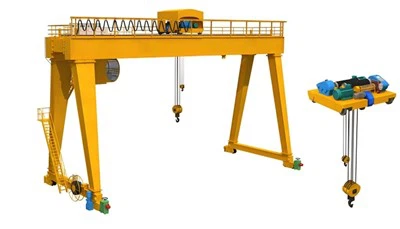
A-frame Rail Mounted Double Beam Gantry Crane
Products Description
Why Choose This Crane?
Best for ultra-heavy lifting (e.g., shipbuilding, steel mills).
Superior safety in hazardous environments.
Long-term cost savings due to durability and low maintenance.
Key Features & Specifications
1. Structural Design
Double Girder Configuration: Two main beams for increased load capacity (typically 5–500 tons).
A-Frame Legs: Triangular support structure for superior stability and resistance to side forces.
Rail-Mounted Travel: Runs on steel or concrete rails for precise movement (indoor/outdoor).
2. Load Capacity & Span
Capacity: 10T–500T+ (customizable).
Span: 10m–40m (adjustable based on application).
Lifting Height: 6m–30m (can be customized).
3. Drive & Control System
Travel Mechanism:
Motorized wheels with variable frequency drives (VFD) for smooth acceleration/deceleration.
Rail-guided movement prevents misalignment.
Wireless Remote Control:
2.4GHz RF remote (100m+ range).
Controls: Hoist up/down, trolley left/right, gantry travel forward/backward.
Emergency stop, speed adjustment, and overload protection.
Comparison: A-Frame vs. Standard Gantry Cranes
| Feature | A-Frame Rail-Mounted | Standard Gantry Crane |
|---|---|---|
| Stability | ✔️ High (A-legs resist side loads) | ❌ Less stable under lateral forces |
| Load Capacity | ✔️ Up to 500T+ | ✔️ Usually up to 200T |
| Movement Precision | ✔️ Rail-guided, no drifting | ❌ May drift on wheels |
| Outdoor Use | ✔️ Better in wind/weather | ❌ Requires anchoring |
| Cost | ❌ Higher (heavy-duty build) | ✔️ More economical |
Lifting Capacity: 30 metric tons (30,000 kg)
Span: 10m–35m (customizable)
Lifting Height: 6m–20m (adjustable)
Hoist Type: Double-girder with electric wire rope hoist (QD-type)
Travel System: Motorized (rail-guided or rubber-tired)
Wheel Type: Steel wheels (for rails) / Pneumatic tires (floor use)
Control System: Cabin-operated or remote control
Power Supply: 380V/50Hz (3-phase)
Structural Steel: Q345B (high-strength) with corrosion-resistant coating

Pictures & Components
Here's a detailed breakdown of the components that make up an A-frame rail-mounted double beam gantry crane:
1. Structural Components
A. Double Main Girders (Bridge Beams)
Function: Primary load-bearing structure supporting the trolley and hoist.
Material: High-strength steel (Q345B or equivalent) with welded box-section design.
Features:
Reinforced with internal stiffeners for heavy loads (50–500T+).
May include walkways for maintenance access.

B. A-Frame Legs
Design: Triangular support structure for superior stability against side forces.
Components:
Vertical Columns: Steel beams with bracing.
Diagonal Braces: Prevent lateral deflection under load.
Base Plates: Bolted to rails or foundation.
C. End Carriages & Rail System
Function: Enables movement along fixed rails.
Components:
Wheels (Double-flanged) – Steel or polyurethane, guided by rails.
Drive Motors – AC/DC motors with gearboxes (one motor per leg for synchronized travel).
Buffers & Rail Clamps – Prevent over-travel and secure the crane when idle.
 |
 |
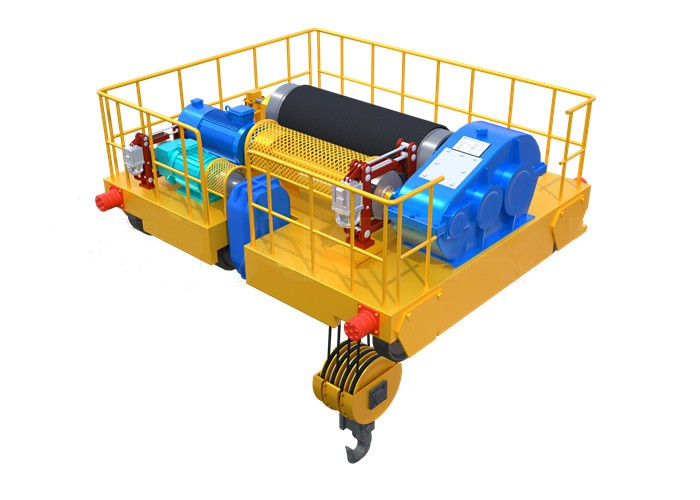
2. Lifting Mechanism
A. Hoist Unit
Type: Electric wire rope hoist (for heavy loads) or chain hoist (for precision).
Key Parts:
Motor (dual-speed or variable frequency drive).
Drum & Wire Rope (or load chain).
Hook Block (swivel-type for 360° rotation).
Brake System (fail-safe disc or electromagnetic).
B. Trolley Assembly
Function: Moves the hoist laterally along the girders.
Components:
Trolley Frame – Steel construction with wheels.
Drive Motor – Powers trolley movement.
Guide Rollers – Keep trolley aligned on girders.
 |
 |
3. Motion & Drive Systems
A. Travel Drive (Gantry Movement)
Components:
Travel Motors – Mounted on end carriages (typically 2–4 motors).
Reducer Gearboxes – For torque amplification.
Couplings & Axles – Synchronize wheel movement.
B. Braking System
Types:
Rail Brakes – Applied when crane is stationary.
Motor Brakes – Automatic engagement during power loss.

4. Wireless Remote Control System
A. Transmitter (Handheld Remote)
Features:
2.4GHz RF with anti-interference technology.
Buttons: Hoist up/down, trolley left/right, gantry travel, emergency stop.
LCD Screen (displays battery life, fault codes).
B. Receiver & Control Panel
Mounted on Crane: Receives signals from the remote.
Safety Logic: Includes overload cut-off, limit switch integration.

5. Electrical Systems
A. Power Supply
Options:
3-Phase AC (380V/50Hz or 460V/60Hz) – Most common.
Diesel Generator – For remote sites.
Festoon/Cable Reel: Delivers power to the trolley (if not battery-operated).
B. Electrical Cabinet
Components:
Contactors & Relays – Control motor operations.
Variable Frequency Drives (VFDs) – Smooth speed control.
Circuit Breakers & Fuses – Overcurrent protection.

6. Safety Components
Limit Switches (for hoist upper/lower limits, trolley end stops).
Overload Limiter – Electronic sensor cuts power if load exceeds 110% SWL.
Anti-Collision System – Laser or ultrasonic sensors for multi-crane zones.
Anemometer (for outdoor cranes) – Locks the crane during high winds.
.
7. Rail Track System
Components:
Steel Rails – P43 or QU80/100 profile (ground or elevated).
Rail Clips & Fishplates – Secure rail joints.
Foundation – Concrete pads or steel sleepers.

8. Optional Add-Ons
Weighing System – Load cells display real-time weight.
Automation – PLC control for programmed movements.
LED Work Lights – For low-light environments.
Corrosion Protection – Epoxy coating or galvanizing (for marine use).

SKETCH

Main technical

Advantages
1. Unmatched Stability & Load Capacity
A-frame legs provide superior resistance to side forces and wind loads, making it ideal for heavy-duty applications (up to 500+ tons).
Double girder design distributes weight evenly, preventing deflection under extreme loads.
2. Precision Movement
Rail-mounted system ensures smooth, controlled travel without drifting (unlike wheeled gantries).
Variable frequency drives (VFDs) enable gradual acceleration/deceleration, reducing load swing.
3. Enhanced Safety
Wireless remote control allows operators to maintain a safe distance from heavy loads.
Fail-safe brakes and overload limiters prevent accidents.
Anti-collision systems (optional) for multi-crane environments.
4. Durability in Harsh Conditions
Reinforced steel construction withstands corrosion, high temperatures, and heavy impacts.
Outdoor-ready with storm-proof locking and optional anti-rust coatings.
5. High Efficiency & Productivity
Faster load positioning due to precise rail-guided movement.
Reduced downtime with low-maintenance components (e.g., sealed bearings, durable rails).
6. Customizable for Specialized Needs
Explosion-proof motors for hazardous areas (e.g., oil refineries).
Automated operation (PLC integration for repetitive tasks).
Weighing systems for real-time load monitoring.
Application:
1. Steel & Metal Industry
Ladle handling in foundries.
Coil, slab, and billet transportation in steel mills.
Blast furnace maintenance.
2. Shipbuilding & Dry Docks
Engine block installation.
Ship section assembly (up to 500-ton hull segments).
Dockyard material handling.
3. Ports & Container Terminals
Heavy cargo loading/unloading.
Intermodal freight handling (rails + ships/trucks).
4. Power Plants
Turbine and generator installation.
Boiler and transformer maintenance.
5. Heavy Construction
Bridge girder placement.
Prefabricated concrete segment lifting.
6. Mining & Heavy Machinery
Ore crusher maintenance.
Mega-component assembly.
Crane production procedure
1. Design and Planning
Demand Analysis: According to customer needs and usage scenarios, a detailed demand analysis is carried out to determine the specifications, load, span, lifting height, etc. of the crane.
Engineering Design: Engineers use CAD and other design software to carry out detailed design, including structural, mechanical, electrical and other aspects to ensure that the design meets relevant standards and specifications.
2. Material Procurement
Material Selection: Select appropriate steel, motors, control systems and other components according to design requirements.
Supplier Screening: Screen suppliers of materials and components to ensure the quality and reliability of materials.
3. Processing and Manufacturing
Cutting and Forming: Cut, weld, bend and other processes on steel to form main beams, end beams and other structural components.
Machining: Precision machining of key components, such as turning, milling, drilling, etc., to ensure that the size and accuracy meet the design requirements.
Surface Treatment: Spray, galvanize or rust-proof metal parts to enhance corrosion resistance and aesthetics.
4. Assembly
Component Assembly: Assemble the main beam, end beam, trolley, lifting mechanism and other components to form a complete crane structure.
Installation of electrical system: Install electrical equipment such as motors, control cabinets, sensors, limit switches, etc. to ensure the normal operation of the electrical system.
5. Debugging and testing
Preliminary debugging: Carry out preliminary debugging of the crane to check the coordination and operation of each component.
Load test: Carry out load test to ensure the safety and stability of the crane under rated load, and test the functions of safety devices such as overload protection and limit switches.
Performance test: Test the performance indicators of the crane such as lifting speed, running speed, braking effect, etc. to ensure that they meet the design requirements.
6. Quality inspection
Quality inspection: Carry out a comprehensive quality inspection of the crane, including appearance, size, performance, etc., to ensure compliance with relevant standards.
Safety assessment: Carry out safety assessment to ensure the normal operation of all safety devices and systems.
7. Delivery and installation
Packaging and transportation: Pack qualified cranes and prepare them for transportation to the customer site.
On-site installation: Carry out on-site installation according to customer requirements, including basic production and equipment debugging.
Training and handover: Train operators to ensure that they master the operation methods and safety precautions of the equipment and complete the handover work.


Workshop view
Material Inspection
Quality Inspection: Strict quality inspection is carried out on the purchased raw materials to ensure that they meet the design requirements and national standards.
Material Storage: Qualified materials are stored according to classification to prevent corrosion or damage.
Cutting and Forming
Steel Cutting: Use plasma cutting, laser cutting or flame cutting and other technologies to cut the steel according to the size of the design drawing.
Forming Processing: Form the steel plate through bending, rolling, welding and other processes to manufacture the main beam, end beam and other structural parts.
Welding
Component Welding: The cut and formed steel parts are welded into the main structures such as the main beam, end beam and trolley. The welding process needs to be strictly controlled to ensure the structural strength and welding quality.
Weld Inspection: Use non-destructive testing technology (such as ultrasonic testing, radiographic testing) to inspect the welds to ensure that there are no cracks or other defects.
Machining
Precision Machining: Precision machining is performed on the key components of the crane, such as wheel sets, bearing seats, pulleys, etc., to ensure their dimensional accuracy and surface quality.
Assembly of the whole machine
General assembly: On the basis of pre-assembly, the overall assembly of the crane is carried out, including the final installation of the main beam, end beam, lifting mechanism, walking mechanism, etc.
Commissioning and testing
Under dynamic conditions, the operating performance of the crane is tested, including the testing of lifting, walking, steering and other functions. The overall size of the assembled bridge crane is checked to ensure that all dimensions meet the design requirements.
Spraying and anti-corrosion treatment
Surface treatment Rust removal: Rust removal on the surface of the crane, common methods include sandblasting, pickling, etc. Primer spraying: Spray anti-corrosion primer on the treated surface to prevent metal oxidation and corrosion. Topcoat spraying Color spraying: Spray topcoat according to customer requirements or industry standards to give the crane a protective and decorative effect. Marking: After spraying, mark the crane's identification information in accordance with the specifications, such as model, rated load, etc.
Factory and installation
Packaging and transportation
Packaging protection: Protectively package the key components of the crane to prevent damage during transportation. Transportation arrangement: According to the equipment size and transportation conditions, select a suitable transportation method to transport the crane to the customer's site.
Acceptance and delivery
Customer acceptance
On-site acceptance: The customer conducts on-site acceptance of the crane according to the contract requirements and technical specifications to check the performance and quality of the equipment.
Problem rectification: If any problems are found, the manufacturer needs to rectify them in time to ensure that the equipment fully meets the customer's requirements. Delivery and use Operation training: The manufacturer usually trains the customer's operators to ensure that they can operate the crane correctly and safely.


Hot Tags: a-frame rail mounted double beam gantry crane, China a-frame rail mounted double beam gantry crane manufacturers, suppliers, factory
You Might Also Like


Send Inquiry