







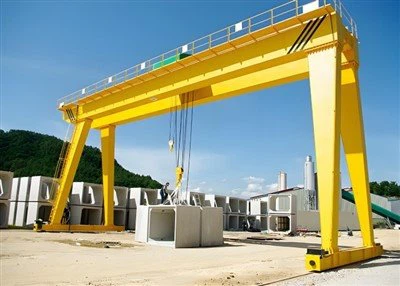
900 Tons Rail Gantry Crane
Products Description
Sure! Here's an introduction to a 900-ton rail-mounted gantry crane-ideal for a technical document, proposal, or presentation:
Introduction to 900-Ton Rail-Mounted Gantry Crane
A 900-ton rail-mounted gantry crane (RMG crane) is a super heavy-duty lifting system engineered for handling extremely large and heavy structures in industries such as shipbuilding, bridge construction, wind power, and heavy manufacturing. Operating on fixed rails, this type of crane offers exceptional stability, precision, and efficiency when transporting massive loads over long distances within a designated worksite.
This colossal lifting system features a robust double-girder or box-type steel structure, high-capacity hoists, and powerful trolley and crane travel mechanisms. It is specifically designed to handle modularized structures, such as precast bridge segments, ship blocks, wind turbine towers, and heavy machinery components-often in outdoor environments.
Key Features
Lifting Capacity: Up to 900 tons, suitable for ultra-heavy industrial applications
Rail-Mounted Operation: Ensures precise linear movement over long spans
Large Span and High Lifting Height: Customizable based on project needs
Dual Hoisting Mechanisms: Allows synchronized lifting of long or awkwardly shaped loads
High Structural Stability: Designed to withstand dynamic loads and harsh weather
Advanced Control Systems: Includes cabin operation, wireless remote control, and PLC automation
Safety Features: Overload protection, anti-collision systems, emergency braking, wind alarms, and limit switches
Applications
Bridge and highway segment erection
Ship block lifting and assembly in shipyards
Wind turbine tower and blade handling
Heavy steel structure and equipment fabrication
Modular construction and transport logistics
A 900-ton rail gantry crane represents a critical solution for large-scale construction and industrial operations where precision, safety, and strength are non-negotiable. Its rail-guided mobility makes it ideal for projects requiring repetitive lifting operations across a fixed path with heavy and oversized components.
Core Components:PLC, Engine, Gear, Motor, Trolley
Place of Origin:Henan, China
Warranty:1.5 years
Weight (KG):125000 kg
Video outgoing-inspection:Provided
Machinery Test Report:Provided
Application:Outdoor/Factory
Working class:A5
Lifting Weight: 20-450 Ton
Steel track:43kg/m QU70
Voltage:3-Phase A.C.50HZ 380V
Lifting mechanism:Trolly
Crane type:Heavey Duty Gantry Crane
Lifting speed:0.48~4.8m/min
Travelling speed:3~30m/min
Steel material:Q355B
Pictures & Components
1.
Main Girder (Bridge Beam)
Function: Serves as the primary horizontal structure supporting the trolley and hoist system.
Details: Typically a box-type double girder structure made from high-strength steel to support massive loads over long spans.
Legs (Support Frames)
Function: Vertical or angled columns that connect the main girder to the end trucks (wheeled base).
Details: Extremely robust and often reinforced with cross-bracing to support the high lifting capacity and resist wind and seismic loads.
Trolley (Traversing Unit)
Function: Moves horizontally along the main girder, carrying the hoisting mechanism.
Details: In a 900-ton crane, the trolley is often split or dual hoist for synchronized or individual lifting of massive and asymmetrical loads.
Hoisting Mechanism
Function: Raises and lowers the load using wire ropes and drums powered by high-capacity motors.
Details: Can include dual synchronized hoists, each capable of lifting several hundred tons. Equipped with load sensors, brakes, and gearboxes for precise control.
 |
 |
3.End carriage
The end carriage of a fixed gantry crane is a crucial component that facilitates the horizontal movement of the crane along its track or rail. It serves as the structural part at the ends of the crane, supporting the trolley or hoist that moves along the crane's beam.
The end carriage is equipped with wheels that run along the rails or tracks installed on the ground or supporting structure.It enables the entire crane to move back and forth across the designated area, allowing for lateral movement of the load.
The end carriage supports the bridge (main crane beam) and ensures stability when the crane is in motion.It transfers the loads from the crane's structure to the ground or supporting surface.
The end carriage is typically powered by an electric motor, which drives the wheels. The motor may be connected to a gear mechanism that allows the crane to travel at different speeds.The drive system may be independent for each end carriage, allowing for precise control of movement.
End carriages are often equipped with brakes or limit switches to ensure safe operation and prevent accidents, such as the crane traveling beyond its intended range.Anti-collision devices may be used to avoid damage if the crane reaches its end position.
End carriages are typically made of steel or reinforced metal to handle heavy loads.They may be designed with bearings or other components to reduce friction and wear over time.The design and functionality of the end carriage are critical for ensuring the smooth, safe, and efficient operation of the gantry crane system.
 |
 |
4.Crane travelling mechanism
1) Working principle
When the operator sends a signal, the electric motor is activated, providing rotational motion to the drive shaft.The rotating drive shaft turns the gear connected to it, which in turn rotates the travel wheels.As the wheels rotate, they move the gantry crane along the rail track in the desired direction.The speed of travel is controlled by varying the motor's speed. The direction of travel is controlled by reversing the polarity of the motor or using a forward/reverse switch.The travel wheels are positioned to distribute the weight of the crane evenly on the track, ensuring stability while moving.
2) Functions of the crane operating mechanism
Horizontal movement: The traveling mechanism allows the crane to move horizontally along the length of the gantry. This enables the crane to position itself over the desired area for lifting and lowering operations.
Load distribution: The traveling mechanism helps distribute the weight of the crane and any load it is carrying evenly across the structure. It ensures the stability of the crane during movement, preventing tipping or imbalance.
Braking and Stopping: The traveling mechanism includes braking systems to stop the crane when required. This function ensures safe operation, allowing the crane to halt at a specific point, such as at the end of its travel path or at a location for load handling.
5.Trolley travelling mechanism
1) Structural composition
Trolley frame: The trolley frame serves as the main structural component that houses all the parts of the trolley. It is typically made of steel to handle the stresses and loads. The frame supports the hoist unit and is designed to be strong yet lightweight enough to move efficiently.
Wheels: The trolley is mounted on wheels, which run along rails positioned on the gantry structure. These wheels are typically made of hardened steel to withstand wear and tear.
Drive device: The drive mechanism consists of an electric motor or hydraulic system, depending on the crane's design. The motor is connected to the reduction gear system, which reduces the speed while increasing the torque required to move the trolley.
2) Function of the trolley operating mechanism
Drive System: It typically involves an electric motor connected to a gearbox, which powers the trolley's movement along a set of rails or tracks mounted on the crane's structure. The motor can be controlled to move the trolley in both directions, providing flexibility and control in positioning the load.
Load Positioning: The trolley can move the load across the length of the crane's beam, allowing operators to place loads in precise locations, often over long distances. This is especially useful for tasks such as loading and unloading materials from trucks or containers.
Horizontal Movement: The trolley traveling mechanism enables the crane to move the hoist horizontally along the beam or girder of the crane. This allows the crane to position the load accurately over a specific area.
Crane wheel
A crane wheel is an essential component of a Fixed Gantry Crane, which is a type of crane used for lifting and transporting heavy loads. The crane wheel is specifically designed to allow the gantry crane to move along a track or rail system, either within a fixed area or along a specific route.
1) Function of wheels
The wheels are designed to run along specific rails or tracks, which can be fixed to the ground or part of a larger moving system. The track's design must match the wheel's size and alignment for optimal performance.The crane wheels help evenly distribute the weight of the gantry crane and the loads it carries, ensuring stability during lifting and travel.
2) Design requirements
These wheels are designed with a strong tread surface to ensure traction and smooth movement along the crane rail system. The design often includes grooves to help maintain the alignment of the crane on the track.The crane wheel is typically made from high-strength steel or alloy material to withstand the heavy loads and continuous stress during operation.Crane wheels come in various sizes depending on the crane's load capacity and the specific application. Larger wheels are used for higher-capacity cranes and longer travel distances.

7.Crane Hook
The crane hook of a fixed gantry crane plays a crucial role in lifting and moving loads.The hook is typically made from high-strength steel to withstand the load-bearing forces during lifting operations.It is designed with a curved shape to securely hold the load by either a chain, rope, or sling.It may have a latch or safety mechanism to prevent the load from slipping off during lifting.
A fixed gantry crane has a stationary or rigid structure that supports the crane's lifting mechanisms. The crane hook is mounted at the end of a trolley, which moves along the crane's horizontal track.The crane hook's position is controlled by a hoisting mechanism, allowing it to raise and lower loads at specific locations.
The crane hook is designed to lift heavy materials such as construction beams, containers, or other large items.It works in conjunction with the crane's hoist, which raises and lowers the hook, allowing it to precisely handle and position heavy loads.
A latch or safety pin may be incorporated into the crane hook to prevent the load from disengaging during movement.Anti-rotation features may also be present to ensure the hook does not spin or swing uncontrollably.

Motor
The motor of a fixed gantry crane plays a crucial role in driving the crane's movements. Fixed gantry cranes are large, heavy-duty machines typically used for lifting and transporting materials over fixed, defined areas. These cranes consist of a hoist, trolley, gantry, and a motorized drive system.
The motors in a fixed gantry crane are typically electric motors.Common types include AC induction motors for simplicity, efficiency, and reliability, or DC motors for more precise speed control.Typically, the motor is located on the crane's trolley, or sometimes on the gantry frame, depending on the crane's design.
The motor powers the hoist, which is responsible for lifting and lowering the load.The motor drives the trolley (for horizontal movement) along the rail system.Some gantry cranes, particularly those with rotating capability, use motors to rotate the crane structure (if applicable) for precise load positioning.The motor's power is determined by the weight capacity of the crane. Larger gantry cranes, designed for heavier loads, will use more powerful motors.The motor's speed can be controlled using variable frequency drives (VFDs), allowing precise movement control.
The motor of a fixed gantry crane is the key component that drives the lifting, movement, and positioning of heavy loads. The type and power of the motor depend on the crane's design and operational requirements, and proper motor maintenance is essential for safe and efficient crane operation.

.
Sound and light alarm system & limit switch
1) Sound and light alarm system
A sound and light alarm system for a fixed gantry crane is an essential safety feature that ensures the well-being of workers, nearby equipment, and the surrounding environment. Such systems are designed to alert personnel of potential hazards, operational status, or malfunctioning of the crane.
Sound Alarms (Audible Signals):Buzzers/Alarm Horns: High-decibel sound emitters alert people about specific conditions (e.g., crane movement, lift in progress, emergency shutdown).Alarm Tones: Different sounds can correspond to different situations (e.g., continuous siren for an emergency, intermittent beep for general operation).Volume Control: Ensures the alarm is audible across the worksite, even in noisy environments.
Light Signals (Visual Indicators):Flashing Lights: High-intensity flashing lights (typically red, yellow, or green) are used to visually signal the crane's operation status. For example:
Red Flashing Light: Indicates emergency or dangerous conditions.
Yellow Flashing Light: Signals that the crane is in operation or moving.
Green Light: Can indicate that the crane is idle or that it is safe to approach.
2) Limit switch
A limit switch on a fixed gantry crane is a safety device used to prevent the crane's movement from exceeding a predetermined limit. It helps ensure that the crane's components (like the hoist, trolley, or gantry) do not move too far in any direction, preventing mechanical damage, accidents, or unsafe operations.
Functions of the Limit Switch:Position Limiting: The limit switch detects when the crane's trolley, hoist, or gantry has reached the end of its travel range and cuts off power to prevent further movement.Safety: It acts as a fail-safe mechanism to prevent the crane from operating outside safe boundaries.Prevents Overtravel: Ensures that the crane's lifting mechanism does not go beyond the safe limits, avoiding damage to the crane or load.Load Protection: Prevents the crane from lifting or lowering a load too far, ensuring load integrity and preventing accidents.
Mechanical Limit Switches: These are physically actuated by the movement of the crane parts. They can be either roller-type, lever-type, or plunger-type switches.Electrical Limit Switches: These use sensors or electrical circuits to detect the position of the crane components.

10.Safety Devices
1) Overload protection device:Prevents the crane from lifting loads that exceed its rated capacity, reducing the risk of structural failure or tipping.
2) Limit Switches (Travel and Hoist Limits):Ensures that the crane's trolley, hoist, or gantry does not move beyond a certain predefined position, preventing damage to the crane structure or surrounding equipment.
3) Emergency Stop Button: Provides an immediate means to stop the crane in case of an emergency.
4) Anti-Sway Control: Minimizes the swaying or swinging of the load, which can lead to accidents or damage.
5) Load Moment Indicator (LMI):Provides real-time data on the crane's stability by measuring the moment or force exerted by the load.
6) Horn and Warning Lights: Alert workers in the vicinity of the crane to its operation, especially when it's moving heavy loads or in restricted areas.
11.Control Mode
1) Manual control: The crane is operated manually by an operator using a control panel or joystick to control the movements of the crane. This is the simplest mode, where the operator has direct control over the hoist, trolley, and gantry motion.
2) Semi-Automatic Control:The crane can be operated in semi-automatic mode where certain movements (such as hoisting or trolley movement) are automated, but the operator still has some manual control over other functions.
3) Fully Automatic Control:In fully automated mode, the crane is controlled by an onboard computer system, with minimal or no human intervention. These systems can manage complex lifting, loading, and unloading operations based on pre-programmed instructions or real-time sensor data.
4)Radio Remote Control: This mode allows the crane to be controlled remotely using a handheld radio transmitter. It provides flexibility for operators to work from different points, improving safety and productivity in environments where the crane is operating over large or hazardous areas.
5) Joystick Control:This is often used in manual or semi-automatic modes, where the operator uses a joystick to control the crane's movements. It allows for precise control of the lifting load, especially for tasks requiring fine movements or in restricted spaces.

12.Sketch

Main technical

Advantages
Here are the key advantages of a 900-ton rail-mounted gantry crane, especially in large-scale and heavy-duty industrial applications:
Advantages of a 900-Ton Rail Gantry Crane
Ultra-High Lifting Capacity
Capable of lifting up to 900 tons, making it ideal for handling oversized, modular, or preassembled components in shipbuilding, bridge construction, and energy projects.
Precision Handling of Massive Loads
Equipped with dual or synchronized hoists, allowing for accurate positioning of long or irregular-shaped objects without imbalance or sway.
Fixed Rail System for Stability
Operates on embedded steel rails, providing excellent linear tracking and structural stability, especially for repetitive lifting tasks across long distances.
Efficient for Large-Scale Projects
Enables the assembly and transportation of massive structures directly at the construction or manufacturing site, reducing the need for intermediate lifting equipment.
Customizable Design
Fully adaptable in terms of span, lifting height, hoisting speed, and control systems, depending on the specific requirements of the project.
Improved Safety Systems
Integrated with advanced safety features like overload protection, wind alarms, emergency stop functions, and anti-collision systems-critical for handling ultra-heavy loads safely.
Reduces Labor and Equipment Costs
One 900-ton gantry crane can replace multiple smaller cranes or lifting systems, streamlining operations and reducing manpower, time, and equipment coordination efforts.
Supports Modular Construction Techniques
Essential for modern infrastructure projects where large pre-fabricated modules are lifted and placed with millimeter-level precision.
Reliable Outdoor Performance
Built to withstand harsh weather conditions, including high winds, with components like storm locks, rail clamps, and wind sensors for safe outdoor operation.
Energy Efficiency & Automation Options
Modern systems come with variable frequency drives (VFDs) and PLC-based control systems, which optimize energy usage, allow for automation, and improve operational accuracy.
Application:
Here's a detailed overview of the applications of a 900-ton rail-mounted gantry crane, focusing on industries and scenarios where such massive lifting capacity is essential:
Applications of a 900-Ton Rail Gantry Crane
Bridge Construction & Infrastructure Projects
Use: Lifting and positioning precast bridge segments, box girders, and concrete slabs
Projects: Highways, overpasses, viaducts, metro rail systems, and long-span bridges
Advantage: Enables segmental launching techniques and fast-tracked modular construction
Shipbuilding & Marine Engineering
Use: Handling large hull sections, ship modules, engines, and structural blocks
Facilities: Dry docks, shipyards, naval bases
Advantage: Supports block assembly method, reducing build time and increasing precision
Wind Energy Industry
Use: Lifting and transporting wind turbine towers, nacelles, and blades
Stages: Manufacturing, storage, and on-site assembly
Advantage: Handles extremely long or heavy components with synchronized hoisting systems
Modular Construction
Use: Positioning large prefabricated modules (e.g., rooms, facility pods, utility blocks)
Advantage: Enhances efficiency in modular high-rise or industrial building projects
Heavy Equipment Manufacturing
Use: Moving large machinery components, such as turbine casings, reactors, transformers, or mining equipment
Advantage: Facilitates complex assembly and handling of heavy-duty parts safely and efficiently
Steel Structure & Fabrication Yards
Use: Lifting heavy steel frames, beams, trusses, and welded assemblies
Advantage: Supports fabrication and transportation directly within the yard
Hydropower and Thermal Power Plant Projects
Use: Transporting and installing penstocks, generators, and large mechanical assemblies
Advantage: Helps streamline setup of heavy infrastructure components on-site
Nuclear & Energy Sector
Use: Handling containment vessels, shielding blocks, and heavy core components
Advantage: High-precision lifting for safety-critical environments
Large-Scale Storage Yards
Use: Organizing and relocating oversized goods and industrial parts in logistics or shipping yards
Advantage: Maximizes use of space and minimizes manual handling risks
Shipbreaking and Marine Salvage
Use: Removing and moving large dismantled ship sections
Advantage: Efficient for environmentally controlled dismantling operations
Crane production procedure
Specification Requirements: Understand the specific requirements for the crane, such as load capacity, span, lifting height, and environmental factors (indoor/outdoor, temperature, etc.).Structural Design: Design the crane structure, including the gantry frame, lifting mechanism, and foundation, using CAD software to ensure strength, stability, and safety.Mechanical Design: Design the trolley, hoist, and other mechanical systems required for crane operation.Electrical Design: Design the electrical components, including control panels, motors, and safety systems.
Steel Plates and Sections: High-quality steel is ordered for the crane's structural components (columns, beams, etc.).Motors and Components: Motors for the trolley, hoist, and other control systems are procured from suppliers.Welding Electrodes, Bolts, and Fasteners: Necessary consumables for welding and assembly.Control Systems: Electrical components such as switches, relays, and sensors are acquired for the crane's control systems.
Cutting and Shaping: Steel plates and sections are cut to the required dimensions using cutting machines, plasma cutters, or water jets.Welding: The steel components are welded together to form the gantry structure. This is done in parts: the base frame, legs, cross beams, and other elements.Machining: If necessary, machining operations (drilling, milling) are performed on parts to ensure accurate fitments.Surface Treatment: Components are cleaned and treated (such as shot blasting and painting) to prevent rusting and improve durability, especially if the crane will be used in outdoor environments.
Assembling the Gantry Frame: The base, legs, and cross beams are assembled into a complete gantry structure. This step may take place in a large workshop or on-site, depending on the crane's size and location.Mounting the Rails: The tracks for the crane's trolley are mounted onto the gantry beams. This is crucial for ensuring smooth operation.Hoist and Trolley Installation: The hoist, motor, and trolley assembly are mounted onto the rails. The hoist mechanism is integrated with the lifting chain or rope, and the motor is connected to the drive system.Electrical Installation: Wiring, control panels, switches, and safety systems are installed, ensuring the crane can be operated remotely and safely.
Mechanical Testing: Verify all mechanical systems are operating correctly, including the hoist, trolley, and gantry movement.Electrical Testing: Check the electrical components for functionality, including the control system, motors, and emergency stop features.Load Testing: Perform load testing to ensure the crane can lift the specified capacity without issues. This may involve loading the crane with test weights and running it through various motions.Safety Features Check: Ensure all safety systems, including limit switches, overload sensors, and emergency braking, function properly.
On-site Assembly (if necessary): For large cranes, parts may be transported to the installation site, where final assembly and setup are done.Final Adjustments: Any adjustments to the crane's alignment, wiring, or safety systems are made as necessary. Operator Training: If needed, operators are trained on how to use the crane safely and effectively, covering operation, maintenance, and safety procedures.

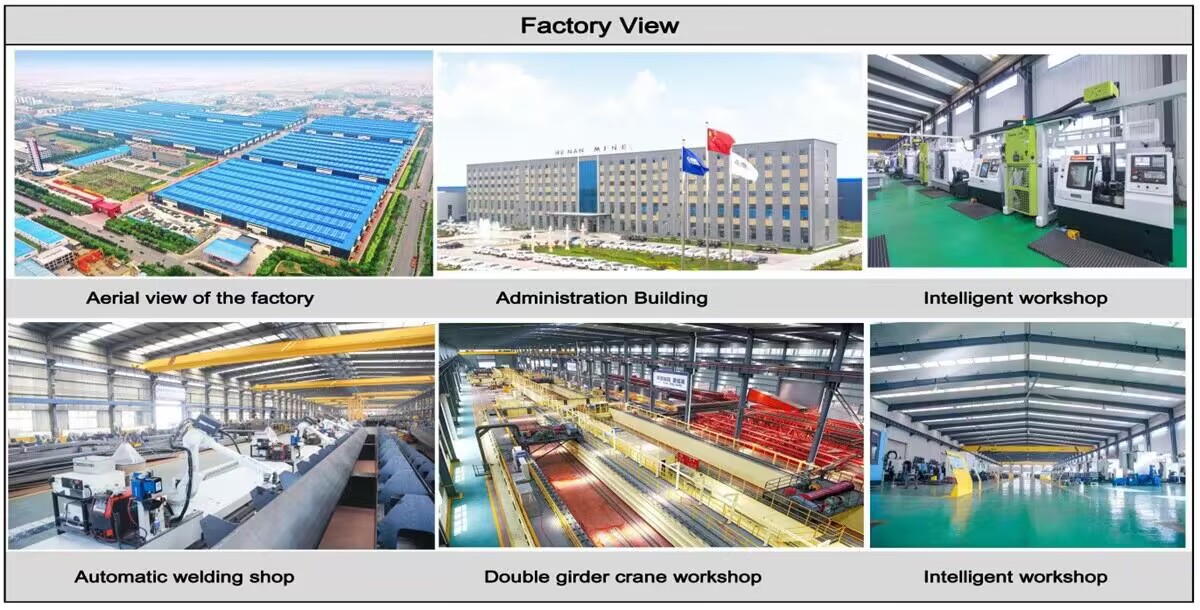
Workshop view:
The company has installed an intelligent equipment management platform, and has installed 310 sets (sets) of handling and welding robots. After the completion of the plan, there will be more than 500 sets (sets), and the equipment networking rate will reach 95%. 32 welding lines have been put into use, 50 are planned to be installed, and the automation rate of the entire product line has reached 85%.


Hot Tags: 900 tons rail gantry crane, China 900 tons rail gantry crane manufacturers, suppliers, factory
Previous
Stationary Gantry CranesYou Might Also Like


Send Inquiry