










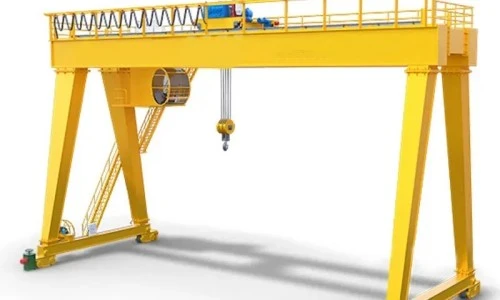

Best Gantry Crane
Products Description
The Best Gantry Crane is a highly versatile and reliable crane designed for moving heavy loads across a wide range of industries. The crane consists of a hoist and a set of beams supported by two or more legs, which run along tracks, allowing the crane to move over the area where material handling is required. It offers excellent flexibility and is perfect for outdoor and indoor use in environments where space constraints or load demands are high.
The best gantry cranes are designed to handle substantial loads, ranging from a few tons to hundreds of tons, depending on the crane's size and specifications. It is built with robust materials and engineered to withstand harsh conditions, gantry cranes are designed for long-term use with minimal maintenance.With adjustable heights, span, and lift capabilities, best gantry cranes can be tailored to specific industrial requirements, providing maximum operational flexibility.
The best gantry cranes are ideal for environments such as warehouses, shipyards, construction sites, and manufacturing plants. They can be designed to operate indoors or outdoors depending on the track and space requirements.
Some gantry cranes are portable and designed for mobility, while others are fixed and provide steady, high-capacity lifting.Equipped with advanced controls and ergonomic design, these cranes are easy to operate, providing precise control over load lifting and movement. Many gantry cranes come with advanced safety systems such as overload protection, limit switches, emergency stop buttons, and anti-sway technology to ensure the safety of both operators and materials.
Core Components:Engine, Gear, Gearbox
Place of Origin:Henan, China
Warranty:1 Year
Weight (KG):20000 kg
Video outgoing-inspection:Provided
Machinery Test Report:Provided
Application:widely
Color:Can be customized
Span:12~30m
Working duty:A3 /A4
Crane feature:Mobile Gantry Crane
Lifting speed:Variable Speed (standard)
Control Method:Ground Control+ Remote Control (customized)
Lifting mechanism:Wire Rope Electric Hoist

Pictures & Components
1.Main beam
1) The main beam of best gantry crane, often referred to as the girder, is the primary structural component that supports the lifting mechanism (such as the trolley or hoist). It spans across the crane's runway and is responsible for bearing the load and transferring it to the supporting legs. The main beam is a crucial part of the gantry crane's design, ensuring its stability and load-bearing capacity.
The main beam is usually made of steel (such as carbon steel or high-strength steel) due to its high strength-to-weight ratio and durability under heavy loads.Double girder: This design incorporates two horizontal beams to distribute the load more evenly and provide greater lifting capacity, commonly used for heavy-duty applications.
The beam must be designed to handle the loads imposed by the hoist, trolley, and the lifting operation itself. This includes factors such as dynamic forces during operation and wind load if the crane is outdoors.The size and strength of the beam depend on the expected maximum load, the span of the crane, and the type of operations it will perform. Calculations for deflection, bending, and shear are essential to ensure the beam can handle the stresses.

2.Lifting System
Motor: AC Motors: The most common type of motor used for gantry cranes, especially in heavy-duty applications. They provide reliable, consistent power and are easy to maintain. DC Motors: Although less common now due to the rise of AC motors, DC motors are still used in specific crane systems where variable speed control is needed.Hydraulic motors are used in gantry cranes, particularly for applications where high torque and precise control are required.Gear motors combine an electric motor with a gearbox to provide the desired speed and torque characteristics for lifting.
Reducer: The reducer in a gantry crane lifting system typically refers to a mechanical device that reduces the speed of the motor driving the crane's hoisting or trolley movement, while simultaneously increasing the torque (force) provided. The reducer, also called a gearbox or reduction gear, is an essential part of the crane's lifting system because it controls the movement speed and ensures that the crane can safely lift heavy loads.
Drum: The drum should be built from high-strength, heavy-duty materials (such as alloy steel) to withstand heavy loads and resist wear, corrosion, and deformation over time.High-precision machining ensures the smooth winding and unwinding of the cable or rope, minimizing wear on the rope and reducing maintenance needs.Properly grooved drums help prevent rope overlap and slippage.An efficient braking mechanism, often integrated with the drum, ensures the crane holds the load securely in place when lifting or holding it in position. Repeated lifting and lowering can generate heat in the drum. A well-designed drum should dissipate heat efficiently, reducing wear on the cable and extending the life of the crane system.
Wire rope: In a gantry crane lifting system, the wire rope is a critical component as it provides the primary lifting capability. Selecting the right wire rope for a gantry crane is essential for safe and efficient operation, as the rope must withstand high tension, abrasion, bending, and environmental conditions.
Pulley block: A pulley block in a gantry crane lifting system is a critical component that helps facilitate lifting, lowering, and moving heavy loads.The pulley block uses a combination of wheels, ropes, or chains to distribute the weight, which reduces the load stress on the crane and eases the lifting process. Pulleys are designed to offer a mechanical advantage by reducing the amount of force needed to lift heavy loads. With multiple pulleys, the system can lift larger weights with less force.Pulley blocks in a gantry crane ensure smooth and precise vertical movement of loads, which is essential for industrial tasks that require accuracy.With the use of locking mechanisms and safety latches, pulley blocks improve the safety and control of the load, especially in heavy-duty applications.Pulley blocks are typically constructed from high-strength materials such as steel, which provides durability and reduces wear.
Lifting device: The lifting device in a gantry crane system is the primary mechanism responsible for raising and lowering loads. It usually includes a combination of components specifically designed to provide stability, control, and strength for various lifting applications.
 |
 |
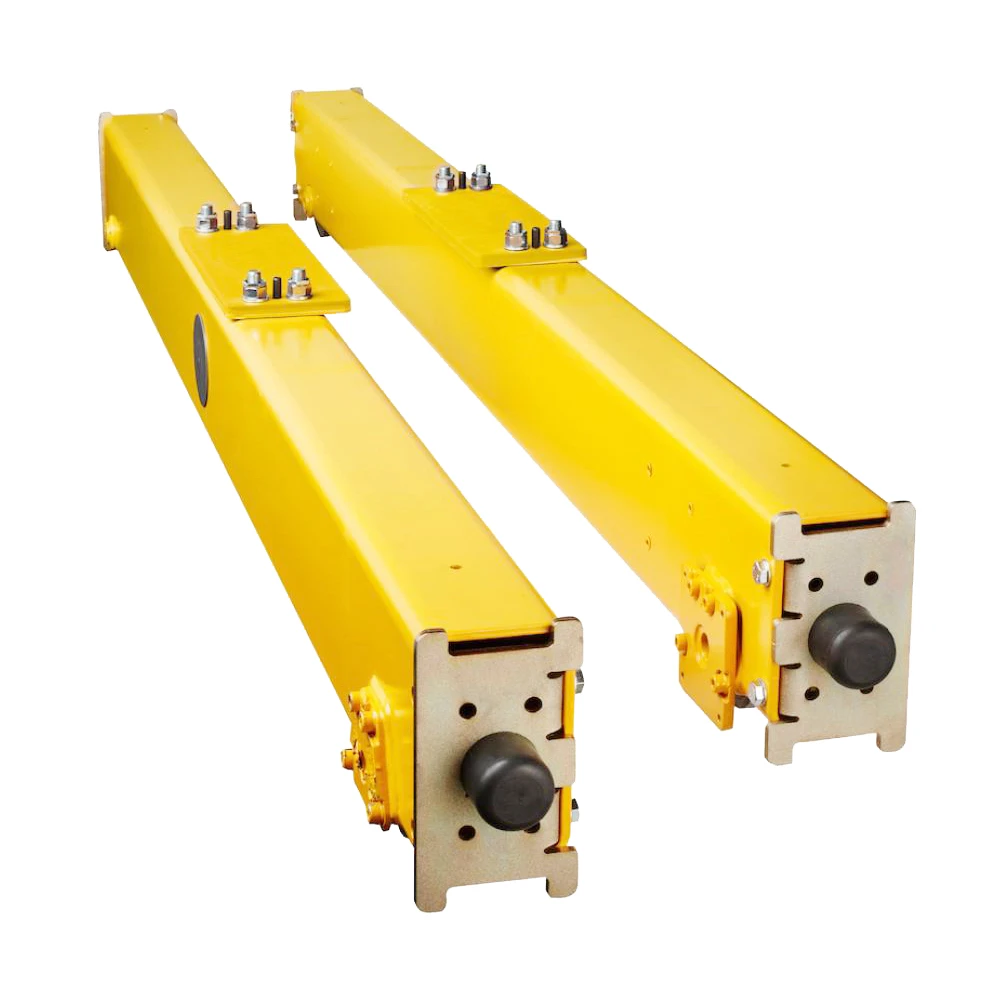
3.End carriage
1) The end carriage on a gantry crane is a crucial part of the crane's structure, responsible for the movement and stability of the crane along its designated path.
2) The end carriage is located at each end of the crane girder and houses the wheels that allow the crane to move along its tracks.It provides the stability and load-bearing capacity needed for safe, reliable movement of the crane, especially under heavy load.The end carriage also helps distribute the weight of the load across the crane's structure and down to the tracks.
3) Typically made of high-strength steel, these wheels are mounted to allow smooth movement along the tracks. Wheels can be motorized or free-running depending on the design. Motorized wheels require geared motors to control the movement and speed of the crane.High-quality bearings and axles support the wheels, ensuring smooth movement and reducing wear on the crane. Installed at the ends of the carriage, these buffers provide a stopping mechanism to prevent the crane from moving off the track.Ensures safe operation by slowing or halting movement, especially during load handling or emergencies.
 |
 |
4.Crane travelling mechanism
1) Working principle
The traveling mechanism of a gantry crane operates by converting electrical energy into mechanical energy through motors and gearboxes, which drive the wheels along rails. The control system governs the motion, providing smooth, controlled acceleration and deceleration, while braking systems ensure stability and safety.
2) Functions of the crane operating mechanism
1. Horizontal Movement:The crane's traveling mechanism allows the entire gantry to move horizontally across a predefined area, which enables the crane to reach different points along the rail or track.
2. Load Positioning:The mechanism allows for precise positioning of the load. By controlling the crane's travel speed and direction, operators can move heavy items to specific locations with high accuracy, which is crucial for loading, unloading, and stacking operations.
3. Flexibility and Versatility:The traveling mechanism allows the gantry crane to access various points within its operational area, making it versatile for a range of tasks. It also enables the crane to handle loads in different orientations or configurations as required.
4. Speed Control:The traveling mechanism typically includes speed control, allowing operators to adjust the movement according to the load's weight and the operation's demands. Variable speed control helps in minimizing the risk of swaying or misalignment, which enhances the overall safety and efficiency of operations.
5. Safety and Stability:Gantry cranes often carry very heavy loads, so the traveling mechanism includes components designed to maintain stability and prevent derailment. Brakes, limit switches, and anti-collision systems are often integrated to ensure safe and controlled movement.
5.Trolley travelling mechanism
1) Structural composition
1. Trolley Frame:The trolley frame is the main structure that supports the trolley's motor, gearbox, wheels, and lifting mechanism. It is designed to withstand loads while maintaining structural rigidity. Frames are often made from high-strength steel to ensure durability and stability.
2. Traveling Motor:A motor powers the trolley's movement along the crane's girder. The motor is often an electric motor selected based on the load capacity and speed requirements. It can be AC or DC depending on the crane's design, and it typically has a variable speed drive for smooth operation.
3. Gearbox or Reducer:The gearbox or reducer is mounted between the motor and the wheels to reduce the motor's speed and increase torque, allowing the trolley to handle heavy loads efficiently. This setup provides controlled acceleration and deceleration to avoid load sway.
4. Wheel Assembly:The wheel assembly includes wheels mounted on the trolley frame that enable movement along the girder. Typically, there are at least four wheels, but the configuration may vary depending on the crane's size and capacity. Wheels can be made of steel or specialized materials to reduce wear on the girder track.
5. Rail or Track:Gantry cranes often use a rail or track system mounted along the top of the crane girder. The trolley wheels run along these rails, ensuring smooth and guided movement along the girder length.
6. Braking System:A braking system is essential to control the trolley's motion and stop it when needed. It can be an electromagnetic or hydraulic brake integrated with the motor or gearbox. The brake helps prevent unintended trolley movement and holds the load in position when necessary.
7. Limit Switches and Sensors:Limit switches and sensors are used to control and monitor the trolley's position and movement. They prevent the trolley from traveling beyond set boundaries on the girder and ensure safe operation. Proximity sensors or laser positioning systems may also be used for precision positioning.
8. Control System:The control system, often integrated into the crane's main control panel, allows the operator to manage the trolley's movement, speed, and braking. Modern systems may include remote controls, variable frequency drives (VFD), and programmable logic controllers (PLCs) to improve operational precision and safety.
9. Cable Reel or Festoon System:For trolleys that carry an electrical power supply, a cable reel or festoon system manages the power cables to prevent tangling and ensure they remain organized while the trolley moves. This system allows the cables to extend and retract smoothly as the trolley travels along the girder.
10. Bumpers or Shock Absorbers:Shock absorbers or bumpers are typically installed on the trolley to minimize impact forces if the trolley reaches the end of the track. They protect both the trolley and the girder from potential damage due to abrupt stops.
2) Function of the trolley operating mechanism
1.The traveling mechanism allows the trolley to move horizontally along the crane's girder or beam, providing access across the entire span of the gantry. By moving the trolley, operators can position loads precisely over the intended location.
Drive Motor provides the power to the trolley movement along the gantry beam.Gearbox reduces the motor speed to the optimal rate for the trolley's movement, enhancing control and safety.
3.The trolley runs on wheels that travel along rails on the girder or beam. These wheels are often made of high-strength materials to support heavy loads and minimize wear.Braking System ensures the trolley can stop accurately and remain stationary when needed.Some advanced gantry cranes include anti-sway systems or speed regulation features in the trolley traveling mechanism to stabilize loads, reduce swaying, and ensure smooth acceleration and deceleration.
6.Crane wheel
1.High-quality materials, such as forged steel or heat-treated alloys, ensure the crane wheels can withstand the heavy loads and harsh conditions they are exposed to. High wear resistance and durability are crucial.The crane wheels must be designed to handle the load of the gantry crane and the materials it lifts, with proper engineering to avoid deformation under heavy weights.To ensure smooth movement along the tracks, the crane wheels need to be precision-machined with correct alignment. This helps in reducing friction, ensuring smooth travel and preventing wear on the rails.
2.The wheels are designed to match specific track profiles. For the best performance, the wheel type and size must be suited to the gantry crane's track system to avoid issues such as derailment or excessive wear.In outdoor or maritime environments, crane wheels are often exposed to elements like moisture, saltwater, and harsh weather conditions. The best wheels will feature corrosion-resistant coatings or materials.
3.High-quality crane wheels also come with safety mechanisms such as braking systems or anti-slip features that enhance the crane's performance and stability.Regular inspections and high-quality bearings contribute to the crane wheels' longevity, ensuring that the gantry crane operates at peak efficiency.
7.Crane Hook
1) .The crane hook is an essential component of a gantry crane, as it is the part that attaches to the load being lifted. It is designed to safely handle heavy loads and facilitate their movement. The best gantry crane hooks are typically made from high-quality materials, such as forged steel or alloy steel, to ensure durability, strength, and safety. The hook should be ergonomically designed to prevent load slippage. This includes features such as a reinforced throat (the part where the load connects), a safety latch to prevent the load from falling, and a curved or tapered design for better grip.
The crane hook should match the gantry crane's rated load capacity.Safety latches, anti-rotation devices, and robust connections to the hoist system are essential. These prevent the hook from opening unexpectedly or the load from detaching during operation.
For additional protection, crane hooks can be coated with rust-resistant materials like galvanizing or painting to prevent corrosion, especially in outdoor environments or in harsh weather conditions.

Motor
AC Induction Motors: These are the most common and widely used in gantry cranes due to their reliability, efficiency, and ease of maintenance. They are often paired with variable frequency drives (VFDs) to control speed.
DC Motors: These offer excellent speed control and torque characteristics but tend to require more maintenance and are less energy-efficient compared to AC motors.
Synchronous Motors: Used for high-load and high-precision applications, they are highly efficient but typically more expensive and require more sophisticated control systems.

.
Sound and light alarm system & limit switch
1) Sound and light alarm system
A sound and light alarm system on a gantry crane is a safety feature designed to alert operators and personnel of any potential hazards or abnormal conditions during crane operation.
Light Alarm: The light alarm typically uses flashing lights, beacons, or strobe lights mounted on the crane or nearby.The lights are often color-coded (e.g., red for danger, yellow for a warning, green for safe operation) to indicate the severity of the condition.Flashing lights provide a visual cue to those around the crane, helping to warn pedestrians or workers in the vicinity of a possible hazard.
2) Limit switch
Limit switches on outdoor gantry cranes are crucial for safety and operational efficiency. They are used to prevent the crane from moving beyond its designated limits, which helps avoid collisions and accidents.
Purpose: Prevents the crane's hoist or trolley from traveling too far along its rails or lifting/lowering past safe limits. Helps ensure the crane does not over-extend or over-travel, which could lead to equipment damage.Ensures the crane operates within the designed limits for efficient and safe operation.
Types: Mechanical Limit Switch: Activated when a moving part of the crane physically contacts a switch. It might consist of a lever, roller, or plunger.Electronic Limit Switch: Uses sensors or proximity detectors to sense the position of a part without physical contact.Rotary Limit Switch: Typically used for the rotation of the crane, it monitors the movement of the crane's rotation mechanism.

10.Safety Devices
1. Overload Protection: Prevents the crane from lifting loads beyond its rated capacity, which could cause damage or failure.Typically involves load sensors that trigger an alarm or automatically stop the crane when the load exceeds the safe limit.
2. Emergency Stop Button: Provides an immediate way to halt the crane's operation in case of an emergency. Located in easily accessible areas, the button can be pressed to stop all crane movements quickly in case of unforeseen events.
3. Anti-Collision System: Prevents the crane from colliding with structures, other cranes, or obstacles.Uses sensors, cameras, or radar systems to detect nearby objects and stops or redirects the crane before contact can occur.
4. Limit Switches (Travel Limits): Prevents the crane from moving beyond its safe operational range.
These switches stop the crane when it reaches the end of its travel path in both horizontal and vertical directions.
5. Horn/Alarm Systems: Warns personnel about crane movements or any potential hazards. Audible alarms or flashing lights alert workers of the crane's operation, especially in busy or noisy environments.
6. Load Sway Control: Minimizes the swaying or swinging of the load, improving safety and precision.Software or mechanical systems reduce the sway by adjusting the crane's motion to stabilize the load.
7. Crane Operator's Cabin Safety: Ensures the safety of the crane operator during operation.Includes safety features like seat belts, proper ventilation, ergonomic design, and emergency communication systems.
8. Rope & Hoist Monitoring Systems: Ensures the integrity of the lifting mechanism.Monitors wear and tear on the ropes and hoists and provides alerts when maintenance or replacement is needed.
9. Wind Speed Monitoring: Prevents crane operation in unsafe weather conditions.Wind speed sensors automatically halt crane operations if wind speeds exceed safe operating limits.
10. Grounding and Anti-Static Devices: Reduces the risk of electrical hazards.Ensures that the crane's electrical system is properly grounded, and static electricity is minimized, preventing electrical shocks or fires.
11. Fall Protection Systems: Prevents personnel from falling during maintenance or operation.Includes guardrails, harnesses, and safety nets on the crane, especially on elevated platforms and walkways.
12. Tilt Sensor (for mobile cranes): Prevents the crane from tipping over. Monitors the crane's tilt and prevents lifting if the crane is on uneven ground or at an unsafe angle.
13. Remote Control & Wireless Safety Systems: Allows operators to control the crane from a safe distance.Remote control systems let operators stand away from hazardous areas, improving safety for both operators and ground personnel.
14. Inspection and Maintenance Systems: Ensures the crane is regularly maintained to avoid mechanical failure.Provides monitoring systems that alert when maintenance or inspections are required to keep the crane operating safely.
15. Safety and Warning Lights: Alerts nearby personnel to crane activity. Flashing lights indicate that the crane is in operation or that there is a potential hazard nearby.
11.Control Mode
1.Manual Control:Joystick or Button Panel: Operators control the crane using joysticks, buttons, or pedals to move the crane's bridge, trolley, and hoist. This mode provides direct control but requires operator skill and attention.
2.Radio Remote Control:Wireless controllers allow operators to control the crane from a distance, improving safety and visibility. This is commonly used in outdoor environments or for handling heavy loads.A pendant control box connects to the crane via a cable.
3.Automated Control (Automatic/Programmed):Some gantry cranes, especially in industrial or port operations, are equipped with automated control systems that allow the crane to perform predefined tasks without human intervention.
4.Hybrid Control (Semi-Automatic):A combination of manual and automated control, where the operator sets up the crane for a specific task, and the system handles some aspects like load positioning or speed control autonomously.
5.Overhead Crane Control with PLC (Programmable Logic Controller):More advanced gantry cranes are integrated with PLC systems, allowing precise control over operations, diagnostics, and real-time adjustments for maximum efficiency.
In modern crane systems, the trend is moving toward semi-automated or fully automated controls to improve efficiency, reduce human error, and enhance safety. However, in more hazardous environments or where fine control is necessary, manual control is still commonly used.

Sketch

Main technical

Advantages
High Lifting Capacity:Gantry cranes are designed to lift heavy loads, making them ideal for large-scale industrial operations. They can handle weights ranging from a few tons to several hundred tons, depending on the design and requirements.
Versatility:Gantry cranes are highly versatile. They can be used for various applications, including moving heavy equipment, materials, and containers. They are suitable for both indoor and outdoor settings.
Space Efficiency:Unlike overhead cranes, gantry cranes do not require fixed installation points (such as ceiling rails).
Mobility:Many gantry cranes are designed to be mobile, mounted on wheels or tracks, which means they can be easily moved across a workspace. This is especially advantageous for outdoor use in construction sites or shipyards.
Cost-Effective:Compared to other types of cranes, such as overhead cranes, gantry cranes tend to be more affordable in terms of installation and maintenance. Their cost-effective design makes them a popular choice for businesses on a budget.
Safety Features:High-quality gantry cranes come with built-in safety features like overload protection, anti-collision systems, and emergency stop buttons, helping reduce accidents and ensure safe operation for workers.
Adaptability:Gantry cranes can be customized to meet specific needs, including modifications in height, span, and lifting capacity. This makes them suitable for diverse industries and specialized tasks.
Increased Productivity:With their ability to handle large and heavy loads efficiently, gantry cranes help improve overall workflow, leading to faster loading and unloading times, which boosts productivity in warehouses, construction sites, and industrial plants.
Durability:Best gantry cranes are built to last, designed with heavy-duty materials that withstand harsh environments, extreme loads, and weather conditions, providing long-lasting performance and reliability.
Ease of Maintenance:Many gantry cranes feature simple designs that make them easier to maintain and repair, contributing to reduced downtime and operational costs over time.
Precise Load Handling:Gantry cranes are often equipped with advanced controls for precise lifting and lowering of heavy loads, allowing operators to perform tasks with high accuracy and minimal risk of accidents or damage to materials.
12. Reduced Need for Heavy Equipment:The use of gantry cranes can reduce the need for other heavy lifting machinery, such as forklifts or hoists, which can save on space, labor, and equipment costs.
Application:
Shipbuilding and Marine Industry: Gantry cranes are extensively used in shipyards to transport and position large, heavy components like ship sections, engines, and hulls.
Construction: Used for lifting and placing large construction materials like steel beams, concrete panels, and pre-cast structures.
Steel Mills and Foundries: In steel mills, gantry cranes are used to transport molten metal, steel slabs, and heavy machinery.
Ports and Shipping: Used to load and unload shipping containers from ships and trucks at ports.
Manufacturing and Assembly Lines: In large manufacturing facilities, gantry cranes can be used to move parts along assembly lines or to lift heavy equipment.
Warehouses and Storage Facilities: Used for lifting and moving large pallets or products in large storage areas, such as in distribution centers or warehouses.
. Aerospace Industry: In aircraft manufacturing or maintenance, gantry cranes are used to lift and position airplane components, such as engines or fuselages.
Power Plants and Nuclear Facilities: Used for lifting and moving heavy components such as turbine generators, reactors, or large valves.
Mining: Gantry cranes are used in mining operations to transport heavy equipment and materials, such as ore and mining machines.
10. Demolition and Heavy Equipment Handling: They are used for lifting and moving heavy machinery and materials during demolition projects.
Crane production procedure
1. Design and Engineering: The process begins with understanding the project requirements, such as lifting capacity, span, height, and environmental conditions (indoor, outdoor, corrosive atmosphere, etc.).After gathering specifications, engineers create detailed drawings and structural calculations using CAD (Computer-Aided Design) software. The crane design includes the structure, lifting mechanism, control systems, and safety features.
2. Material Procurement: High-strength steel plates and beams are sourced for the gantry frame, legs, cross members, and other components. Materials must meet quality standards to ensure longevity and load-bearing capacity.These are sourced from trusted suppliers. The hoisting mechanism, trolley, electrical control panel, and other automated systems are sourced as per the design specifications.
3. Fabrication of Gantry Frame: Large steel plates and sections are cut to size using CNC machines or other cutting techniques. They are then shaped to form the gantry frame components (uprights, cross beams, gantry legs, etc.). The various parts of the gantry frame are welded together. Precision welding techniques are used to ensure strong and reliable joints. Special attention is given to the alignment and accuracy of the frame.After welding, the joints and surfaces are ground and smoothed to remove excess material or sharp edges.
4. Assembly of Crane Components: The welded gantry frame is assembled by connecting the legs, cross beams, and other structural elements. The hoist trolley, crane hooks, pulleys, and lifting ropes are installed as per the design. This includes adjusting the trolley and hoist to function within the required range of motion. The control panel, electrical wiring, motors, sensors, and remote control systems are integrated into the crane.
5. Testing and Quality Control: The crane undergoes rigorous load testing to ensure it can handle the rated load without failure. All the crane's functions, such as movement, lifting, lowering, and control responsiveness, are tested. Safety features like limit switches, emergency stops, and overload protection are also checked.The crane undergoes a detailed inspection for any defects in welding, electrical components, or structural alignment.
6. Painting and Coating: The crane frame and components are thoroughly cleaned and prepared for painting. This may involve sandblasting to remove rust and ensure a smooth surface. A protective coating, typically a corrosion-resistant paint, is applied to the gantry crane.
7. Final Assembly and Commissioning: After painting and coating, the crane is reassembled, and final adjustments are made.
8. Delivery: Once the gantry crane passes all tests and inspections, it is prepared for delivery to the customer. It may be disassembled for easier transport and reassembled on-site at the customer's location.The crane is assembled at its operational site, where additional testing and adjustments are made to ensure it is fully functional in its working environment.
9. Post-Installation Support: After installation, the manufacturer often provides ongoing maintenance services and technical support, ensuring the crane's continued operation and longevity.

Workshop view:
The company has installed an intelligent equipment management platform, and has installed 310 sets (sets) of handling and welding robots. After the completion of the plan, there will be more than 500 sets (sets), and the equipment networking rate will reach 95%. 32 welding lines have been put into use, 50 are planned to be installed, and the automation rate of the entire product line has reached 85%.


Hot Tags: best gantry crane, China best gantry crane manufacturers, suppliers, factory
Previous
Double Beam Gantry CraneYou Might Also Like




Send Inquiry