










230 Ton Mobile Boat Hoist Lift Boat Marine
Products Description
A 230-ton mobile boat hoist is a heavy-duty lifting system designed for marine applications, such as boatyards, shipyards, and marinas. It allows for the safe and efficient handling, launching, and retrieval of large vessels, including yachts, commercial boats, and military craft.
Key Features of a 230-Ton Mobile Boat Hoist:
High Load Capacity – Can lift and transport boats weighing up to 230 tons (460,000 lbs).
Mobility – Equipped with wheels or tracks for easy movement around dry docks, shipyards, or marinas.
Adjustable Straps/Spreader Bars – Ensures balanced lifting and minimizes hull stress.
Hydraulic or Electric Operation – Provides smooth and controlled lifting/lowering.
Stability & Safety Features – Includes outriggers, load sensors, and emergency brakes.
Versatility – Can handle different boat sizes and types (catamarans, monohulls, etc.).
Weather Resistance – Often built with corrosion-resistant materials for marine environments.
Comparison with Other Marine Lifting Solutions
| Feature | Small Boat Gantry Crane | Travel Lift | Forklift (Marine) |
|---|---|---|---|
| Mobility | Portable, some wheeled | Fixed or rail-mounted | Highly mobile |
| Capacity | 1–20 tons | 10–100+ tons | 2–10 tons |
| Best For | Small boats, DIY yards | Large marinas | Lightweight boats |
| Cost | Lower | Higher | Moderate |
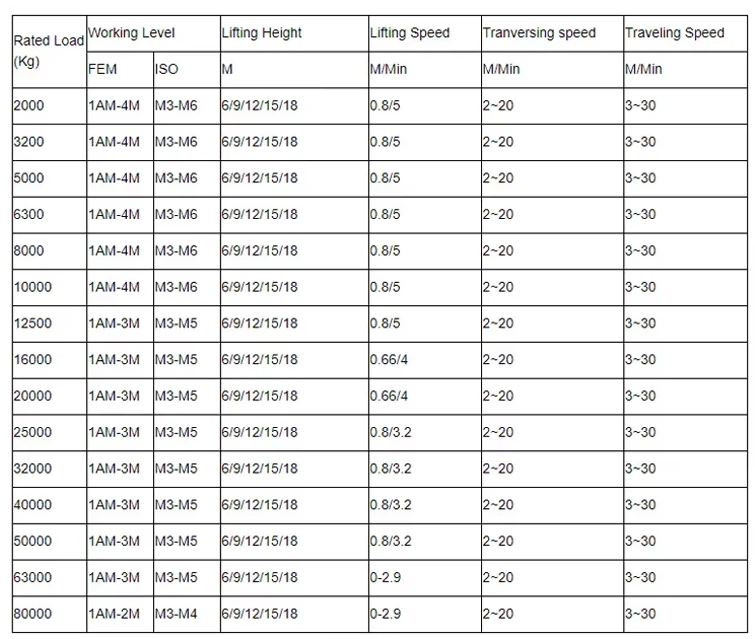
Lifting Capacity 230 tons
Span (Width) 3 - 12 meters (adjustable)
Lifting Height 3 - 10 meters
Working Class A3-A5 (light to medium duty)
Hoisting Speed 0.5 - 8 m/min (variable)
Main Beam Type Single/double girder (box-type)
Power Supply 220V/380V 3-phase or manual
Control Mode Pendant control/wireless remote
Hoist Type Electric chain hoist/wire rope hoist
Travel Drive Manual push or motorized
Corrosion Protection Hot-dip galvanized or marine-grade paint
Wind Resistance Up to Beaufort scale 6 (for outdoor use)
Operating Temp -20°C to +50°C

Pictures & Components
A 230-ton mobile boat hoist is a heavy-duty lifting system designed to handle large vessels for maintenance, storage, or transportation. Below are the key components typically found in such a hoist:
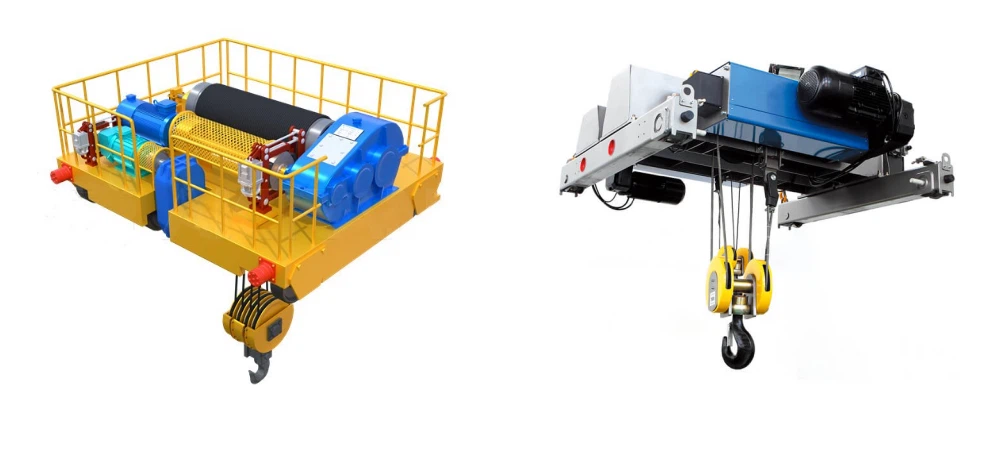
1. Structural Components
Main Beams/Frames – Heavy-duty steel girders that support the hoist's weight capacity.
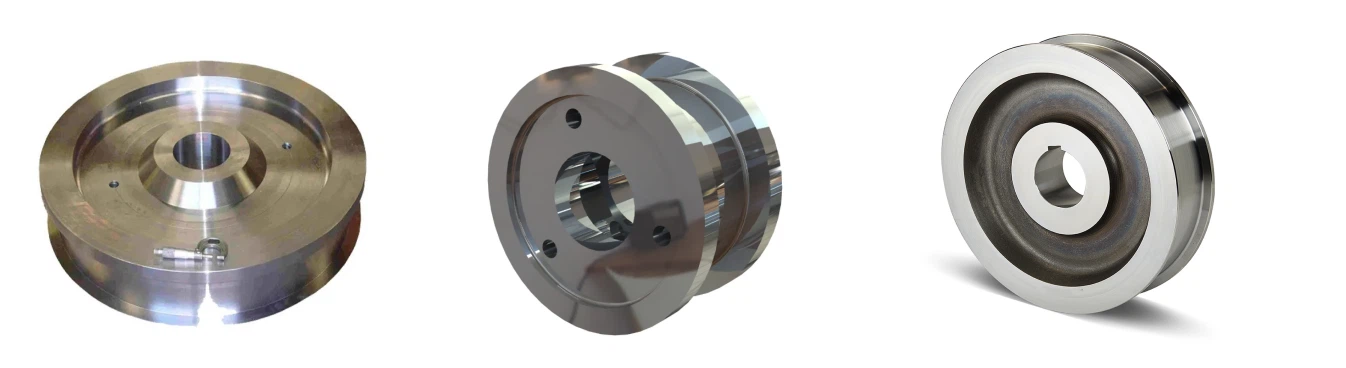
Wheel Assemblies – Heavy-duty wheels (often rubber-tired or rail-mounted) for mobility.
Outriggers/Stabilizers – Extendable legs to provide stability during lifting operations.
Cross Beams/Spreaders – Distribute the load evenly across lifting points.

2. Lifting Mechanism
Hydraulic Cylinders – Provide the lifting force (usually synchronized for even lifting).
Lifting Straps/Cables – Heavy-duty synthetic slings or wire ropes to cradle the boat.
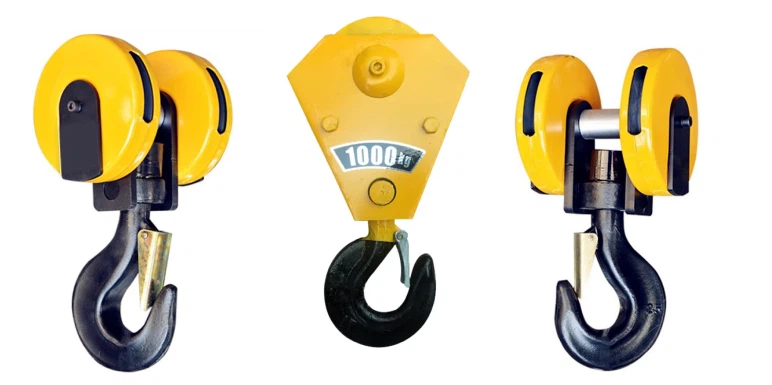
Hooks & Shackles – High-capacity attachment points for securing slings.
Load Cells/Sensors – Monitor weight distribution to prevent overloading.
3. Power & Control System
Hydraulic Power Unit (HPU) – Powers the hydraulic cylinders with pumps, valves, and reservoirs.
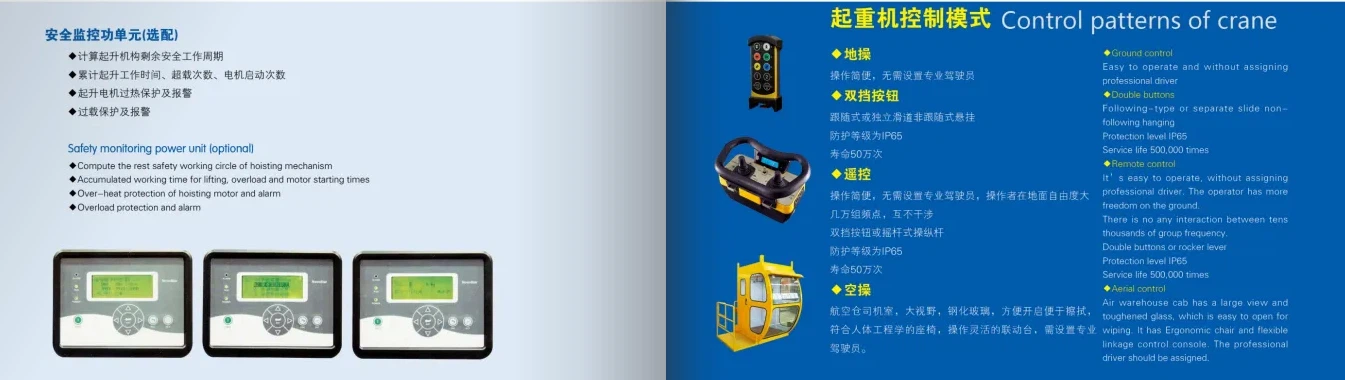
Control Panel – Operator interface (may be wired or wireless) for lifting/lowering.
Synchronization System – Ensures even lifting to prevent boat damage.

4. Mobility System
Drive Motors – Electric or hydraulic motors for moving the hoist.
Steering Mechanism – Allows precise maneuvering (joystick or remote control).
Braking System – Ensures secure stopping when stationary.
5. Safety Features
Overload Protection – Prevents lifting beyond rated capacity.
Emergency Stop (E-Stop) – Immediate shutdown in case of malfunction.
Anti-Tip System – Prevents hoist from tipping during operation.
Warning Alarms/Lights – Alerts personnel during movement.
6. Optional Accessories
Boat Cradle Adapters – Custom supports for different hull types.
Remote Control – Wireless operation for better visibility.
Self-Propelled System – For easier repositioning.
Corrosion-Resistant Coatings – For marine environments.


SKETCH
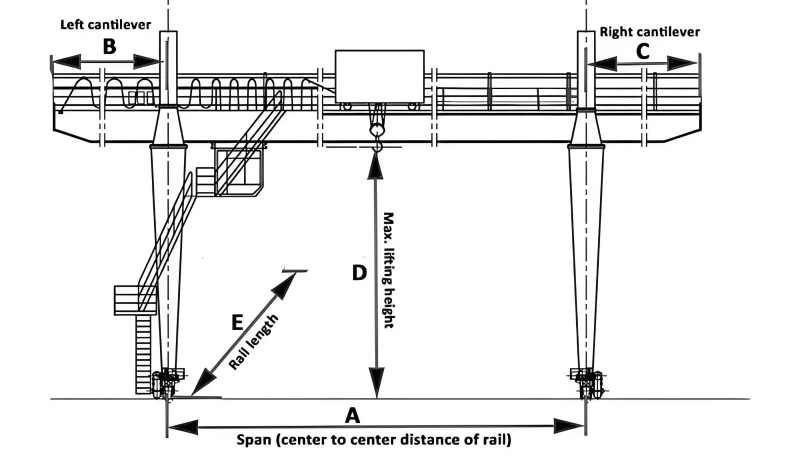
Main technical
Advantages
✅ Advantages of a 230 Ton Mobile Boat Hoist
Advantages Over Traditional Methods:
Faster than Travel Lifts – No need for a fixed crane or rail system.
More Flexible than Slipways – Can position boats precisely for storage or transport.
Reduces Ground Space Requirements – Unlike stationary lifts, mobile hoists can be repositioned as needed.
Application
A 230 Ton Mobile Boat Hoist (also known as a Travel Lift, Boat Lifter, or Boat Gantry Crane) is a specialized piece of marine equipment designed to lift, transport, launch, and retrieve boats and yachts up to 200 tons. It is commonly used in shipyards, marinas, boatyards, and ports.
Applications:
Boatyard Operations – Launching, hauling, and storing large vessels.
Marina Maintenance – Dry docking for repairs, painting, or inspections.
Shipbuilding & Repair – Moving boats between workstations.
Military & Commercial Use – Handling patrol boats, ferries, and small ships.
Crane production process
The production process of a 230-ton mobile boat hoist (marine lift) involves several stages, from design and material selection to fabrication, assembly, testing, and delivery. Below is a detailed breakdown of the typical manufacturing process:
1. Design & Engineering
Requirements Analysis: Determine load capacity (230 tons), lift height, span, and mobility needs (rail-mounted or self-propelled).
CAD Modeling: Use 3D design software (SolidWorks, AutoCAD) to create structural and mechanical drawings.
Structural Calculations: Ensure the hoist can handle dynamic loads, wind forces, and corrosion resistance (for marine environments).
Regulatory Compliance: Meet standards like DNV, ABS, ISO, or CE for marine equipment safety.
2. Material Procurement
Steel Selection: High-grade structural steel (S355, ASTM A572) for beams, columns, and frames.
Corrosion Protection: Marine-grade coatings (galvanization, epoxy paint) or stainless steel components.
Hydraulic/Pneumatic Systems: Pumps, cylinders, hoses, and valves rated for heavy-duty use.
Electrical Components: Waterproof motors, sensors, and control panels (IP66/IP67 rated).
3. Fabrication Process
A. Structural Fabrication
Cutting: CNC plasma/laser cutting for precision parts.
Welding: Robotic or manual welding (MIG/TIG) for load-bearing joints; inspected via X-ray/ultrasonic testing.
Machining: Drill holes for bolts, shafts, and hydraulic fittings.
Surface Treatment: Sandblasting + anti-corrosion coatings.
B. Mechanical Assembly
Hydraulic System: Install cylinders, pumps, and hoses; pressure-test for leaks.
Drive System: Fit motors, gearboxes, and wheels (if mobile).
Lifting Mechanism: Assemble synchronized lifting arms or sling systems.
C. Electrical & Control Systems
Wiring: Connect sensors, limit switches, and remote controls.
PLC Integration: Program for synchronized lifting, overload protection, and emergency stops.
Testing: Verify responsiveness and safety features.
4. Quality Control & Testing
Load Testing: Lift 125–150% of rated capacity (287.5–345 tons) to confirm structural integrity.
Operational Tests: Check lifting/lowering speed, stability, and synchronization.
Environmental Tests: Exposure to salt spray (if for marine use).
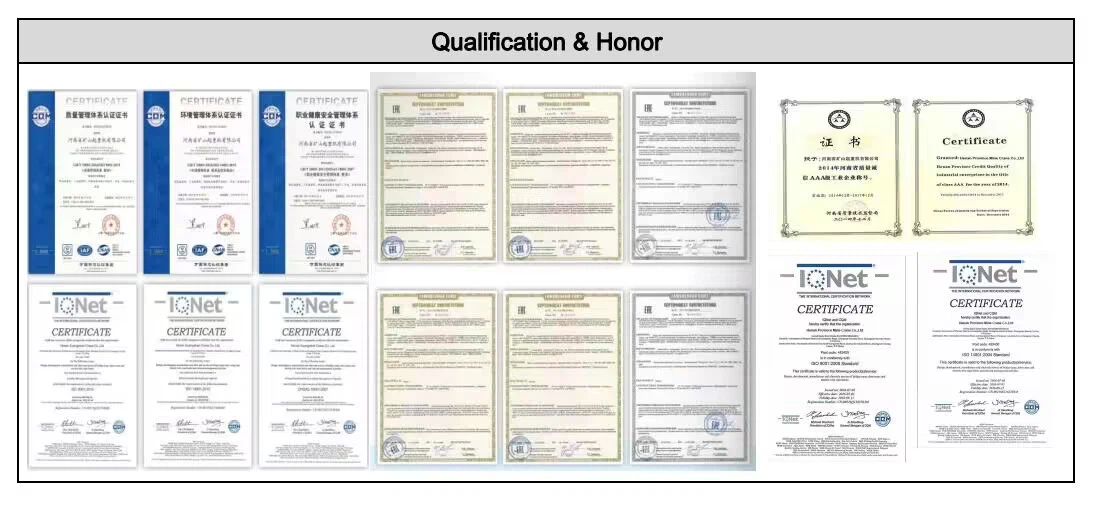
Certification: Third-party inspections (e.g., Lloyd's Register, DNV).
5. Delivery & Installation
Transport: Disassled for shipping (if large); reassembled on-site.
Installation: Anchor to rails or prepare a foundation for stationary models.
Training: Operators trained on safety protocols and maintenance.
6. Maintenance & Support
Manual: Provide guidelines for lubrication, hydraulic checks, and part replacements.
Remote Monitoring: Optional IoT sensors for predictive maintenance.

Workshop view:
The company has installed an intelligent equipment management platform, and has installed 310 sets (sets) of handling and welding robots. After the completion of the plan, there will be more than 500 sets (sets), and the equipment networking rate will reach 95%. 32 welding lines have been put into use, 50 are planned to be installed, and the automation rate of the entire product line has reached 85%.



Hot Tags: 230 ton mobile boat hoist lift boat marine, China 230 ton mobile boat hoist lift boat marine manufacturers, suppliers, factory
You Might Also Like


Send Inquiry