










Movable Double Leg Gantry Crane
Product Introduction
A movable double leg gantry crane is a versatile material handling solution designed for lifting and transporting heavy loads across a workspace. Unlike fixed overhead cranes, this crane is supported by two legs that run on wheels or rails, making it mobile and adaptable to different environments.
Key Features:
Double Leg Structure: Provides high stability and load-bearing capacity, making it ideal for heavy-duty applications.
Mobility: Equipped with wheels (rubber tires or rail-mounted) for easy movement along a working area.
Hoisting Mechanism: Typically includes an electric wire rope hoist or chain hoist suspended from a trolley that runs along the bridge beam.
Span and Height: Customizable to suit various project requirements and workspace sizes.
Power Supply: Can be powered by cable reels, conductor bars, or even diesel generators for outdoor use.
Applications:
Shipbuilding and ship repair
Precast concrete handling
Steel fabrication yards
Construction sites
Warehouses with heavy lifting needs
Advantages:
Flexibility: Easily relocated within or between job sites.
Cost-effective: No need for permanent building modifications.
Robust Design: Suitable for outdoor and heavy-duty operations.
Rated Loading Capacity:25 ton, 10 ton, 16 ton, 20 ton, 30 ton
Max. Lifting Height:16m
Span:10-29.5 meters
Working Duty:A4-A7
Voltage:380V/50HZ
Working temperature:-20℃~+40℃
Crane control mode: Floor control / Remote control / Cabin room

Pictures & Components
Bridge Girder (Main Beam):
The horizontal beam that spans the width of the crane.
Supports the trolley and hoisting mechanism.
Typically made of steel and designed to handle high load capacities.
Legs (Double Legs):
Two vertical support structures on either side of the bridge girder.
Connect the bridge to the end carriages/wheels.
Designed to withstand vertical loads and lateral forces.

Main girder
The main girder of a travelling double girder gantry crane is a critical structural component that provides the foundation for the crane's lifting capabilities. In a double girder gantry crane, there are two parallel main girders that span between the end trucks or columns, which run along the ground rails or tracks. These girders are typically designed to be robust and rigid to support the loads and stresses encountered during operation.
Main girders are commonly made from steel, which offers high strength and durability. The specific type of steel and its grade will depend on the expected load requirements and environmental conditions.
The main girders are connected to the end trucks or columns at each end, often through a system of pins, bolts, and welds. This connection must be strong enough to prevent any relative movement that could compromise stability.

End Carriages / Bogies:
Located at the base of the legs.
Contain wheels (either rubber-tired or rail-mounted) to enable movement.
May include drive motors for powered travel.
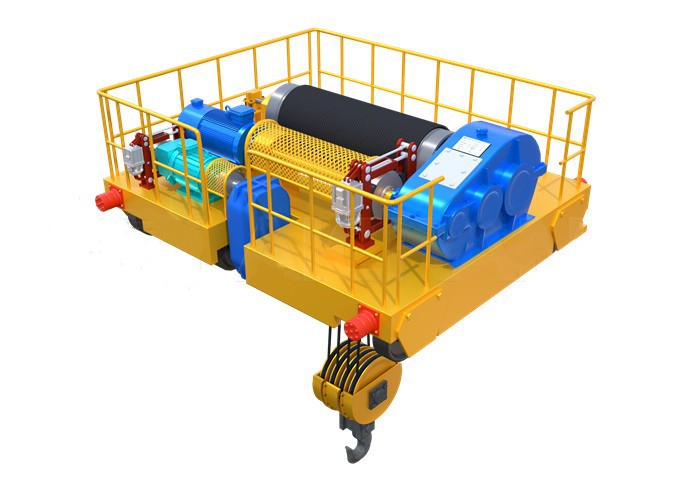
End Carriages
The end carriages of a double girder traveling gantry crane play a crucial role in the movement and stability of the crane.Here are some key points regarding the end carriages
Functionality:1.Support and Movement: The end carriages support the ends of the double girder and run along the crane rails or ground tracks, allowing the crane to travel horizontally.
Stability: They help to stabilize the crane during operation, especially when lifting heavy loads.3.Wheel Assembly: Each end carriage typically contains multiple wheels (sometimes referred to as "crane wheels" or "end trucks") that ensure smooth movement and even distribution of load on the rails.Types:1.Fixed End Carriages: These are non-powered and depend on the movement of the bridge for translation.
2.Powered End Carriages: Equipped with motors, these can propel the crane independently along the rails.
Design:
1.Rigid Construction: The end carriages are designed to be strong and rigid to handle the stresses of both the crane's own weight and the lifting loads.
2.Adjustable: Some models may include adjustable features to compensate for track irregularities or different operating conditions.
Maintenance:
1.Regular Inspection: Periodic checks for wear and tear on wheels, bearings, and other components are essential to maintain operational safety and efficiency.
2.Lubrication: Proper lubrication of moving parts reduces friction and extends the lifespan of the end carriages.
.
Crane traveling mechanism
The crane travelling mechanism of a travelling double girder gantry crane is responsible for moving the crane horizontally along a specific track or rail. This mechanism allows the crane to transport goods over a wider area and is therefore very useful in industrial environments where a wide range of transport is required.
The most important aspects of the crane trolley will be explained below:Components:
End forklifts or trolleys: they are located at the ends of the double girder and run on the crane track or ground track.
Drives: These are usually electric motors driven by industrial control systems, which can be boom-controlled, radio-controlled or automated.
Wheels and bearings: the end frames are fitted with a number of wheels to support the weight of the crane and its load so that the crane travels smoothly on the track.
Coupling devices: some cranes are equipped with mechanical or electronic coupling systems that synchronise the movement of two end trolleys so that they travel in a straight line.
Trolley traversing mechanism
The trolley mechanism of a travelling double girder gantry crane is responsible for the lateral movement of the crane or hook along the bridge or girder. This mechanism allows the load to be positioned precisely in a horizontal plane perpendicular to the direction of movement of the gantry crane itself. Below are some of the key components and features of the trolley skid mechanism:
Components:
1.Propulsion mechanism: Usually an electric motor that provides the movement of the trolley along the girder.
2.Wheels or casters: The trolley has wheels or casters that run on rails located on the underside of the bridge or girder. These wheels support the weight of the lift and cargo.
3.Gearbox: Some mechanisms may be equipped with a gearbox that regulates the speed and torque of the engine, allowing for precise control of the lift's movement.
4.Ropes or hooks: The hoist's ropes or hook (such as a rope or chain) are attached to the trolley and move with it along the girder.
Crane wheel
The wheels of a double girder gantry crane are an essential component that allows the crane to move on rails. These wheels are usually mounted on end carriages or trucks located at either end of the crane beam. Below are some important aspects of crane wheels:
Support and Mobility: The wheels support the weight of the crane and its load, enabling the crane to travel along the designated runway or rails.
Load Distribution: Crane wheels ensure an even distribution of the load on the rails, preventing excessive wear and tear on the tracks and the crane structure.
Material: Made from durable materials such as steel or cast iron, sometimes with additional coatings for corrosion resistance.
Travel Speed: The design of the wheels and their interaction with the rails can influence the maximum speed at which the crane can safely travel.
Flanged Wheels: Have a rim or flange on both sides to prevent derailment.
The crane wheels are a fundamental part of the double girder traveling gantry crane, ensuring its mobility, stability, and safe operation. Proper maintenance and regular inspection are essential to maintain their performance and longevity.
 |
 |
 |
Crane hook
1)The crane hook of a double girder traveling gantry crane is the component at the end of the lifting mechanism that is used to engage and lift various loads. The hook plays a critical role in the operation of the crane, as it is the primary attachment point for lifting slings, cables, or other lifting accessories.


Motor
The motor of a double girder traveling gantry crane is a critical component that provides the power necessary for both the hoisting and traveling mechanisms. Motors are used to lift and lower loads using the hoisting mechanism and to move the crane along its rails or runway.
Types of Motors:
Electric Motors: These are the most common type of motors used in gantry cranes due to their efficiency, controllability, and reliability. They can be DC (Direct Current) or AC (Alternating Current) types.
DC Motors: Historically, DC motors were widely used for cranes because of their excellent speed control characteristics. However, they require more maintenance than AC motors.
AC Motors: Modern cranes often use AC motors with variable frequency drives (VFDs) for hoisting and traveling functions. AC motors are less maintenance-intensive and offer high efficiency.
Pneumatic or Hydraulic Motors: Some specialized gantry cranes might use pneumatic or hydraulic motors, especially in applications where electrical power is not available or where specific performance characteristics are required.
Functionality:
Hoisting Motors: Power the winch or hoist drum to raise and lower the hook or grab.
Traveling Motors: Drive the crane's wheels or tracks, allowing it to move along its horizontal path.

. 

Sound and light alarm system & limit switch
The sound and light alarm system and limit switches are important safety features of a double girder traveling gantry crane. These components help to alert operators and surrounding personnel to potential hazards and ensure that the crane operates within its designated boundaries. Here's an explanation of each:
Sound and Light Alarm System:
Audible Alarm: A loud siren or horn is used to alert people in the vicinity of the crane's operation, particularly when the crane is moving or when there is a potential safety hazard.
Visual Signals: Warning lights, typically strobe lights or rotating beacons, are used to provide visual warnings during crane operations, especially in conditions with limited visibility or at night.
Limit Switches:
Function: Limit switches are electronic devices that detect the position of the crane or its components and cut off power when the crane reaches its operational limits.
Travel Limit Switches: These are installed at the ends of the crane's rails or runway to prevent the crane from running off the tracks.
Hoist Limit Switches: Used to detect when the hook or load reaches the upper or lower limits of its travel, preventing the hoist from overwinding or unwinding.
Other Safety Switches: Additional limit switches may be used to monitor other critical components such as the trolley position, gate positions, or even load angles in the case of luffing jib cranes.

Safety Devices
Travelling gantry crane Safety Devices:
The safety of personnel and equipment is a top priority when operating a double girder traveling gantry crane. To ensure safe operations, various safety devices are incorporated into the design and operation of the crane.
Overload Protection:Load Cells: Used to measure the load being lifted by the crane. If the load exceeds the rated capacity of the crane, the system can automatically shut down the hoisting mechanism.Mechanical Overload Indicators: Some cranes may use mechanical devices that show when a load is close to or exceeding the crane's capacity.
Anti-collision device: This device is designed to prevent the crane from colliding with other cranes or structures in the area. It can be in the form of a proximity sensor or a laser scanner.
Travel limit switches: These switches are installed at the end of the crane's travel path to prevent it from moving beyond its safe operating range.
Emergency stop button: This button allows the operator to immediately stop all motion of the crane in case of an emergency.
Brakes: The crane is equipped with brakes on each wheel to prevent it from rolling when not in use.
Lighting: Adequate lighting is provided to ensure that the operator can see the load and the surrounding area clearly.
Grounding: The crane is grounded to prevent electrical shock to the operator or damage to the equipment.
Control Mode
The control mode of a traveling gantry crane refers to the method by which the crane is operated to perform its functions, including lifting, moving, and lowering loads. There are several types of control modes used in traveling gantry cranes, each with its own advantages and applications.
Here are some common control modes:1. Manual Control2. Pendant Control3. Radio Radio/Wireless Control4. Automatic/Programmable Control


Sketch

Main technical data

Advantages of Movable Double Leg Gantry Crane
High Load Capacity
The double-leg structure provides excellent stability and strength, allowing the crane to lift and transport very heavy loads safely.
Mobility and Flexibility
Unlike fixed overhead cranes, movable gantry cranes can be relocated within a site or even between different sites.
Ideal for temporary or changing work areas, such as construction zones, shipyards, and outdoor warehouses.
No Need for Building Modifications
Does not require a permanent overhead support structure, which makes it more economical for outdoor or open-area operations.
Useful where installing a bridge crane would be structurally or financially impractical.
Customizable Span and Height
Can be designed to suit specific project dimensions, including wide spans and tall lifting heights.
Adaptable for different equipment sizes and working environments.
Efficient Use of Space
Operates in open areas where other types of cranes may not be feasible.
Frees up floor space and minimizes obstruction in the work area.
Cost-Effective Solution
Lower installation and infrastructure costs compared to fixed overhead cranes.
Ideal for applications requiring heavy lifting but not a permanent crane installation.
Heavy-Duty and Durable Design
Built to withstand harsh outdoor environments, including wind, rain, and dust.
Often equipped with weatherproof components and corrosion-resistant materials.
Multiple Power Options
Can operate on electricity (via cable reels or conductor bars), diesel engines, or hybrid systems, depending on the location and application.
Easy Maintenance and Accessibility
Ground-level components are more accessible than overhead cranes, simplifying maintenance and inspection tasks.
Enhanced Safety Features
Equipped with limit switches, overload protection, emergency brakes, and anti-collision systems to ensure safe operation.
Application:
Heavy Manufacturing: In industries such as steel, paper, and cement, where heavy materials and products need to be moved from one place to another, the double girder gantry crane is indispensable. It allows for the efficient transport of large rolls, sheets, or heavy machinery components.
Shipbuilding and Repair: Used in shipyards for the assembly and repair of vessels. The crane can lift heavy sections of ships, engines, or other large components with precision.
Construction Sites: On large construction sites, the crane is used for lifting precast concrete elements, steel beams, and other construction materials. Its mobility allows it to cover large areas, making it suitable for use in both indoor and outdoor environments.
Warehousing and Material Handling: In open storage yards and warehouses, the crane is used for loading, unloading, and moving goods. Its ability to travel along a track makes it ideal for facilities requiring frequent and extensive material handling.
Energy Sector: In power plants and renewable energy facilities, the crane is used for the installation and maintenance of heavy equipment such as turbines, generators, and other mechanical assemblies.
Mining and Quarrying: In mining operations, the crane is utilized for loading and unloading mining equipment, transporting ore, and handling supplies.
Railway and Airport Maintenance: Used for maintenance work at railway stations and airports, such as moving maintenance equipment, loading and unloading cargo, and handling large items like locomotives or aircraft components.
Automotive Industry: In manufacturing plants, the crane is used for assembly operations, moving heavy components and subassemblies, and loading and unloading shipments.
Crane production procedure
1. Design: Requirements Analysis: The first step involves understanding the specific requirements of the client, including the lifting capacity, span, height, and any special applications or environments the crane will operate in.Preliminary Design: Based on the requirements, engineers create preliminary designs, selecting the appropriate structural components, drive systems, and safety features.Detailed Engineering: This involves detailed drawings and specifications for every component, ensuring all elements comply with relevant standards and regulations.
2. Material Procurement and Preparation
Material Sourcing: Obtaining high-quality materials such as steel, wire ropes, and electrical components from reliable suppliers.
Material Preparation: Steel sections are cut, shaped, and prepared for welding and assembly.
3. Component Manufacture
Structural Assembly: The main structure, including the bridge girder, end trucks, and legs, are fabricated and assembled using welding and bolting.
Mechanical Components: The hoist mechanism, trolley, and other mechanical parts are manufactured in the machine shop.
Electrical Components: Electrical components like motors, control panels, and wiring harnesses are assembled and tested.
4. Painting and Finishing
Surface Preparation: All structural components are blasted and cleaned to remove any contaminants that could affect paint adhesion.
Painting: Components are painted with high-quality industrial paint, often with multiple coats for durability and to protect against environmental factors.
5. Assembly
Sub-assembly: Smaller components and assemblies are put together, such as the hoist mechanism and trolley assembly.
Main Assembly: The main structure is assembled, and the sub-assemblies are integrated into the crane.
Electrical Installation: Electrical components and wiring are installed and connected.
6. Testing and Quality Control
Functional Testing: Each function of the crane is tested to ensure it operates smoothly and meets the specified requirements.
Load Testing: The crane undergoes static and dynamic load tests to ensure it can safely handle its rated capacity.
Safety Checks: All safety devices are tested to ensure they function correctly.
7. Packaging and Shipping
Disassembly (if necessary): Depending on transport requirements, some components may need to be disassembled.
Packaging: Components are packed securely to prevent damage during transportation.
Shipping: The crane or its components are shipped to the installation site.

Workshop view
Material Inspection
Quality Inspection: Strict quality inspection is carried out on the purchased raw materials to ensure that they meet the design requirements and national standards.
Material Storage: Qualified materials are stored according to classification to prevent corrosion or damage.
Cutting and Forming
Steel Cutting: Use plasma cutting, laser cutting or flame cutting and other technologies to cut the steel according to the size of the design drawing.
Forming Processing: Form the steel plate through bending, rolling, welding and other processes to manufacture the main beam, end beam and other structural parts.
Welding
Component Welding: The cut and formed steel parts are welded into the main structures such as the main beam, end beam and trolley. The welding process needs to be strictly controlled to ensure the structural strength and welding quality.
Weld Inspection: Use non-destructive testing technology (such as ultrasonic testing, radiographic testing) to inspect the welds to ensure that there are no cracks or other defects.
Machining
Precision Machining: Precision machining is performed on the key components of the crane, such as wheel sets, bearing seats, pulleys, etc., to ensure their dimensional accuracy and surface quality.
Assembly of the whole machine
General assembly: On the basis of pre-assembly, the overall assembly of the crane is carried out, including the final installation of the main beam, end beam, lifting mechanism, walking mechanism, etc.
Commissioning and testing
Under dynamic conditions, the operating performance of the crane is tested, including the testing of lifting, walking, steering and other functions. The overall size of the assembled bridge crane is checked to ensure that all dimensions meet the design requirements.
Spraying and anti-corrosion treatment
Surface treatment Rust removal: Rust removal on the surface of the crane, common methods include sandblasting, pickling, etc. Primer spraying: Spray anti-corrosion primer on the treated surface to prevent metal oxidation and corrosion. Topcoat spraying Color spraying: Spray topcoat according to customer requirements or industry standards to give the crane a protective and decorative effect. Marking: After spraying, mark the crane's identification information in accordance with the specifications, such as model, rated load, etc.
Factory and installation
Packaging and transportation
Packaging protection: Protectively package the key components of the crane to prevent damage during transportation. Transportation arrangement: According to the equipment size and transportation conditions, select a suitable transportation method to transport the crane to the customer's site.
Acceptance and delivery
Customer acceptance
On-site acceptance: The customer conducts on-site acceptance of the crane according to the contract requirements and technical specifications to check the performance and quality of the equipment.
Problem rectification: If any problems are found, the manufacturer needs to rectify them in time to ensure that the equipment fully meets the customer's requirements. Delivery and use Operation training: The manufacturer usually trains the customer's operators to ensure that they can operate the crane correctly and safely.


Hot Tags: movable double leg gantry crane, China movable double leg gantry crane manufacturers, suppliers, factory
You Might Also Like


Send Inquiry