










150 Tons Hoist Lifting Gantry Crane
Products Description
The 150 tons hoist lifting gantry crane is a heavy-duty lifting solution specifically engineered for handling extremely large and heavy materials in open yards, construction sites, shipyards, railways, and heavy manufacturing industries. This crane features a double girder gantry structure equipped with a powerful hoist mechanism capable of lifting up to 150 tons, ensuring stability, precision, and safety in critical lifting operations.
This type of crane operates with electric hoist trolleys that travel along the girders, allowing for flexible and efficient movement of loads across a large working area. Depending on the application, the crane can be mounted on rails or wheels, offering either fixed-track or mobile lifting solutions.
Key Features:
Lifting Capacity: Up to 150 tons
Span: Customized according to operational requirements
Lifting Height: Variable, typically from 6m to 30m
Hoisting Mechanism: Electric wire rope hoist or winch with heavy-duty motor
Structure: Welded box or truss-type double girder gantry frame
Power Supply: Cable reel, diesel generator, or bus bar
Control Options: Cabin control, remote control, or pendant control
The 150 tons hoist lifting gantry crane is ideal for precise lifting and handling of large steel structures, concrete segments, wind turbine components, and oversized machinery, ensuring high performance even under demanding industrial conditions.
Core Components:Gearbox, Motor, Gear
Place of Origin:China
Warranty:1 Year
Weight (KG):10000 kg
Video outgoing-inspection:Provided
Machinery Test Report:Provided
Rated Loading Capacity:50 Ton, 30 Ton, 40 ton, 5 ton, 20 Ton, 10 TON
Max. Lifting Height:30M
Pictures & Components
1.Double Girder Main Beams
Constructed from high-strength steel.
Support the entire load and provide a stable path for the hoist trolley.
Designed with either a box girder or truss structure, depending on site conditions and span length.
Leg Structures (Supporting Columns)
Vertical steel legs that support the main beams.
Can be designed in an A-frame or box-type structure.
Transmit the load from the girder to the ground or rails.

Hoist Trolley
Equipped with a 150-ton wire rope hoist or winch.
Runs horizontally along the main girders to position the load precisely.
Includes high-torque motors, braking systems, and heavy-duty drum with guide rollers.
Features overload protection and speed regulation for safety and control.
 |
 |
3.End Carriages
Mounted on both sides of the gantry structure.
Contain the driving wheels and motorized mechanisms to enable crane movement along rails.
Feature shock absorbers and buffers to reduce impact and wear during operation.
 |
 |
4.Travel Mechanism
Motorized system that drives the entire gantry crane along the working track.
Includes driving motors, gearboxes, wheels, and brakes.
Controlled for smooth acceleration and deceleration during operation.
5.Trolley travelling mechanism
1) Structural composition
The trolley travelling mechanism in the biggest gantry cranes combines a series of high-strength steel components for structural integrity, advanced motor and gearbox systems for movement, and intricate safety systems to ensure precise and safe operation.
2) Function of the trolley operating mechanism
Horizontal Movement of the Trolley:The trolley moves back and forth along the length of the crane bridge. This allows the load to be positioned over various parts of the work area.It ensures that the crane can cover a wide span, enabling the lifting and transportation of materials across the designated work area.
Load Transport:The trolley is equipped with a hoisting mechanism (hook, clamp, or other lifting devices), which can pick up, move, and release loads. The traveling function enables the crane operator to precisely move loads over a specified path.
Load Transport:The trolley is equipped with a hoisting mechanism (hook, clamp, or other lifting devices), which can pick up, move, and release loads. The traveling function enables the crane operator to precisely move loads over a specified path.
6.Crane wheel
1) Function of wheels
Mobile support: The main function of the wheels is to support the movement of the crane on the track and ensure the smooth operation of the crane.
Load distribution: The wheels help to evenly distribute the load of the crane, reduce the pressure on the track, and increase the service life of the equipment.
2) Design requirements
Strength and rigidity: The wheels must have sufficient strength and rigidity to withstand the dead weight of the crane and various dynamic loads.
Wear resistance: Due to the continuous friction between the wheels and the track, the wheel material must have good wear resistance to extend the service life.
Anti-skid design: The wheel surface should be designed to be anti-skid to avoid sliding or slipping under heavy load.

7.Crane Hook
The crane hook of the largest gantry cranes is typically a heavy-duty, robust piece of equipment designed to handle extremely high lifting capacities. These cranes, used in large-scale industrial applications such as shipyards, ports, and construction sites, have hooks that can handle loads often exceeding several hundred tons.
Crane hooks are usually made from high-strength alloy steel to withstand the immense stresses from heavy loads. The hook may be forged to ensure toughness and reliability.The hook on a giant gantry crane can be very large, often weighing several tons itself, depending on the lifting capacity of the crane. For instance, cranes with lifting capacities in the range of 1,000 tons or more might have hooks that weigh several tons as well.The design may vary, but common types include single, double, or triple hook configurations, especially for larger cranes. Double or triple hooks can help distribute the load more evenly, which is particularly important when lifting very large or awkwardly shaped items.
Large gantry cranes are equipped with safety mechanisms to prevent hook damage and accidents. This includes features like automatic overload protection, anti-sway systems, and emergency brakes.On larger cranes, hooks often come with different types of rigging attachments (e.g., lifting slings, spreader bars) to facilitate safe and efficient load handling.

Motor
1) The motor system of such a massive crane would involve highly specialized motors capable of handling immense loads with precision. The crane's hoisting system would likely use several DC motors or AC motors with variable frequency drives (VFDs) for smooth and efficient control. The motors would be linked to a complex system of winches, pulleys, and lifting mechanisms to lift and move extremely heavy loads.
2) The crane is powered by a combination of electric motors for the lifting mechanism and hydraulic motors for certain parts of the crane, such as the trolley or the slewing mechanism. Specific details on the exact type and power of the motors aren't usually publicly available, but such a crane would require motors with several megawatts of power to perform its heavy-duty tasks effectively.
3) The crane is also equipped with sophisticated safety features and control systems to ensure stability and prevent overloads during operation.

.
Sound and light alarm system & limit switch
1) Sound and light alarm system
The audible alarm is used to alert personnel of critical conditions, such as an overload, malfunction, or unsafe operation.Continuous Alarm is typically used for emergency situations like a malfunction or overload condition.Intermittent Beeps may be used for warnings (e.g., when a limit is approaching, such as a crane nearing its maximum load or operating range).A louder sound that may be employed to indicate an emergency or during high-risk operations.The alarm system should be loud enough to be heard above the noise of the crane's operation and from a distance, considering the size of the crane and the surrounding environment.
Visual Indicators (Lights): The visual light system serves as a secondary alert, helping workers who may be in areas where the sound alarm cannot be heard (e.g., in loud environments, or when they are visually monitoring crane operations). Flashing lights may be used to attract attention in emergency situations or to indicate an ongoing hazard.These lights are usually mounted on the crane's main structure and the gantry, visible from all directions where people might be working. The lights may also be installed at key control panels or ground-based operational stations.
Red Lights: Indicate critical failure, emergency, or unsafe conditions, such as crane overload or mechanical failure.
Yellow/Amber Lights: Warn of non-critical issues or impending danger, like approaching operational limits.
Green Lights: Indicate normal operation or that the crane is operating within safe parameters.
2) Limit switch
A limit switch on such a gantry crane plays a crucial role in safety and operational control. It is a mechanical or electronic device used to define the travel limits of the crane's movement. Limit switches are typically installed on the crane's trolley or gantry structure to prevent over-travel, which could cause mechanical damage or dangerous situations. They ensure that the crane does not move beyond its safe operating range in horizontal, vertical, or rotational directions.
Horizontal (longitudinal) travel limit switches – These prevent the crane from moving too far along the dock or construction site.
Vertical (hoisting) limit switches – These prevent the hook or lifting mechanism from traveling beyond its designed upper or lower limits.
Lateral (trolley or gantry) limit switches – These help prevent the trolley or gantry structure from moving out of its designated track or path.
Rotational limit switches – In cases where the crane has a rotating boom or arm, rotational limit switches help avoid over-rotation.

10.Safety Devices
1) Overload protection device: Overload Limiters: These devices monitor the load being lifted. If the crane exceeds its rated lifting capacity, the system will automatically stop operation or issue an alert.Continuously checks the load and boom angle, ensuring the crane does not exceed safe lifting conditions.
2) Anti-Sway Systems: Reduces the swinging motion of the load to prevent accidents or loss of control, especially when moving heavy or suspended loads.Some cranes use automated systems that control the speed of the crane or implement counterweights to manage the sway of the load.
3) Collision Prevention Systems: Prevent the crane from moving beyond safe limits. These switches stop the crane if it reaches dangerous positions (e.g., near another crane or an obstacle). Detect objects or personnel near the crane and prevent movement in hazardous areas.
4) Emergency Stop Systems: Strategically located emergency stop buttons can immediately halt crane operations in case of an emergency.Some large gantry cranes are equipped with a remote emergency shutdown feature to allow operators to stop the crane from a distance if needed.
5) Crane Monitoring Systems: Video surveillance cameras mounted on the crane or its operator cabin provide visibility of blind spots and ensure safe operations.These systems provide real-time data on crane performance, diagnostics, and usage. Operators and maintenance teams can monitor crane status remotely.
6) Wind and Weather Sensors: Detects wind speed to ensure that the crane doesn't operate in hazardous weather conditions, such as high winds.Detect adverse conditions (e.g., lightning, heavy rain, extreme temperatures) and may restrict crane movement if dangerous weather is detected.
11.Control Mode
1) Manual Control via Joysticks or Consoles: Operators can use sophisticated control panels to maneuver the crane. This may involve controlling the main hoist, the trolley, the gantry's lateral movement, and rotation of the crane.
2) Automated Systems: Some modern gantry cranes are equipped with automation and AI-based control systems to optimize efficiency, safety, and reduce human error. These systems can assist in performing repetitive tasks, positioning containers, or adjusting crane speeds based on cargo weight and environmental factors.
3) Remote Control: Many of the largest cranes are equipped with remote control systems, allowing operators to control the crane from a distance, often in a cab or even from a control room. This gives them a better view of the task and allows for safer operations in challenging environments.
4) Safety Systems: These cranes also feature robust safety systems to prevent accidents. These may include load sensors, anti-collision technology, and emergency stop mechanisms.

12.Sketch

Main technical

Advantages
1. High Lifting Capacity and Efficiency
Capable of safely handling loads up to 150 tons, making it ideal for large-scale industrial, construction, and infrastructure projects.
High-performance motors and hoist mechanisms enable efficient lifting and movement of oversized or bulky materials.
2. Flexible Installation and Operation
Suitable for both indoor and outdoor use with rail-mounted or mobile configurations.
Can be custom-designed to meet specific site conditions, span lengths, and lifting heights.
Various control options-cabin, remote, or pendant-allow for flexible operation based on job site needs.
3. Robust and Durable Structure
Made with high-strength steel and advanced welding techniques for long service life and reliable performance under continuous heavy-duty use.
Corrosion-resistant coatings and weatherproofing options make it suitable for harsh environments such as shipyards, ports, and construction sites.
4. Precise Load Handling
Equipped with advanced hoisting systems and smooth traveling mechanisms for accurate positioning of heavy components.
Variable frequency drives (VFDs) and other controls reduce swing and improve load stability.
5. Enhanced Safety Systems
Integrated with multiple safety features, including:
Overload protection
Limit switches
Emergency stop systems
Anti-collision devices
Wind-proof locking mechanisms (for outdoor models)
These features significantly reduce the risk of accidents and equipment damage.
6. Cost-Effective for Heavy Lifting Tasks
Compared to building large fixed lifting infrastructure (like bridge cranes in closed buildings), gantry cranes are often more economical for open-site heavy lifting tasks.
Lower maintenance costs due to accessible structure and durable components.
7. Customizable Design
Can be tailored to specific industry requirements, such as tandem lifting, multiple hoists, or special hooks and attachments for different materials (e.g., concrete segments, steel plates, turbines, etc.).
Application:
1. Construction and Infrastructure Projects
Lifting and positioning of precast concrete segments, bridge beams, and steel structures.
Widely used in bridge construction, high-rise building assembly, and tunnel segment placement.
Ideal for segmental erection in highway and railway construction.
2. Shipbuilding and Marine Industry
Handling ship hull sections, engines, propellers, and other oversized components.
Useful in dry docks, shipyards, and marine fabrication yards for assembling or repairing large vessels.
3. Power Plant and Wind Energy Sector
Lifting of turbine components, transformers, and reactors during installation or maintenance.
Transporting and installing wind turbine towers, blades, and nacelles in wind power projects.
4. Steel and Metal Industry
Moving heavy steel coils, slabs, billets, and metal sheets in steel plants and storage yards.
Supporting the assembly and disassembly of large industrial equipment.
5. Railway and Metro Projects
Handling rail segments, track panels, and tunnel lining segments.
Used in the construction of metro lines, railway bridges, and stations.
6. Mining and Heavy Equipment Manufacturing
Assists in the fabrication and transportation of large mining machinery, crushers, and mechanical parts.
Also used for maintaining large mining equipment in open-pit or underground operations.
7. Logistics and Storage Yards
Efficiently moves oversized cargo and containers in logistics hubs and industrial stockyards.
Supports temporary storage operations by lifting and organizing heavy goods.
Crane production procedure
1. Design Phase: A team of engineers drafts the initial design, considering the required lifting capacity, dimensions, environmental factors (wind, seismic activity), and operational needs (speed, controls).The crane's frame is designed to support massive loads. This involves calculations for strength and stability, including stress tests to ensure safety.High-strength steel and alloys are selected for various crane components, such as beams, legs, and the gantry structure. Corrosion-resistant materials may also be chosen for parts exposed to harsh environments.
2. Component Fabrication: The gantry frame, which includes the legs, cross beams, and the top structure, is fabricated. This involves cutting, welding, and assembling steel sections.The legs, which are the primary load-bearing components, are fabricated as large vertical structures and then welded and reinforced.The crane's wheels or tracks are manufactured, allowing the gantry to move along the rails or ground track system. This is critical for positioning the crane for different operations.
3. Jacking and Assembly of the Main Frame: Large sections of the gantry crane are often built in a modular fashion, meaning various components are fabricated in different locations and then assembled at the site.For the assembly of the largest components, specialized equipment like jacks, cranes, and forklifts are used to lift and position individual pieces.Assembling the gantry structure requires precise alignment of each section. This often involves using advanced laser-guided systems to ensure everything is in place.
4. Installation of Hoisting System: This includes the main hoist, which is responsible for lifting loads. The hoist may have a series of pulleys, winches, and cables that need to be installed and tested.The crane requires a powerful motor to lift and lower heavy loads. This motor, often an electric or hydraulic system, is integrated into the hoist assembly and connected to the control system.
5. Electrical and Control Systems: The crane's electrical systems are installed, including sensors, safety features, and control systems. These include anti-collision systems, load sensors, and the software used to operate the crane remotely.Extensive testing is done to ensure the crane can be operated safely, with precision, and without errors. This includes testing for load balancing, movement control, and emergency shutdown systems.
6. Testing and Calibration: The crane undergoes rigorous load tests to ensure it can handle the maximum weight it's designed for. This includes static tests (no movement) and dynamic tests (moving with a load).The crane's movement, including its speed, lifting capacity, and range of motion, is tested under real-world conditions. This ensures the crane operates as intended.Extensive safety inspections are performed to verify compliance with international standards for heavy lifting and industrial operations.
7. Final Assembly and Commissioning: Once all systems are tested and fully functional, the crane is completed and prepared for commissioning.If the crane was partially constructed elsewhere, the final assembly might take place on-site, where the crane is moved to its designated operational area.Operators and maintenance staff are trained in the operation of the gantry crane, which includes safety procedures, operational protocols, and routine maintenance tasks.
8. Operational Use and Maintenance: The crane will undergo periodic inspections and maintenance to ensure its continued functionality and safety. This includes checking for wear and tear on critical components like cables, motors, and hoists.Over time, the crane may undergo upgrades or modifications to improve its efficiency, safety, or lifting capacity.

Workshop view:
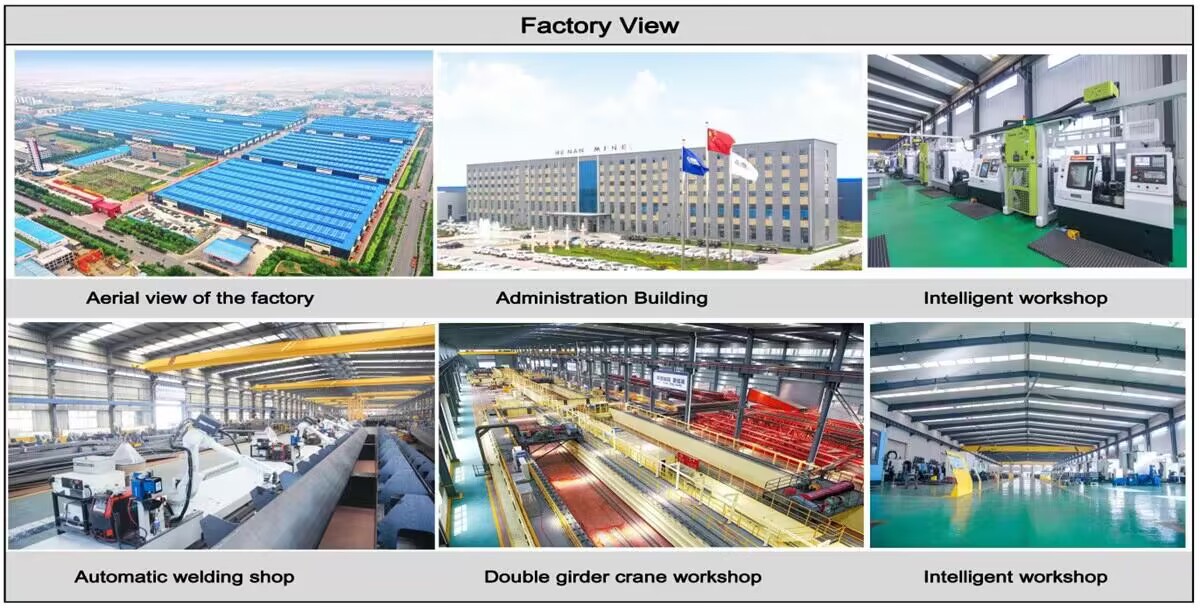
The company has installed an intelligent equipment management platform, and has installed 310 sets (sets) of handling and welding robots. After the completion of the plan, there will be more than 500 sets (sets), and the equipment networking rate will reach 95%. 32 welding lines have been put into use, 50 are planned to be installed, and the automation rate of the entire product line has reached 85%.


Hot Tags: 150 tons hoist lifting gantry crane, China 150 tons hoist lifting gantry crane manufacturers, suppliers, factory
You Might Also Like


Send Inquiry