







Wheeled Gantry Crane
Products Description
1.Product Overview
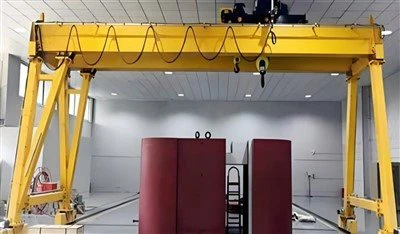
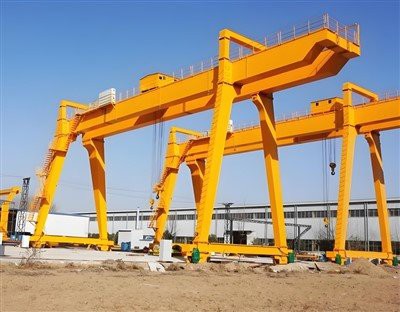
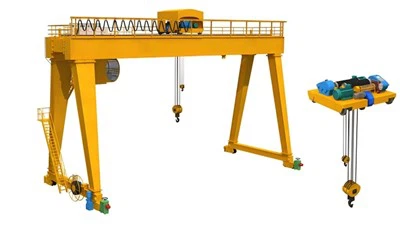
A Double Girder Wheeled Gantry Crane is a high-performance lifting solution designed for heavy-duty material handling in various industrial applications. It features two girders for increased load-bearing capacity and stability, mounted on wheels for enhanced mobility. This type of gantry crane is widely used in shipyards, steel mills, construction sites, and logistics hubs, providing efficient and flexible lifting operations.
2.Key Features
High Load Capacity – Suitable for lifting loads ranging from 5 tons to 500 tons.
Flexible Mobility – Equipped with heavy-duty wheels, allowing smooth movement across different workspaces.
Robust & Stable Design – The double girder structure ensures higher strength and stability compared to single girder models.
Advanced Control Options – Available with cab control, wireless remote control, or pendant control for easy operation.
Customizable Configurations – Designed to fit various lifting heights, spans, and speeds according to customer requirements.
Weather-Resistant – Built with high-quality steel and anti-corrosion coatings for long-lasting outdoor and indoor use.
Core Components:Engine, Bearing, Gearbox, Motor, Gear
Place of Origin:Henan, China
Warranty:2 years
Weight (KG):50000 kg
Video outgoing-inspection:Provided
Machinery Test Report:Provided
Application:Outdoor
Keywords:Gantry Crane
Rated Loading Capacity:50Ton
Cross travelling speed:44.6m/min
Long travelling speed:47.1m/min
Control way:cabin
Power supply:Cable reel
Steel track:QU80
Power:3-phase AC 50HZ 380V

Pictures & Components
1.Main beam
Key Features of the Main Beam
1)High-Strength Structure – Made of Q235B/Q345B steel or other high-grade materials to ensure durability and resistance to bending and torsion.
2)Box-Type or Truss-Type Design – Box girders are commonly used for heavy-duty applications, while truss girders offer lighter weight and wind resistance.
3)Optimized Load Distribution – Designed to evenly distribute the load across the structure, reducing stress and extending lifespan.
4)Precision Manufacturing – Processed with advanced welding, cutting, and machining techniques to ensure high accuracy and stability.
5)Anti-Corrosion Protection – Coated with rust-proof paint and other surface treatments for long-term outdoor use.
6)Integrated Trolley Rails – The trolley and hoist move smoothly along the pre-installed rails on the main beam for efficient material handling.
Lifting System
Key Components of the Lifting System
1. Lifting Mechanism
Electric Hoist or Winch Trolley – Mounted on the double girder structure and moves along the rails for smooth horizontal travel.
Wire Rope or Chain – High-strength wire ropes are commonly used for heavy lifting, ensuring durability and load security.
Hook or Lifting Device – Designed for secure material handling, can be customized with magnetic lifters, spreader beams, or clamps.
2. Motor & Drive System
High-Performance Lifting Motor – Provides stable and powerful lifting capabilities, often equipped with variable frequency drives (VFDs) for smooth speed control.
Gearbox & Brake System – Ensures precise movement and safety by preventing sudden load drops.
Anti-Sway Technology – Some advanced systems include load stabilization to minimize swing and improve precision.
3. Control System
Operation Methods – Options include cabin control, wireless remote control, and pendant control for enhanced flexibility.
Safety Features – Includes overload protection, emergency braking, limit switches, and anti-collision sensors.
 |
 |
3.End carriage
1. Function
The end carriage is responsible for moving the main bridge structure of the gantry crane along the runway rails or the ground.
It houses the traveling wheels, which are powered by motors to enable smooth movement.
2. Components
Main Frame: A steel structure that connects the end carriage to the crane's main girders.
Wheels: These can be made of forged steel or polyurethane-coated materials for durability and load capacity.
Motors & Gearboxes: Provide the driving force for horizontal movement.
Braking System: Ensures controlled stopping and prevents unwanted movement.
Rail System (if applicable): Supports guided movement for the crane.
  |
4.Crane travelling mechanism
1)Traveling Mechanism:
Motorized system that drives the crane along the tracks.
Usually consists of two end carriages, each equipped with wheels and drive units.
2)Wheels and Wheel Assemblies:
Driving Wheels: Connected to the motor and gearbox to provide movement.
Idle Wheels: Support the crane structure but do not drive motion.
Material: Typically made of hardened steel to withstand heavy loads.
3)Motors & Gearboxes:
Electric motors drive the crane movement.
Gearboxes control speed and torque, ensuring smooth operation.
Variable Frequency Drive (VFD) is often used for speed control and energy efficiency.
4)Rail System (Runway Tracks):
Steel rails or embedded tracks guide the crane's movement.
Proper alignment is essential to prevent derailment and excessive wear.
5)raking System:
Includes electromagnetic or hydraulic brakes for controlled stopping.
Emergency brakes prevent uncontrolled movement in case of failure.
6)Control System:
Operator can control movement via a remote control, pendant control, or cabin control.
PLC (Programmable Logic Controller) may be used for automation and safety monitoring.
5.Trolley travelling mechanism
1)Trolley Frame:
A rigid steel structure that supports the hoist and traveling mechanism.
Mounted on wheels that move along the rails on top of the main girders.
2)Trolley Wheels & Wheel Assemblies:
Driving Wheels: Powered by motors and gearboxes to move the trolley.
Idle Wheels: Support and guide the trolley but do not drive motion.
Material: Usually made of hardened steel for durability.
3)Drive System:
Motors: Provide power for trolley movement.
Gearboxes: Adjust speed and torque for smooth operation.
Couplings & Shafts: Transfer power from the motor to the wheels.
Variable Frequency Drive (VFD): Controls speed and acceleration to ensure precise positioning.
4)Rail System:
Rails are mounted on the top of the main girders.
Proper alignment is crucial to prevent derailment and excessive wear.
5)Braking System:
Electromagnetic or hydraulic brakes ensure controlled stopping.
Emergency braking system prevents accidents in case of power failure.
6)Control System:
Operated via wireless remote, pendant control, or cabin control.
PLC (Programmable Logic Controller) may be used for automation and safety features.
6.Crane wheel
Key Features of Crane Wheels
1)Material:
Made from high-strength forged steel (e.g., 42CrMo, 65Mn, or ZG430-640).
Heat-treated for hardness and durability.
2)Surface Hardness:
Typically HB300–HB500 to resist wear and deformation.
3)Wheel Tread Design:
Flat Tread: Used when alignment is precise, reducing stress.
Tapered or Flanged Tread: Helps prevent derailment, commonly used on curved tracks.
4)Load Capacity:
Designed based on crane load, track conditions, and operational frequency.

7.Crane Hook
Types of Crane Hooks:
1)Single Hook:
A simple, standard hook designed for lifting light to moderate loads.
Often used for small-scale operations.
2)Double Hook or Spread Hook:
A hook with two lifting points, often used for lifting large, heavy, or wide loads.
Offers more stability and better load control.
3)Latch Hook:
Includes a safety latch that secures the load, preventing it from coming off during lifting.
Common in industrial applications where safety is a concern.
4)Swivel Hook:
A hook that can rotate 360 degrees, offering greater flexibility in load handling.
Used in applications where precise positioning of the load is required.

8.Motor
Main Types of Motors Used in Double Girder Wheeled Gantry Cranes:
1)AC Motors (Alternating Current Motors):
Induction Motors: The most common type used for general crane applications. They are robust, reliable, and easy to maintain.
Squirrel Cage Induction Motors: Popular due to their simple design and reliability.
Slip Ring Induction Motors: Used in cases requiring more torque or control.
Synchronous Motors: Less common, but can provide precise speed control for specific applications.
2)DC Motors (Direct Current Motors):
Brushed DC Motors: Offer excellent speed control and high torque at low speeds, often used in older systems or for specific, high-precision tasks.
Brushless DC Motors (BLDC): Provide more efficiency, lower maintenance, and higher performance. These are becoming more common in modern gantry cranes.

.
Sound and light alarm system & limit switch
1)Sound and Light Alarm System in a Double Girder Wheeled Gantry Crane
The sound and light alarm system is an important safety feature of a double girder wheeled gantry crane. It alerts the operators and nearby personnel of potential hazards, warning them of the crane's movements or other conditions that may pose a danger.
2)Limit Switches in a Double Girder Wheeled Gantry Crane
Limit switches are critical safety components that define the safe operating range of the crane's movements. They prevent the crane from exceeding its designated travel or hoisting limits, protecting both the crane and its operators from damage or dangerous situations.

10.Safety Devices
1)Overload Protection System
Function: Prevents the crane from lifting loads beyond its rated capacity, which could cause structural damage or failure.
2)Emergency Stop (E-Stop) Button
Function: Provides an immediate and safe method for stopping all crane movements in case of an emergency.
3)Anti-Collision System
Function: Prevents collisions between the crane and nearby structures, other cranes, or personnel.
4)Limit Switches
Function: Stops the crane's movement once it reaches a predefined limit, preventing it from moving beyond the safe operational range.
5)Warning Alarms (Sound & Light Systems)
Function: Alerts personnel to the crane's operation and potential hazards, such as crane movement, load lifting, or the approach of maximum limits.
6)Safety Latches & Hooks
Function: Secures the load to the crane hook and prevents accidental detachment during lifting.
11.Control Mode
1)Cabin Control Mode (Operator's Cabin Control)
Description: In this mode, the crane operator controls the crane from a driver's cabin that is mounted on the crane. The cabin typically contains all the necessary controls for crane operation, including joysticks, buttons, switches, and monitoring screens.
2)Pendant Control Mode (Remote Control with Cable)
Description: In pendant control mode, the crane is controlled via a wired control station (pendant) connected to the crane. The operator uses this handheld device to control the crane's movements, typically while standing on the ground or in close proximity to the crane.
3)Radio Remote Control Mode
Description: In radio remote control mode, the crane is operated via a wireless radio frequency remote control. This allows the operator to control the crane from a significant distance, offering greater flexibility and mobility.
4)Automatic or Semi-Automatic Control Mode
Description: In automatic control mode, the crane operates based on pre-programmed commands or instructions. The operator may still oversee the operation, but the crane's movements are largely automated.
5)Hybrid Control Mode
Description: Hybrid control mode combines features from the above control modes, offering more flexibility and control options depending on the situation. In this case, an operator can switch between manual control (via pendant or cabin) and automatic operation (via pre-programmed systems).

12.Sketch

Main technical

Advantages
1. High Lifting Capacity
Benefit: The double girder design allows for a higher lifting capacity compared to single girder cranes. This is due to the increased structural strength of the two parallel girders, which can support more weight and withstand greater forces.
Use Case: Ideal for lifting heavy loads, such as shipping containers, large machinery, and construction materials, making it suitable for industries requiring the movement of large, heavy items.
2. Greater Stability and Durability
Benefit: The dual-girder design provides greater structural stability and load distribution, ensuring the crane can handle large and uneven loads without compromising safety or performance.
Use Case: Especially important in environments where the crane is subjected to high loads or environmental stresses (e.g., outdoor construction sites or ports).
3. Wide Span and Reach
Benefit: Double girder cranes are capable of covering a wider span than single girder cranes. The two girders can support larger widths, allowing the crane to cover a broader work area and handle larger or more diverse loads.
Use Case: Essential in large storage areas, shipyards, or ports where the crane needs to cover wide spaces to lift and move large or bulky loads.
4. Enhanced Mobility (Wheeled Base)
Benefit: The wheeled base allows the crane to move freely across a defined track or work area, making it extremely versatile in environments that require transportation of goods or materials over a large area.
Use Case: Perfect for outdoor environments like ports, construction sites, and industrial yards, where mobility is crucial for the crane to serve multiple workstations or locations.
5. Flexible Control Options
Benefit: Double girder wheeled gantry cranes are typically equipped with various control modes such as cabin control, pendant control, and radio remote control, giving operators flexibility in how they manage crane movements. Additionally, automated or semi-automatic control systems can be integrated.
Use Case: Ideal for areas where operators need flexibility in how they operate the crane, such as complex construction projects, port container handling, and warehouse logistics.
6. Increased Efficiency and Productivity
Benefit: Due to its robust structure, the double girder wheeled gantry crane can handle heavier loads more quickly and safely, resulting in faster cycle times and more efficient material handling.
Use Case: Especially beneficial in high-volume operations where speed and precision are key, such as port facilities where containers need to be moved efficiently.
7. Improved Safety Features
Benefit: Double girder wheeled gantry cranes typically come equipped with advanced safety features, such as overload protection systems, limit switches, warning alarms, and anti-collision systems. These features help prevent accidents and ensure safe operation in challenging environments.
Use Case: Essential in industrial environments, ports, and shipyards, where large, heavy loads are moved, and there are significant safety risks.
Application
1. Port and Container Handling
Application: Double girder wheeled gantry cranes are widely used in ports for loading and unloading containers from ships. Their large lifting capacity and ability to span wide areas make them ideal for container handling, where containers need to be moved quickly and safely between ships, trucks, and storage areas.
2. Construction Industry
Application: In construction, a double girder wheeled gantry crane is commonly used for lifting heavy building materials, such as steel beams, concrete blocks, and heavy equipment. Its ability to move across the construction site allows it to serve multiple areas without needing repositioning.
3. Shipyard and Marine Industry
Application: In shipyards, a double girder wheeled gantry crane is used for heavy lifting tasks, including moving ship sections, steel plates, and other large marine equipment. It is ideal for assembling or disassembling ships, moving boats into and out of dry docks, and loading or unloading marine cargo.
4. Steel and Heavy Manufacturing Industry
Application: Double girder wheeled gantry cranes are essential in steel mills, heavy manufacturing plants, and other industrial environments where large, heavy raw materials or finished products need to be moved. They are used to lift and transport steel coils, large machinery, or other heavy components.
5. Warehouse and Distribution Centers
Application: In warehouses and distribution centers, a double girder wheeled gantry crane is used for efficiently moving heavy pallets, industrial goods, and machinery. The crane can quickly load and unload materials from trucks, transport goods across the warehouse, and place them in storage.
Crane production procedure
1. Design and Engineering
Objective: Create a detailed design and engineering plan for the crane based on the specific needs and requirements of the client or the operational environment (e.g., lifting capacity, span, mobility, safety features).
2. Material Procurement
Objective: Obtain the materials needed for crane construction, ensuring they meet the required standards of strength, durability, and safety.
3. Fabrication of Components
Objective: Manufacture and fabricate the individual components of the crane based on the design specifications.
4. Assembly
Objective: Assemble the individual crane components into a complete, functional unit.
5. Testing and Quality Control
Objective: Ensure the crane meets all performance, safety, and operational standards before delivery to the client.
6. Painting and Surface Treatment
Objective: Apply protective coatings to the crane to prevent corrosion and enhance durability, especially for outdoor use.
7. Final Inspection and Delivery Preparation
Objective: Ensure that the crane meets all client specifications and regulatory requirements before shipping.
8. Installation and Commissioning
Objective: Install and test the crane on-site to ensure it operates properly in its final environment.

Workshop view:
The company has installed an intelligent equipment management platform, and has installed 310 sets (sets) of handling and welding robots. After the completion of the plan, there will be more than 500 sets (sets), and the equipment networking rate will reach 95%. 32 welding lines have been put into use, 50 are planned to be installed, and the automation rate of the entire product line has reached 85%.


Hot Tags: wheeled gantry crane, China wheeled gantry crane manufacturers, suppliers, factory
Previous
Girder Gantry Crane For ProjectYou Might Also Like

Send Inquiry